
Camposanto Monumentale
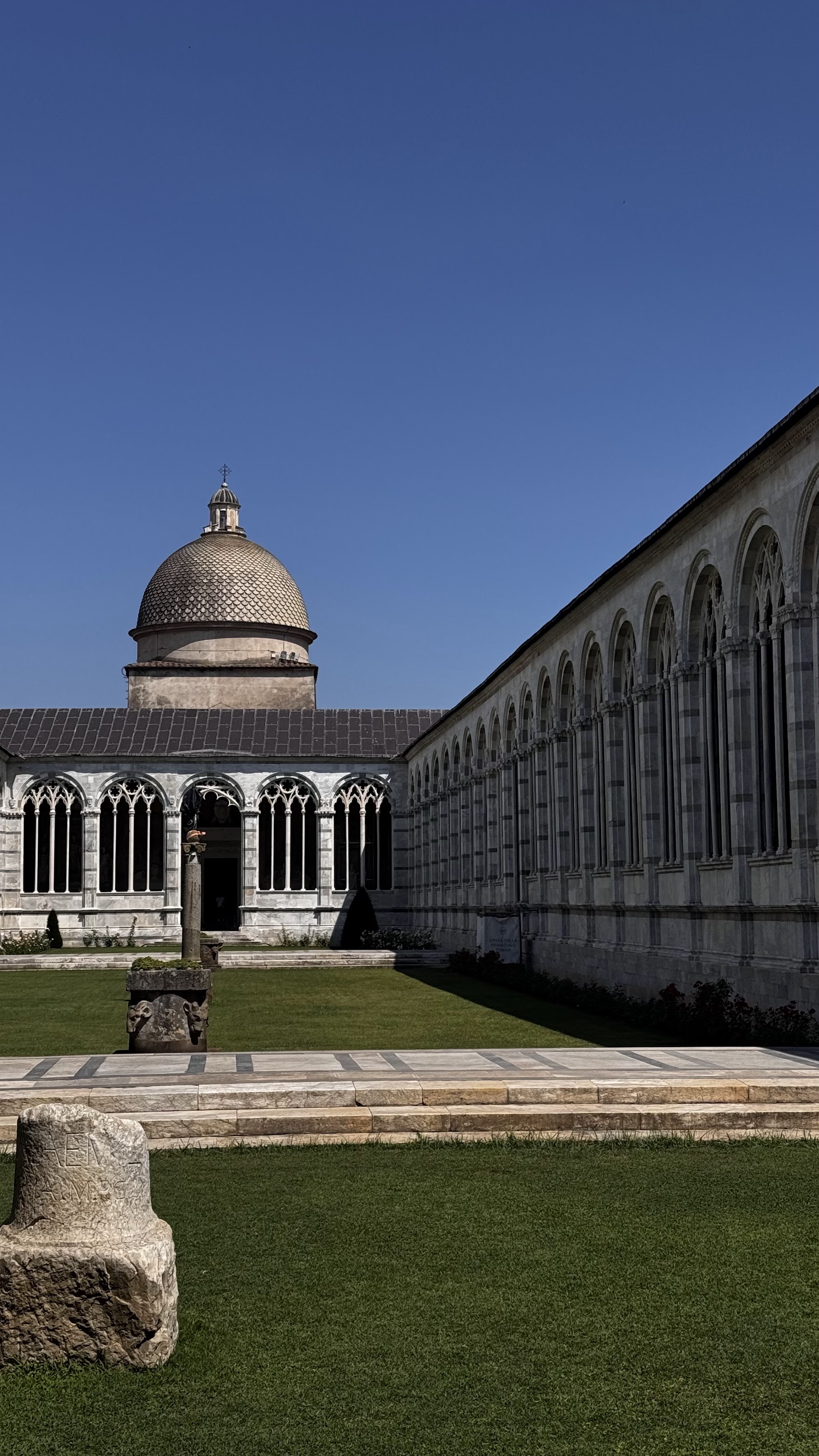
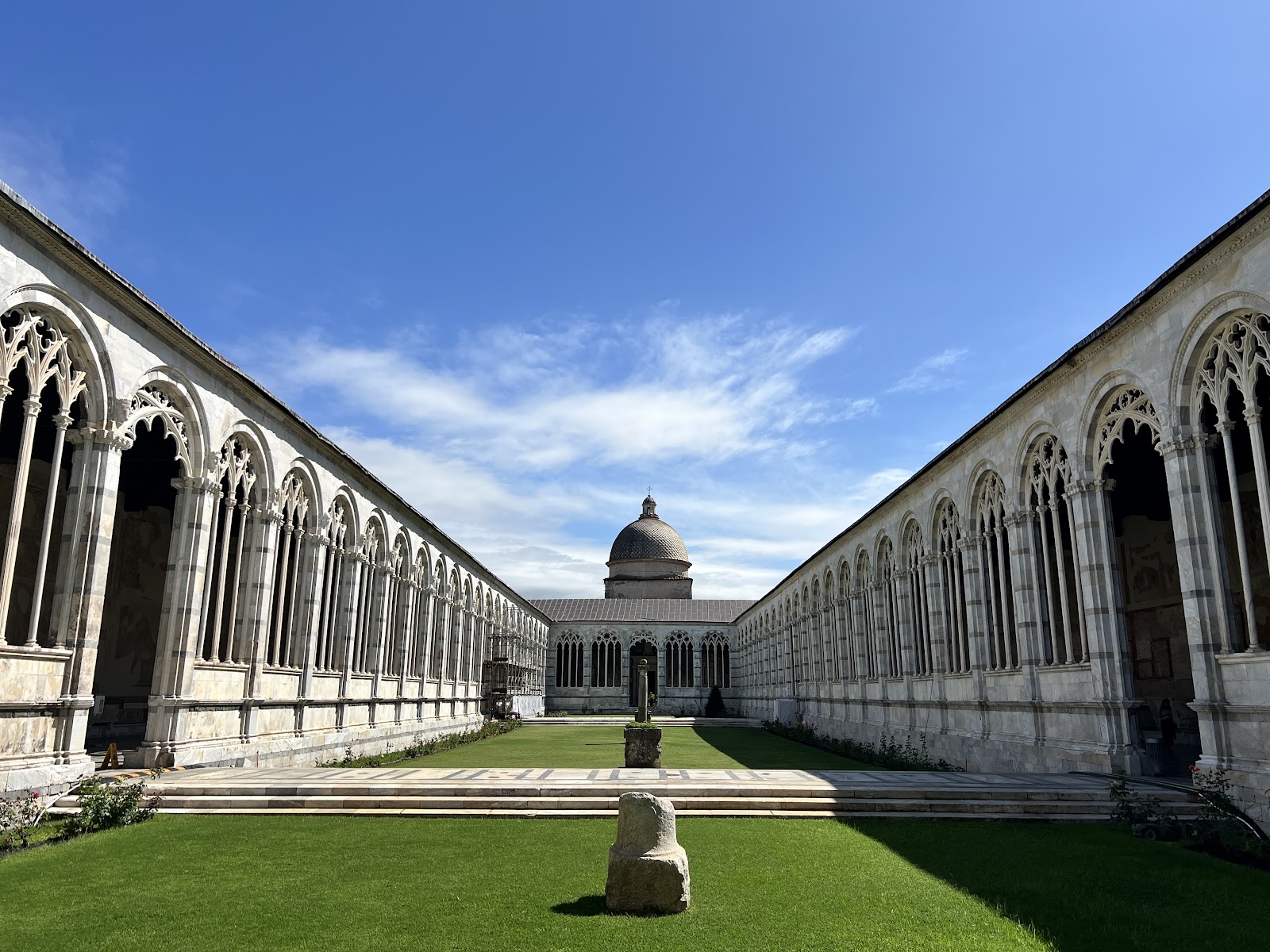
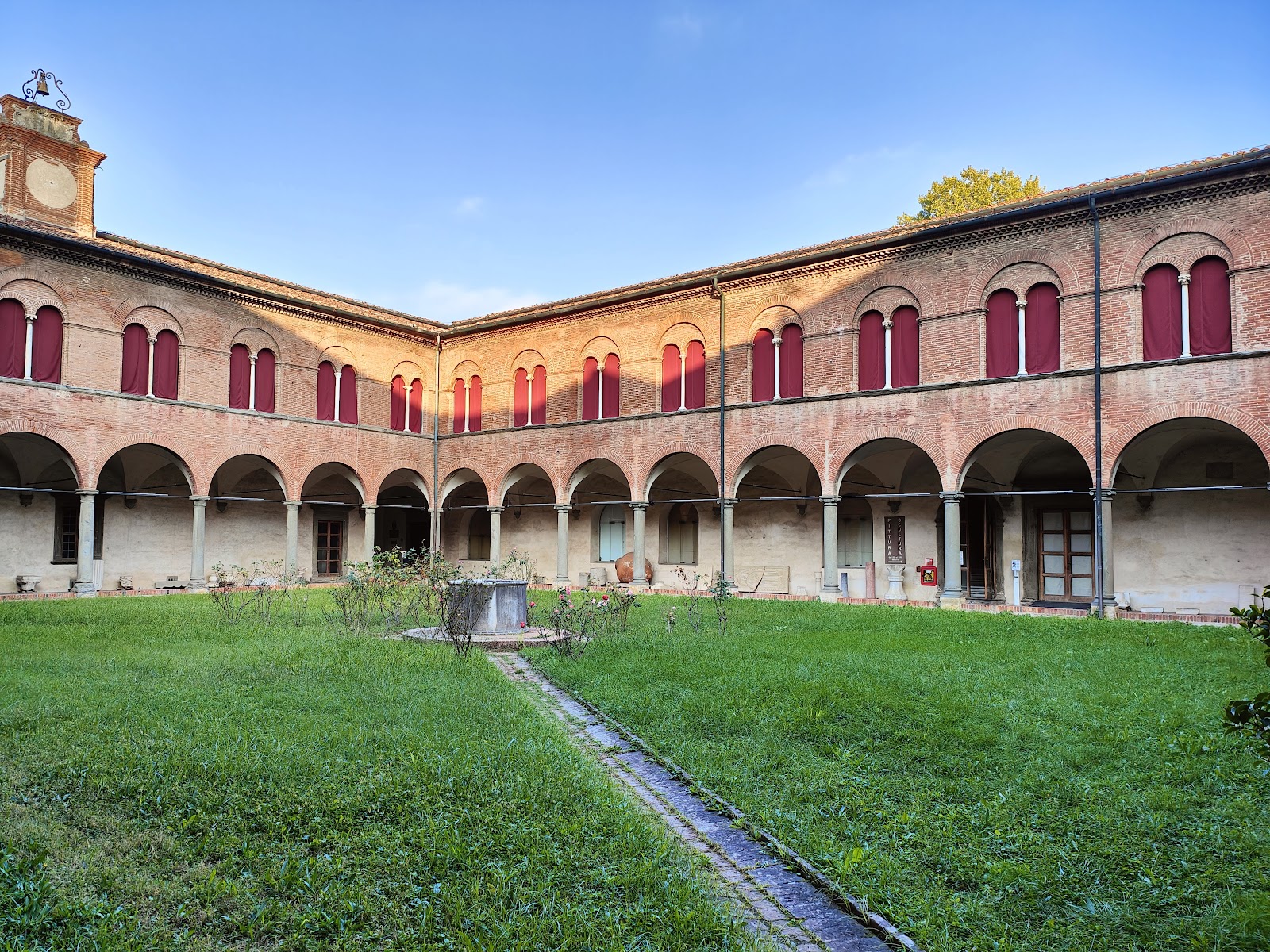
The fourth building on the Campo dei Miracoli is the one most people walk past to photograph the Tower. That's their loss. Step inside the Camposanto Monumentale and you find yourself in a vast Gothic cloister — 120 metres long, its inner arcade laced with slender mullions and plurilobed tracery — built around a core of sacred earth that an archbishop of Pisa is said to have shipped home from Golgotha during the Third Crusade.
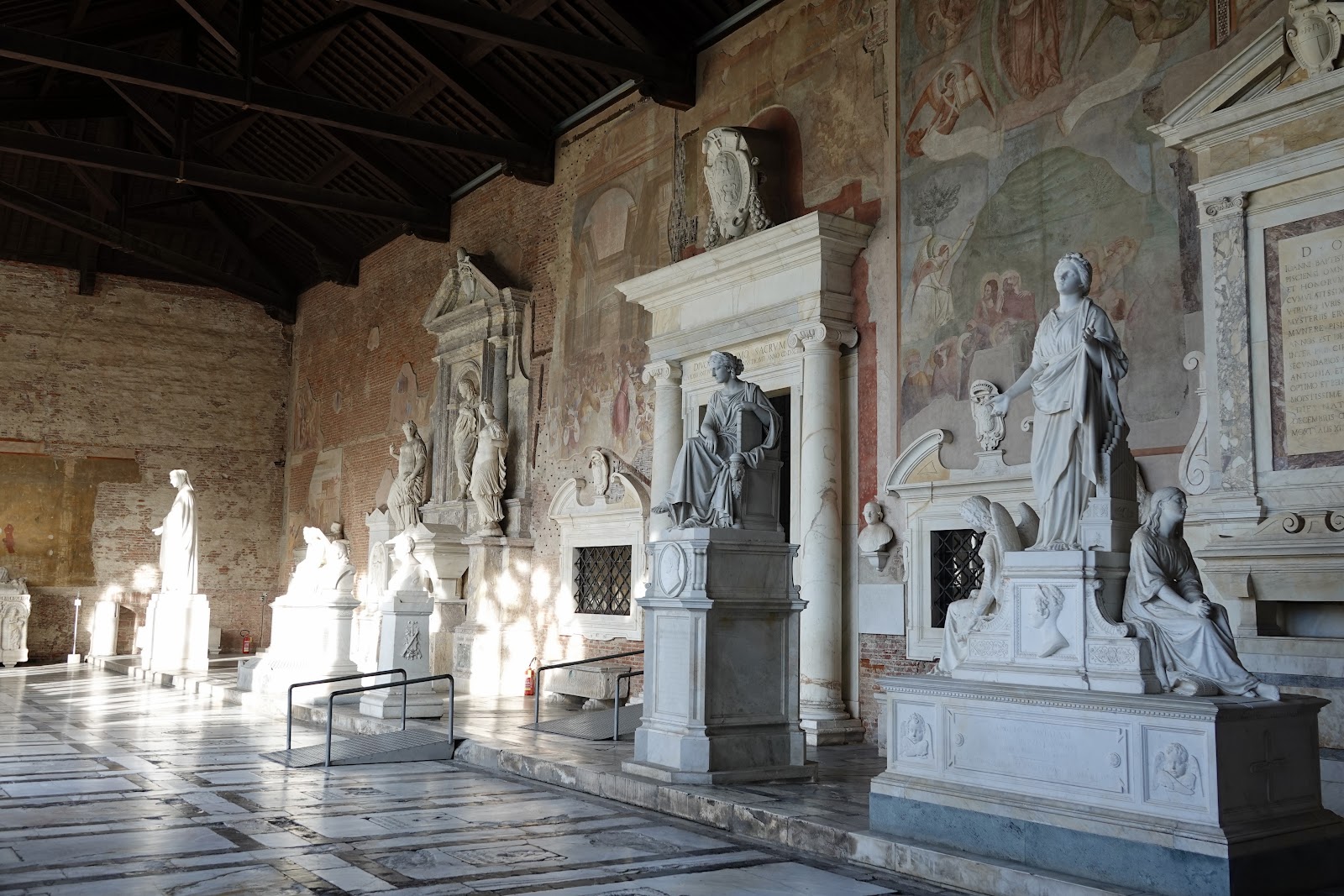
More than 2,600 square metres of frescoes line the walls, a greater expanse than the Sistine Chapel. Eighty-four Roman sarcophagi line the arcades. Harbour chains seized from Pisa's port by the Genoese in 1342 hang on the walls, returned only in 1860. The whole place is a slow accumulation of the city's ambitions, losses and long memory.
💛 What travellers fall for
People who return tend to spend most of their time in front of Buonamico Buffalmacco's Triumph of Death — a fresco cycle painted in the shadow of the Black Death and fully reinstalled only in 2018 after decades of painstaking restoration. Go early, before tour groups arrive, and you'll have the courtyard lawn almost to yourself.
The story behind Camposanto Monumentale
Archbishop Federico Visconti commissioned the building in 1277, wanting a single dignified enclosure to gather the graves scattered around the Cathedral. Work began in 1278 under architect Giovanni di Simone, then stalled when Pisa was defeated at the Battle of Meloria. Construction resumed in the 1300s, and the cemetery reached its completed rectangular form by 1464.
On 27 July 1944, a bomb fragment from an Allied air raid ignited the timber-and-lead roof. The fire burned for three days. Most sculptures and sarcophagi were destroyed; every fresco was compromised. Restoration has continued ever since — the last major fresco cycle, Buffalmacco's Triumph of Death, was reinstalled in April 2018.
Good to know
A 20-minute walk from Pisa Centrale, or take the LAM Rossa bus to the Torre 1 stop. Standard hours run 8am–8pm; from late June through August the building stays open until 10pm. Free entry on 1 and 2 November. Allow at least an hour — the frescoes reward slowness.
Where is Camposanto Monumentale?
More tickets & tours for Camposanto Monumentale
Book directly at the provider
What travellers say about Camposanto Monumentale
The Monumental Cemetery of Pisa (Camposanto Monumentale di Pisa) is a truly impressive and atmospheric place to visit. Even though parts of the site were under construction during my visit, it did not take away from the overall experience. The architecture and historical significance are remarkable. I highly recommend buying the combined ticket for all the monuments in the area, it’s absolutely worth it and gives you access to everything.
Stepping inside from the business of the tower is a peaceful and welcome space. The ancient artwork is quite something and you can watch them restoring them (Feb 26). Lots of tombstones that I googled the names of for an interesting read. Absolutely pop in while you’re visiting the tower.
It's part of the square tickets if you buy the leaning tower bundle. Honestly, I wasn't expecting much of it, but there's an ominous beauty about this cemetery. Maybe it's the paintings around it or the tombs. Either way, worth a visit
This was a suprise. I simply did not expect this magnitude and size of the wall paintings. Well worth the visit. Again, I praise the efforts of the restaurateurs. It is very tidious, but the results are astoneshing.
I never heard of this monument before. The leaning tower gets all the attention, but this certainly was my highlight of my visit to Pisa. Unfortunately, some of the murals are severely damaged, but the ones that remain are breathtaking.
More of Pisa
Discover where to stay, what to do and the best deals for your trip.
Explore Pisa →More attractions in Pisa
All of Pisa →

Background adapted from Wikipedia (CC BY-SA) · map data © OpenStreetMap contributors · ratings & place photos via Google · other photos with per-image credit. Ticket links may earn us a commission at no extra cost to you.