
Camp Nou
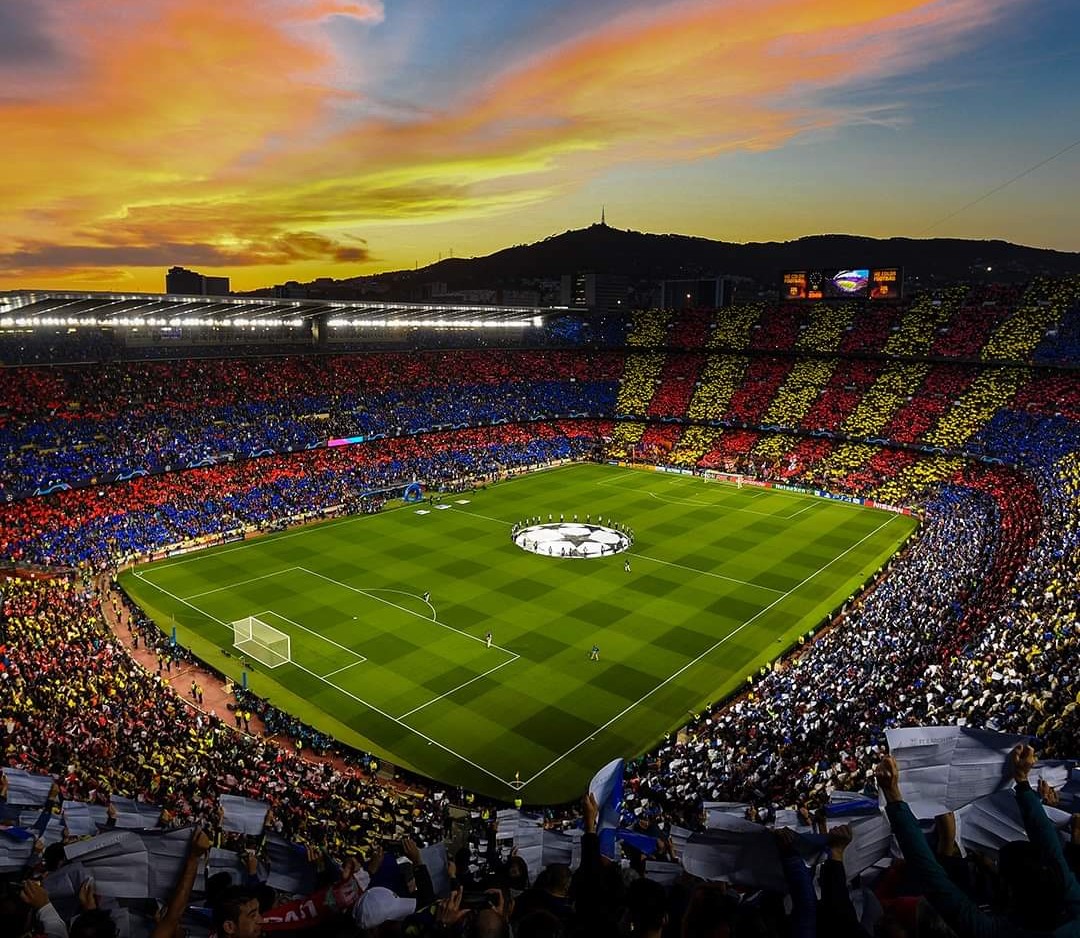
At 17 minutes and 14 seconds into every home match, the crowd at Camp Nou stops watching football and starts making history — tens of thousands of voices rising together to chant "independència," marking the year 1714 and a defeat that Catalans have never quite put down. It is a ritual that tells you this stadium is not only about the sport.
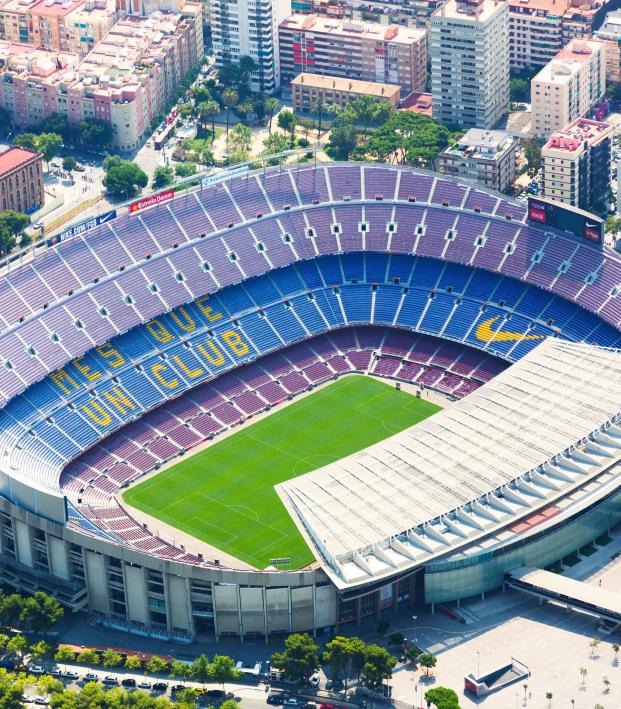
With a current operating capacity of 62,652 (reduced while renovation continues), Camp Nou sits in the Les Corts district, a long oval of concrete and steel covering 55,000 square metres. The pitch itself measures the UEFA-standard 105 by 68 metres, and the stands rise to 48 metres at their highest point.
💛 What travellers fall for
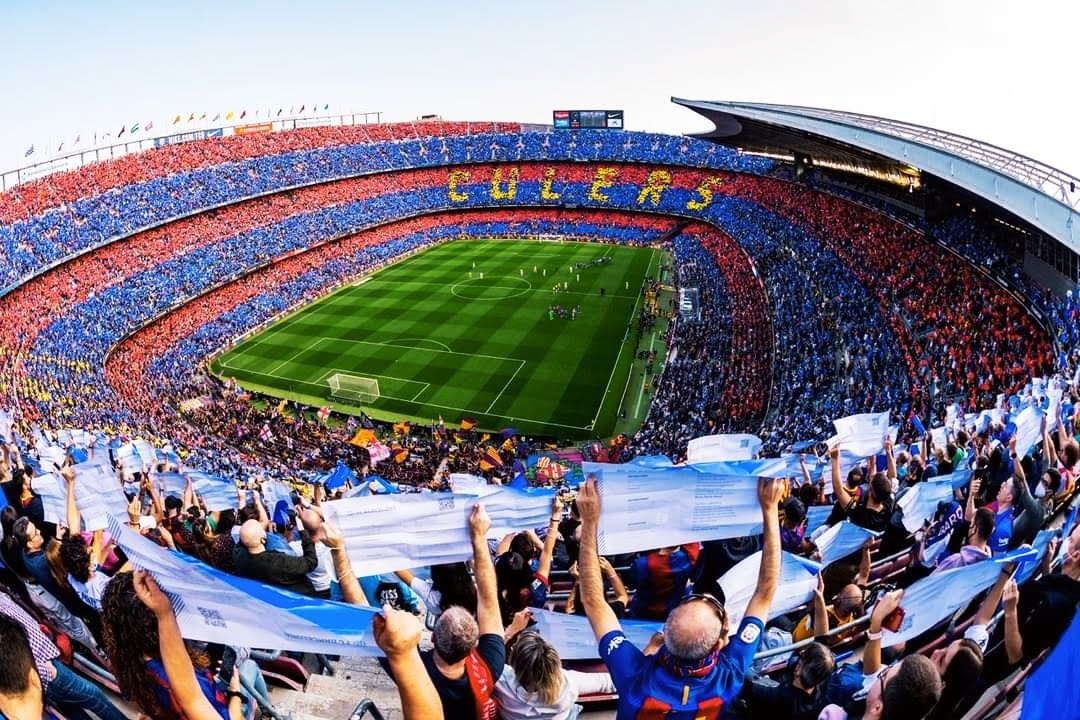
People who come back tend to time their visit around a match day, even knowing the full tour is off the table — the Trophy Gallery and Messi Area stay open until three hours before kickoff, and the atmosphere building outside the ground is worth the trade-off. Book tickets online; walk-up queues eat your afternoon.
The story behind Camp Nou
The foundation stone went down on 28 March 1954, in front of 60,000 people. Construction was handed to INGAR SA in July 1955, budgeted at 67 million pesetas and timed for 18 months — but subsoil problems pushed the final bill to 288 million. The stadium opened on 24 September 1957, the feast of La Mercè, under club president Francesc Miro-Sans. Architects Francesc Mitjans and Josep Soteras drew inspiration from De Kuip in Rotterdam, wrapping continuous stands around the pitch without open corners.
For the 1982 FIFA World Cup, capacity expanded to 121,401. A major renovation in 1993–94 lowered the pitch by 2.5 metres and converted standing terraces to individual seats. The name "Camp Nou" was formalised by postal vote in the 2000–01 season — 68.25% of voters preferred it to Estadi del FC Barcelona. A further renovation began in June 2023, designed by Nikken Sekkei and b720 Fermín Vázquez Arquitectos, with full completion now expected in 2027.
Good to know
Take Line 3 to Palau Reial or Les Corts, or Line 5 to Collblanc. Standard tours run €28 for adults; last entry is 1.5 hours before closing. The stadium is mid-renovation until at least 2027, so pitchside access remains limited — check what phases are open before you go.
Where is Camp Nou?
More tickets & tours for Camp Nou
Book directly at the provider
What travellers say about Camp Nou
Spotify Camp Nou is an incredible place for football fans and visitors alike. The stadium has an amazing atmosphere, rich history, and unforgettable energy that makes every visit special. A must-see attraction in Barcelona for any sports lover
Watching a game at Camp Nou was a dream come true. The energy of nearly 60.000 fans is electrifying. There isn't a bad seat in the house when it comes to the view of the pitch. If you have the chance to see a match here, take it—it’s a spiritual experience for any sports lover. Visca el Barça!
Visited Camp Nou and it was an unforgettable experience! Even with some renovation work going on, the stadium atmosphere is absolutely incredible. Sitting inside and seeing the massive stands where legends of FC Barcelona played gave me goosebumps. The museum is very well organized, with trophies, historic jerseys, and interactive displays that explain the club’s history beautifully. Everything is modern and easy to follow. Staff were helpful and the tour was smooth. For football fans, this place is a dream. Even if you are not a big football supporter, you will still be impressed by the size, history, and energy of the stadium. Highly recommended when visiting Barcelona! 🔵🔴
Camp Nou is an iconic stadium and a dream destination for football fans. The atmosphere, history, and sheer scale of the place are impressive, even when empty. Walking through the stadium and museum gives a powerful sense of Barça’s legacy. A must-visit in Barcelona, especially for sports lovers.
The tour was disappointing but this is due to the current building works at the stadium, but for the price you currently pay it is a rip off. You get about 10 minutes there to take photos & a little talk. Just be happy with the knowledge that you have part funded the stadium rebuild.... The museum was good, you get to see the trophy's & it is a virtual experience which is fairly good. Exit through the gift shop & get your pants pulled down by your child/children.... €115 for a footy shirt is crazy money, I don't care what team it is.
More of Barcelona
Discover where to stay, what to do and the best deals for your trip.
Explore Barcelona →More attractions in Barcelona
All of Barcelona →
Background adapted from Wikipedia (CC BY-SA) · map data © OpenStreetMap contributors · ratings & place photos via Google · other photos with per-image credit. Ticket links may earn us a commission at no extra cost to you.