
City

Cairns City Centre

Cairns City Centre
Photo by Kenny Foo on Pexels
Cairns City Centre
Photo by Sanchit Gogna on Pexels
Cairns City Centre
Photo by Relaxing Journeys on Pexels
Cairns City Centre
Photo by Leo Wang on Pexels
Cairns City Centre
Photo by Khanh Dang on Pexels
Cairns City Centre
Photo by Pak WanJanggut on Pexels

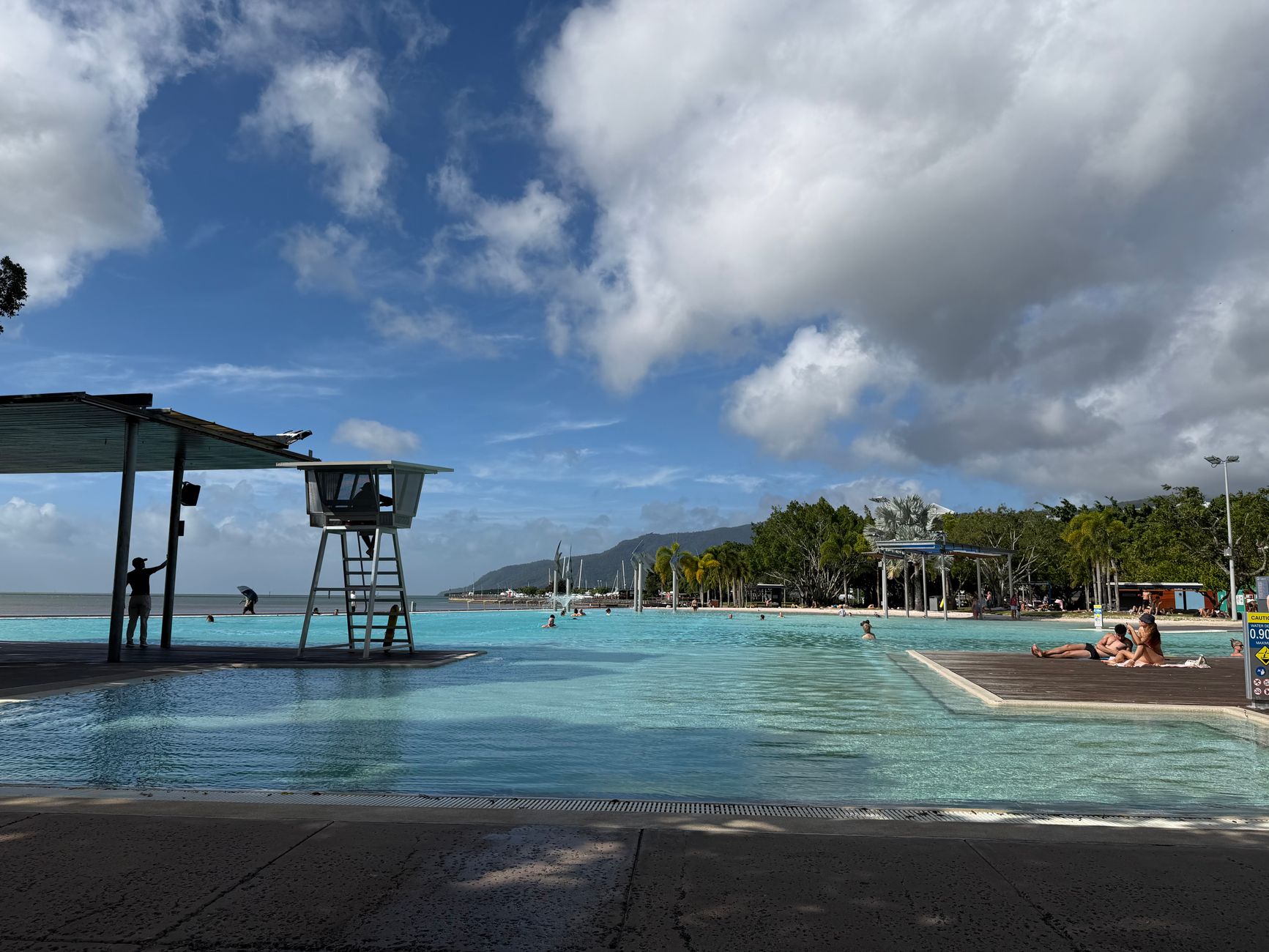
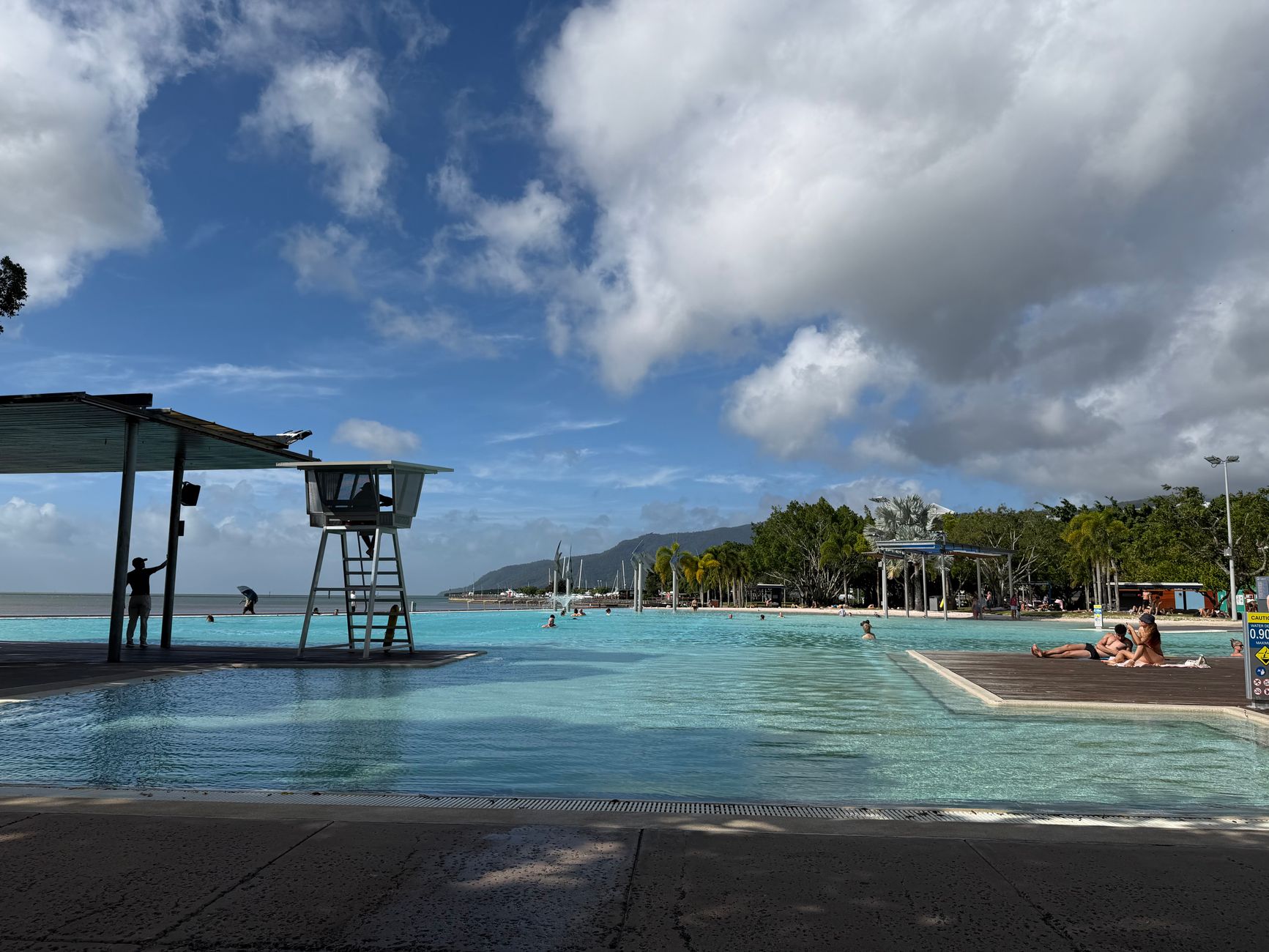
The Cairns Esplanade tells you most of what you need to know about this city: a 4,800-square-metre saltwater lagoon sits on reclaimed foreshore, free and open to anyone, with the Coral Sea stretching out beyond the mudflats. It's a civic gesture that suits the place — practical, a little unexpected, and genuinely good.

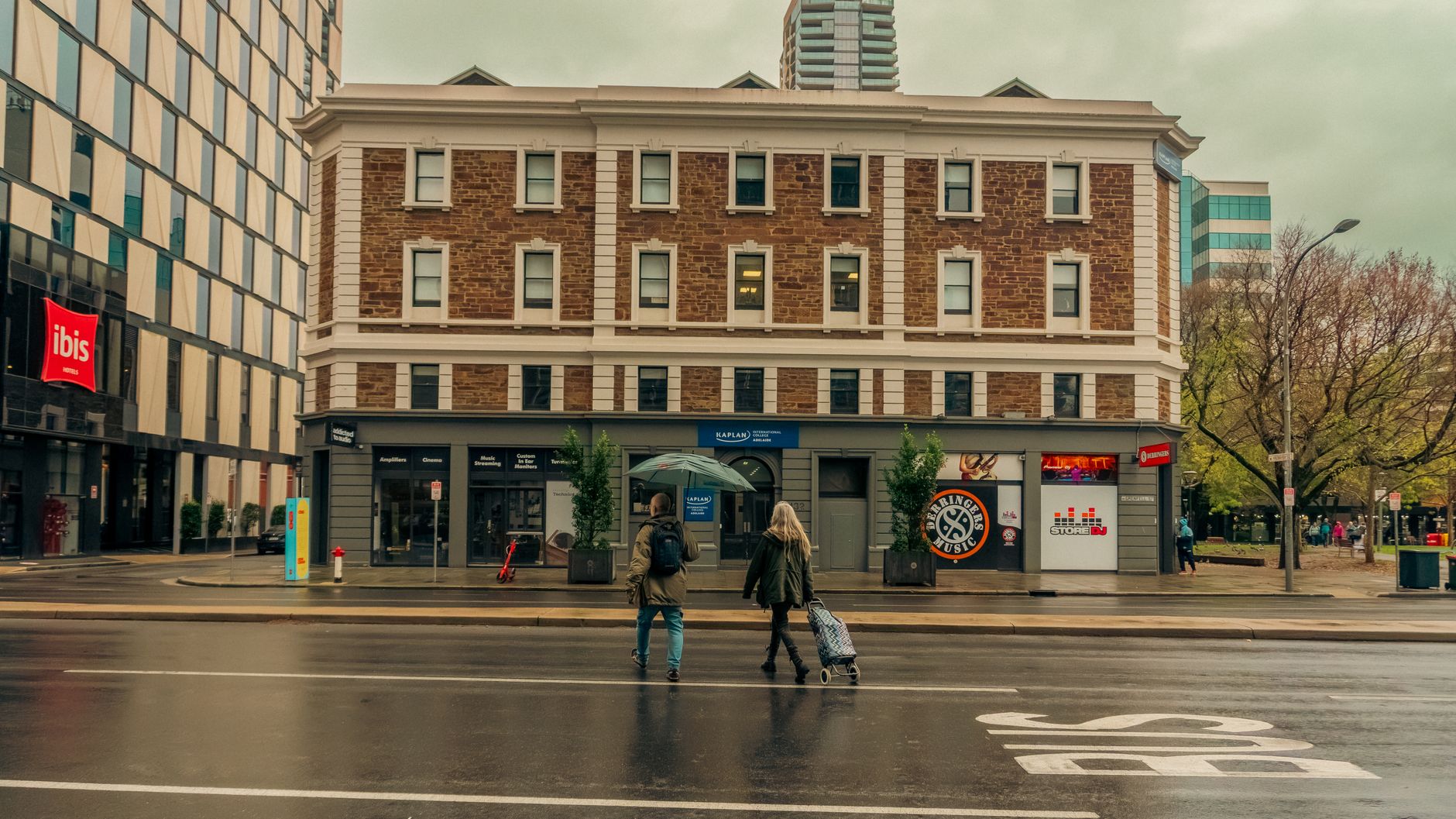
The city centre itself is compact and walkable, anchored by Lake Street's bus terminal and the railway station where the North Coast line ends its long run from Brisbane. St Monica's Cathedral on Abbott Street holds what are claimed to be the world's largest themed stained-glass windows, and the Cairns Art Gallery occupies a restored 1936 government building that once housed the Public Curator's Office.

💛 What travellers fall for

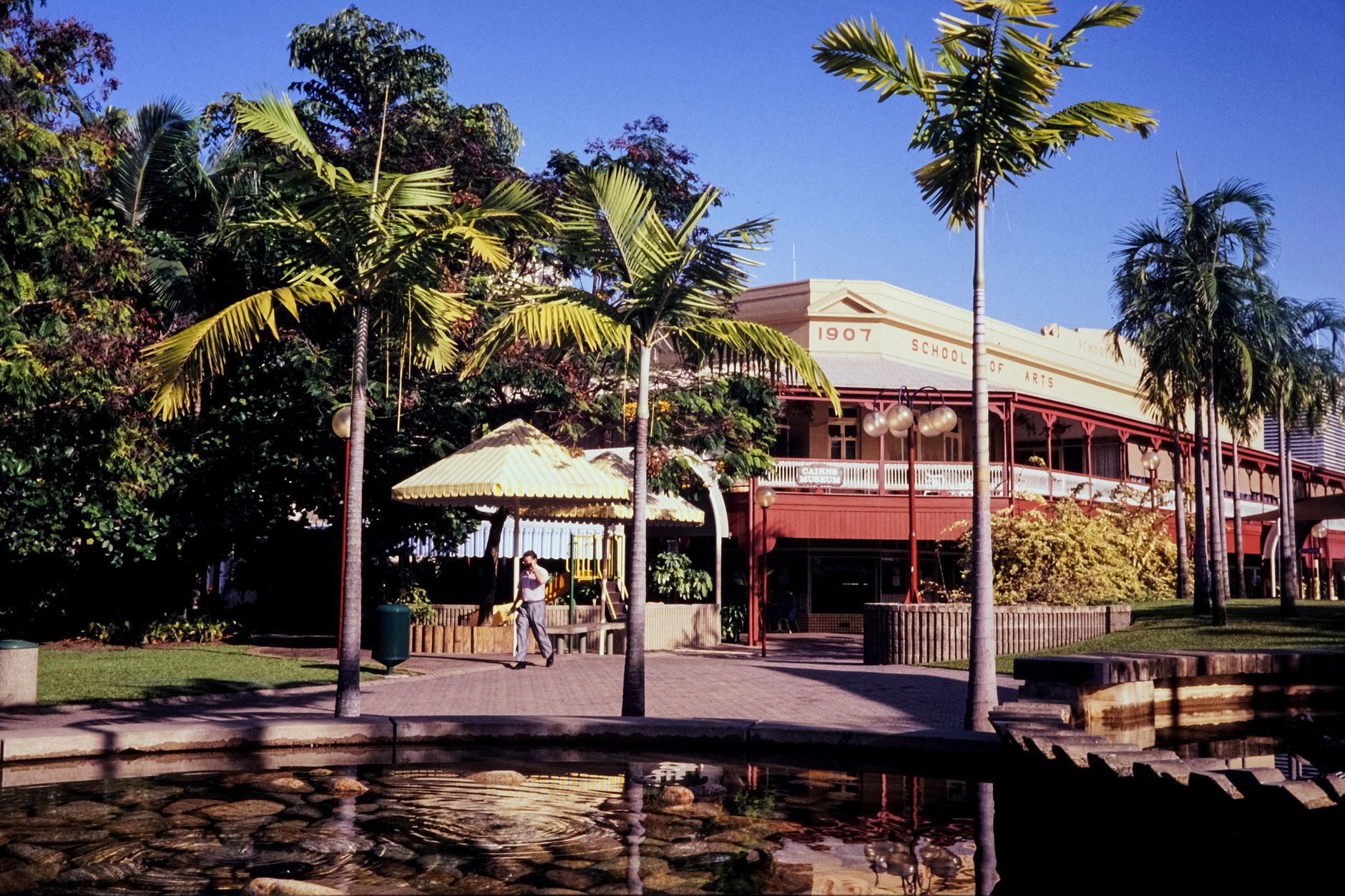
People who keep coming back tend to arrive in the dry season and spend a morning at the Cairns Museum in the old School of Arts building on the corner of Lake and Shields — the entry fee is modest and the local history is genuinely well-curated. The Barrier Reef Hotel, on the skyline since 1926, is worth a look from the street even if you don't go in.

Good to know
May to August is the sweet spot — lower humidity, cooler mornings, and the city at its most navigable. Sunbus covers the centre well from the Lake Street terminal. The Spirit of Queensland train connects to Brisbane five times a week if you want to arrive or leave by rail. Skip the car; the centre is small enough to walk.

Deals in Cairns City Centre

Book directly at the provider
The story

How Cairns City Centre came to be

Cairns was surveyed and gazetted in 1876, named after Sir William Wellington Cairns, the Queensland Governor of the time, following the discovery of gold in the Hodgkinson River inland. The logic was economic: a coastal port to service the goldfields. The first mayor, R.A. Kingsford, was elected in 1885, and construction of the Cairns-to-Herberton railway began the following year.

Official city status came on 12 October 1923. During the Second World War the centre served as a staging ground for Allied operations in the Battle of the Coral Sea. The opening of Cairns International Airport in 1984 reoriented the city's economy toward tourism, and the 1996 Convention Centre cemented that shift. The old 1960 railway station was demolished that same year to make way for Cairns Central Shopping Centre.

People & landmarks

Who and what shaped it

People who shaped it

Sir William Wellington Cairns
Queensland Governor; city named after him following 1876 gold discovery in Hodgkinson River.
R.A. Kingsford
First mayor of Cairns, elected 1885.
Thomas Swallow
Known as 'the father of the cairns district'.
Harald Falge
Local chiropractor who founded Street Level Youth Care in early 1993 to assist homeless.

Landmark buildings

St Monica's Catholic Cathedral
Located 183 Abbott Street; features the world's largest themed stained-glass windows.
Cairns Museum
Housed in former Cairns School of Arts building at corner of Lake and Shields Streets; admission $15 adults, $6 children.
Cairns Art Gallery
Occupies restored 1936 government building, formerly Public Curator's Office and Government Savings Bank.
Barrier Reef Hotel
Prominent landmark on Cairns skyline since 1926.
Cairns Masonic Temple
Heritage-listed building constructed 1934–1935.
Cairns Esplanade
Features 4,800-square-metre artificial saltwater lagoon on reclaimed foreshore; free public access.
Cairns Convention Centre
Established 1996; hosted Microsoft's first major conference in 2000.
Cairns Railway Station
Terminus of North Coast railway line from Brisbane; new station opened 1996 as part of Cairns Central Shopping Centre redevelopment.
Cairns Central Shopping Centre
Largest shopping mall in Far North Queensland with 180 stores; built 1996 on site of demolished 1960 railway station.
Practical

Plan your visit

On the map

When to go

The dry season, May through August, brings temperatures of roughly 17–26°C with low humidity and very little rain — the most comfortable time to walk the centre. December through April is hot and wet, with the bulk of the annual 2,000 mm of rainfall falling in summer; tropical cyclones are possible from mid-November to mid-May, and jellyfish make swimming in open water inadvisable without a stinger suit.

Right now

22°C
Partly cloudy
Sat
23°
16°
Sun
☀️
23°
17°
Mon
24°
14°
Tue
🌧️
24°
19°
Weather data: Open-Meteo

Background & history adapted from Wikipedia (CC BY-SA) · specs from Wikidata (CC0) · weather from Open-Meteo · map data © OpenStreetMap contributors · photos from Wikimedia Commons / Unsplash with per-image credit. No third-party reviews or social posts reproduced.

Top