
Buxton


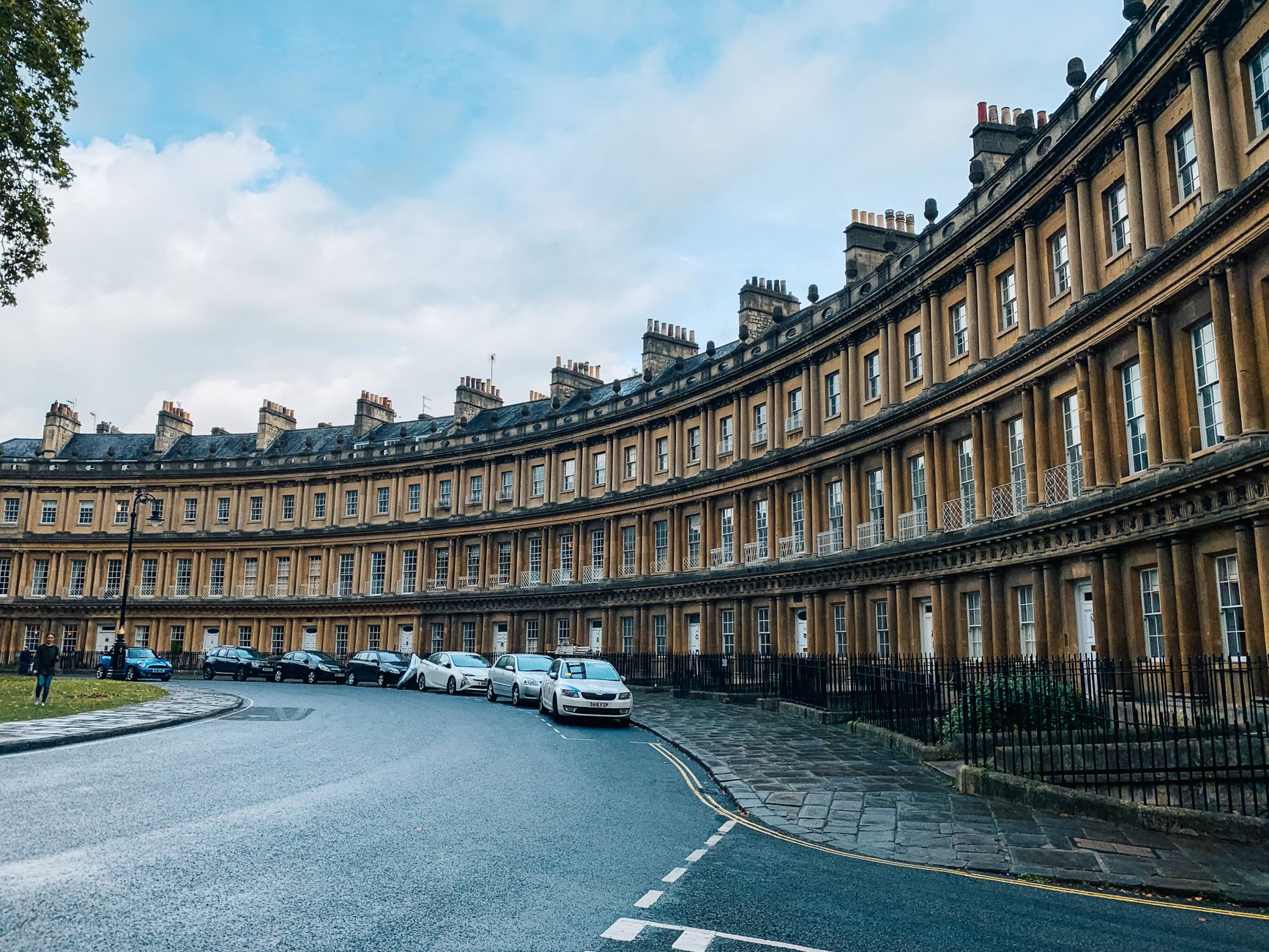
The water at St Ann's Well comes out of the ground at exactly 27.5°C, year-round, regardless of what the Peak District weather is doing above it. That constancy is what built Buxton — Romans settled here around 78AD for the spring, Mary Queen of Scots came to ease her rheumatism, and the 5th Duke of Devonshire spent the equivalent of a copper-mine fortune raising a Georgian crescent to rival Bath. The result is a market town that punches well above its 20,000-person weight in architecture, opera, and subterranean geology.
Sit with that for a moment: a dome larger than the Pantheon in Rome, a Frank Matcham theatre, and a two-million-year-old limestone cave are all within a short walk of each other, at 1,000 feet above sea level on the southern edge of the Peak District.
💛 What travellers fall for
People who come back tend to time it around the Buxton Festival — the Opera House, reopened in 1979 specifically for it, is intimate in the best sense. Outside festival season, the Cavendish Arcade rewards a look: it was the Victorian Thermal Baths until 1963, and the original ironwork and tilework are still there underneath the shop fronts.
Experiences you don't want to miss


Deals in Buxton
Book directly at the provider


How Buxton came to be
Romans arrived around 78AD, drawn by the thermal spring they named Aquae Arnemetiae. The settlement faded with the empire, but the water kept rising at its fixed temperature. Serious development came in the late 18th century, when the 5th Duke of Devonshire decided Buxton should become a northern rival to Bath. The Crescent — built 1780 to 1786 in the Doric style by architect John Carr, at a cost of £38,601 funded largely by the Duke's Ecton copper mines — was the centrepiece of that ambition.
The 19th century added layer upon layer: Joseph Paxton landscaped the Serpentine Walks, the Natural Mineral Baths opened 1851–53, Henry Currey designed the Palace Hotel in 1867, and in 1880 the former stable block behind the Crescent gained a dome of 44.2 metres — fractionally wider than the Pantheon's 43 metres, and for a time the largest unsupported dome in the world. Frank Matcham's Opera House followed in 1903. Lime quarrying, formalised when 13 owners formed Buxton Lime Firms in 1891, ran alongside all of it as the town's industrial backbone.
Who and what shaped it
People who shaped it
Landmark buildings
See Buxton in motion
Plan your visit
On the map
When to go
Buxton sits at around 1,000 feet, which means it runs noticeably cooler and wetter than the lowland towns to its south and west — pack a layer even in July. Winters can bring snow when the rest of Derbyshire sees only rain, which makes the Georgian stonework look particularly good but does warrant checking train services before you travel.
Right now
Background & history adapted from Wikipedia (CC BY-SA) · specs from Wikidata (CC0) · weather from Open-Meteo · map data © OpenStreetMap contributors · photos from Wikimedia Commons / Unsplash with per-image credit. No third-party reviews or social posts reproduced.