Bungalow
Bungalow sits between Mulgrave Road and Hartley Street in a way that most people in Cairns experience only at speed — a suburb you pass through rather than pause in. But slow down and you notice the workers' cottages still standing from the early twentieth century, small industrial yards running alongside residential streets, and a community garden occupying the corner where the old post office once stood. It is one of the city's oldest suburbs, and the bones of that age are still legible if you know to look.
With a population of around 2,300, Bungalow is compact and unpretentious. The German Club on Winkworth Street, the red-brick post office on Spence Street, and the Showground Shopping Centre on Mulgrave Road anchor a neighbourhood that mixes light commerce and quiet residential life without much ceremony.
💛 What travellers fall for
People who spend time here tend to mention the community garden at Spence and Aumuller Streets — a low-key spot that rewards a slow walk. The German Club on Winkworth Street comes up too, more for its reliability than any fanfare. Mulgrave Road moves fast, but the side streets off it are where the suburb actually lives.
Deals in Bungalow
Book directly at the providerHow Bungalow came to be
The suburb takes its name from a plantation established around 1907 by Archdeacon Joseph Campbell, who used the land for experimental cotton growing. It was already connected to the wider region by the Cairns-Mulgrave tramway, which had been running since 1897 and was absorbed into Queensland Railways in 1911. The line ran along the north-west side of Spence Street, and a station and post office served the area just south of where the current post office sits at the corner of Scott and Aumuller Streets.
The railway infrastructure is long gone — tracks relocated, station demolished — but the red-brick post office on Spence Street survives from that early period, as do a number of workers' cottages that give Bungalow the quiet texture of a suburb that predates most of what surrounds it.

Who and what shaped it
People who shaped it
Landmark buildings
Plan your visit
On the map
When to go
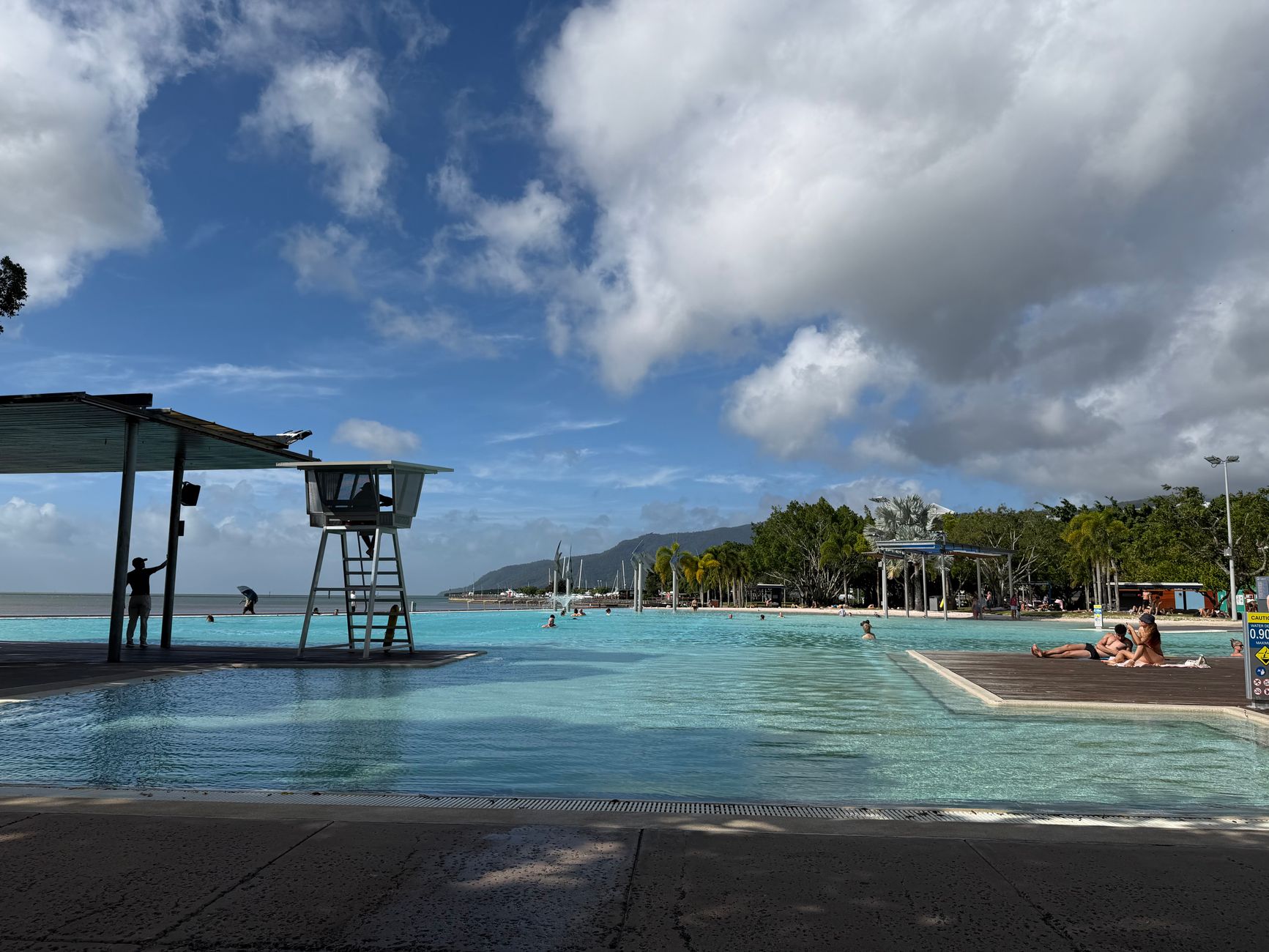
June through August is the most liveable stretch — temperatures between 17 and 26°C, low humidity, and little rain. From December to April, expect heat above 30°C, heavy rainfall, and the possibility of tropical cyclones; box jellyfish and Irukandji are present in the water from November onward.
Right now
Background & history adapted from Wikipedia (CC BY-SA) · specs from Wikidata (CC0) · weather from Open-Meteo · map data © OpenStreetMap contributors · photos from Wikimedia Commons / Unsplash with per-image credit. No third-party reviews or social posts reproduced.