
Brunswick
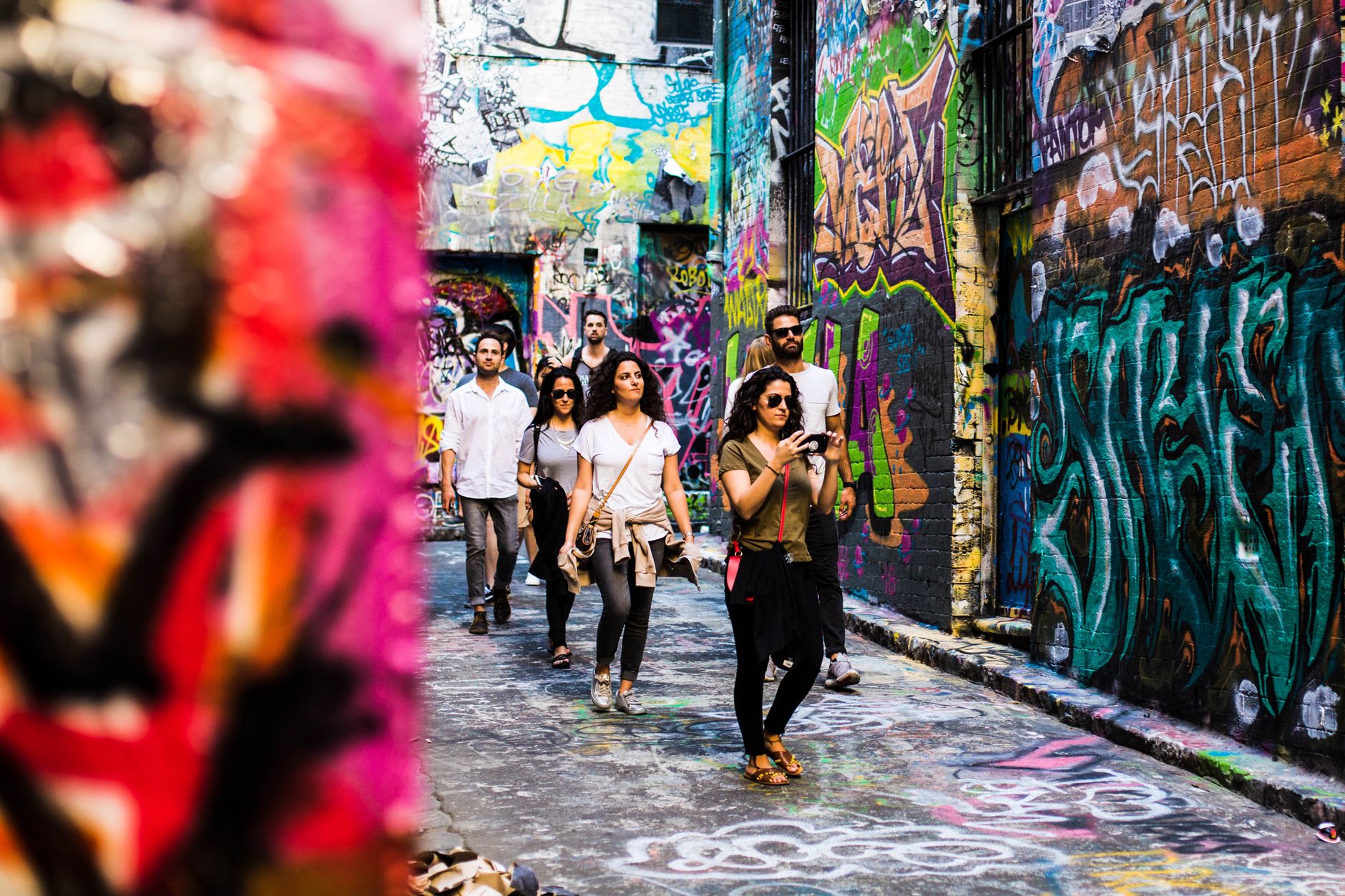
Sydney Road is the spine of Brunswick — a long, loud, democratic strip where a Lebanese bakery sits beside a record shop, a Greek Orthodox church converted from a Methodist hall, and a pub that has been serving people since 1852. The footpaths are wide enough for tables and arguments, and the tram runs straight down the middle of it all, as it has in some form since 1887.
Brunswick is about five kilometres north of the Melbourne CBD, and it carries the particular confidence of a place that has never needed to perform. By 1996, nearly half its residents had been born overseas — Italians and Greeks first, then Lebanese, then waves of artists, students and musicians who found the rents workable and the community already interesting.
💛 What travellers fall for
Regulars tend to mention the Merri Creek bike path — pick it up in Brunswick East and you can ride south all the way to the Yarra without touching a road. They'll also point you toward the former Hoffman Brickworks site on Dawson Street, a heritage-listed ruin that once employed 800 people and still reads as genuinely monumental.
Experiences you don't want to miss


Deals in Brunswick
Book directly at the provider


How Brunswick came to be
The land was surveyed in 1839, and two years later Thomas Wilkinson named his estate Brunswick after Princess Caroline of Brunswick, wife of King George IV. A post office followed in 1846, the Brunswick Hotel in 1852, and by 1857 the area had been proclaimed a municipal district. The Upfield railway arrived in 1884, the cable tram in 1887, and the suburb was elevated to city status in 1908.
The industrial backbone was brick — the Hoffman Brickworks on Dawson Street at its peak employed 800 workers, and the suburb's bluestone and brick buildings still carry that weight. John Curtin, who would become Prime Minister, worked in the local pottery industry and played for the Brunswick Football Club. The City of Brunswick was absorbed into the City of Moreland in 1994, now renamed City of Merri-bek.
Who and what shaped it
People who shaped it
Landmark buildings
See Brunswick in motion
Plan your visit
On the map
When to go
October through April brings the most reliable weather — warm to hot days between 20 and 27°C, with occasional showers that pass quickly. July is the coldest month, with daytime temperatures around 14°C; if you're visiting in winter, the covered sections of Sydney Road make it walkable regardless.
Right now
Background & history adapted from Wikipedia (CC BY-SA) · specs from Wikidata (CC0) · weather from Open-Meteo · map data © OpenStreetMap contributors · photos from Wikimedia Commons / Unsplash with per-image credit. No third-party reviews or social posts reproduced.