
Brihuega
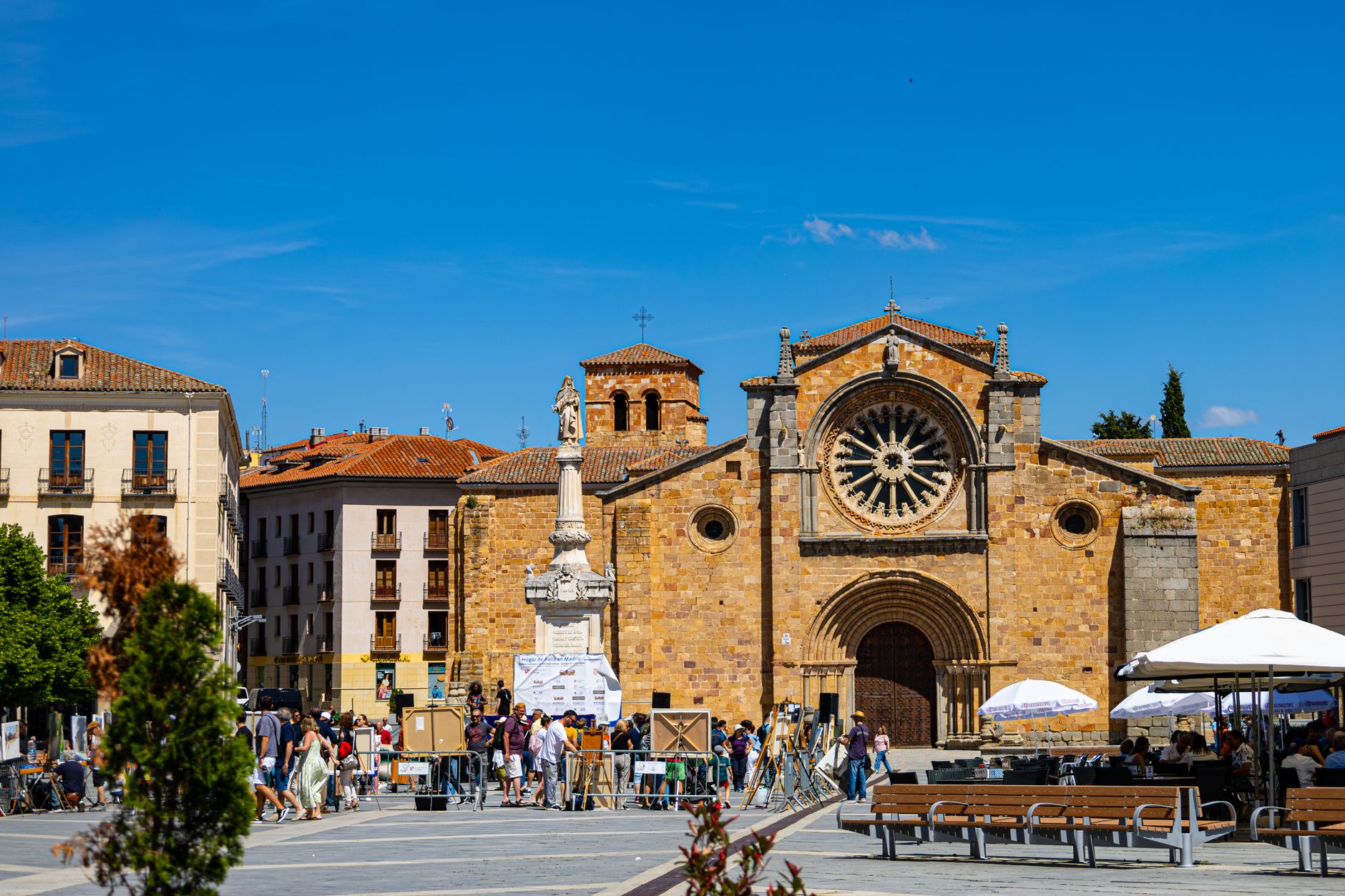
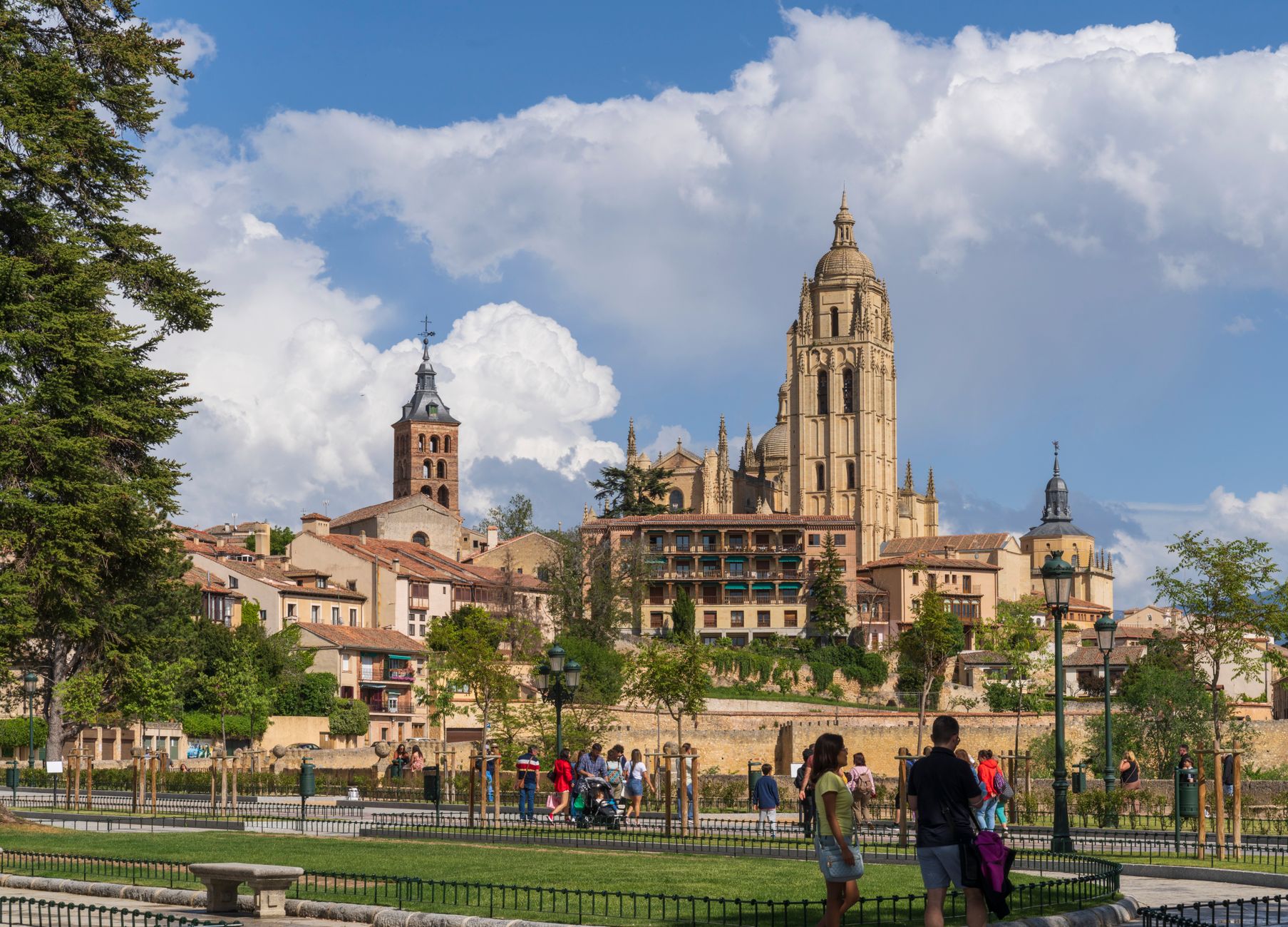
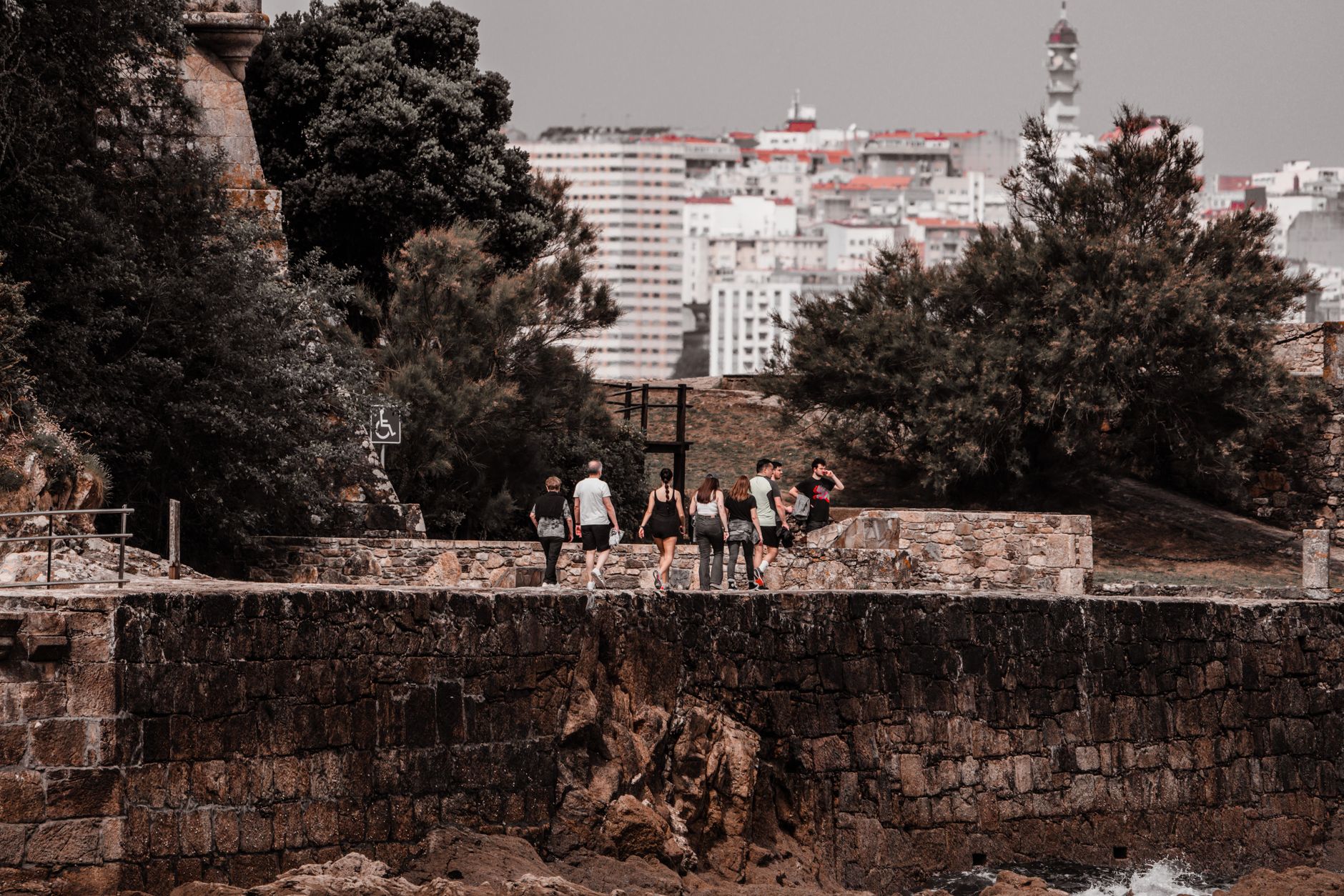
The thing that stops you first in Brihuega is the smell — in July, the plateau above town turns the colour of a bruise, and the lavender fields release something almost narcotic into the dry Alcarrian air. The town itself sits on a rocky spur above the Tajuña river, ringed by roughly two kilometres of Moorish wall that has been standing, in one form or another, since the twelfth century.
Inside those walls, the streets are narrow and the stone is pale, and the pace is the pace of a place that has never needed to perform for visitors. The Arab caves run some seven hundred metres beneath the town. The Royal Cloth Factory — Baroque door, circular plan, gardens that echo Versailles — stands quietly locked. Brihuega keeps its stories close.
💛 What travellers fall for
People who come back tend to time it for early July: the Lavender Festival brings guided distillery tours and evening concerts out in the fields, and the Friday and Saturday guided tours at seven or eight-thirty catch the low light. The Arab Caves cost two euros and take twenty minutes — do them before lunch, when the heat is already climbing.
Experiences you don't want to miss


Deals in Brihuega
Book directly at the provider


How Brihuega came to be
The site was already a Celtiberian settlement — Castrum Briga — before it passed through Moorish hands. Alfonso VI took shelter here with Al-Mamún, King of Toledo, and after the reconquest of Toledo in 1086 the town was handed to the Archbishop of Toledo. In 1242, Archbishop Rodrigo Ximénez de Rada chartered Brihuega and built several of its earliest sanctuaries, including the proto-Gothic Church of Santa María de la Peña.
For centuries the town was a textile centre, and between 1560 and 1620 more than a thousand of its people emigrated to Puebla, Mexico, carrying that trade with them. In 1750, Ferdinand VI established the Real Fábrica de Paños here as a branch of the Guadalajara cloth works. The Battle of Brihuega on 8 December 1710, during the War of Spanish Succession, was fought in the streets and fields the town still occupies. Camilo José Cela passed through and wrote it into his 'Journey to the Alcarria.'
Who and what shaped it
People who shaped it
Landmark buildings
See Brihuega in motion
Plan your visit
On the map
When to go
Winters are cold and clear — January highs barely reach 9°C — and frost is common overnight. Spring warms quickly and is pleasant for walking the walls; by July the plateau is hot and dry, which is exactly what the lavender needs.
Right now
Background & history adapted from Wikipedia (CC BY-SA) · specs from Wikidata (CC0) · weather from Open-Meteo · map data © OpenStreetMap contributors · photos from Wikimedia Commons / Unsplash with per-image credit. No third-party reviews or social posts reproduced.