
Box Hill
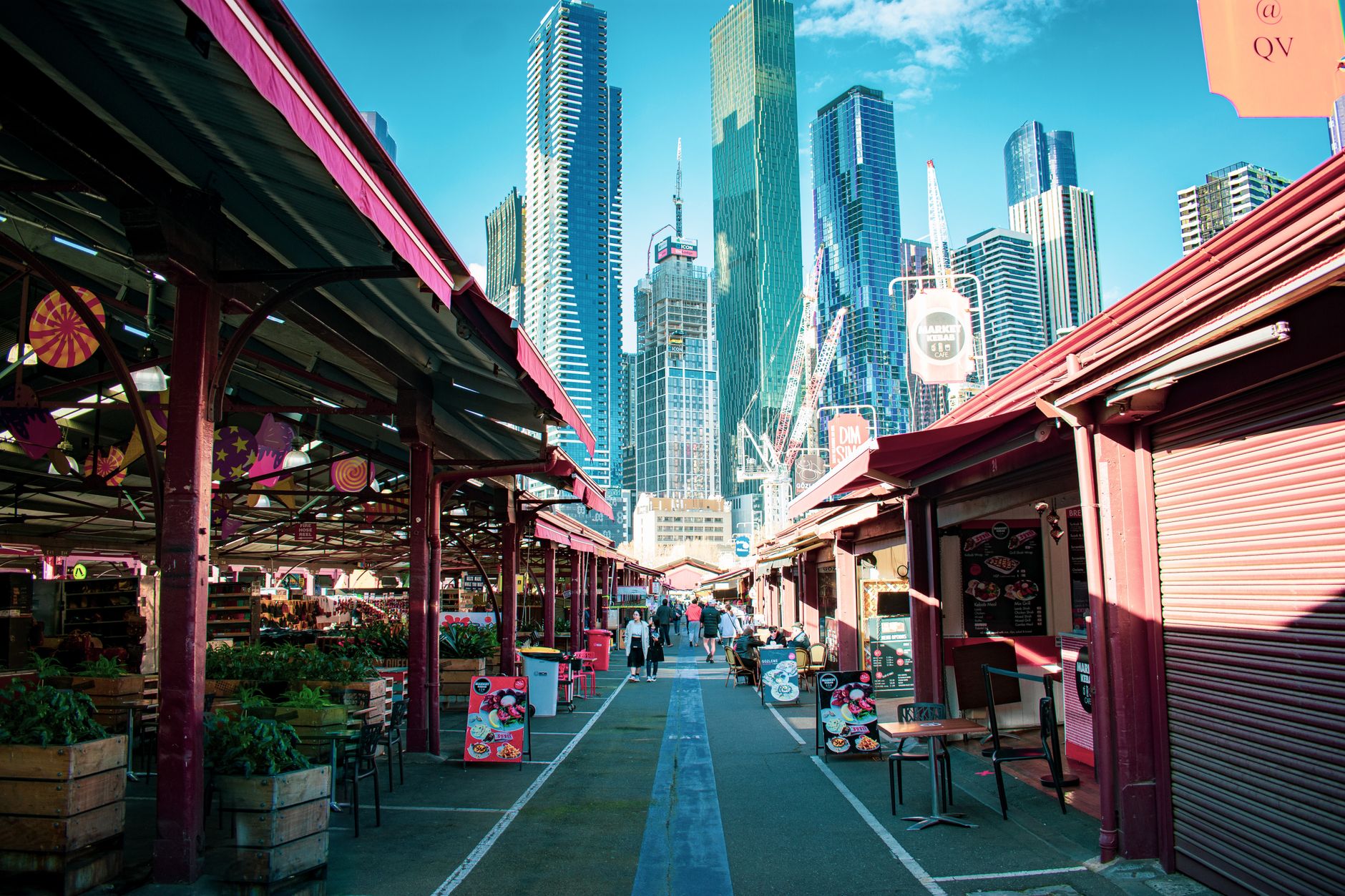
Stand at the corner of Whitehorse Road and watch the 109 tram roll in from the city, and you start to understand what Box Hill actually is: a transit hub that became a neighbourhood, a neighbourhood that became something harder to categorise. Nearly half the population has Chinese ancestry — the highest proportion in Melbourne — and that fact reshapes everything from the food market at Box Hill Central to the rhythm of the Lunar New Year festival along the main strip.
Carrington Road and Station Street are where you spend your time: roast duck hanging in windows, Vietnamese pho houses, bubble tea, and the occasional reminder that this suburb was once farmland sketched by some of Australia's most important painters.
💛 What travellers fall for
People who come back regularly tend to arrive hungry. Tien Dat on the main strip has been family-owned since 1983 — first Vietnamese restaurant in Box Hill, still going. The rooftop bus terminus above Box Hill Central is genuinely useful for reaching the Dandenong Ranges without a car, and regulars know to check the schedule before eating.
Experiences you don't want to miss



Deals in Box Hill
Book directly at the provider

How Box Hill came to be
Wurundjeri Woiwurrung people moved through this country for thousands of years, following Bushy Creek and the seasonal rhythms of the land. European pastoral leases arrived in 1838, and by 1841 Thomas and Edith Toogood had acquired 5,000 acres. A formal township emerged in the 1850s; the name came in 1860, borrowed from Box Hill in Surrey on Padgham's suggestion. The railway arrived in 1882, and seven years later Australia's first electric tramway ran from here to a lookout at Doncaster — closed again by 1896, but a signal of how the suburb was already positioning itself as a gateway.
In the late 1880s, Tom Roberts and Frederick McCubbin came out to paint the paddocks, later joined by Arthur Streeton, Charles Conder and Jane Sutherland — the loose gathering now called the Heidelberg School. The Borough of Box Hill was gazetted in 1925, became a city in 1927, and was designated one of Melbourne's five metropolitan district centres in 1954. It merged with Nunawading to form the City of Whitehorse in 1994.
Who and what shaped it
People who shaped it
Landmark buildings
See Box Hill in motion
Plan your visit
On the map
When to go
January through April and October through December offer the most comfortable conditions — temperatures between 20 and 26°C with relatively modest rainfall. July is the coldest month, averaging around 14°C, and September brings the most rain, so pack accordingly if you're visiting in late winter.
Right now
Background & history adapted from Wikipedia (CC BY-SA) · specs from Wikidata (CC0) · weather from Open-Meteo · map data © OpenStreetMap contributors · photos from Wikimedia Commons / Unsplash with per-image credit. No third-party reviews or social posts reproduced.