
Bourg-en-Bresse
The thing that stops most people in Bourg-en-Bresse is a roof. Specifically, the geometric diamonds of glazed terracotta tiles — burgundy, gold, black — that crown the church at the Royal Monastery of Brou, a Flamboyant Gothic building completed in 1532 and built, essentially, as one woman's act of grief. Margaret of Austria commissioned the whole complex after losing her husband, Philibert II of Savoy, and the result is one of the most elaborately carved church interiors in France.
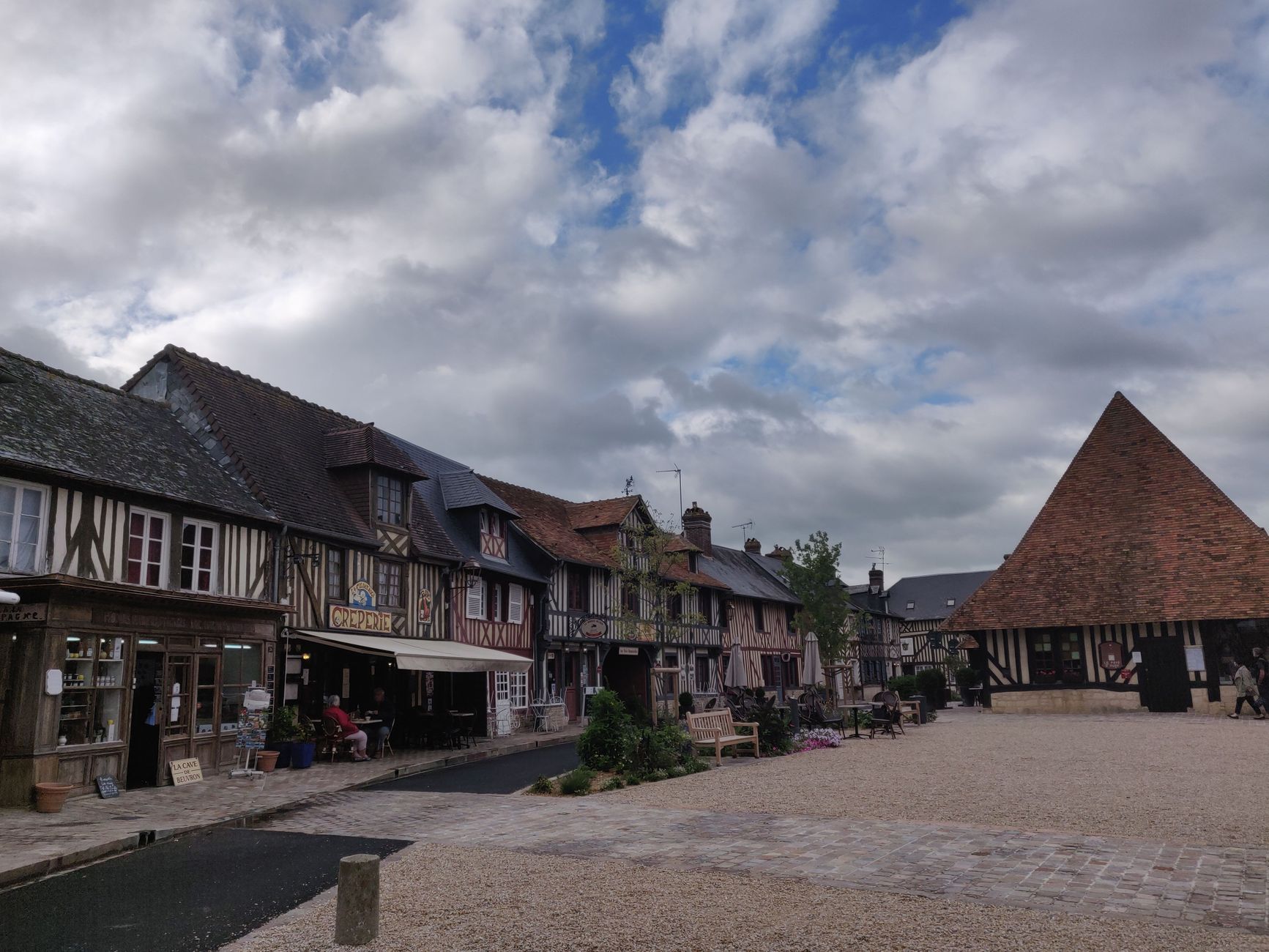
Beyond Brou, the city rewards the unhurried. A 15th-century timber-framed house on Rue du Palais, a Renaissance cathedral with 16th-century choir stalls, a Haussmannian boulevard that opened in 1895 — Bourg-en-Bresse carries its layers lightly, without making a fuss about any of them.
💛 What travellers fall for
Return visitors tend to time the Hôtel-Dieu apothecary visit for a Saturday afternoon — the guided tour (French only, 2:30 p.m.) of that 1782 building organized around its cloister is oddly absorbing. They also mention the Demeure Hugon on Rue Gambetta: a colombage house from 1496 that most people walk past without noticing it's an official historic monument.
Experiences you don't want to miss


Deals in Bourg-en-Bresse
Book directly at the provider
How Bourg-en-Bresse came to be
Bourg-en-Bresse earned the status of free town in 1250, and by the early 15th century it had become the capital of the dukes of Savoy in the province of Bresse. France seized it in 1535, but the Treaty of Cateau-Cambrésis returned it to Savoy in 1559. The restored duke built a citadel strong enough to hold off a six-month siege during the Franco-Savoyard War of 1600–1601 — and then, after the town passed permanently to France in 1601, the ramparts and citadel were demolished in 1644, leaving almost nothing of that military chapter.
The defining moment had come earlier and more peacefully. Margaret of Bourbon had intended to found a monastery on the site of Brou but died before she could act. Her daughter-in-law, Margaret of Austria — daughter of Holy Roman Emperor Maximilian I and later Governor of the Habsburg Netherlands — carried the project through, commissioning the church between 1506 and 1532 and installing sculptor Conrad Meit's monumental tombs for herself, her husband Philibert II, and his mother. The monastery has belonged to the town since 1922.
Who and what shaped it
People who shaped it
Landmark buildings
See Bourg-en-Bresse in motion
Plan your visit
On the map
When to go
Summers are warm and settled, good for walking between sites without much rain. Spring and autumn are mild and quieter; winters can be cold with occasional frost, but the monastery and cathedral are worth visiting year-round.
Right now
Background & history adapted from Wikipedia (CC BY-SA) · specs from Wikidata (CC0) · weather from Open-Meteo · map data © OpenStreetMap contributors · photos from Wikimedia Commons / Unsplash with per-image credit. No third-party reviews or social posts reproduced.