
Bioparc Valencia
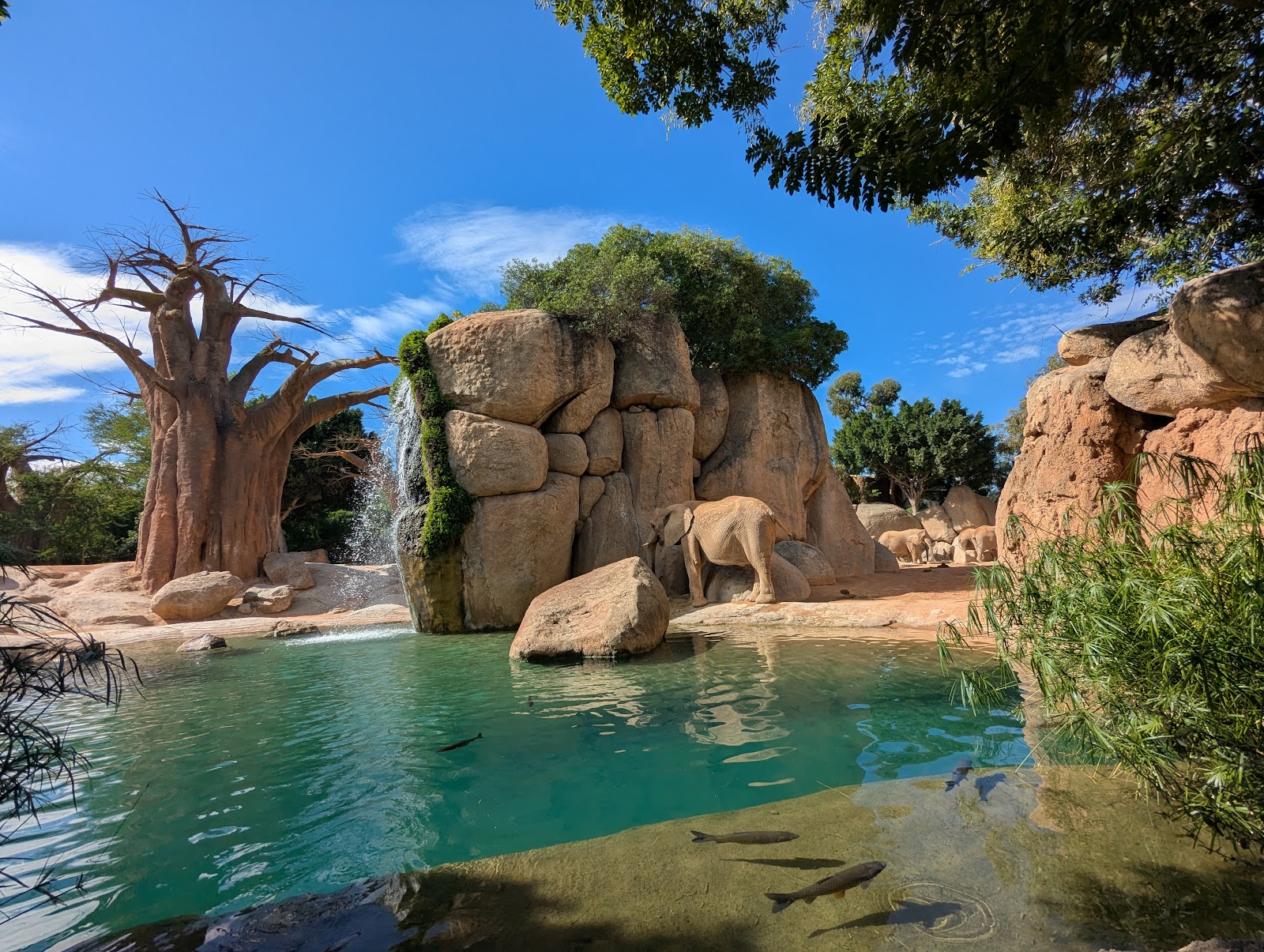
The old railings and moats are gone. At Bioparc Valencia, the ten hectares of former Turia riverbed have been reshaped into four African ecosystems — savannah, equatorial forest, Madagascan island, and a recreation of Kenya's Kitum Cave — where the separation between you and a white rhinoceros or a family of gorillas is a carefully designed trick of landscape rather than a cage.
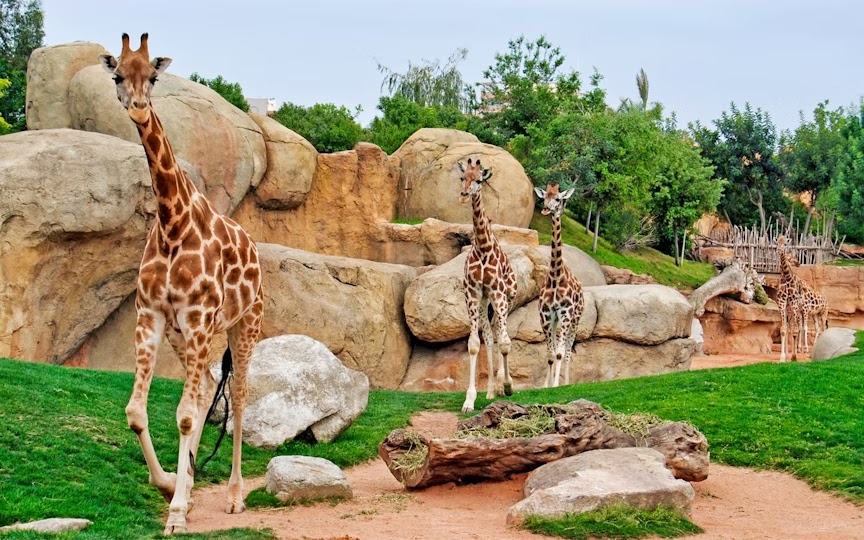
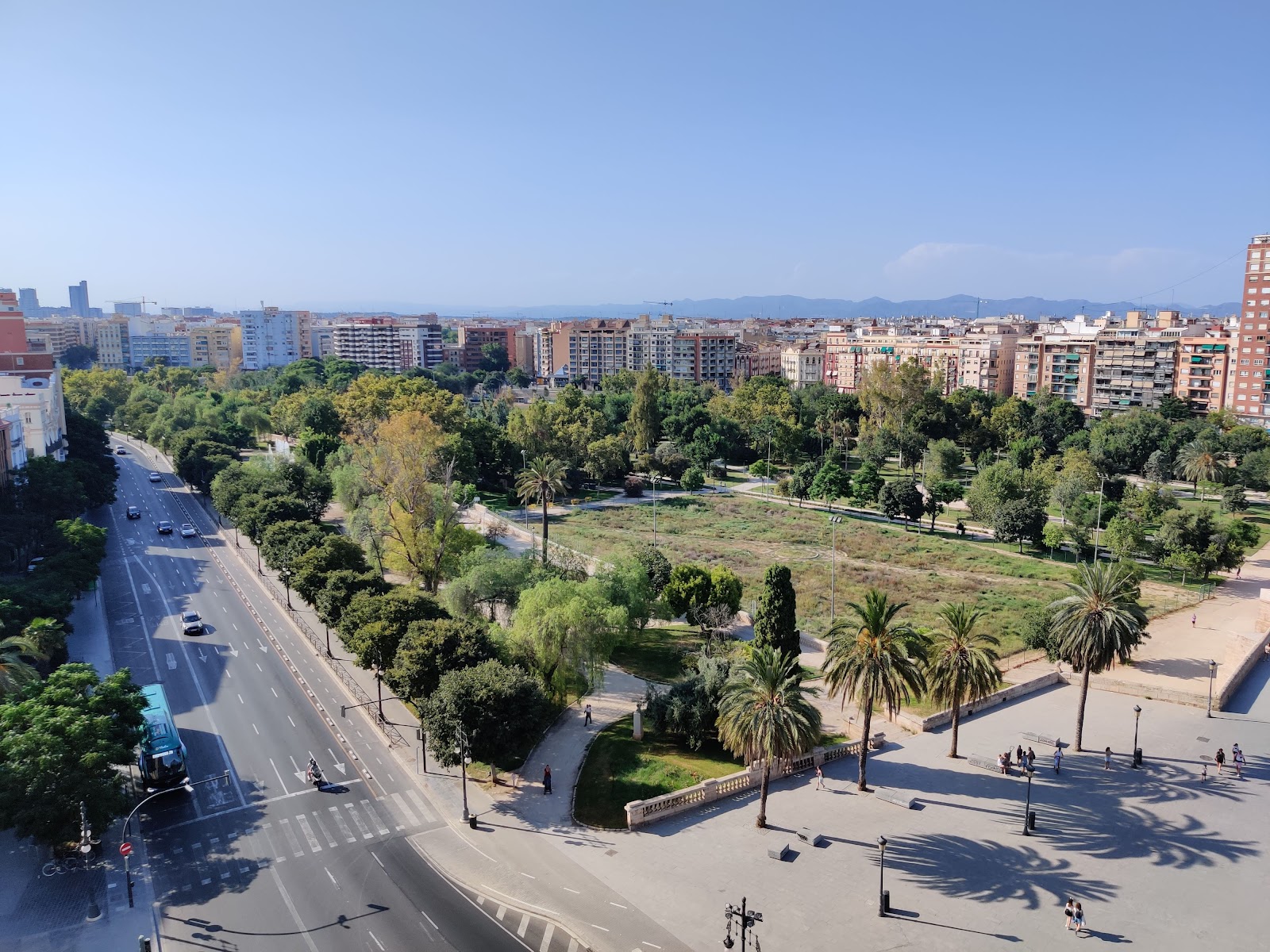
The design concept, called Zooimersion, uses rivers, rocks, and planted terrain to fold visitors into the animals' space. Giraffes graze at eye level. Lemurs move through open canopy. The park sits inside Parque de Cabecera, ten minutes from the city centre, and takes a full afternoon to do properly.
💛 What travellers fall for
People who return tend to arrive after midday — animals are more active, crowds thinner. The hippo cave draws a crowd early, so leave it for later. The meerkat lookout is easy to walk past; don't. Closing time shifts with the light, and on winter evenings some animals will have moved inside before the gates shut.
The story behind Bioparc Valencia
Valencia's original zoo, the Viveros, had been running since 1965 on a conventional model — exhibits behind barriers, animals as spectacle. By the early 2000s, the City Council of Valencia partnered with Rainforest, a private Spanish company specialising in zoological park design, to rethink what a city zoo could be. The result opened on 28 February 2008, designed by Italian architect Fabrizio Miccichè.
The guiding idea was to dismantle the visual grammar of captivity — no fences in the sightlines, no concrete moats — and replace it with immersive habitat design. The approach earned a Europa Nostra Award in 2009, the European Union's principal heritage and architecture prize.
Good to know
Metro lines 3, 5, or 9 to Nou d'Octubre is the cleanest approach. Open every day except Christmas and New Year's Day; hours run 10am–6pm in winter, 10am–8pm in summer. Book online to save €1 per ticket and lock in a time slot. Budget four to five hours. Picnics aren't allowed, but cafés are scattered throughout.
Spring and early autumn are the most comfortable seasons — mild temperatures, shorter queues, and animals reliably out in their enclosures. Summer afternoons can be hot even inside the shaded forest zones, and on winter evenings the park closes early as the light drops, sometimes before animals have returned to visible areas.
Where is Bioparc Valencia?
More tickets & tours for Bioparc Valencia
Book directly at the provider
What travellers say about Bioparc Valencia
The most amazing place! I highly recommend a visit here, you will not be dissapointed. Where else can you sit at a cafe/restaurant while watchng Giraffes and Elephants walk past in front of you. You can easily spend a whole day there, so much to see and experience. Clever, well thought out and you can tell they really care for their animals. Don't miss it!
arrived around 10 a.m., which meant there were no crowds yet and the visit was really comfortable. The entire park is beautiful, well maintained, and very well organized. During our visit, only one enclosure was empty, so we were able to see a wide variety of animals. The biggest attraction was the opportunity to enter the lemur habitat and observe them up close. It was a fantastic experience and definitely something that makes this place stand out. There is also another enclosure that you can enter in a similar way, which was also very enjoyable. The visit took us around 2–3 hours at a relaxed pace, without children. It is also worth knowing that there is no section with spiders, reptiles, or similar creatures — the park mainly focuses on larger animals and natural-style habitats. Overall, we left very satisfied and would definitely recommend this place.
🦁🐘 Really enjoyed visiting Bioparc Valencia! The prices are a bit on the high side 💶, but I believe places like this need money to keep running and to take proper care of the animals ❤️. All the animals looked healthy, well looked after, and the whole park was very clean and spotless ✨. There is plenty of space for the elephants 🐘, lions 🦁, giraffes 🦒 and even gorillas 🦍, which was great to see. Lots of exotic animals and a very nice zoo overall 🌍. That said, there wasn’t anything super special that I haven’t seen in other zoos around Europe. But if you want to experience something truly unforgettable… wait until you see a gorillas. Overall, a lovely day out and worth a visit 👍
One of the best zoos I've visited with diverse land and marine wildlife, excellent views and exhibits, unique animals, and up-close viewing areas where the animals swing over your heads and cross the paths you're walking on. Recommended to buy the ticket online to avoid a short queue. Bag and luggage storage is on the -1 floor and is convenient and only costs around 4 euros for a good-sized secure storage, no troubles there. Recommended to build a day around the Bioparc and some nearby shops and restaurants - be careful as once you leave, you can't re-enter with the same ticket. The cafes and food shops inside the zoo are good enough, but the views are incredible and unique. Would definitely return again and it was a great experience overall
This natural setting zoo, focused primarily on the African experience, is amazing and really enjoyable. I’d highly recommend it to anyone who likes animals. Well worth the time spent there. The animal areas were extremely well done, with a very natural set but really good viewing at each opportunity.
More of Valencia
Discover where to stay, what to do and the best deals for your trip.
Explore Valencia →More attractions in Valencia
All of Valencia →
Background adapted from Wikipedia (CC BY-SA) · map data © OpenStreetMap contributors · ratings & place photos via Google · other photos with per-image credit. Ticket links may earn us a commission at no extra cost to you.