
Beynac-et-Cazenac
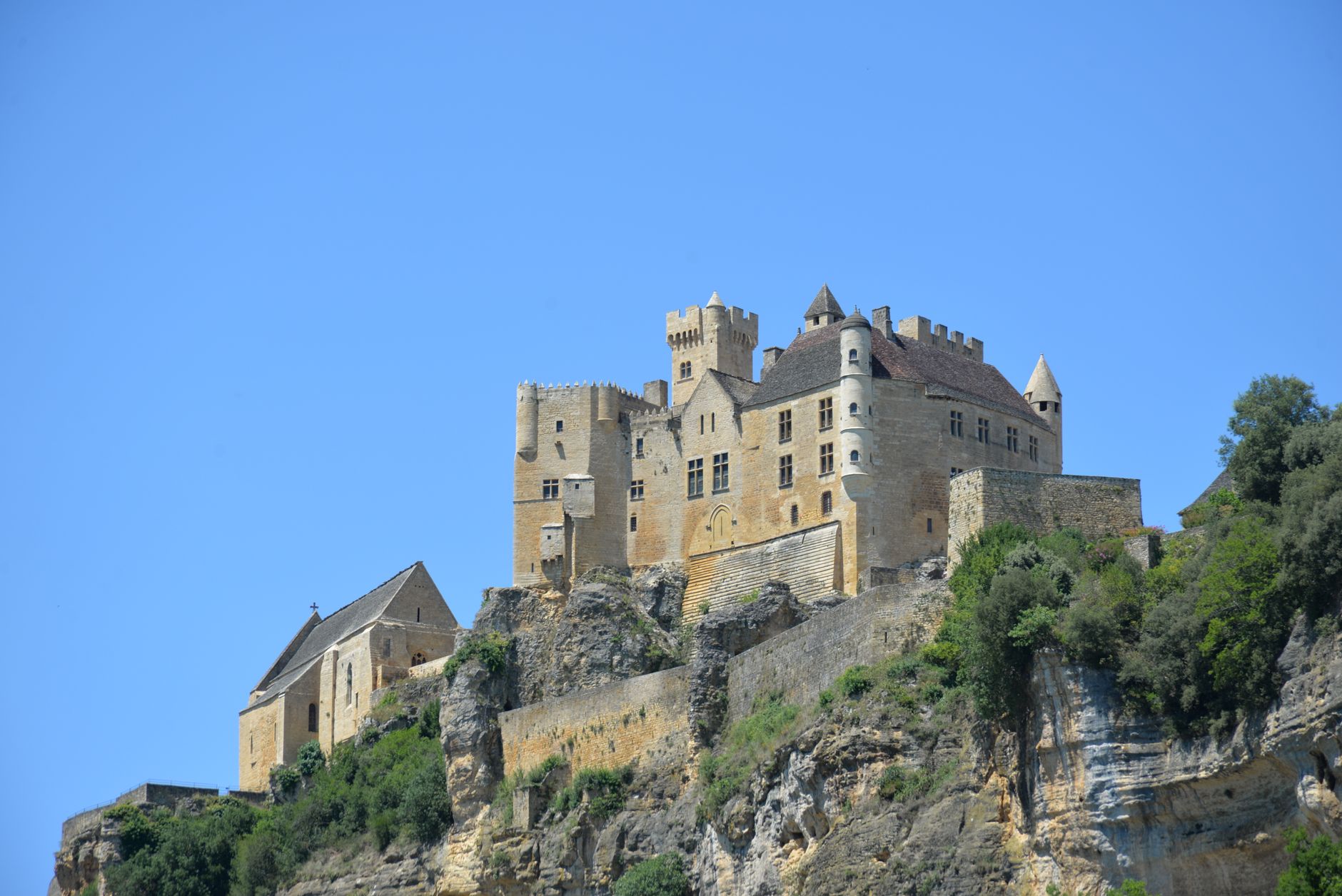
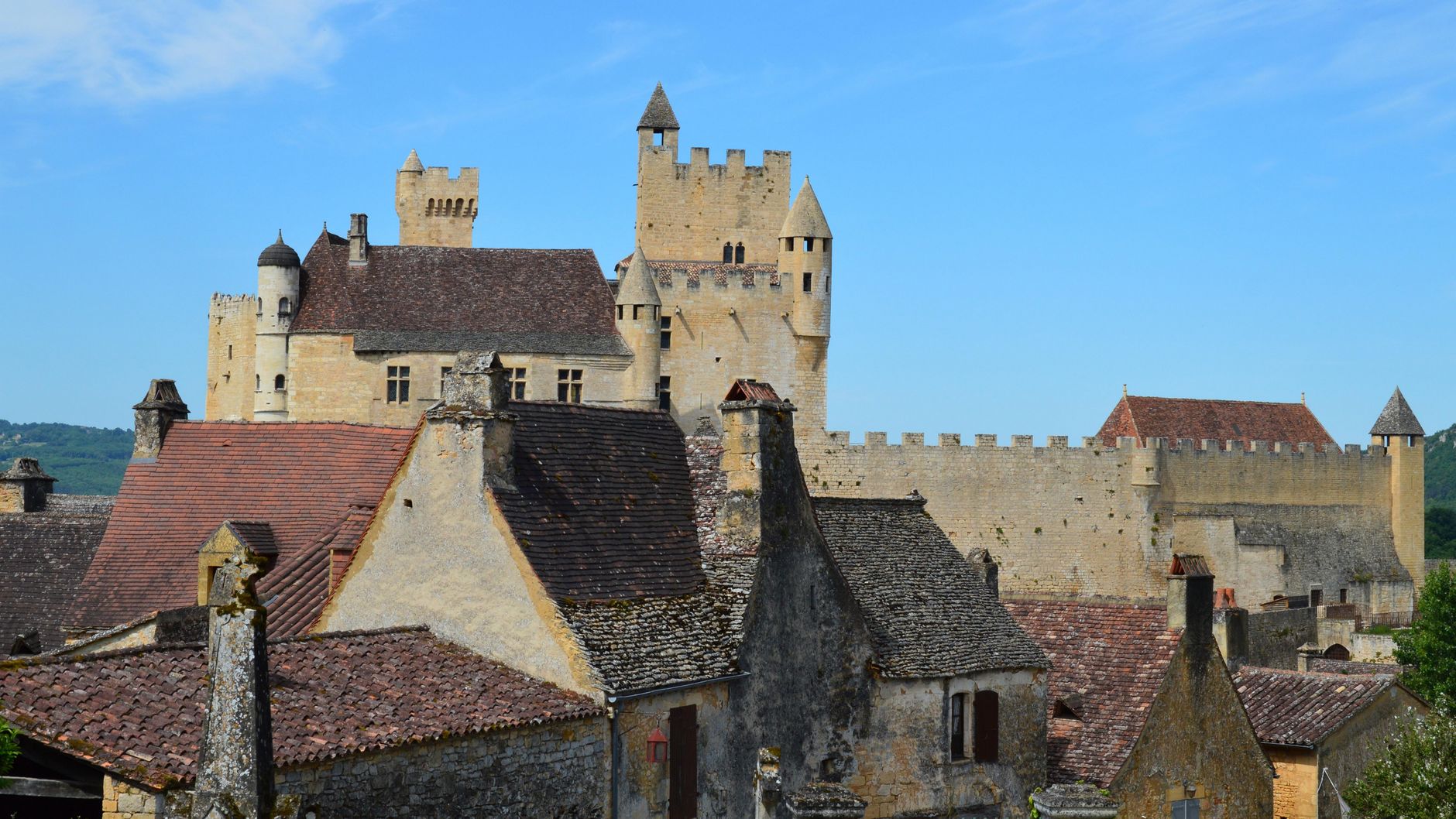
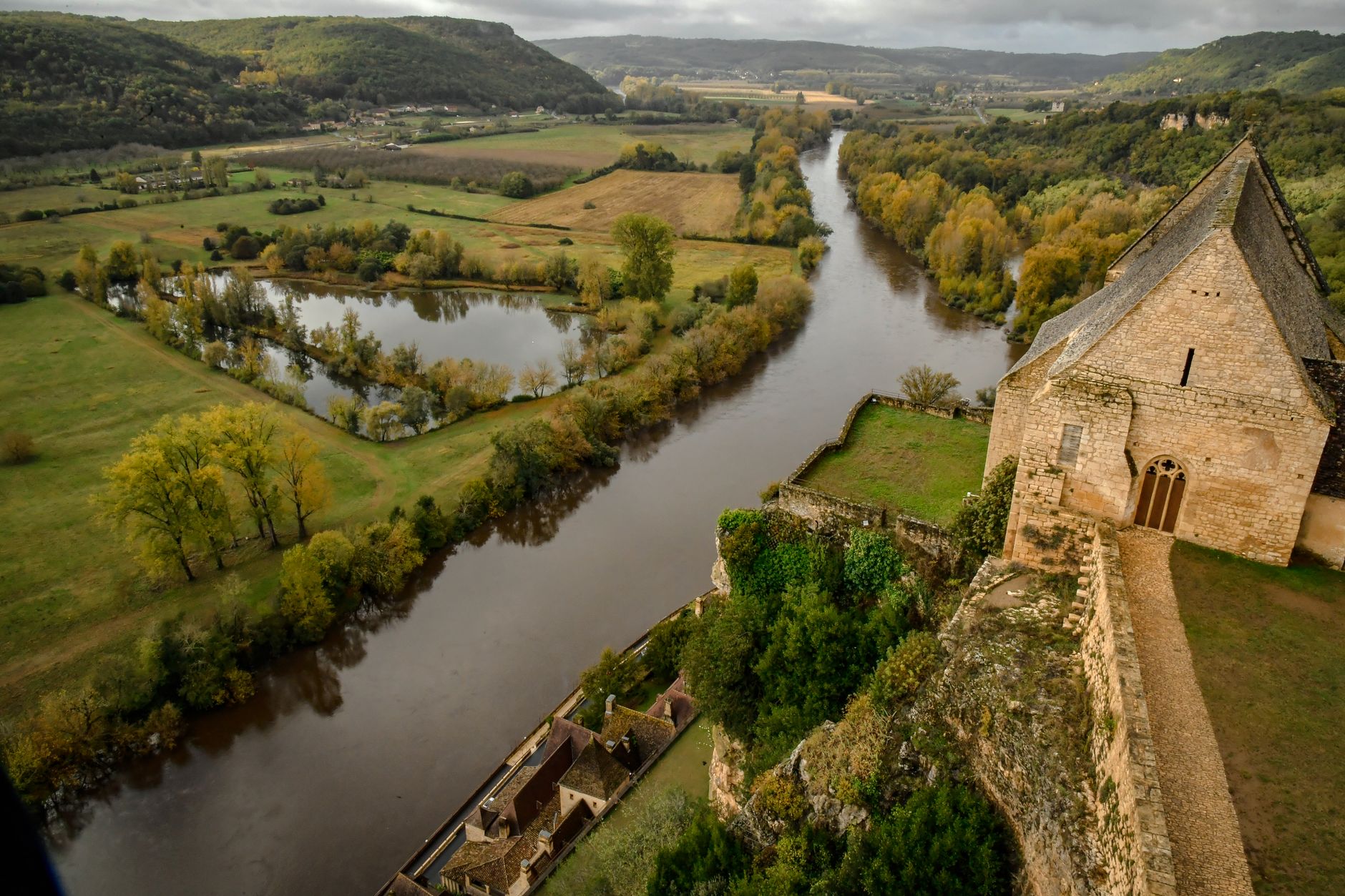
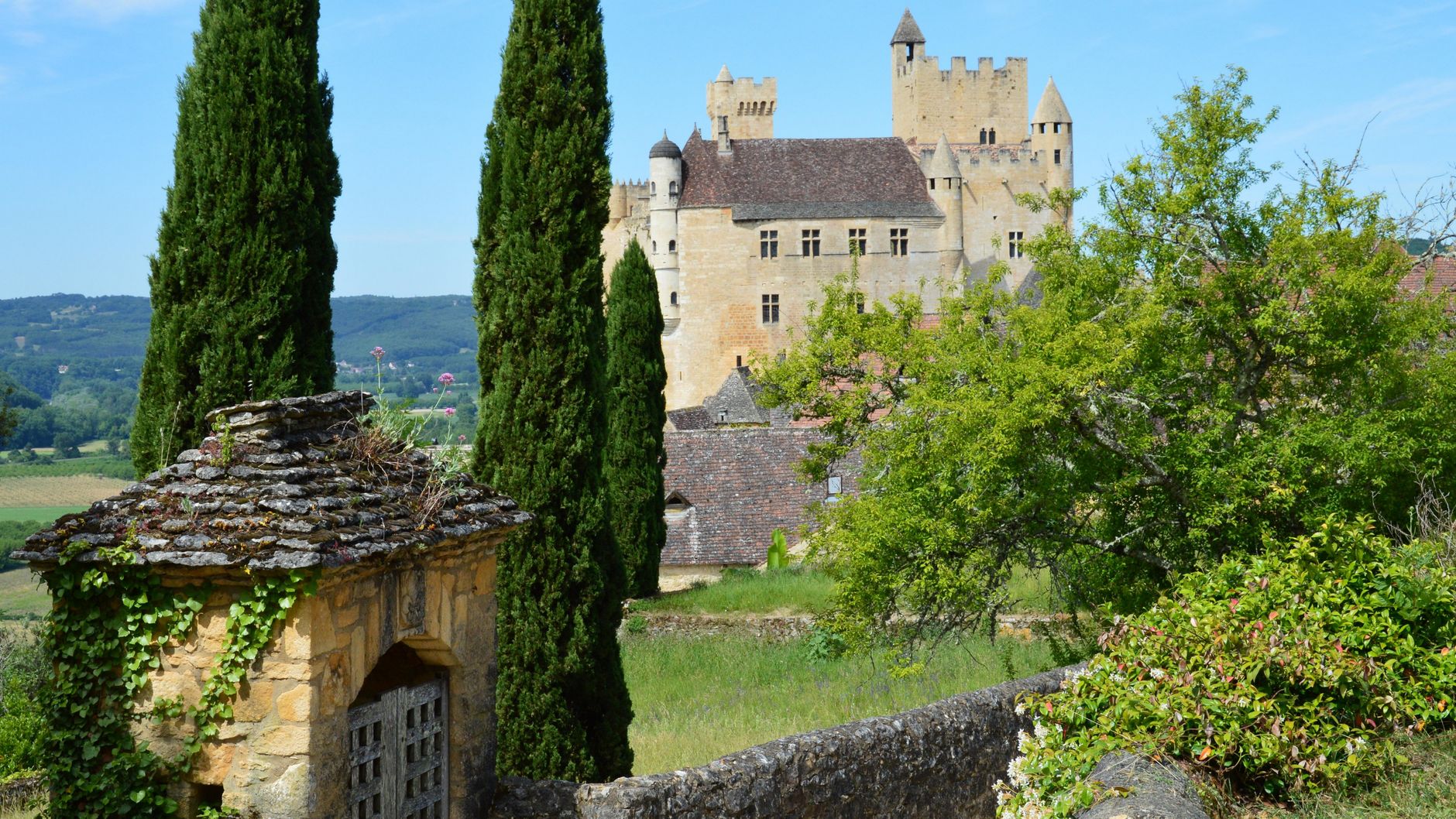
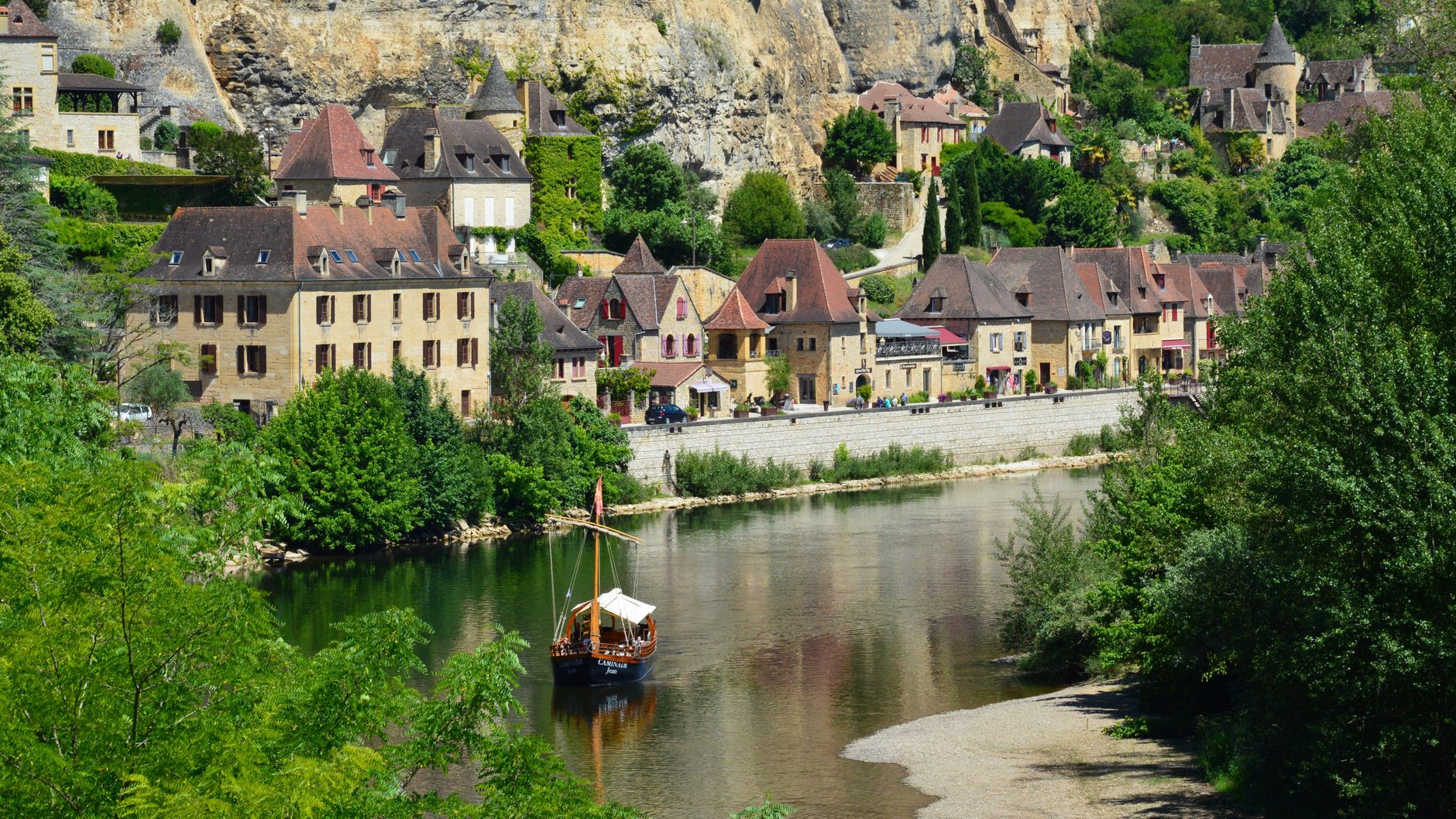
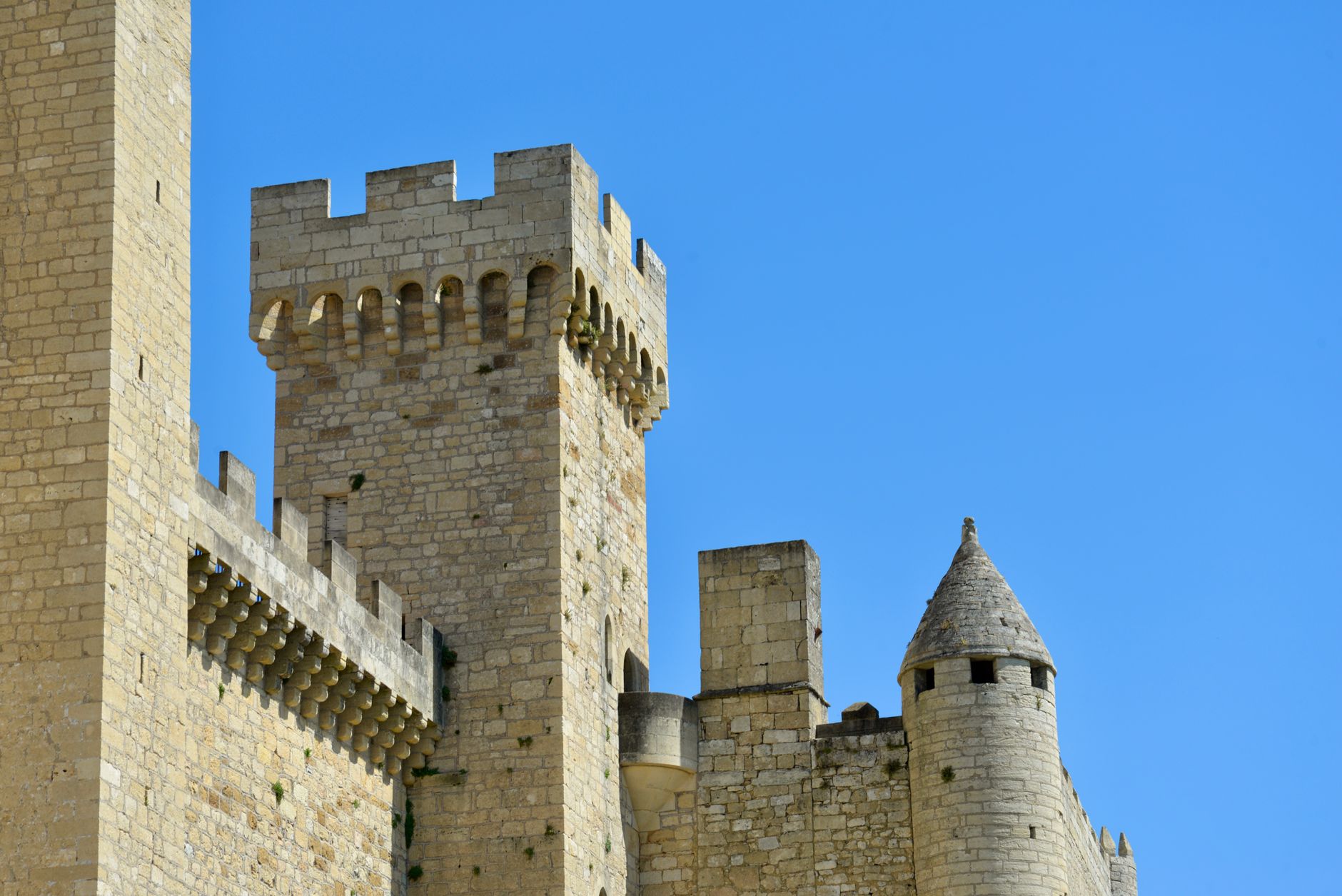
The château at Beynac goes straight up — 152 metres of limestone cliff between the river and the keep, with no gentle approach to soften the effect. From a gabarre drifting on the Dordogne below, the whole arrangement makes immediate sense: whoever held this rock controlled the water, and whoever controlled the water controlled everything moving through Périgord.
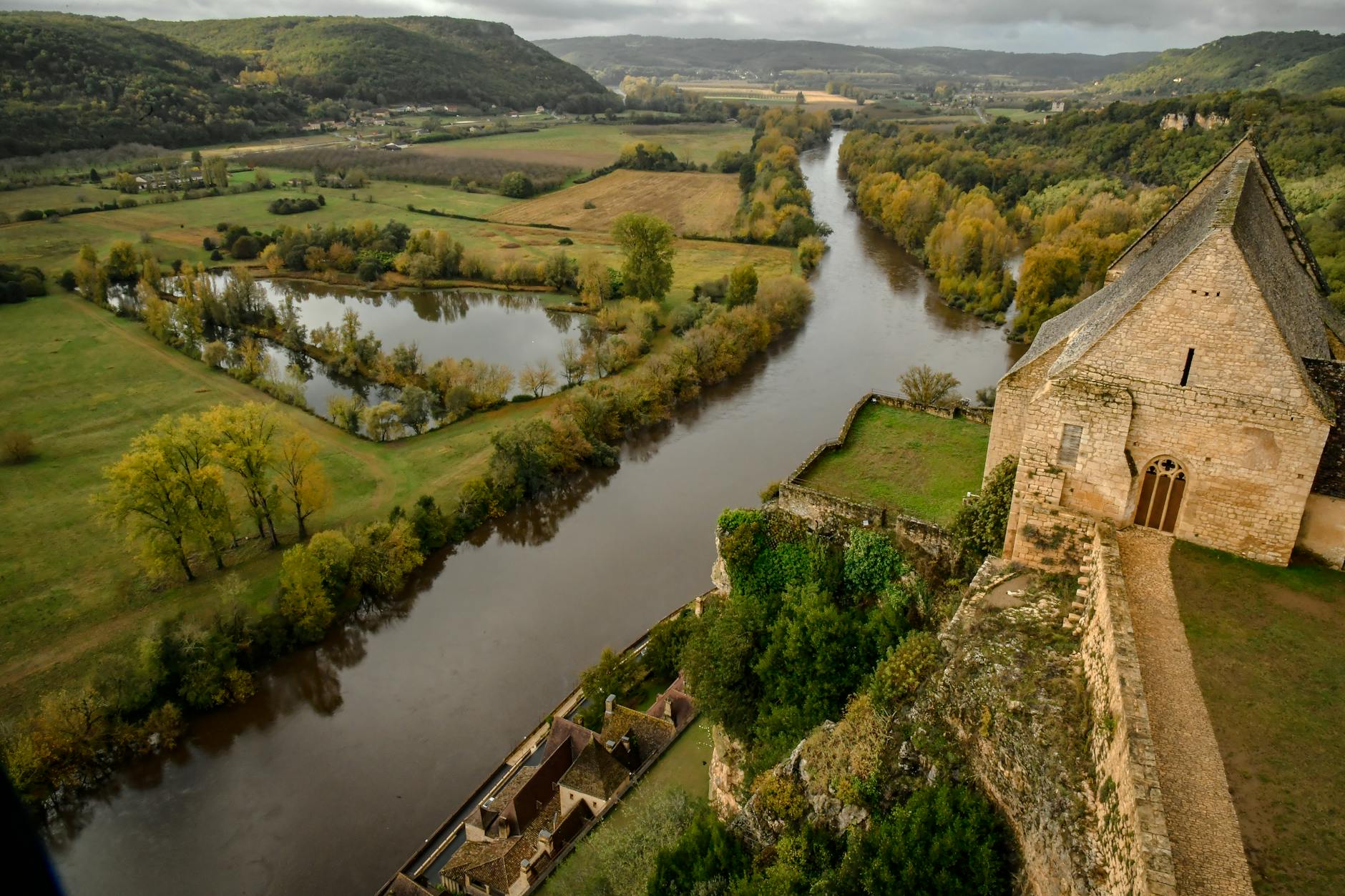
The village clings to the cliff face beneath the castle in three distinct quarters — the weavers once worked in Barri del Soucy, boats loaded and unloaded at the Port. The cobbled lanes between them are steep enough that wet weather turns them treacherous, but the viewpoint over the river bend from rue de la Laïcité is worth every careful step.
💛 What travellers fall for
People who come back tend to say the same thing: go up to the château early, before the guided-tour groups arrive, and linger in the Salle des États long enough to find the 15th-century frescoes in the oratory — a Pietà and a Last Supper tucked into a corner that most visitors walk past. Then take a gabarre on the way out, looking back up at what you just stood inside.
Experiences you don't want to miss



Deals in Beynac-et-Cazenac
Book directly at the provider
How Beynac-et-Cazenac came to be
People have been using this cliff since around 2000 BCE, and the Gauls held it to watch the wine trade moving upriver from the Mediterranean. The first documented lord, Hélie de Beynac, formalised things around 1050 with a fortified castrum; the family appears in writing in 1115, when Maynard de Beynac made a gift to Fontevrault Abbey. Richard the Lionheart inherited the castle in 1189 as Duke of Aquitaine, and Simon de Montfort seized it during the Cathar crusade — before Philippe Auguste intervened in 1217 to restore it to the Beynac line.
The castle the Beynac family built over those centuries is one of the four great baronial seats of Périgord: a massive Romanesque keep with near-vertical walls, double crenellated ramparts, double moats (one carved from a natural ravine), and a double barbican. The male line of the family died out in 1753 with Pierre, the last marquis. The château was purchased by Lucien Grosso in 1961, who began systematic restoration; it was listed as a monument historique in 1944 and opened to the public in 1966. Beynac and the neighbouring commune of Cazenac merged in 1827, and the combined village joined the Les Plus Beaux Villages de France classification in 1982.
Who and what shaped it
People who shaped it
Landmark buildings
See Beynac-et-Cazenac in motion
Plan your visit
On the map
When to go
Summers in the Dordogne valley are warm and frequently sunny, though July and August bring the most visitors alongside the heat. Spring and early autumn give you milder temperatures and quieter streets; the river light in October is particularly clear.
Right now
Background & history adapted from Wikipedia (CC BY-SA) · specs from Wikidata (CC0) · weather from Open-Meteo · map data © OpenStreetMap contributors · photos from Wikimedia Commons / Unsplash with per-image credit. No third-party reviews or social posts reproduced.