
Betws-y-Coed
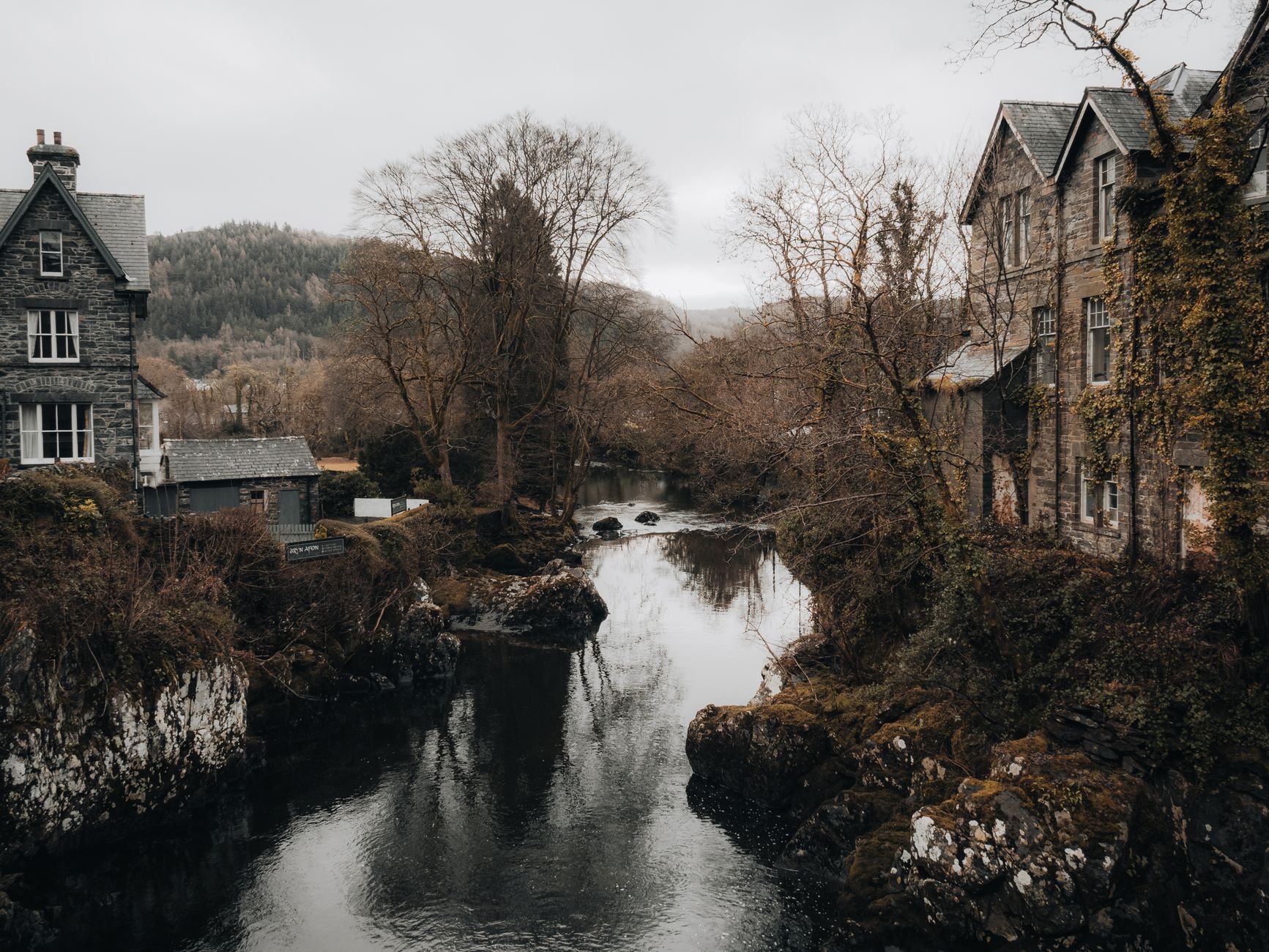
The village sits where three rivers meet under a canopy of oak and birch, and on a wet afternoon the stone bridges turn dark and the water runs loud. Betws-y-Coed — the name translates roughly as 'prayer-house in the woods' — has fewer than five hundred permanent residents, but it has been drawing painters, walkers and the curious for the better part of two centuries.
Swallow Falls, Wales's highest continuous waterfall, is a short walk from the centre. Pont-y-Pair bridge has spanned the Llugwy since 1475. The old railway station, no longer staffed, has been converted into a cafe and small shops, and the Conwy Valley line still runs through on its way between Llandudno and Blaenau Ffestiniog.
💛 What travellers fall for
People who come back tend to mention the same things: arriving by train rather than car, walking the Gwydir Forest trails early before the car parks fill, and paying the small fee at Swallow Falls in the shoulder season when the river is high and the viewing platforms are nearly empty. The village itself takes an hour on foot — the surrounding forest is where the time goes.
Experiences you don't want to miss


Deals in Betws-y-Coed
Book directly at the provider
How Betws-y-Coed came to be
A Celtic Christian community is thought to have established a monastic settlement here in the late sixth century — the 'betws' in the name refers to that founding prayer-house. For centuries the village was a quiet place of lead miners and woodland. Then in 1815 Thomas Telford drove the A5 through on its way from London to Holyhead, building the Waterloo Bridge the same year, and the place was suddenly on the map.
The railway arrived in 1868, adding around five hundred people to the population almost immediately, and with them came the Victorian appetite for landscape. John Cox had already been the first British landscape painter to stay at the Royal Oak Hotel in 1844; by the 1860s the Norwegian artist Hans Frederik Gude had settled here with his family, and the Italian painter Onorato Carlandi began what would become thirty years of repeat visits in 1880. The village has been a working artists' destination longer than it has been a walkers' one.
Who and what shaped it
People who shaped it
Landmark buildings
See Betws-y-Coed in motion
Plan your visit
On the map
When to go
July averages around 19°C in the day and rarely feels hot; February sits near 8°C with nights close to freezing. Annual rainfall is substantial — over 1,200 mm — with December the wettest month and April the most reliably dry. Pack layers and waterproofs in any season.
Right now
Background & history adapted from Wikipedia (CC BY-SA) · specs from Wikidata (CC0) · weather from Open-Meteo · map data © OpenStreetMap contributors · photos from Wikimedia Commons / Unsplash with per-image credit. No third-party reviews or social posts reproduced.