
Basilika St. Mang
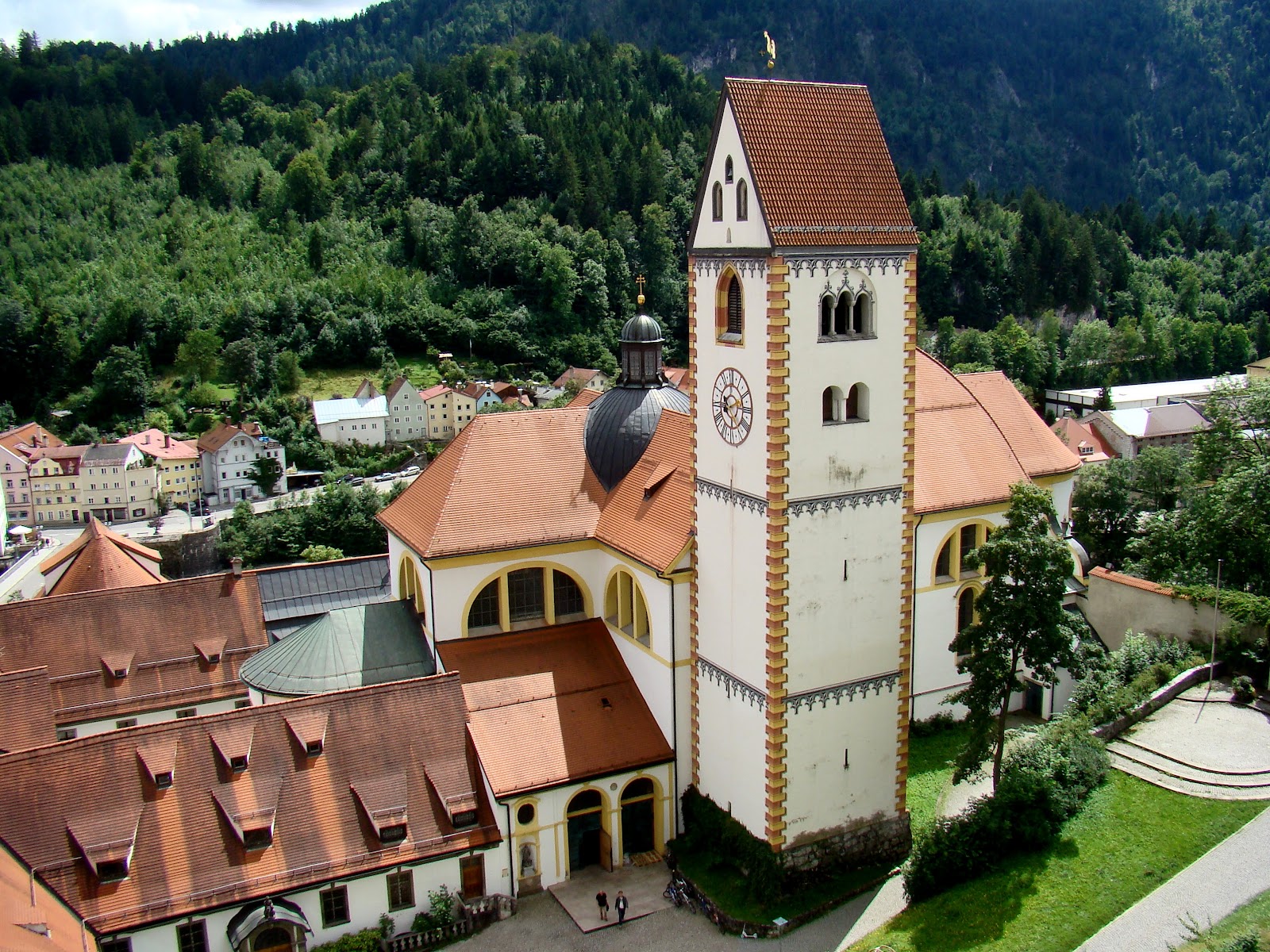
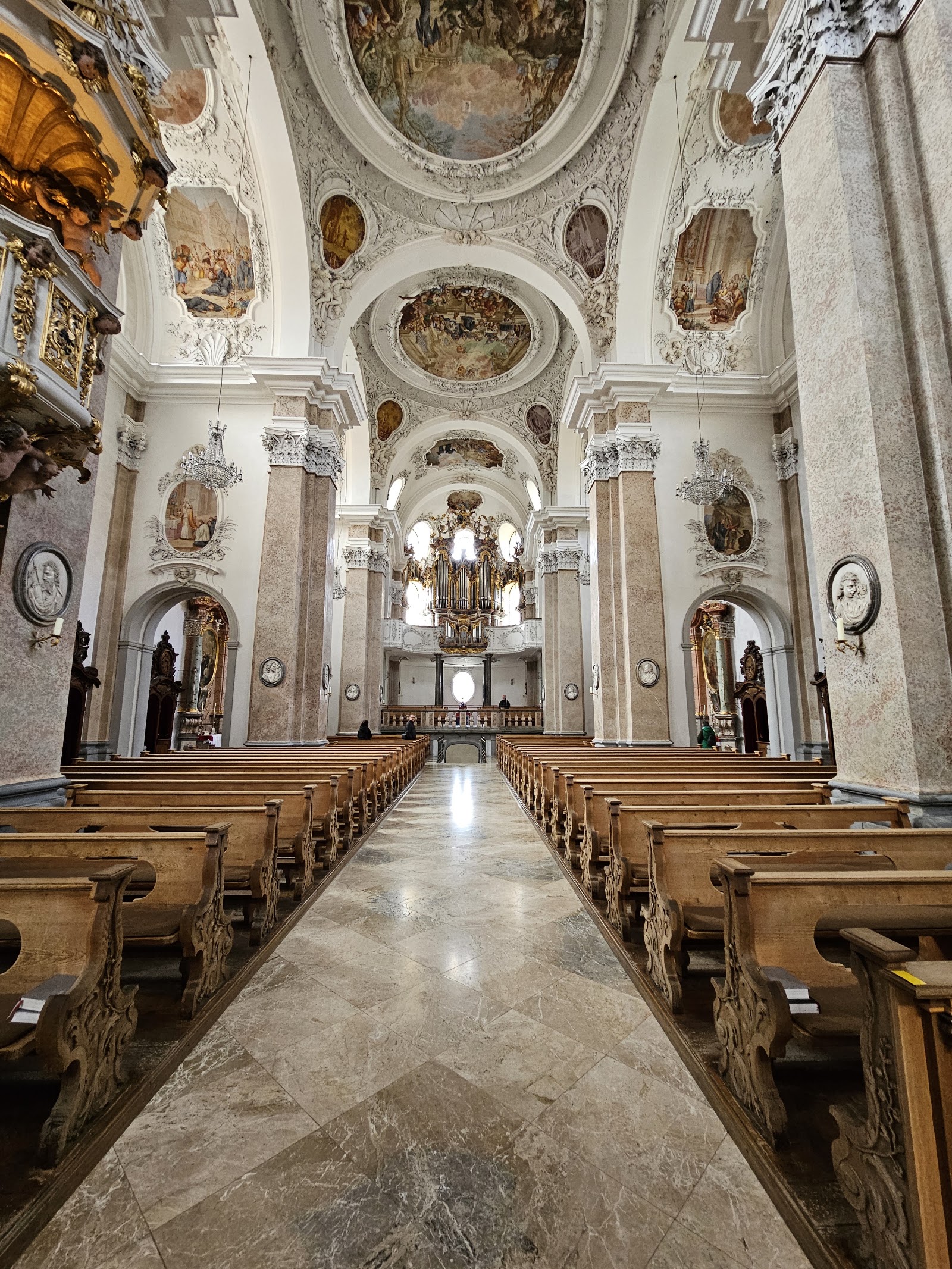
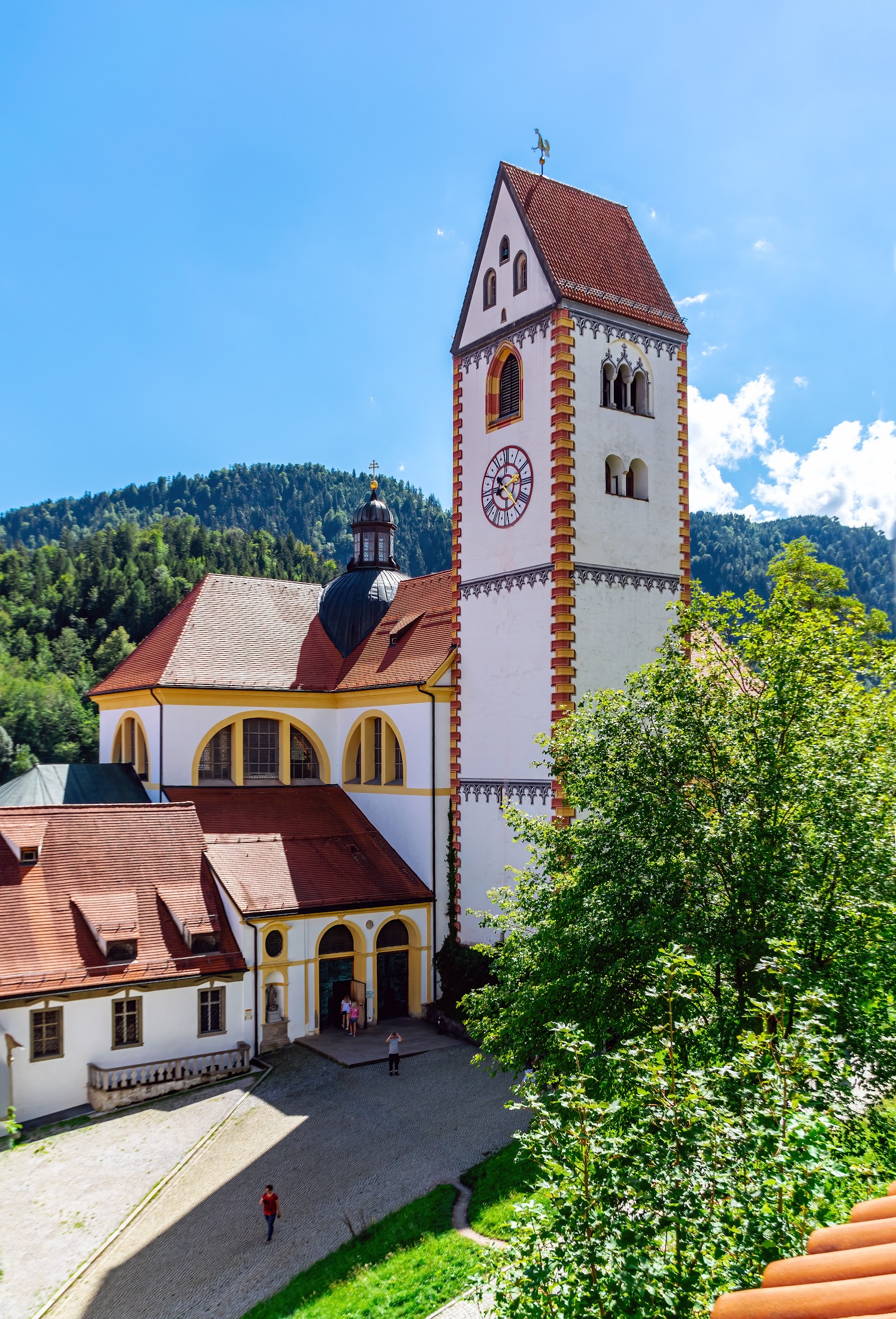
At the top of a slight rise from Füssen's old town, the Baroque façade of St. Mang stops you before you've even reached the door. The church grew from a cell and chapel that Saint Magnus — a hermit from the Abbey of Saint Gall — built here around 725, on a rocky outcrop above the Lech. What stands today is the work of architect Johann Jakob Herkomer, who rebuilt the medieval basilica between 1701 and 1717 on Venetian models, filling it with Andreas Faistenberger's stucco, Anton Sturm's high-altar figures, and ceiling frescoes that follow Magnus's life from start to end.
💛 What travellers fall for
People who come back tend to seek out the Anna Chapel, reached through the Museum of the City of Füssen, where Jakob Hiebeler's 1602 Dance of Death — twenty scenes across ten wooden panels — runs along the wall with an unsettling quiet. The dragon figures holding candles near the choir stalls also catch a second look. Then there's the Romanesque crypt underneath, older than everything else, its Ottonian frescoes still legible in the low light.
The story behind Basilika St. Mang
Magnus arrived on this rocky ledge above the Lech sometime in the early eighth century, building a cell and a chapel dedicated to Salvator Mundi. A monastery followed in the first half of the ninth century, under the Prince-Bishops of Augsburg, and Magnus was canonised around 845 when Bishop Lanto elevated his remains to a new grave.
The Baroque transformation came under Abbot Gerhard Oberleitner (1696–1714), who commissioned Herkomer to rebuild the complex. Construction ran from 1696 to 1726. The monastery was dissolved on 11 December 1802 and formally wound up by 1 March 1803; the church passed to the Füssen parish in 1837. The town acquired the abbey buildings in 1909, converting the south wing into the city museum and the north wing into the town hall.
Good to know
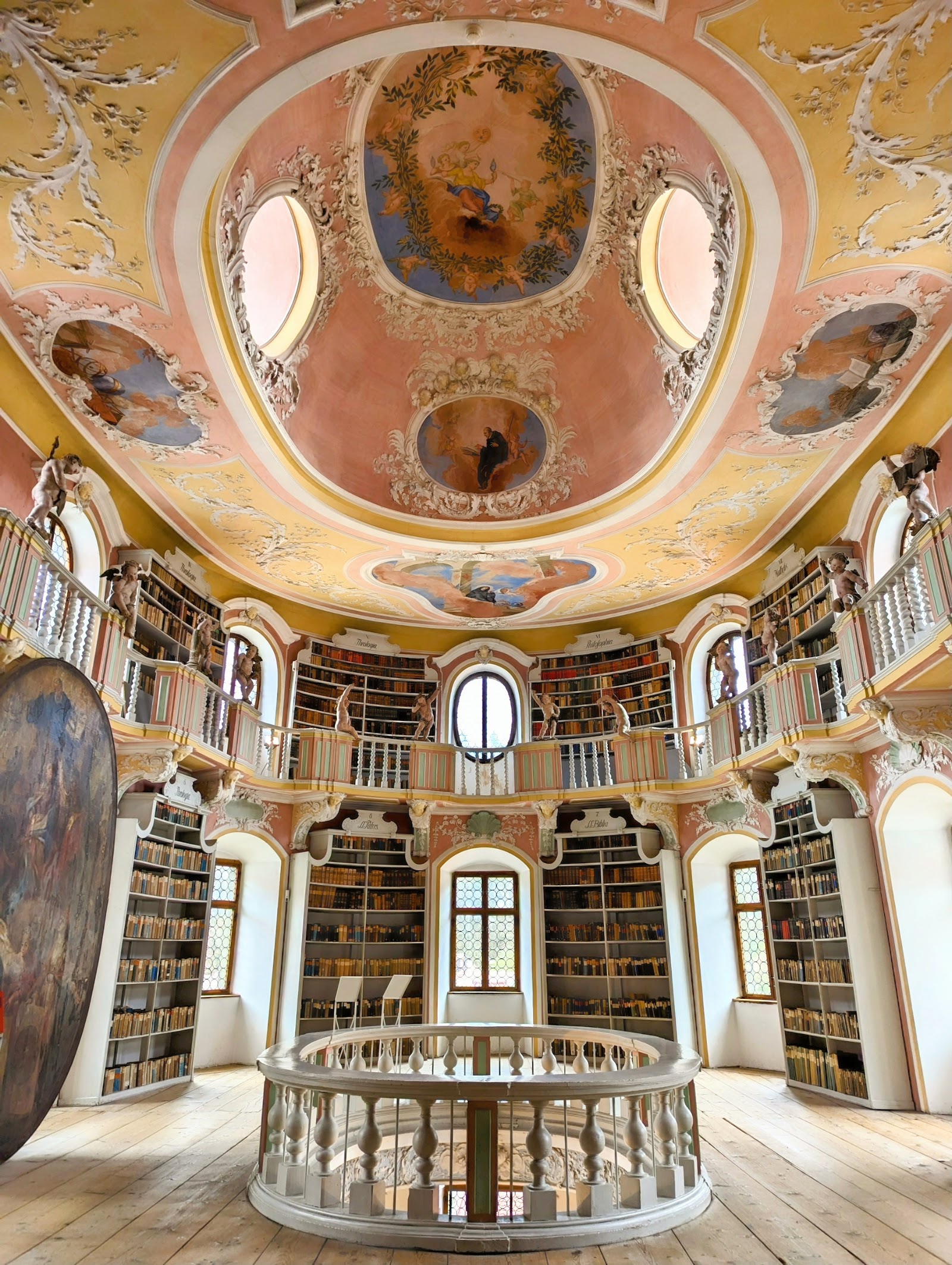
Entry to the church is free; the crypt and the museum in the monastery's south wing charge a small fee. The museum keeps limited winter hours (Friday–Sunday afternoons, November through March). Bring a layer — the Baroque library inside runs noticeably cold year-round.
Where is Basilika St. Mang?
More tickets & tours for Basilika St. Mang
Book directly at the provider
What travellers say about Basilika St. Mang
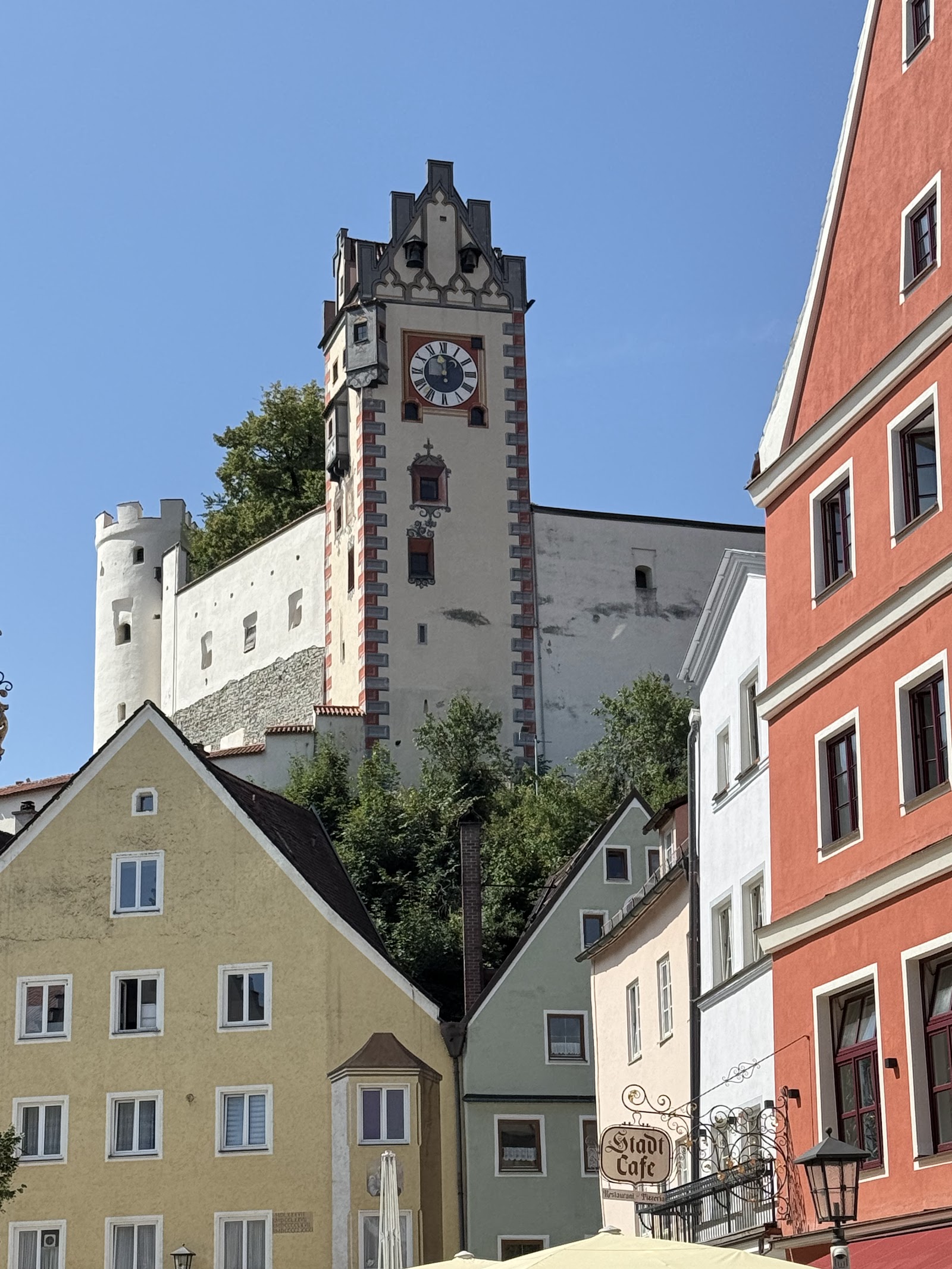
A beautiful designed Baroque style church opposite to Hohes Schloss and Stadts Park. Both the exterior and interior are an architectural wonder from that period. Perfect place place to have a peaceful reflection of ones mind and thought.
early baroque style church dated to the 18th century with rococo style altars. impressive interior and organ room. theres a crypt at the end of the church with facinating statues.
The whole place is gorgeous, only thing I was sad about that there wasn't any English translations on the boards, so unfortunately had to Google things about the monastery :( but overall I recommend visiting this place, for only 9€ we went to the monastery and the castle nearby.
An absolutely beautiful church next to the Hohes Schloss. The ceiling paintings are amazing and the organ balcony is just gorgeous. For such a small town, this church has the same level of ornate plasterwork and gold details as some of the cathedrals in Munich and larger cities. It’s a great spot to stop and admire on your way down from Hohes Schloss.
The church is worth a stop to see the gorgeous Baroque interior. It’s also right next to the castle and a park,
More of Füssen
Discover where to stay, what to do and the best deals for your trip.
Explore Füssen →More attractions in Füssen
All of Füssen →
Background adapted from Wikipedia (CC BY-SA) · map data © OpenStreetMap contributors · ratings & place photos via Google · other photos with per-image credit. Ticket links may earn us a commission at no extra cost to you.