
Basilica of Begoña
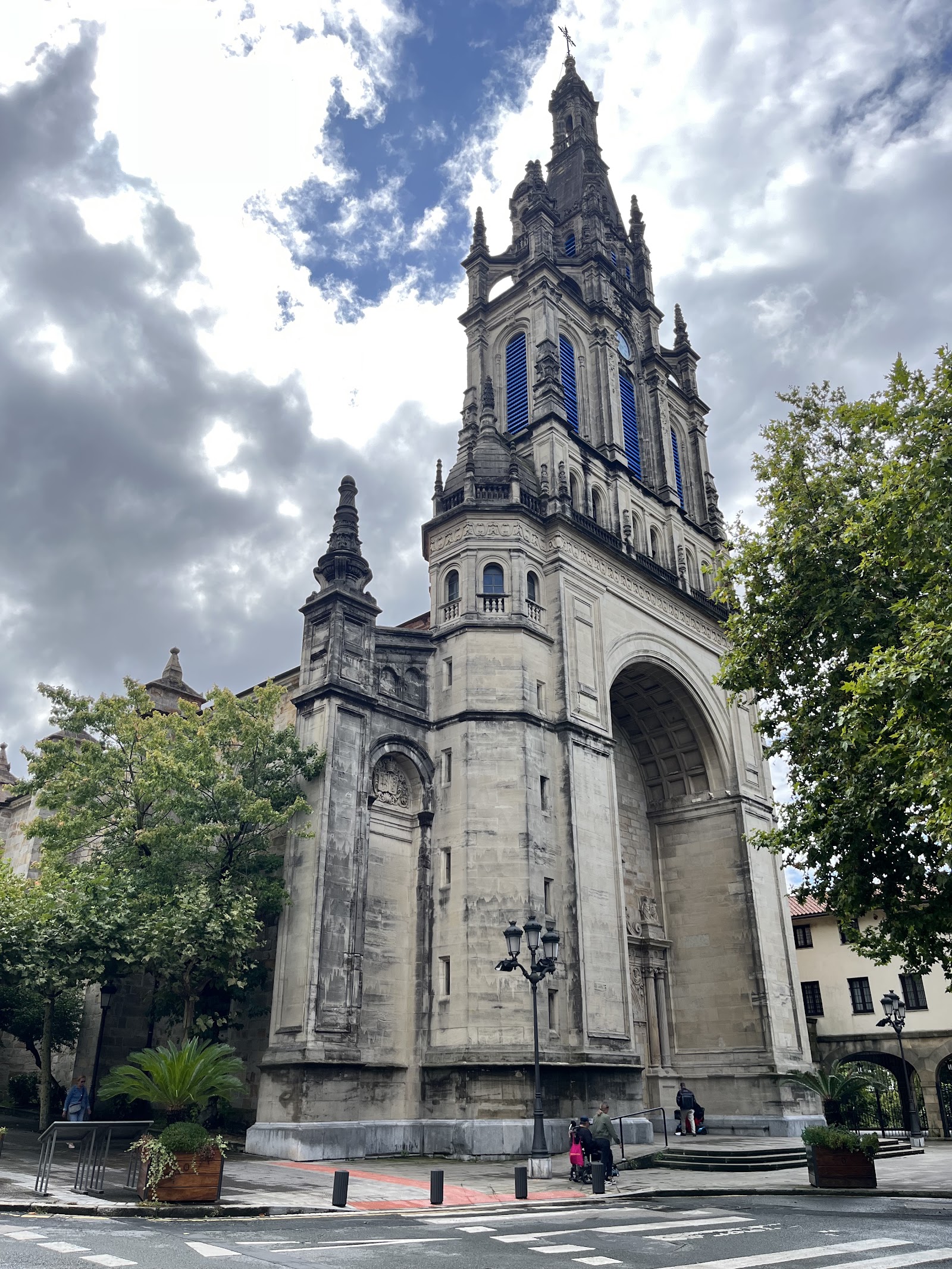
The Basilica of Begoña sits on a hill above Casco Viejo, reached most memorably by climbing the long stone staircase of the Calzadas de Mallona from Plaza de Unamuno. At the top, the city drops away behind you and the basilica's open belfry — housing twenty-four bells, the heaviest a full tonne, cast in Switzerland — rises against the Bilbao sky.
Inside, the Gothic nave stretches back through three aisles of vaulted stone, and at the far end a polychrome wooden Virgin presides over the Neo-Classical altarpiece. The sculpture is roughly seven hundred years old — at least two centuries older than the church built to house her.
💛 What travellers fall for
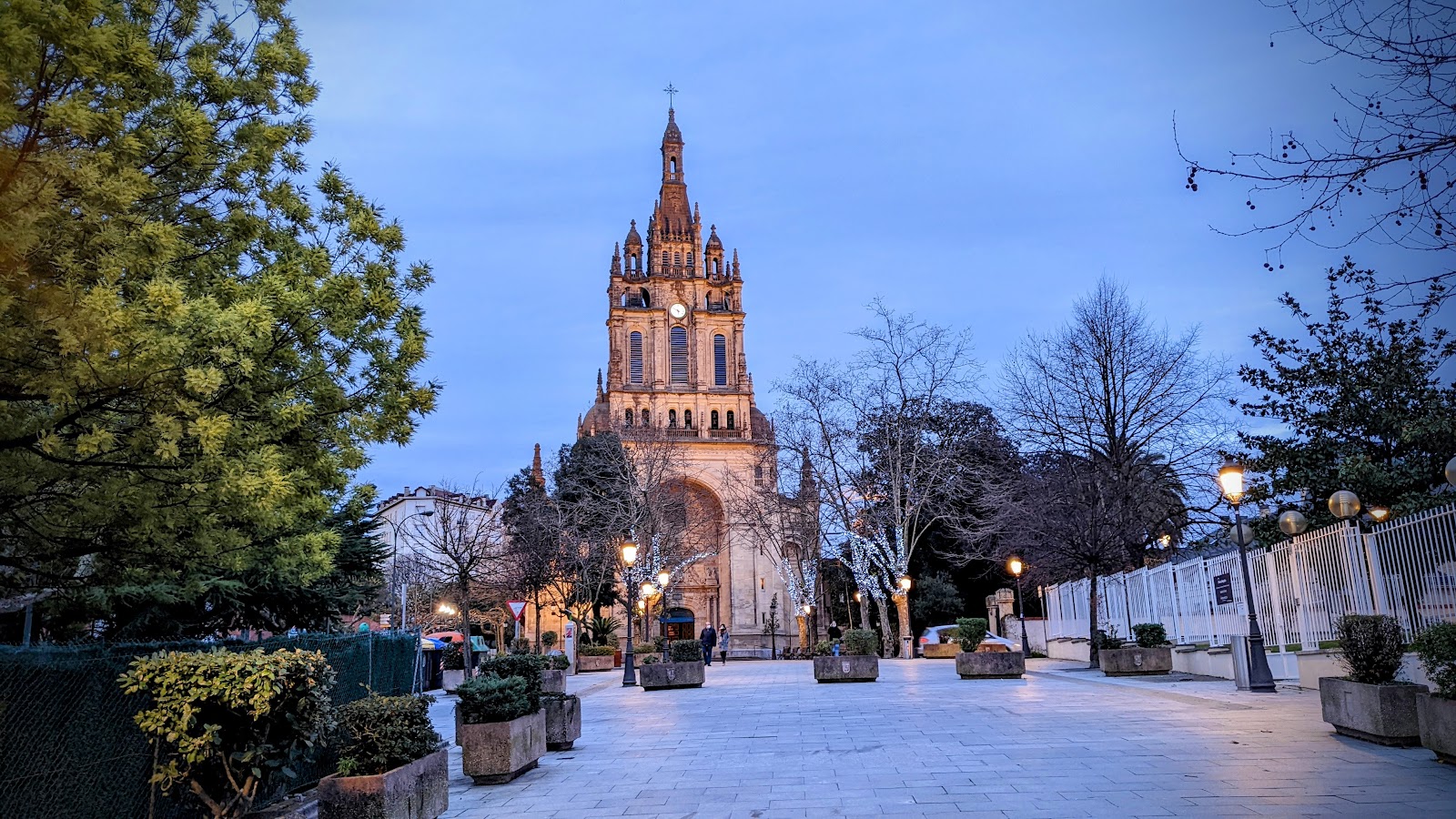
People who come back tend to time a visit around the bells: the tower produces seven different melodies and the sound carries across the hillside in a way that stops you mid-step. The climb up Calzadas de Mallona is also worth doing slowly — the staircase itself is a quiet counterpoint to the streets below.
The story behind Basilica of Begoña
Construction began in 1511 to a design by Sancho Martínez de Arego, and the basilica took a full century to complete — the vaulted three naves weren't finished until the 1600s. The mid-16th century main entrance reflects the influence of Gil de Hontañón's transitional style, Renaissance in form where the rest of the structure is purely Gothic. Notably, the pillars bear the emblems of Bilbao's merchant guilds, not aristocratic coats of arms — this was a church funded by the city's traders.
The building has taken serious damage across its history: Napoleon's troops looted it in 1808, and the Third Carlist War in 1873 brought a bombardment that collapsed the bell tower onto the nave. The current tower and exterior date to a restoration by José María Basterra between 1902 and 1907. The basilica was elevated to Minor Basilica status on March 27, 1908.

Good to know
Open daily 9:30 a.m.–1:30 p.m. and 4:30 p.m.–8:30 p.m.; entry is free. Walk up from Plaza de Unamuno via Calzadas de Mallona, or take Metro to Santutxu (Zabalbide exit). The historic Ascensor de Begoña has been closed since 2014 with no confirmed reopening date — don't count on it.
Where is Basilica of Begoña?
More tickets & tours for Basilica of Begoña
Book directly at the provider
What travellers say about Basilica of Begoña
This basilica is dedicated to Our Lady of Begoña, the patron saint of Bilbao and the wider Biscay region. The church was originally founded in the 16th century, with most of its present structure completed during the 17th century. Architecturally, the basilica reflects a transitional style, bridging Late Gothic traditions with emerging Renaissance and Baroque elements. The basilica holds deep cultural and spiritual significance, especially as the focal point of the Festividad de la Amatxu de Begoña, celebrated each year on October 11. On this day, locals gather to honor the Virgin of Begoña.
I walked up the steps to visit the Begona Basilica. It is worth visiting if you are in Bilbao. The basilica itself is not as big as you’d expect but the altar is stunning. There are several large paintings on the walls which are interesting. I am here during their August holiday and there are food stalls lining outside with all kind of baked goods.
Begonako Basilika is up the hill and it worth a visit in sunset time especially. Beautiful architecture!
A relatively tough climb to get here, I chose to take the stairs instead of the elevator and was glad I did. The church is very beautiful both inside and out and I very much enjoyed my short time coming here.
An imposing Church perched on a hill overlooking the centre of Bilbao. It backs onto some beautiful gardens with fine views of the city and is located along the Camino de Norte pilgrim route.
More of Bilbao
Discover where to stay, what to do and the best deals for your trip.
Explore Bilbao →More attractions in Bilbao
All of Bilbao →
Background adapted from Wikipedia (CC BY-SA) · map data © OpenStreetMap contributors · ratings & place photos via Google · other photos with per-image credit. Ticket links may earn us a commission at no extra cost to you.