
Barrio de Santa Cruz
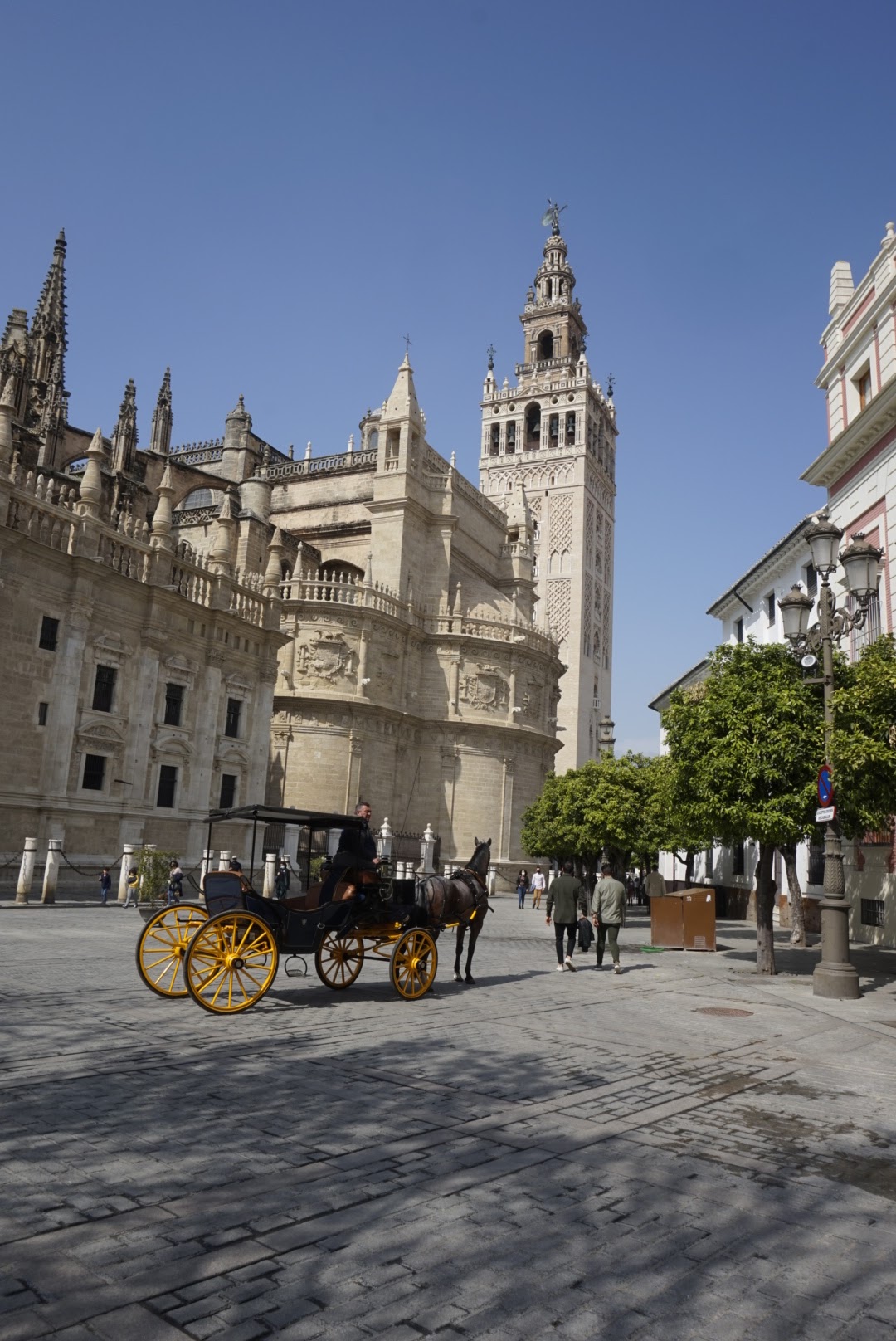
Some of Santa Cruz's alleys are barely wide enough for one person to pass through — a clue to how old the logic of this place really is. The lanes weren't designed for cars, or tourists, or even the 18th-century renovators who tried to tidy them up. They were laid out for a medieval Jewish community that Ferdinand III of Castile settled here after conquering Seville from the Almohads in 1248.
Today the quarter holds the Cathedral, the Real Alcázar, the Hospital de los Venerables, and the Museo del Baile Flamenco — each with its own story. But the neighbourhood itself is the thing: a palimpsest of synagogues turned churches, plazas built on demolished floors, and orange trees that have no interest in your itinerary.

💛 What travellers fall for
People who come back tend to anchor themselves differently each time — a coffee near the Plaza de Santa Cruz in the morning before the tour groups arrive, a slow circuit of the Hospital de los Venerables courtyard, an evening performance at the Museo del Baile Flamenco. The neighbourhood rewards the unhurried: the details are in the tilework, not the signage.
The story behind Barrio de Santa Cruz
Ferdinand III handed this district to Seville's Jewish population after the Reconquest of 1248 — a community second in size on the Iberian Peninsula only to Toledo's. For two and a half centuries it functioned as a Jewish quarter, its synagogues and streets forming a distinct city within the city. The Alhambra Decree of 1492 expelled the Jews from Spain entirely, and Santa Cruz fell into long decline.
A wave of 18th-century urban renewal converted a former synagogue into the Church of Saint Bartholomew, and the Mudéjar parish church of Santa Cruz — itself built over a synagogue floor — was demolished during the Napoleonic Wars, leaving its old floor as the present plaza. The neighbourhood's final reinvention came after the Ibero-American Exhibition of 1929, which funded the reforms that shaped the quarter visitors walk through today.
Good to know
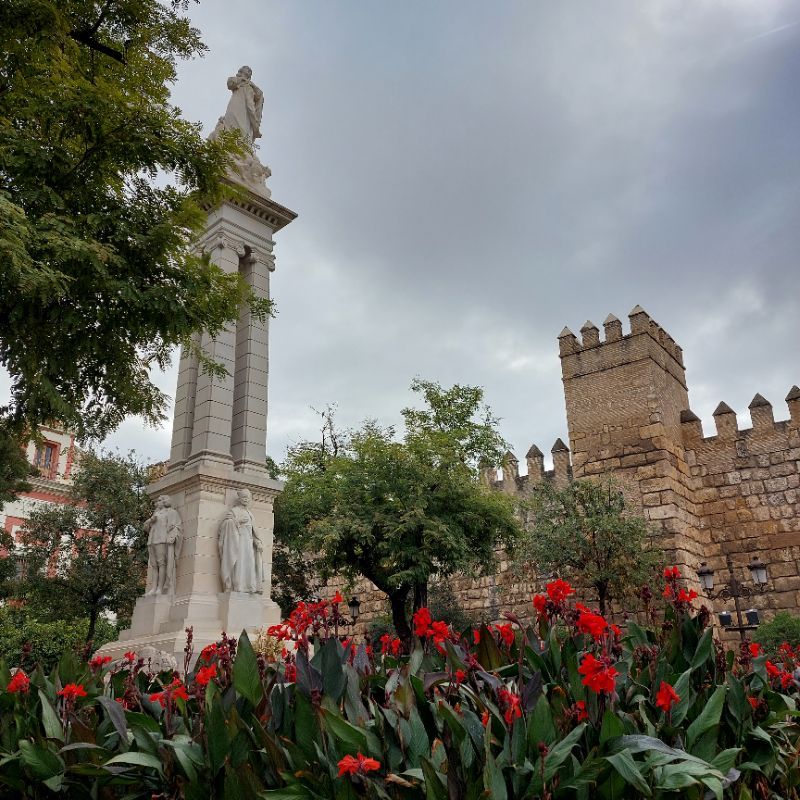
Santa Cruz is best on foot — the MetroCentro tram runs along Avenida de la Constitución to the cathedral's edge, and from Sevilla Santa Justa station a bus or taxi gets you to the historic centre quickly. The neighbourhood itself is free to enter; individual monuments charge separately. Allow half a day if you plan to go inside anything.
Seville runs hot, and Santa Cruz in July or August means serious heat by mid-morning. Spring — particularly April and May — gives you warmth without the full weight of summer. The narrow streets cast shade for much of the day, which makes an afternoon wander more manageable than it sounds, but carry water regardless.
Where is Barrio de Santa Cruz?
Location
- In Seville
- 37.3847, -5.9875
- Open in Google Maps
More tickets & tours for Barrio de Santa Cruz
Book directly at the provider
More of Seville
Discover where to stay, what to do and the best deals for your trip.
Explore Seville →More attractions in Seville
All of Seville →
Background adapted from Wikipedia (CC BY-SA) · map data © OpenStreetMap contributors · ratings & place photos via Google · other photos with per-image credit. Ticket links may earn us a commission at no extra cost to you.