
Barceloneta Beach
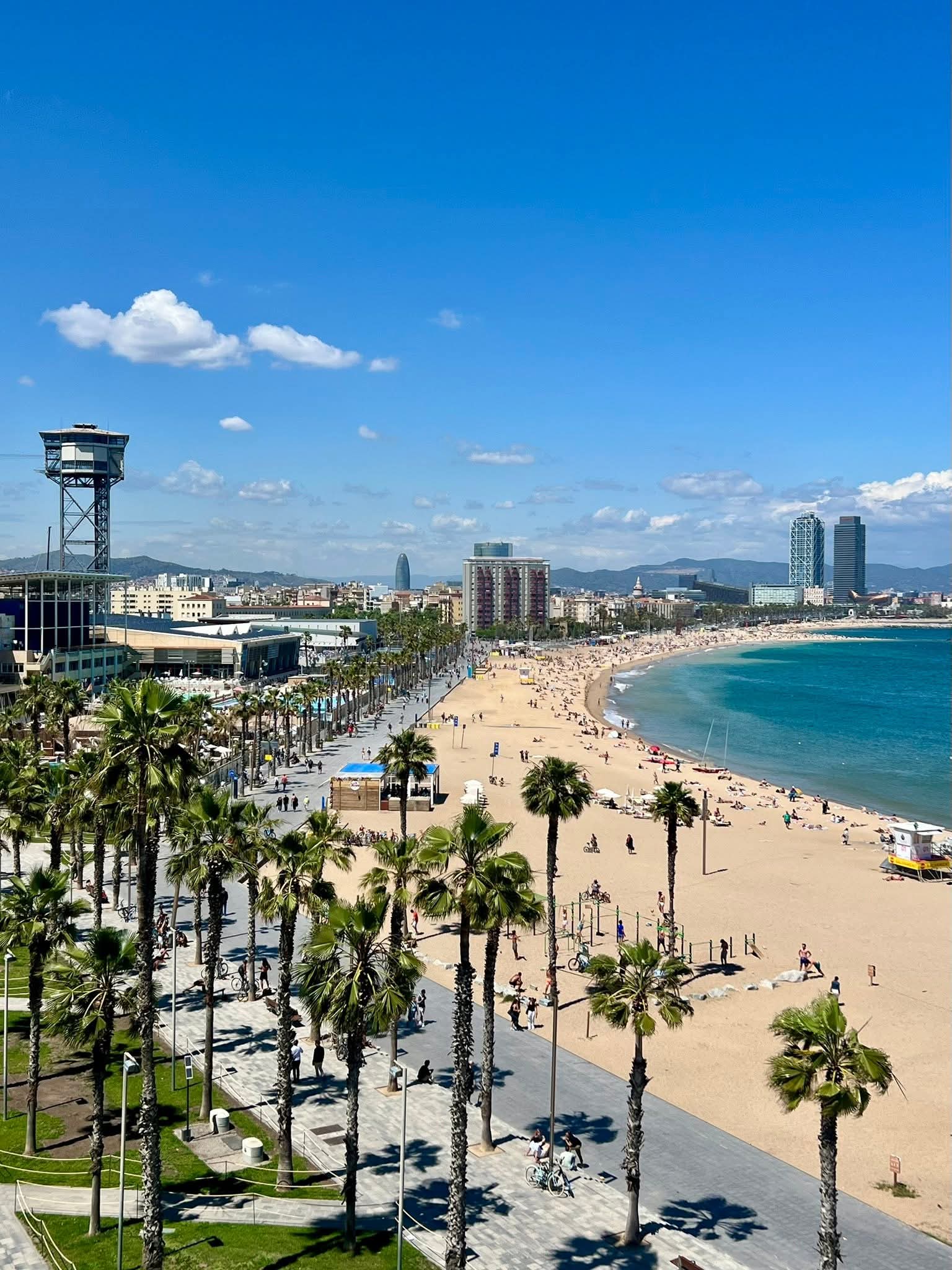
Stand on Barceloneta Beach at seven in the morning and you have it mostly to yourself — a 422-metre strip of imported Egyptian sand, the Mediterranean pale and flat, Frank Gehry's gilded fish sculpture catching the first light to the south. By noon, the calculus changes entirely.
This is Barcelona's working shoreline, reshaped for the 1992 Olympics into the promenade-and-sand arrangement you walk today. Rebecca Horn's iron tower sculpture, 'L'estel ferit' — four stacked cubes leaning slightly, like something about to topple — stands mid-beach as a deliberate memorial to the low-rise neighbourhood that once crowded this edge of the city.
💛 What travellers fall for
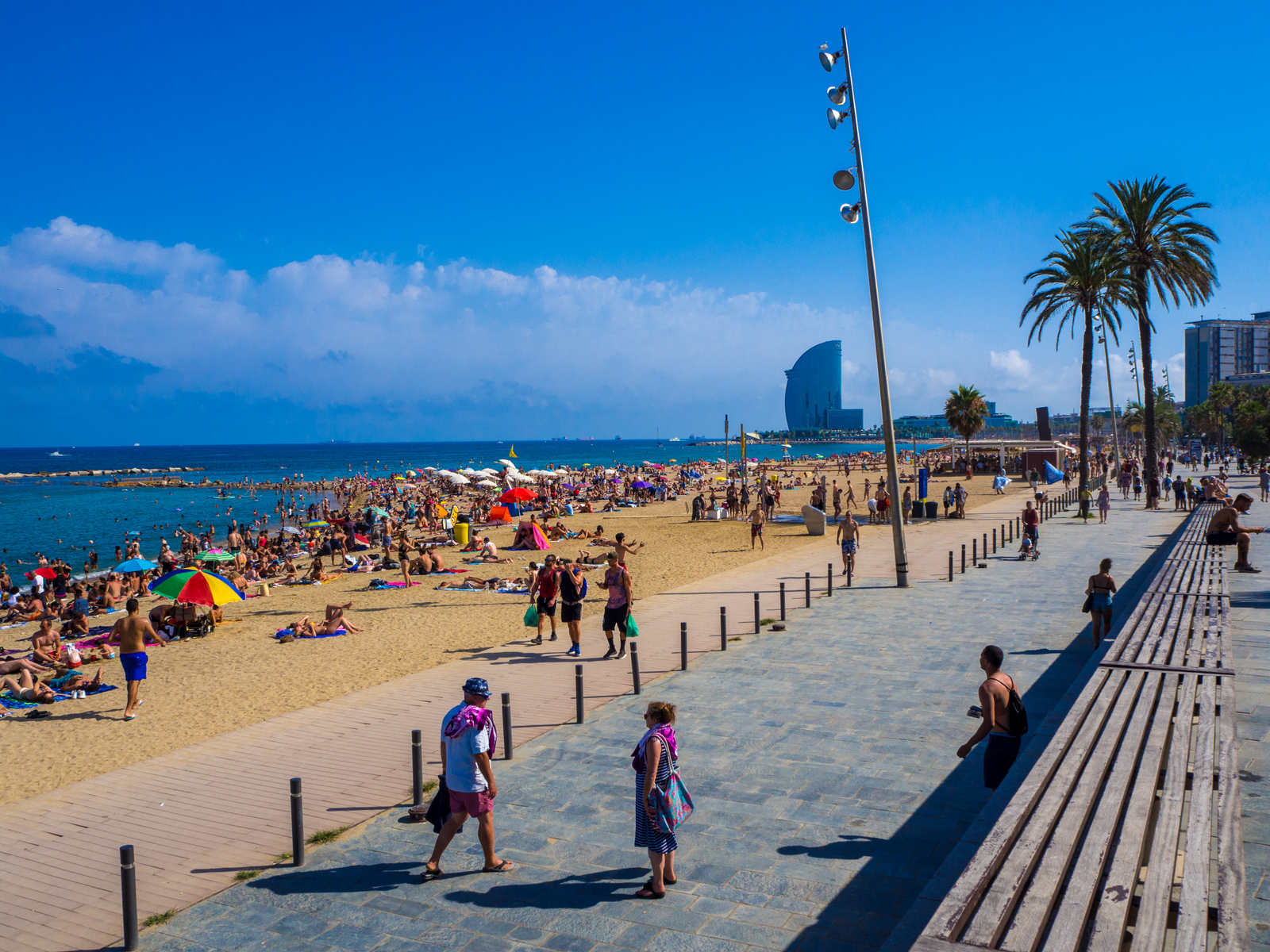
People who come back tend to arrive before 9 AM, claim a spot near the water, and stay through the quiet morning hours. The Barceloneta metro (L4) drops you five minutes away. The Carmen Amaya Fountain at Carrer Sant Carles — two guitarists, three dancers in bronze — is easy to miss on the walk down and worth a pause.
The story behind Barceloneta Beach
The land Barceloneta sits on didn't fully exist until the 1600s, when a dike connecting the island of Maians to the city caused gradual silting. Even then, the neighbourhood remained largely empty until the mid-18th century, when residents displaced by the demolition of the Ribera district — cleared to build the Ciutadella fortress — needed somewhere to go. Engineer Juan Martín Cermeño designed the grid of low-rise buildings that gave the barri its character. Carmen Amaya, the flamenco dancer, was born here in 1913 in a Gypsy settlement on the beach's edge.
The beach itself, as a public amenity, is essentially a 1992 invention. The Olympic transformation cleared waterfront shantytowns, imported sand from Egypt, built the promenade, and planted the palms. The Hotel Arts — Bruce Graham's 154-metre steel-and-glass tower — went up the same year.
Good to know
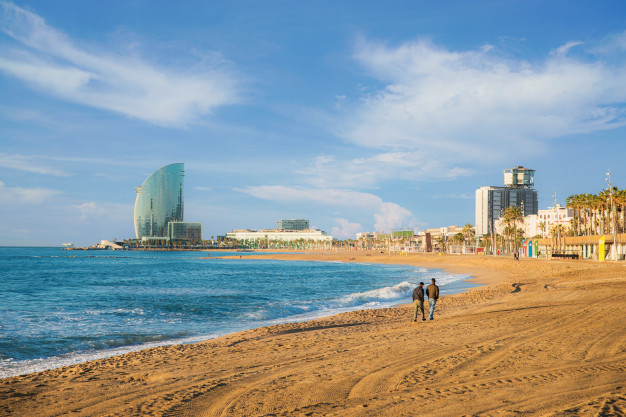
Take the L4 to Barceloneta station and walk straight down Passeig de Joan de Borbó. Entry is free; sun loungers run €10–15 in season. Smoking has been banned on Barcelona beaches since July 2022. Arrive early — crowds build fast after 10 AM.
Summer runs warm, with July and August averaging highs around 29–30°C and a coastal breeze that makes the heat manageable. The swimming season stretches from June through October; spring visits in April and May are quieter and mild, with fewer crowds and comfortable temperatures for walking the promenade.
Where is Barceloneta Beach?
More tickets & tours for Barceloneta Beach
Book directly at the provider
What travellers say about Barceloneta Beach
Barceloneta Beach has a very energetic and lively atmosphere that perfectly matches the vibe of Barcelona. The beach is wide, clean, and always full of activity — people relaxing, playing volleyball, cycling, skating, and enjoying the Mediterranean weather. What I liked most was the mix of city life and beach culture. You can spend time by the sea and within minutes be surrounded by cafés, restaurants, and street performers along the promenade. It feels active both during the day and at night. The sunset here is beautiful, especially with the golden light reflecting on the water and people gathering along the shore. It’s also a great place for photography and casual evening walks. A few tips: • Early morning is calmer and less crowded. • Keep an eye on personal belongings because tourist areas can attract pickpockets. • The beachfront promenade is great for walking or cycling. • Plenty of restaurants and small shops nearby. A must-visit spot if you want to experience the relaxed coastal side of Barcelona.
Barceloneta Beach is the most famous and lively beach in Barcelona, located just minutes from the historic city center. It is known for its wide promenade, vibrant atmosphere, and excellent seafood and tapas restaurants. It's the top spot for both locals and tourists to swim, sunbathe, and enjoy outdoor sports.
Wonderfull beach and full activity all year around. It has nice places for volleyball, an outdoor gym and also room for swiming and surfing. Only downside is the sand on the beach and the bottom is full of sharp rocks some places.
You haven't truly experienced Barcelona until you’ve taken a stroll along Barceloneta Beach. It’s the perfect place to soak up the Mediterranean sun and enjoy the sea breeze. The Experience: The promenade is incredibly lively, filled with people walking, skating, and enjoying the outdoor terraces. The view of the iconic W Hotel against the blue sky is breathtaking—perfect for photos! The sand is well-maintained, and the atmosphere is always energetic. The Atmosphere: I love the mix of locals and tourists here. It’s a great spot to just sit and watch the world go by. There are plenty of Chiringuitos (beach bars) where you can grab a refreshing drink or some quick Tapas. Practical Tips: • Watch your belongings: Since it’s a very popular spot, keep a close eye on your bags and phone, especially if you decide to go for a swim. • Arrive early: If you want a good spot on the sand during peak season, try to get here before the midday rush. • Walking: It’s a lovely walk from the Gothic Quarter or the Columbus Monument. Verdict: A must-visit for the quintessential Barcelona vibe. Whether you’re here for a morning jog or a sunset cocktail, Barceloneta never disappoints!
My son insisted that we visit Barceloneta Beach, even though it was our last day in Barcelona and we had already checked out of the hotel. If it had been entirely up to me, we probably would not have gone because it was quite hot that day—and that would have been a big mistake. On my next visit to Barcelona, if I ever return, I will definitely choose the swimming season because Barceloneta was one of the highlights of our trip. The beach was not overcrowded, the sand was excellent, and the sea was surprisingly clean. I have very high standards when it comes to water quality, and considering that this is a city of millions, I was genuinely impressed by how clean the water was. The showers available on the beach were fantastic and very convenient. What pleasantly surprised me even more was the overall cleanliness of Barceloneta and, in fact, of Barcelona as a whole. People often warn visitors about pickpockets, and of course it is always wise to keep an eye on your belongings. However, perhaps because it was not overly crowded, I never felt uncomfortable or worried. I also noticed police officers regularly patrolling the area, which added to the feeling of safety. I did not use the public facilities myself, but my son did and had no complaints. He was able to change comfortably, and everything seemed well organized. One feature I particularly enjoyed was the outdoor fitness area with exercise equipment right by the beach. It was wonderful to see so many young people exercising and enjoying an active lifestyle. Overall, I absolutely loved Barceloneta Beach and would gladly spend much more time there on a future visit.
More of Barcelona
Discover where to stay, what to do and the best deals for your trip.
Explore Barcelona →More attractions in Barcelona
All of Barcelona →
Background adapted from Wikipedia (CC BY-SA) · map data © OpenStreetMap contributors · ratings & place photos via Google · other photos with per-image credit. Ticket links may earn us a commission at no extra cost to you.