
Baptistery of Pisa

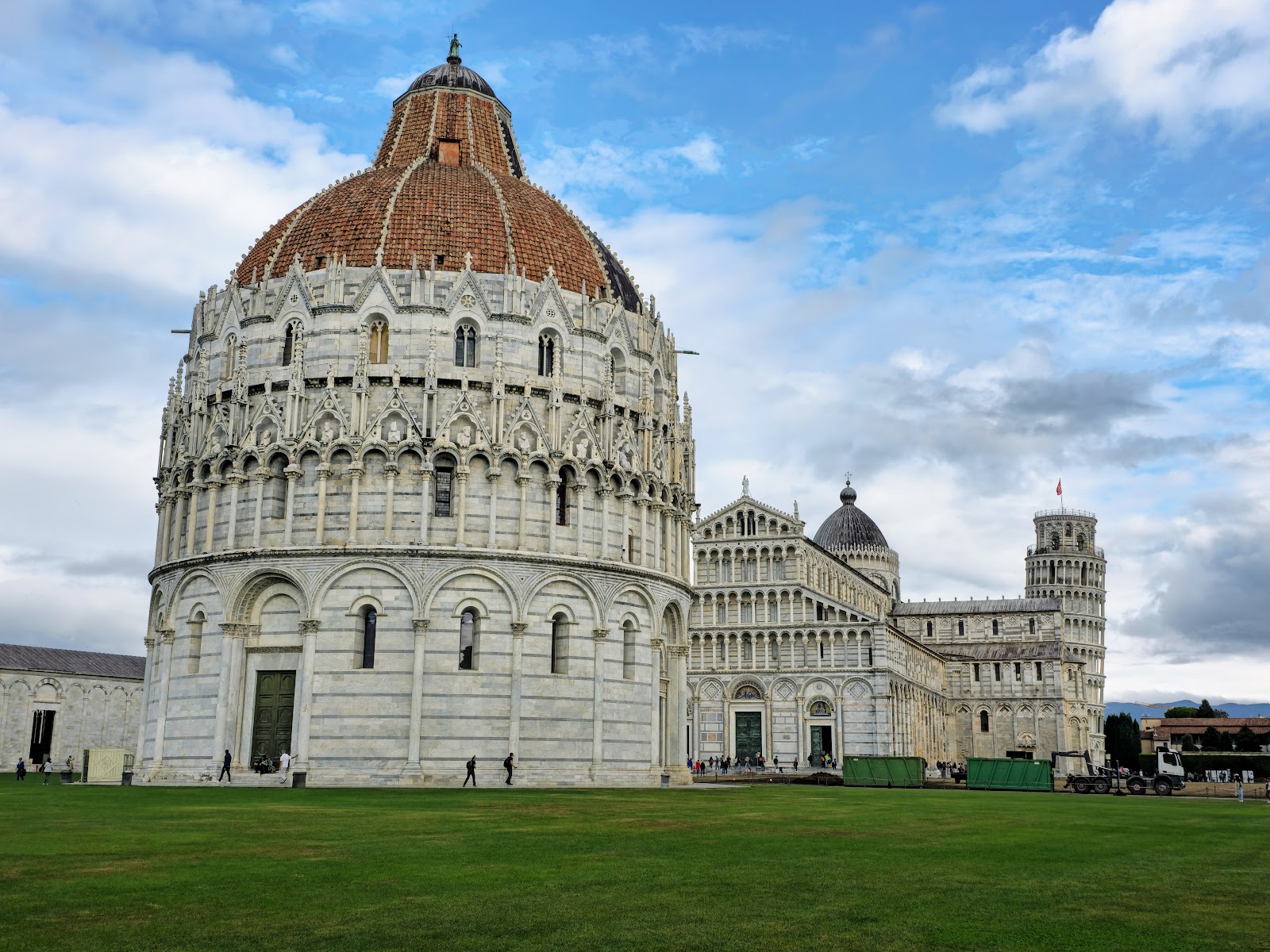
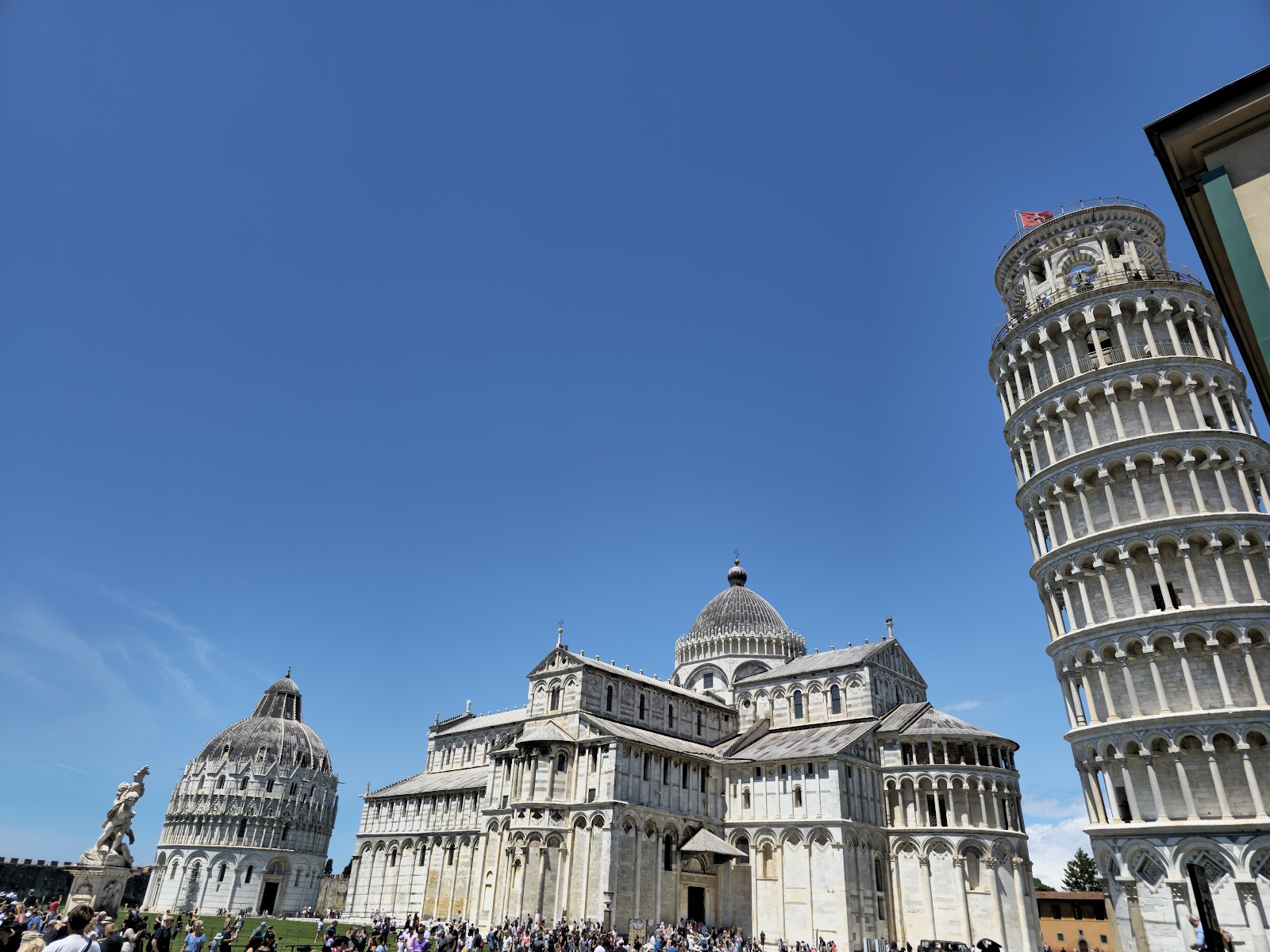
The Baptistery of San Giovanni is the largest baptistery in Italy — 54 metres tall, 34 metres across — and it leans, almost imperceptibly, 0.6 degrees toward the cathedral next door. The same unstable sand that tilts the tower and shifts the Duomo has been quietly pulling at this building since 1152.
Step inside and the proportions do something unexpected: the double dome overhead creates acoustics so precise that a single sung note hangs in the air and layers into a chord. Every half hour, a staff member demonstrates this, and the room falls quiet in a way that has nothing to do with reverence for marble.
💛 What travellers fall for
People who visit twice tend to linger near the octagonal font at the centre — Guido Bigarelli da Como carved it in 1246, and it still holds the space with a quiet authority. They also go straight to Nicola Pisano's pulpit, which dates to 1260 and is worth crouching beside to read the carved relief panels at eye level.
The story behind Baptistery of Pisa
Construction began on 15 August 1152 under the architect Diotisalvi, whose name is still carved on a pillar inside: 'Deotisalvi magister huius operis.' He worked in a rounded Romanesque idiom and brought the building up through its first order of arches before the project outlasted him. Over the next two centuries, tastes shifted, and the upper sections were completed in Gothic style — pointed wimpergs rising above the round arches below, the whole thing built from bichromatic Carrara marble.
The interior accumulated its defining objects across the same long span. Guido Bigarelli da Como completed the octagonal baptismal font in 1246. Nicola Pisano finished his pulpit in 1260 — a date sometimes cited as a hinge point in Italian sculpture, partly because of how openly it borrows from classical Roman form. His son Giovanni added the exterior figures. By 1363, the building was complete. Galileo Galilei was baptized here in 1564.

Good to know
You cannot buy a standalone Baptistery ticket — entry is bundled with the Cathedral and optionally the Tower; the full Piazza dei Miracoli pass runs €27 in 2026. Summer hours extend to 22:30 from mid-June through August. Buses 1, 3 or 11 reach Piazza dei Miracoli from Pisa Centrale; the walk is about 20 minutes.
Where is Baptistery of Pisa?
More tickets & tours for Baptistery of Pisa
Book directly at the provider
What travellers say about Baptistery of Pisa
Well the most interesting building beside the cathedral if You ask me. Th tower is great and the story behind it Yes, but this one is quite the best for me. If you will have more luck, the guy inside is making sounds at the very center of the baptisterium and the sounds are... Perfect.
We passed by the Pisa Baptistery during our visit to Piazza dei Miracoli and it immediately stood out as one of the most impressive buildings in the complex. Although we didn’t go inside, its striking circular design and magnificent white marble exterior were captivating enough on their own. As the largest baptistery in Italy, it holds an important place in Pisa’s religious and architectural history. The blend of Romanesque and Gothic styles is beautifully displayed through its elegant arches, intricate detailing, and distinctive dome, creating a structure that is both grand and graceful. Standing beside the cathedral and the Leaning Tower, it would be easy to overlook the baptistery but it deserves attention in its own right. We found ourselves spending several minutes admiring the craftsmanship and taking photos from different angles. Even without entering, it’s a memorable part of any visit to Pisa—and proof that there’s much more to Piazza dei Miracoli than just the famous tower.
The Battistero di San Giovanni is absolutely beautiful and very impressive to see in person. The architecture and details are stunning both inside and outside. I highly recommend buying the combined ticket for all the buildings for around €20, as it is definitely worth the price and allows you to fully enjoy the entire complex. A must-visit when in Pisa!
The Battistero di San Giovanni (Pisa Baptistery of St John) is a circular, white‑marble baptistery in the Piazza dei Miracoli, directly in front of the cathedral. Started in the mid‑12th century and finished in the 14th, it mixes Romanesque arches on the lower level with Gothic decoration above, and is famous for its simple interior, fine medieval sculpture, and remarkable acoustics. Inside, it features an octagonal font for performance of baptism and Nicola Pisano's masterful pulpit.
This octagonal building in the heart of Piazza del Duomo is breathtaking with its marble exterior. Once you step inside, the famous golden mosaics on the ceiling offer a visual feast. It was a real pleasure to examine every single detail. A quick reminder for those planning to visit: it is no longer free. You need to pay around €15 for an adult ticket (usually sold as a combined pass with other sites in the Duomo complex).
More of Pisa
Discover where to stay, what to do and the best deals for your trip.
Explore Pisa →More attractions in Pisa
All of Pisa →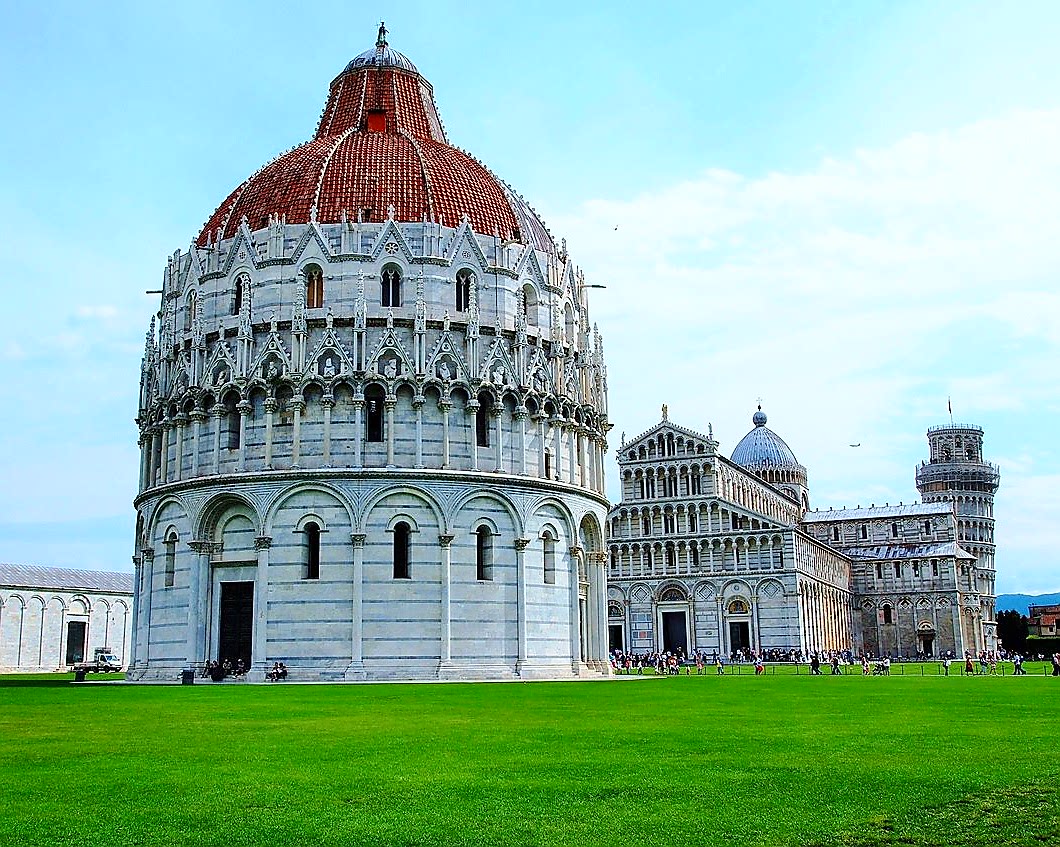
Background adapted from Wikipedia (CC BY-SA) · map data © OpenStreetMap contributors · ratings & place photos via Google · other photos with per-image credit. Ticket links may earn us a commission at no extra cost to you.