
Bamberg
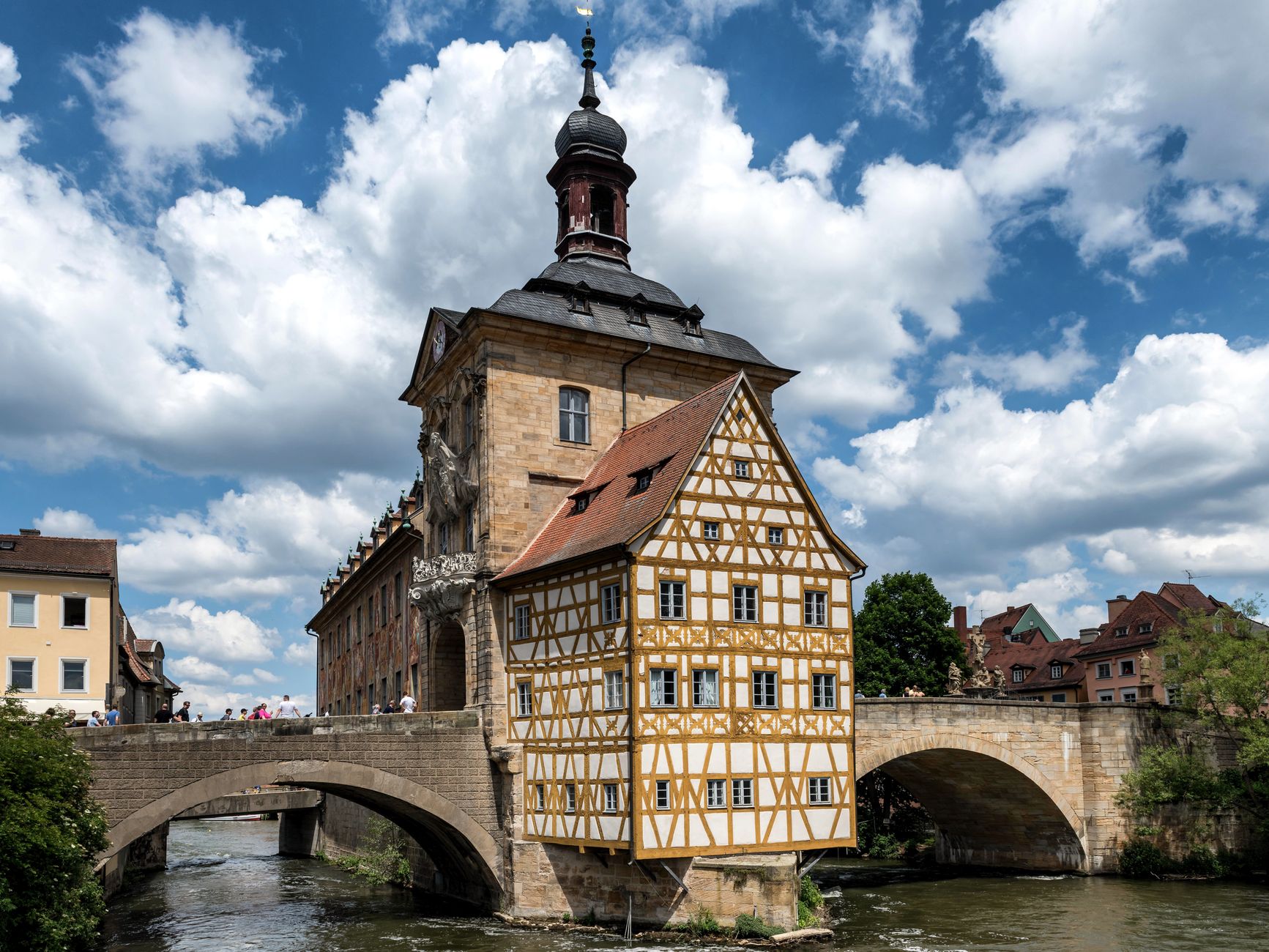
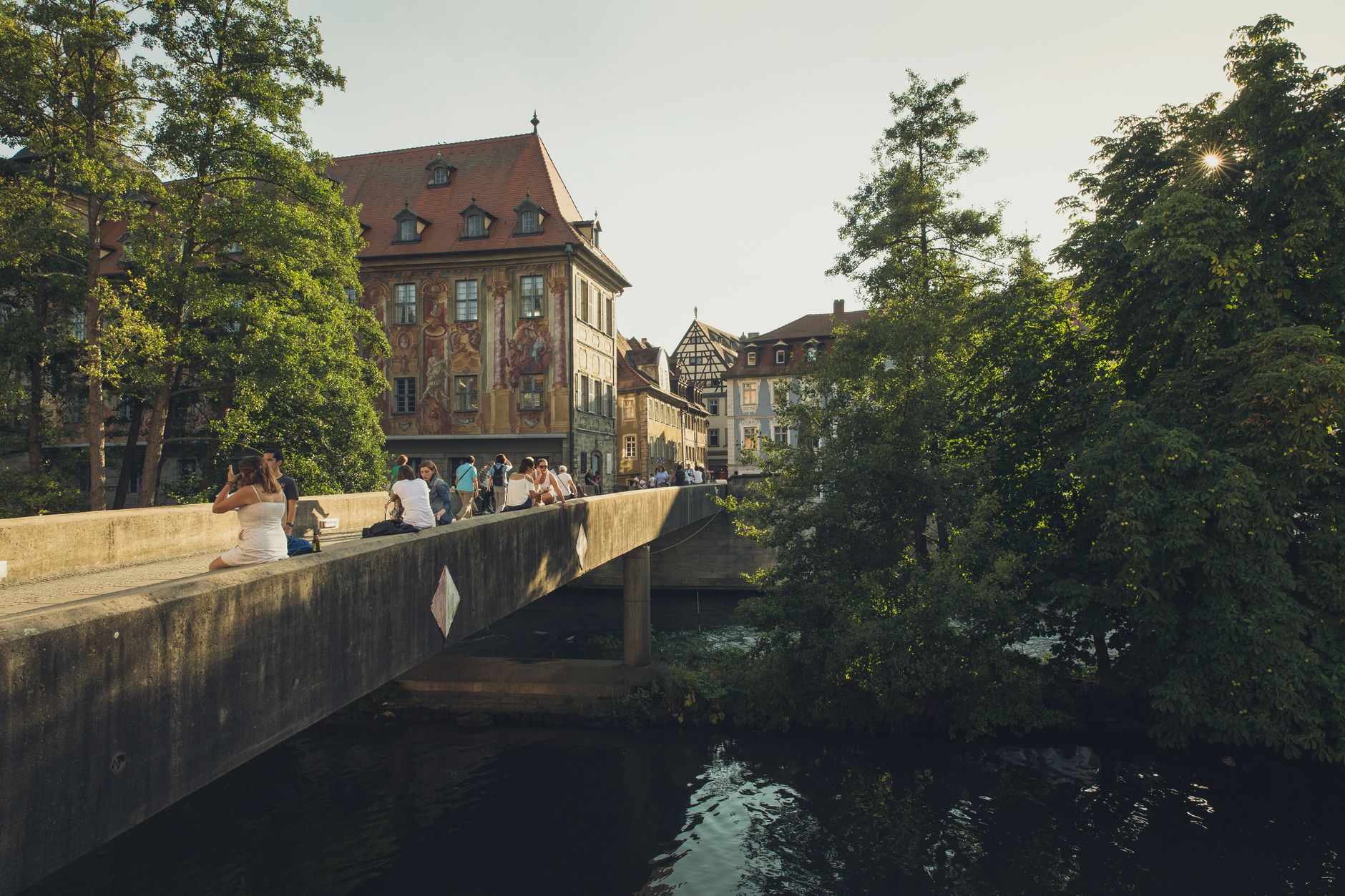
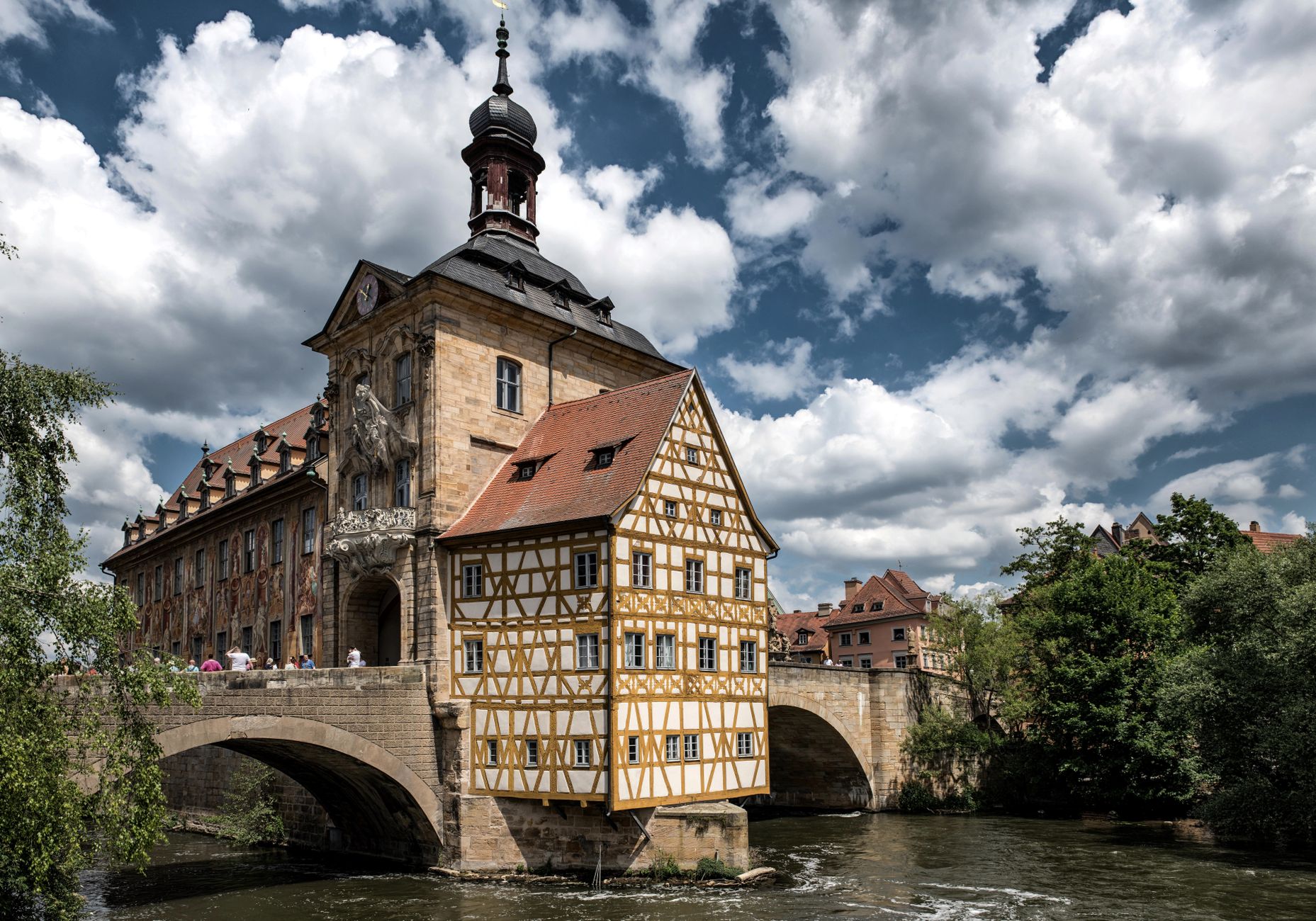
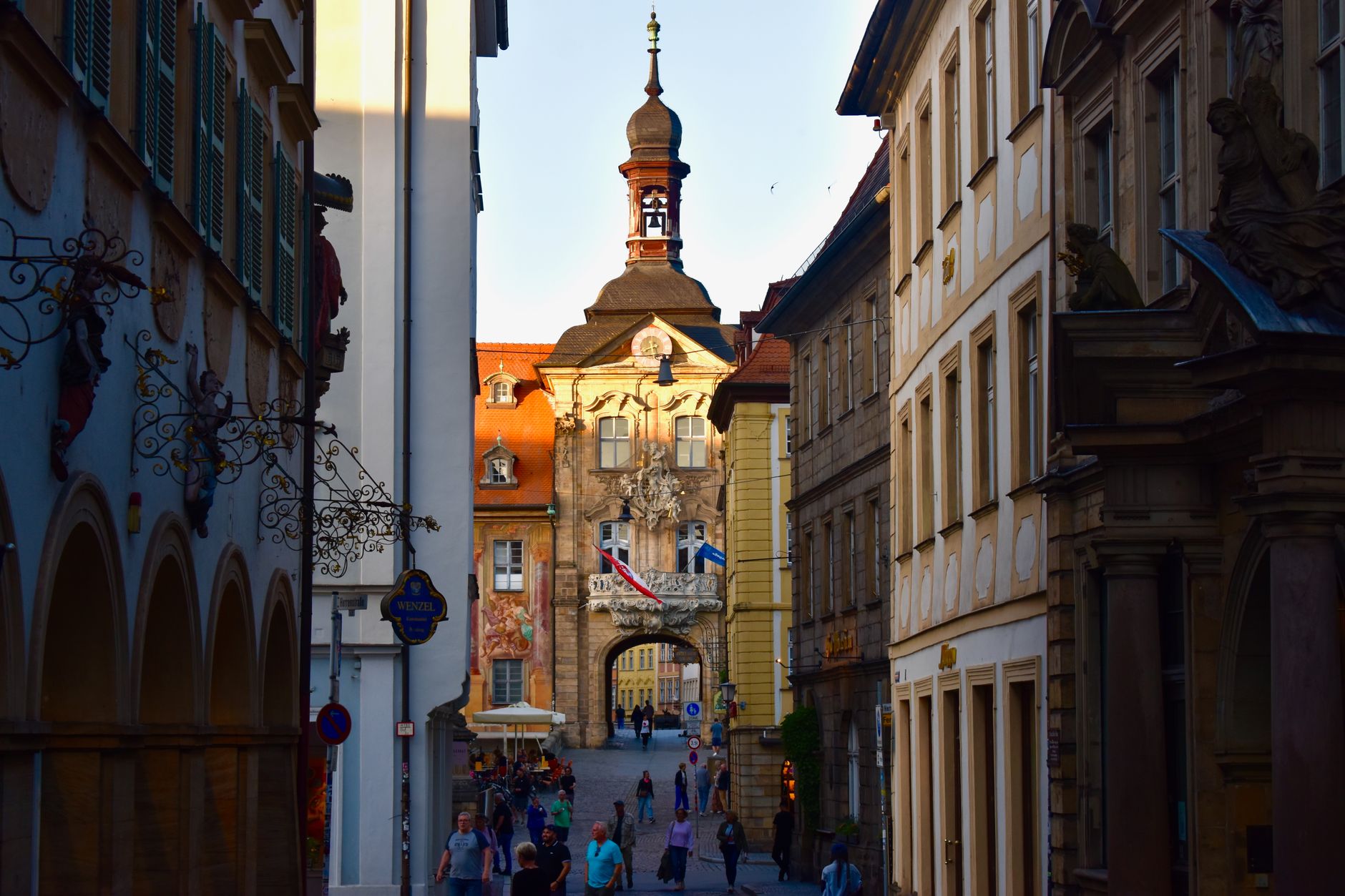
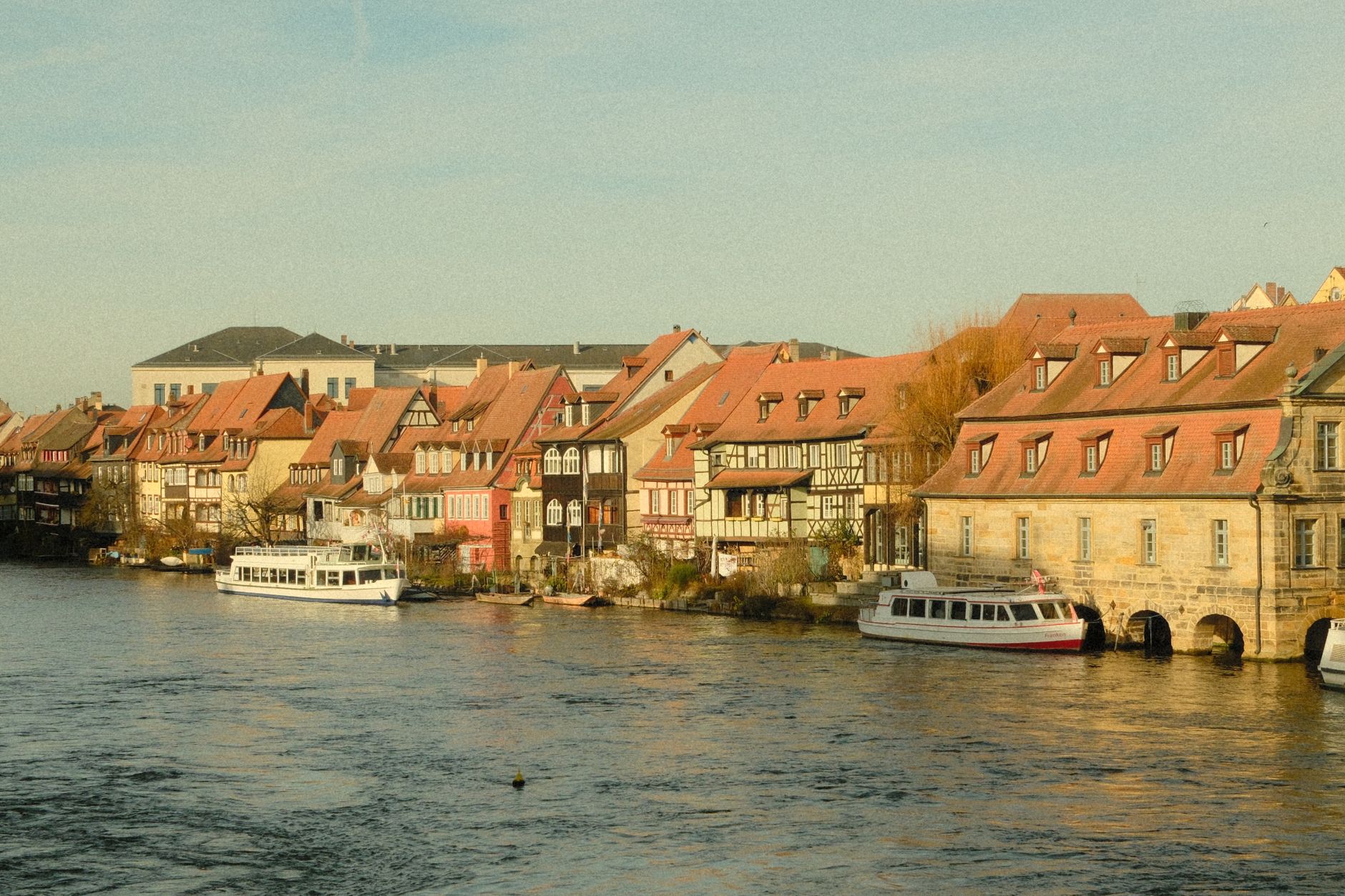
Bamberg sits on seven hills above the River Regnitz, and the view from Michaelsberg Abbey makes that geography legible in a single glance — red rooftops, four cathedral towers, a town hall built on a man-made island because the bishop wouldn't give the citizens any land. More than a thousand buildings in the center are registered historic landmarks, yet the city moves at the pace of a university town rather than a museum piece.
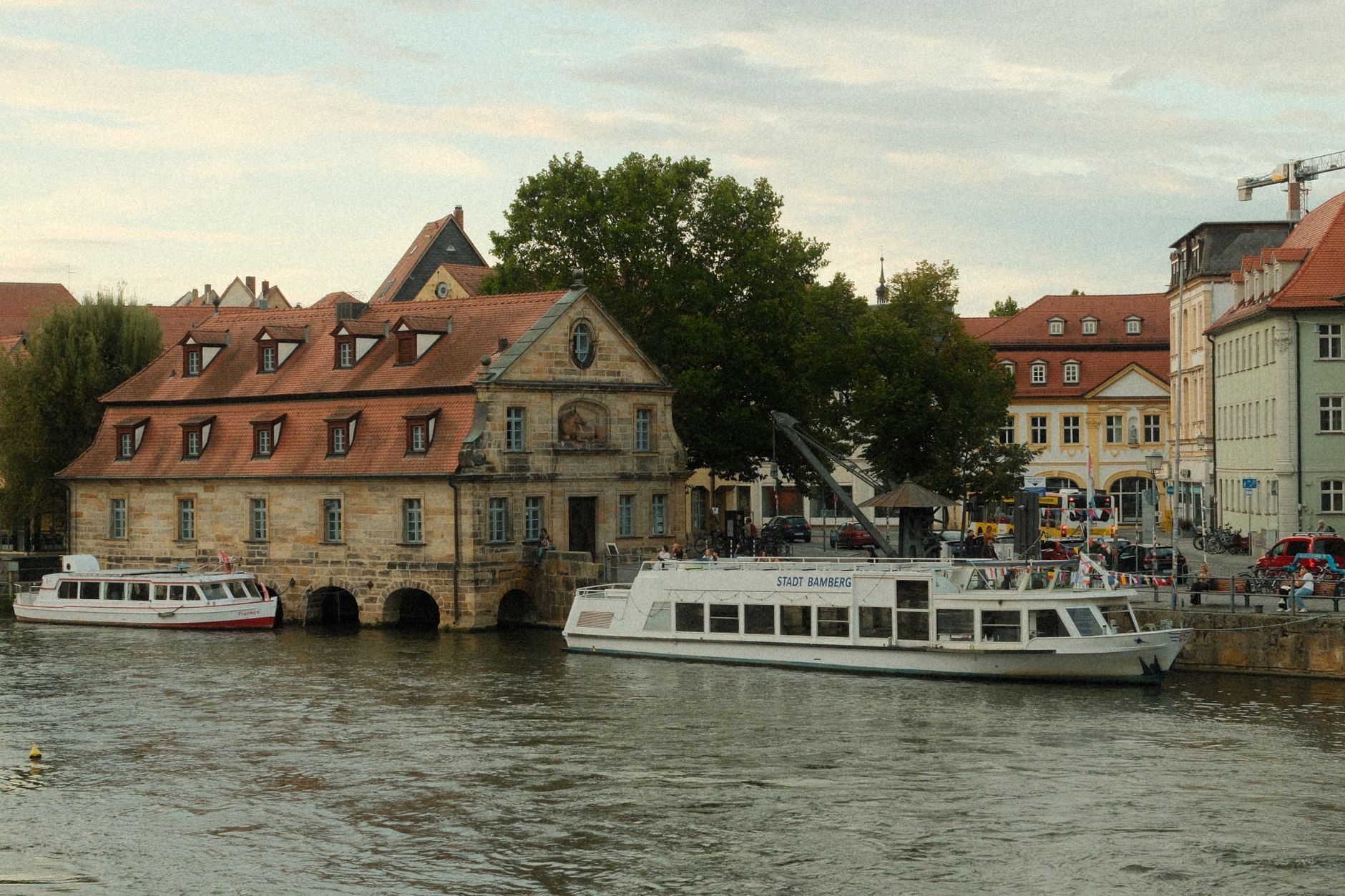
The Altes Rathaus, straddling the Regnitz on its own artificial island since the 15th century, is the image most people carry away. But spend time in the lanes around Klein Venedig — the row of 19th-century fishermen's houses along the riverbank — and the place starts to feel less like a set piece and more like somewhere people actually live.
💛 What travellers fall for
People who come back tend to mention the same few things: the Böttingerhaus doorway, which you can examine for free from the street; the Rosengarten behind the Neue Residenz for a quiet hour above the rooftops; and the Franconian Brewery Museum inside the old Michaelsberg Abbey, which rewards the uphill walk.
Experiences you don't want to miss


Deals in Bamberg
Book directly at the provider

How Bamberg came to be
The site first appears in records in 902 as the ancestral seat of the Babenberg family. Its real founding moment came in 1007, when Holy Roman Emperor Henry II established a bishopric here and began construction of the cathedral. That building was consecrated on 6 May 1012 and still stands, housing the tombs of Henry II and Empress Kunigunde alongside the famous 13th-century stone equestrian statue known as the Bamberger Reiter.
For centuries Bamberg operated as an independent ecclesiastical city-state under its prince-bishops, who built the Neue Residenz and the Alte Hofhaltung that still define the hilltop skyline. The city lost its independence in 1802 and was absorbed into Bavaria the following year. The University, founded in 1647, was refounded in the modern era and keeps the population young. UNESCO added the entire old town to its World Heritage List in 1993.
Who and what shaped it
People who shaped it
Landmark buildings
See Bamberg in motion
Plan your visit
On the map
When to go
Bamberg has a temperate central European climate — warm summers that make the Rosengarten worth visiting, cold winters with occasional snow that softens the Baroque stonework considerably. Spring and early autumn tend to offer mild days and thinner crowds than the summer peak.
Right now
Background & history adapted from Wikipedia (CC BY-SA) · specs from Wikidata (CC0) · weather from Open-Meteo · map data © OpenStreetMap contributors · photos from Wikimedia Commons / Unsplash with per-image credit. No third-party reviews or social posts reproduced.