
Arue



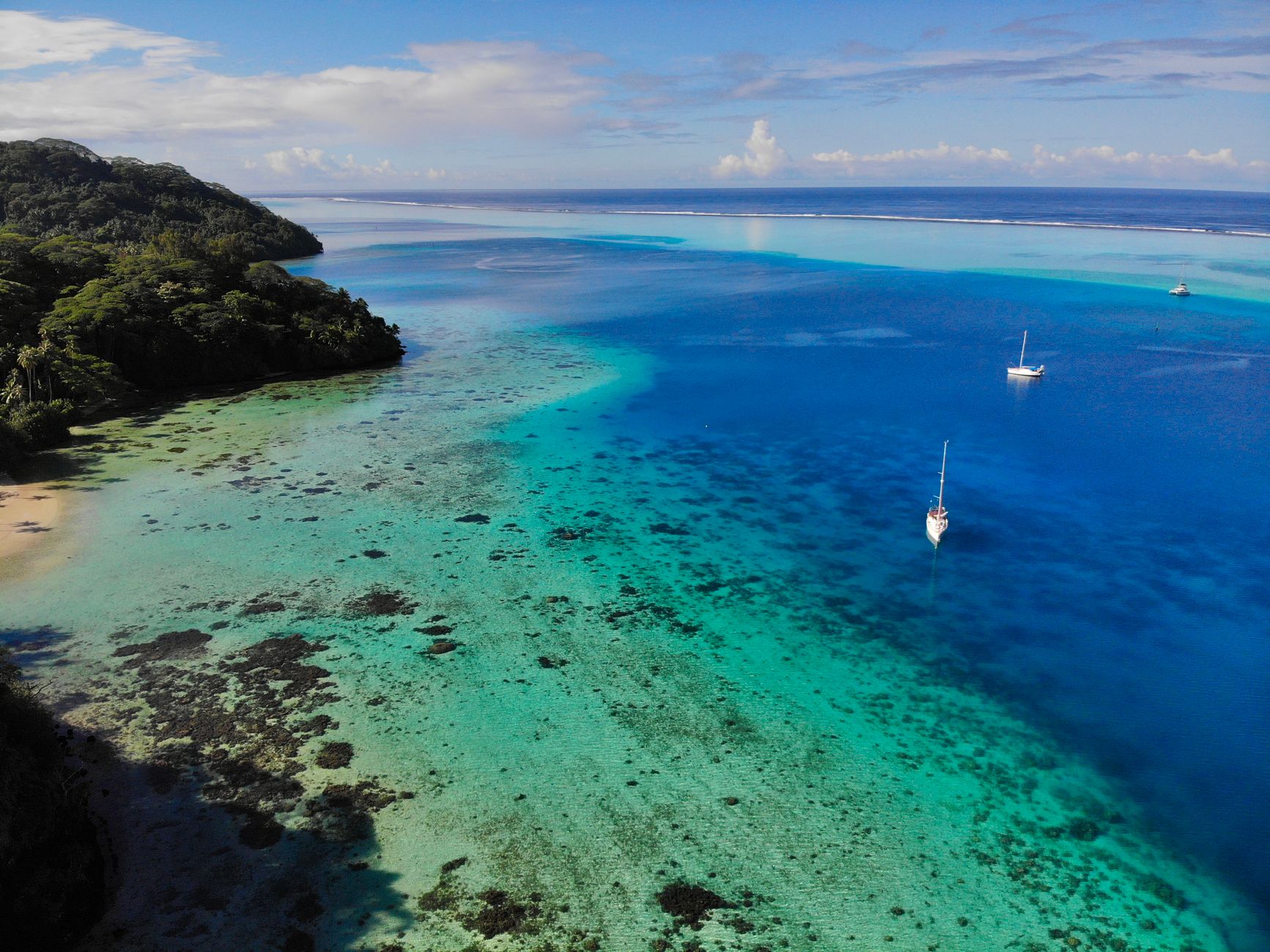
Arue begins where Papeete's freeway ends — or rather, where it starts. The first commune east of the capital sits against the lagoon with a quiet self-possession, its name said to derive from the Tahitian word for 'praise,' a title earned from the old greetings called out to King Pomare I at his royal estate here. That lineage runs deep: this was once the ceremonial heart of the Pare-Arue chiefdom, and the ground still holds it.
Today Arue is home to around ten thousand people and one of the more quietly absorbing literary addresses in the Pacific — the house where James Norman Hall lived and wrote for three decades, now preserved as it stood in 1951. The atoll of Tetiaroa, 58 kilometres north, falls within Arue's commune boundaries, a detail that says something about how Polynesian geography works.
💛 What travellers fall for
People who return tend to come back for the James Norman Hall House specifically — not the Mutiny on the Bounty mythology, but the manuscripts on the desk and the particular stillness of a writer's room kept intact. The guided tour is worth taking slowly. Afterward, the Church of Bostens rewards anyone with an ear for acoustics.
Experiences you don't want to miss


Deals in Arue
Book directly at the provider


How Arue came to be
The Pare-Arue district was already a seat of chiefly power when Captain Samuel Wallis arrived in 1767, governed by Tu under the regency of Tutaha. Two years later, Captain James Cook visited and noted the Tarahoi marae on the promontory of Utuhaihai — the most sacred marae in the Arue and Pare areas at the time. The Pomare dynasty made the Papaoa Estate here their royal residence, and it was in a local Protestant chapel that King Pomare II was baptized in 1819 by British missionary Henry Nott, a moment that marked a decisive turn in the islands' religious and political history.
The American writer James Norman Hall arrived in 1920 and stayed until his death in 1951, co-authoring the Bounty Trilogy and putting Tahiti at the center of the English-language literary imagination. His descendants and the French Polynesian government rebuilt his house as a museum in 2002.
Who and what shaped it
People who shaped it
Landmark buildings
See Arue in motion
Plan your visit
On the map
When to go
Arue runs warm year-round — 26°C at the coolest in August, 28°C at the warmest in March — but the difference between seasons is more about rain than temperature. The wet season runs November through April with heavy downpours and high humidity; May to October is drier and more comfortable, with August the driest month of all.
Right now
Background & history adapted from Wikipedia (CC BY-SA) · specs from Wikidata (CC0) · weather from Open-Meteo · map data © OpenStreetMap contributors · photos from Wikimedia Commons / Unsplash with per-image credit. No third-party reviews or social posts reproduced.