
Arriaga Theatre
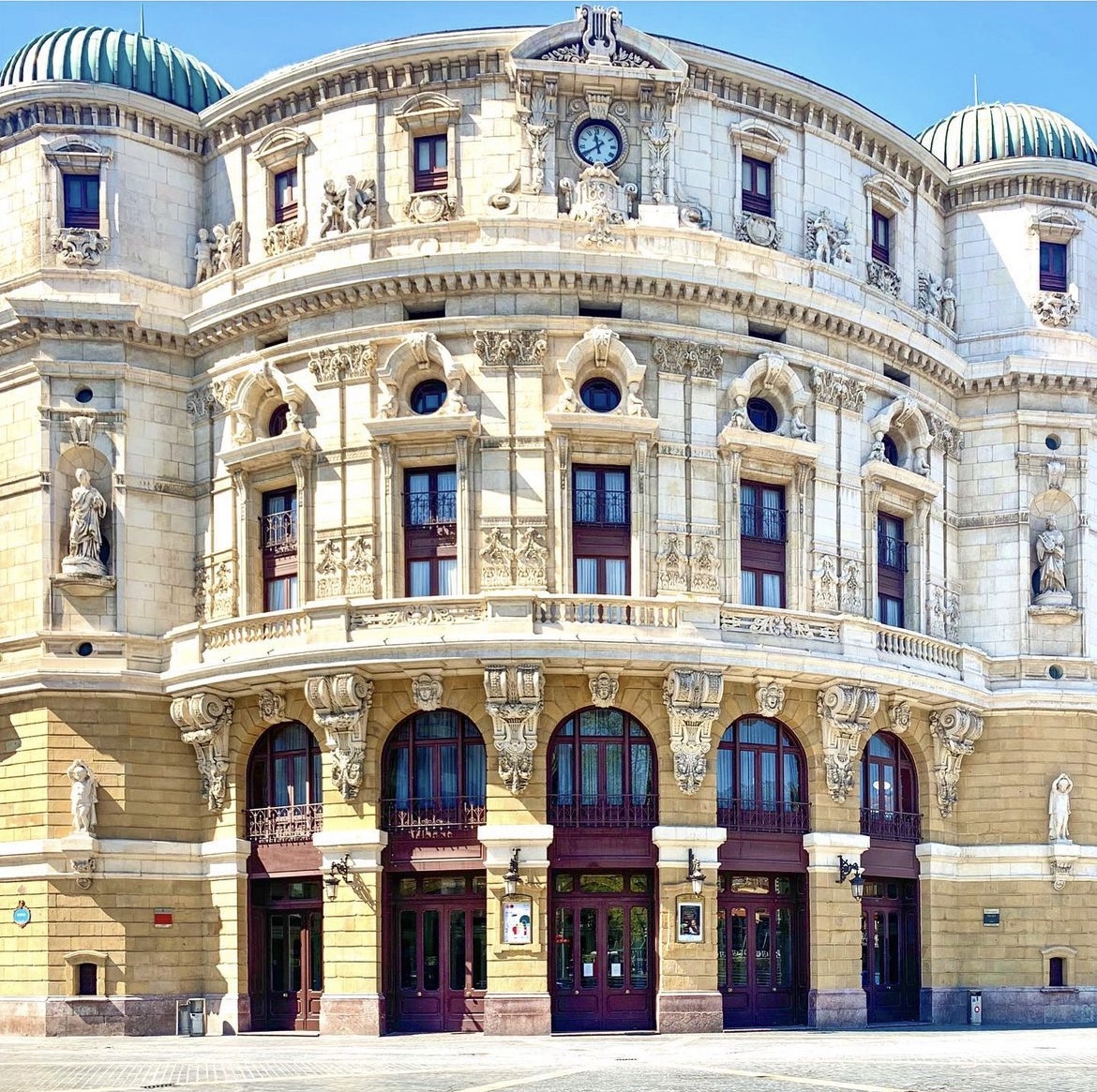
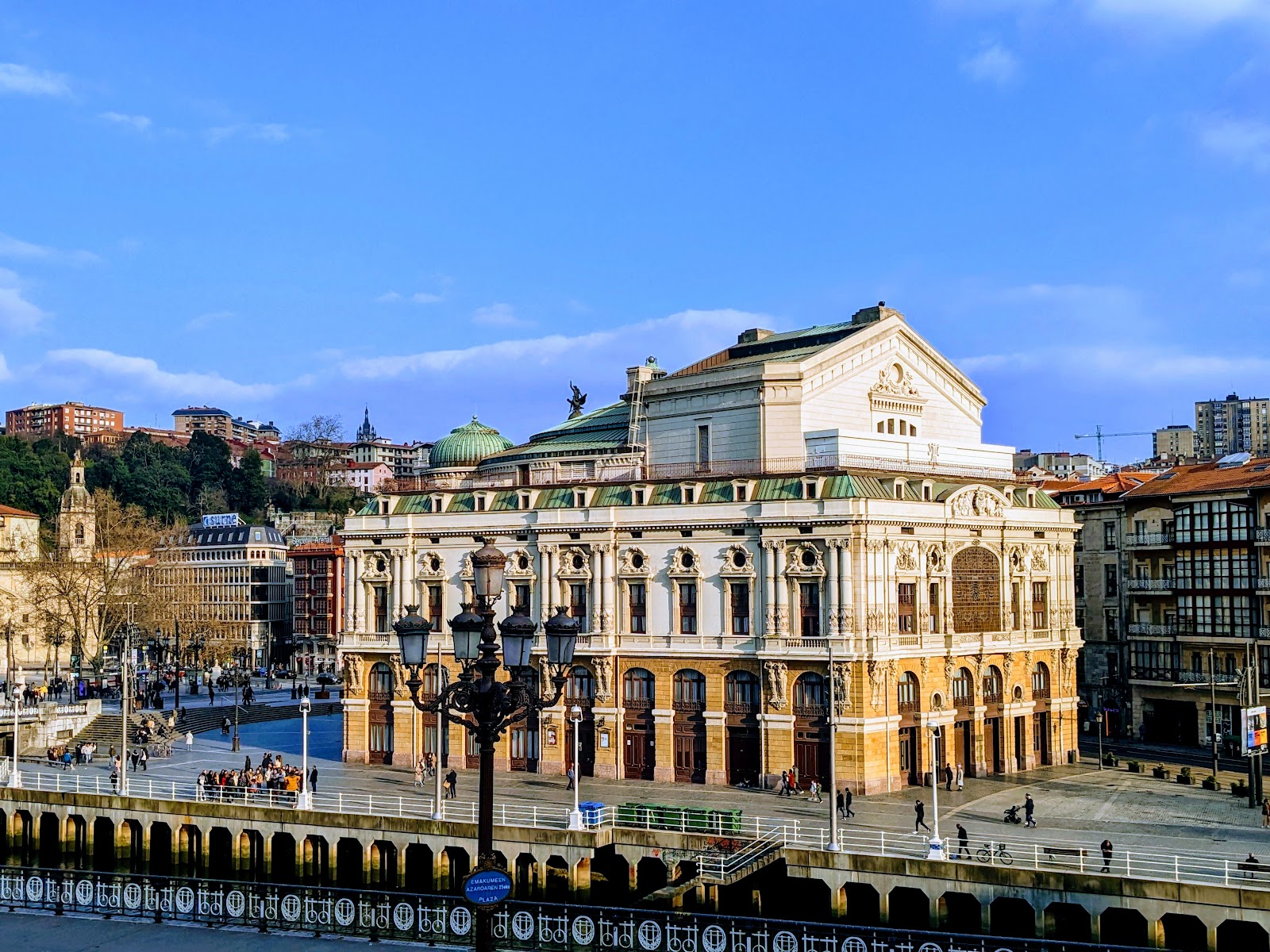
The locals called it 'the maternity home' — a wry nod to the carved caryatids, all bust and bravado, that line the curved façade. Stand on Plaza Arriaga and the building announces itself with twin turrets, layered balconies, and the kind of Neo-Baroque confidence that architect Joaquín Rucoba brought to Bilbao in 1890, inspired by the Paris Opera.
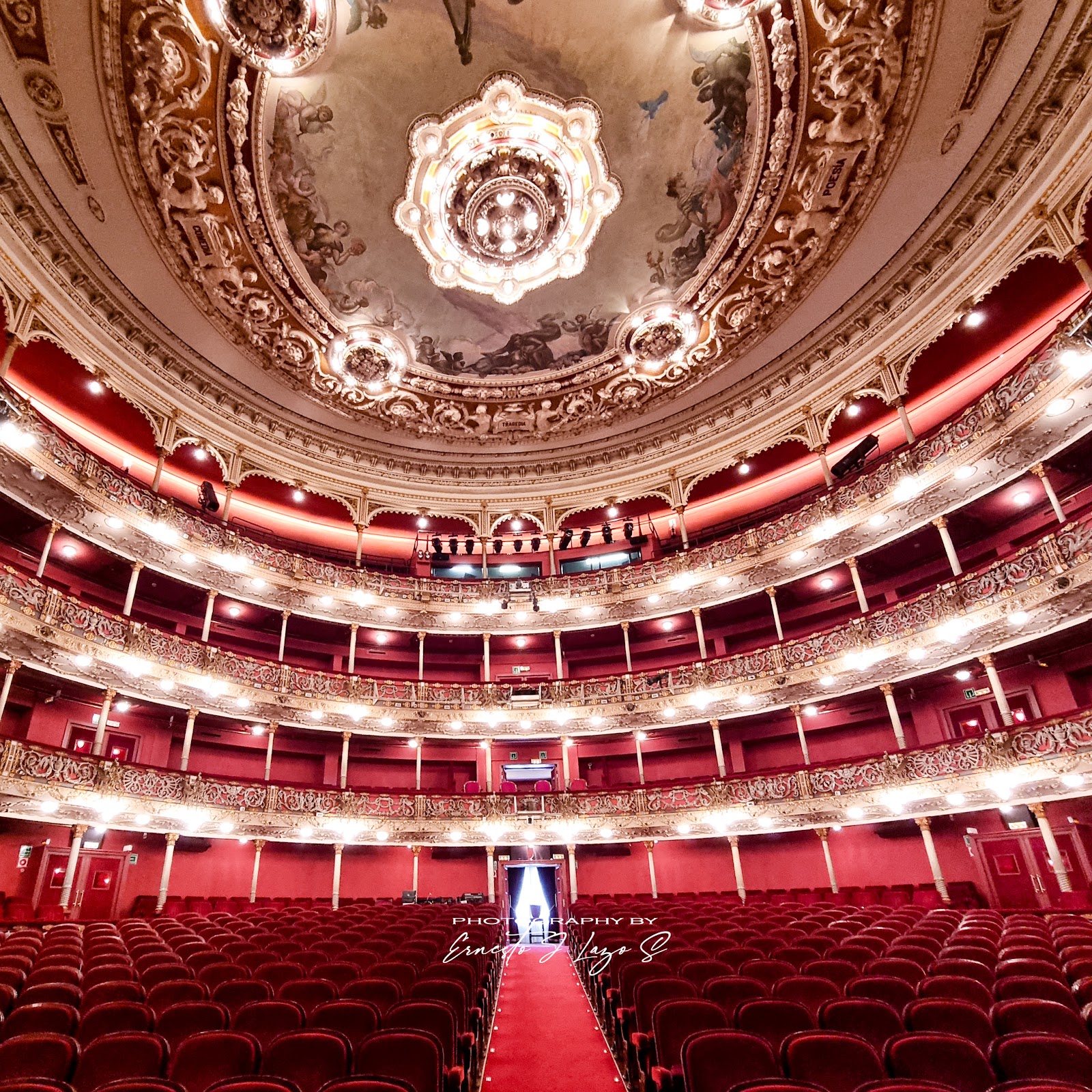
Inside, a horseshoe auditorium holds 1,200 people across stalls, boxes, amphitheatre and gallery. The orchestra pit travels on an elevator platform — it can rise flush with the stalls for extra seating or climb to stage level as an extension. Carpets from the Royal Tapestry Factory cover the floors; a bust of Juan Crisóstomo de Arriaga, the composer who died just before turning twenty, presides over the imperial staircase.
💛 What travellers fall for
People who do the weekend tour tend to linger in the Orient Express room longer than expected, and in the costume collection — opera and zarzuela dress stored here has a way of making the building's history feel worn-in rather than preserved. Book early; the cap is thirty visitors and slots fill by mid-week.
The story behind Arriaga Theatre
Plans were drawn in 1882; construction ran from 1886 to 1890, when the theatre opened on 31 May. The Bilbao Stock Exchange held its inaugural meetings on the ground floor in 1891 — the commercial spaces Rucoba built beneath the second-floor stage found immediate civic use. The name 'Teatro Arriaga' first appeared in print in 1902, in a newspaper announcement for a performance.
Fire destroyed the building on the night of the Santo Tomás Market in 1914. Architect Federico de Ugalde led the reconstruction; the theatre reopened in June 1919. Then, on 26 August 1983, the Nervión flooded Bilbao and left five metres of water inside. Francisco Hurtado de Saracho oversaw the subsequent restoration, and the theatre reopened in December 1986. A further campaign between 1999 and 2000 cleaned the façades, treated biological growth and salts, and reinforced damaged sculptural elements.
Good to know
Metro lines 1, 2, or 3 stop at Casco Viejo, a short walk across the river. Guided tours run Saturday and Sunday mornings, 11 am–1 pm, for €5 — but not in July or August. The box office is open daily year-round for performance tickets, closing Sundays in July.
Where is Arriaga Theatre?
More tickets & tours for Arriaga Theatre
Book directly at the provider
What travellers say about Arriaga Theatre
This theatre is Bilbao’s principal performing arts venue and one of the city’s most recognizable cultural landmarks. The theatre first opened in 1890, and after suffering damage from both a fire and a flood, the current building was completed in 1919 in an elegant Neo-Baroque style. It is named after Juan Crisóstomo de Arriaga, a Bilbao-born musical prodigy often referred to as the "Spanish Mozart." Today, the theatre hosts a wide range of performances, including opera, classical concerts, ballet and dance, theatre, and musicals.
Amazing building, dripping in old fashioned in glamour! The stalls have quite a good gradient so no really bad seat
Beautiful building. We enjoyed a tour today. We have not seen any performances here.
Fantastic concert by Mikel Urdangarin and his very talented band!
Beautiful! The building stand out.
More of Bilbao
Discover where to stay, what to do and the best deals for your trip.
Explore Bilbao →More attractions in Bilbao
All of Bilbao →
Background adapted from Wikipedia (CC BY-SA) · map data © OpenStreetMap contributors · ratings & place photos via Google · other photos with per-image credit. Ticket links may earn us a commission at no extra cost to you.