
Anau



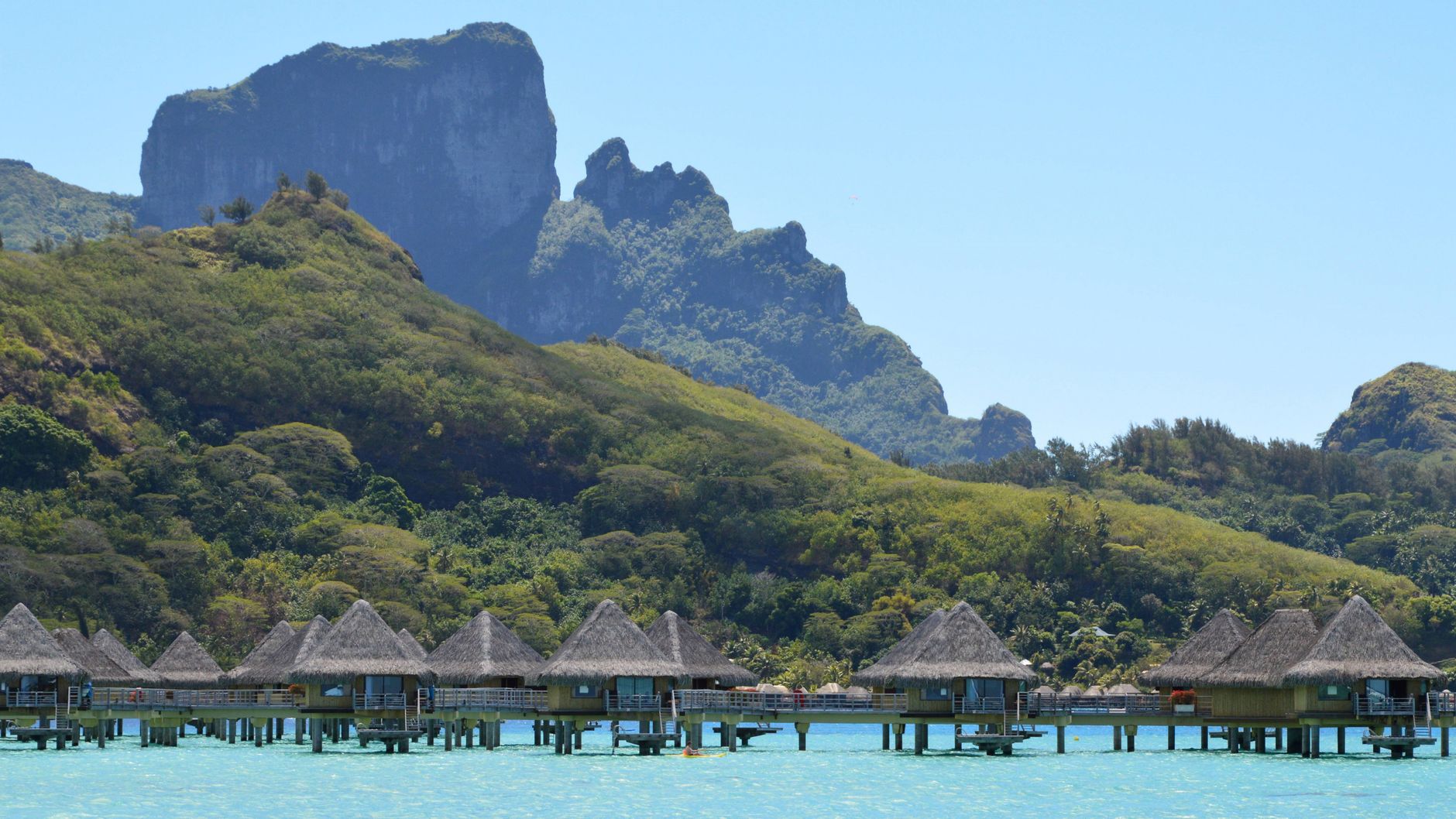
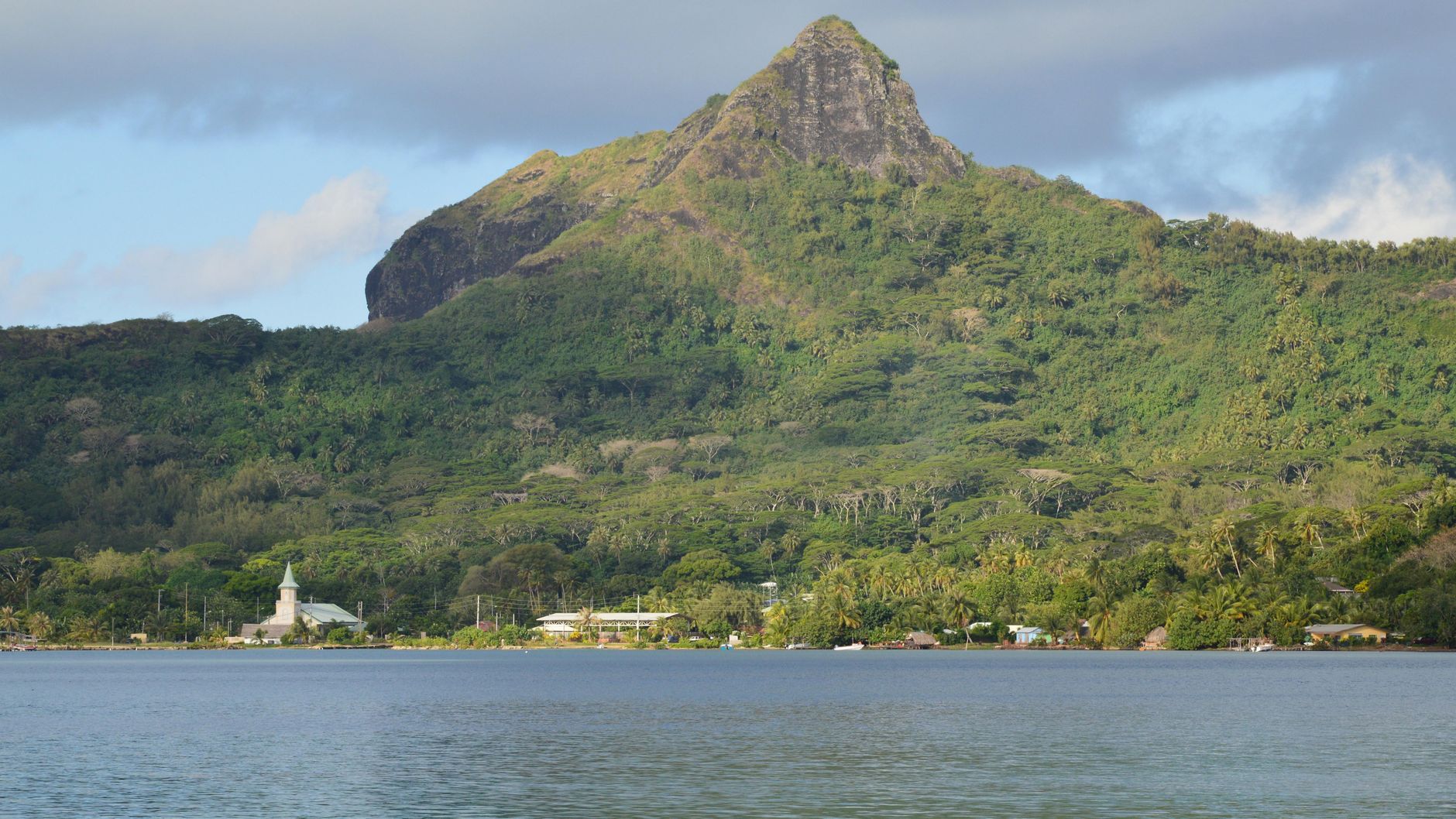
On Bora Bora's east coast, Anau is where the lagoon narrows to almost nothing and a motu sits barely a kilometre offshore. The road through town passes a small church with a steeple, a general store, tin-roofed houses, and not much else — which is partly the point. Mount Otemanu fills the skyline to the west in a way that resort guests on the other side of the island pay considerably more to see.
About fifty families here still weave pandanus leaves into the thatched roofs that finish the overwater bungalows across the lagoon. That quiet economic thread — traditional craft sustaining a contemporary tourism economy — says something about how Anau sits in relation to the rest of Bora Bora: present, working, unhurried.
💛 What travellers fall for
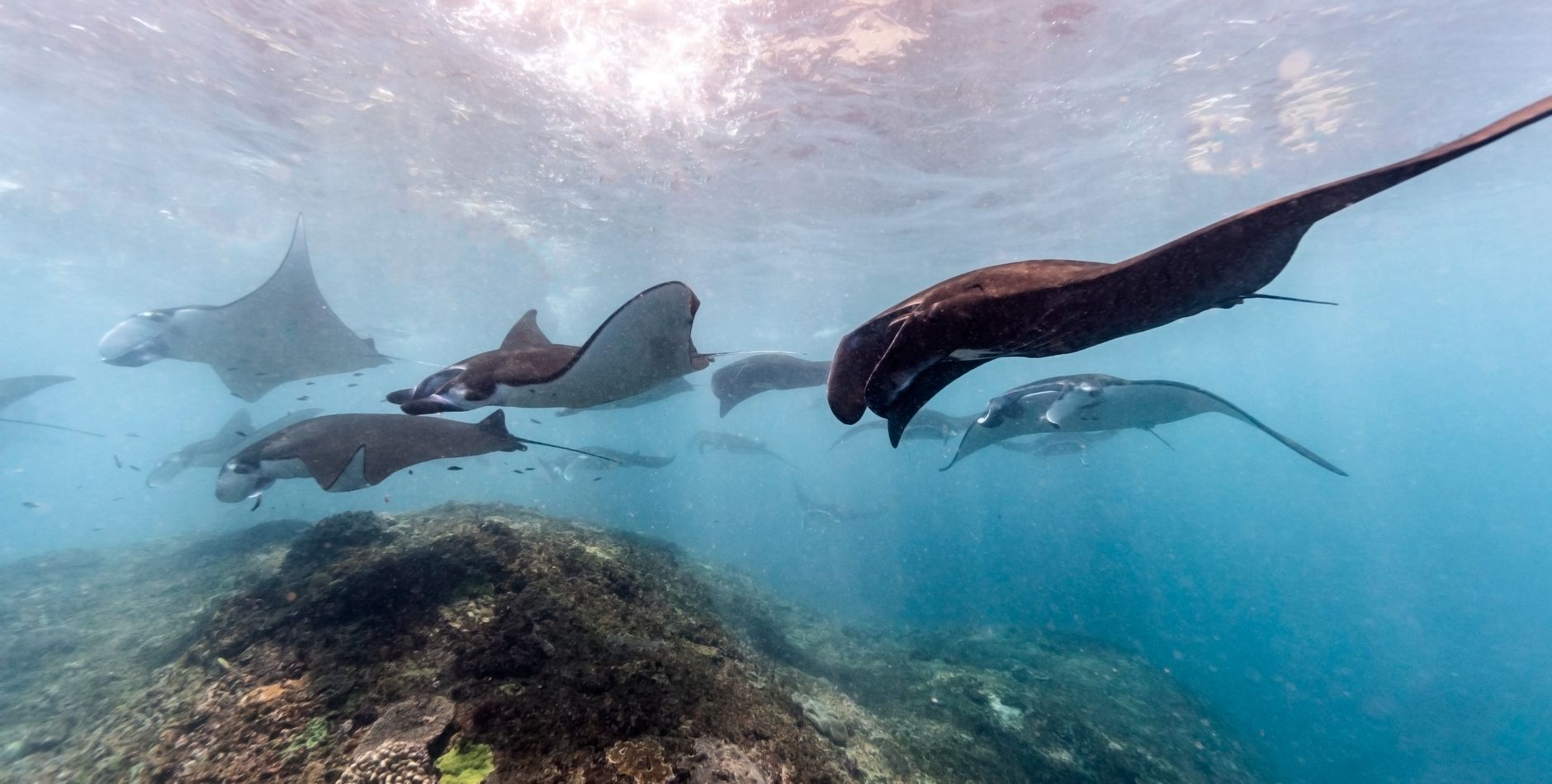
People who come back to Bora Bora tend to mention two things about Anau specifically: the manta ray cleaning station on the east reef, where rays arrive almost year-round at a shallow coral garden around six metres down, and Marae Fare Opu — coral slabs, volcanic stone, turtle petroglyphs — which you will miss entirely if you don't ask someone in Vaitape where the unmarked turnoff is.
Experiences you don't want to miss

Deals in Anau
Book directly at the provider

How Anau came to be
Bora Bora's early settlers arrived, by most accounts, around the ninth century, and the island's districts — Nunue, Faanui, and Anau among them — were not peaceful neighbours. Internal wars repeatedly fractured and reshuffled these communities across centuries. Anau's place in that history is still legible at Marae Fare Opu on the southern coast nearby: a platform of coral slabs and volcanic stone carved with sea turtle petroglyphs, one of the more intact ceremonial sites remaining on the island.
Gaston Tong Sang, born on Bora Bora in 1949, served multiple terms as both Mayor of Bora Bora and President of French Polynesia. His tenure shaped much of the infrastructure that now connects communities like Anau to the island's tourism economy while attempting to hold ecological concerns in the balance.
Who and what shaped it
People who shaped it
Landmark buildings
See Anau in motion
Plan your visit
On the map
When to go
The dry season runs May through October, with temperatures between 24 and 29°C and the clearest conditions for diving. December through March brings the heaviest rainfall and the warmest air — fine for visiting, but plan around afternoon downpours.
Right now
Background & history adapted from Wikipedia (CC BY-SA) · specs from Wikidata (CC0) · weather from Open-Meteo · map data © OpenStreetMap contributors · photos from Wikimedia Commons / Unsplash with per-image credit. No third-party reviews or social posts reproduced.