
Altenau
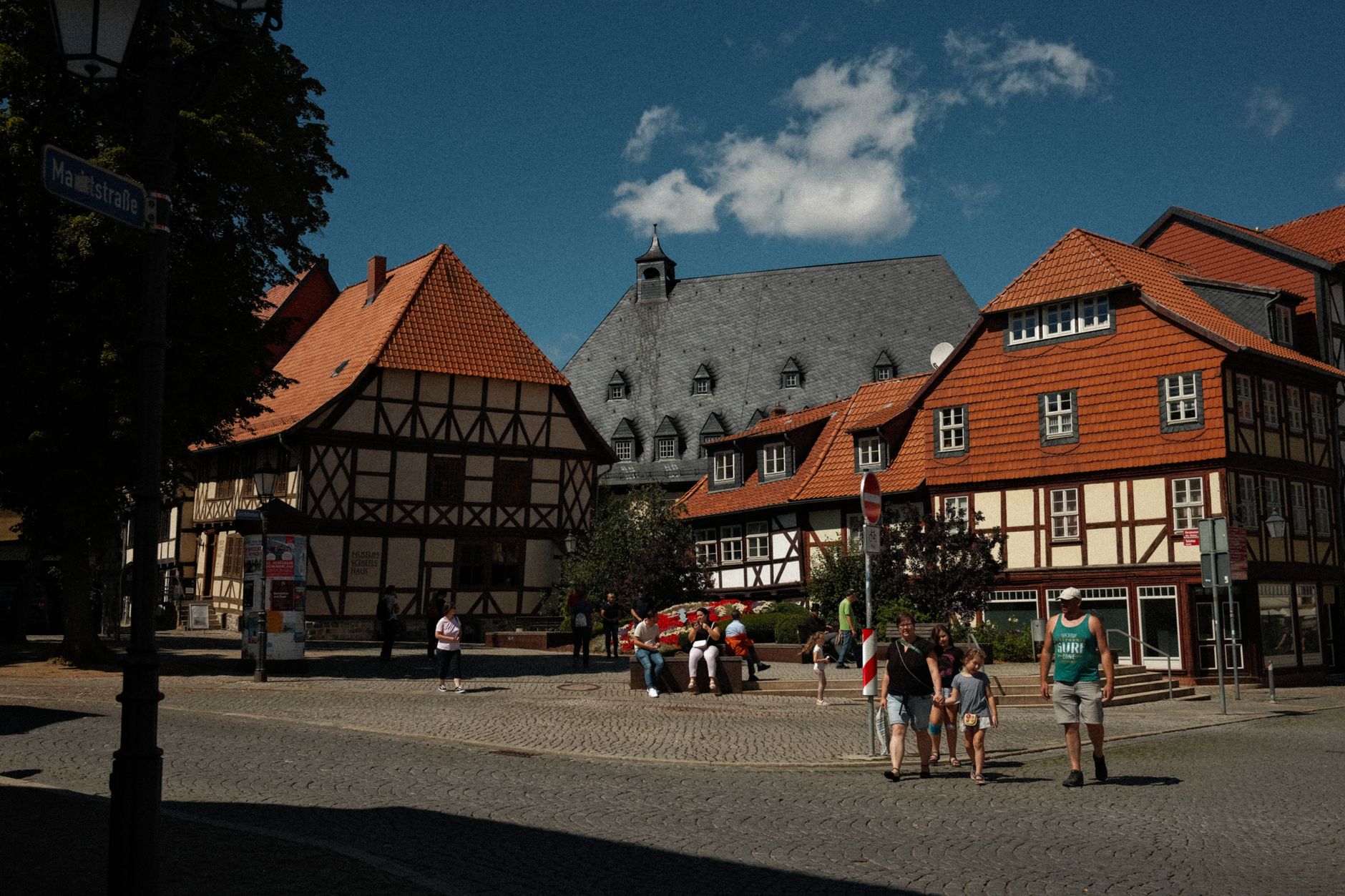
Altenau sits where five valleys meet and two rivers — the Altenau and the Oker — merge at the market square, which is roughly how the town got its name in the first place. At 450 to 550 metres above sea level in the Upper Harz, the air here has a particular quality that drew sanatorium visitors after the mines closed, and draws walkers now.
The 17th-century timber houses along the downtown streets are not a reconstruction; they survived. St. Nikolai Church, rebuilt in wood in 1670, is a rarity in Germany for that construction alone. Twelve kilometres to the east, the Brocken summit is visible on clear days from half the streets in town.
💛 What travellers fall for
People who return tend to mention the same loop: the Altenauer Runde trail in the morning, the Kristall Heißer Brocken thermal spa in the afternoon. The herb park — 30,000 square metres of medicinal and kitchen plants — rewards a slower pace than most visitors give it. Go on a weekday.
Experiences you don't want to miss


Deals in Altenau
Book directly at the provider


How Altenau came to be
The town's name appears in records as early as 1227, with further mentions in 1298 and 1311 — the confluence of waters giving it both its identity and its label. Mining came later: the first workings opened in 1532, followed by the Schatzkammer and Rose operations in 1540 and 1570. By 1636, Altenau had earned the status of a free mountain town, a mark of civic standing tied to the silver and iron economy beneath its hills.
When those industries wound down through the 19th and early 20th centuries, the town reoriented around its other resource: the air. It became a recognised climatic health resort, a designation it still holds. Since January 2015 it has been formally part of Clausthal-Zellerfeld, though it keeps its own centre and character.
Who and what shaped it
Landmark buildings
See Altenau in motion
Plan your visit
On the map
When to go
The yearly average sits at 7.5°C, and that number flatters the winters, which run long, freezing and mostly overcast from November through March. July is the warmest month at around 16°C — comfortable rather than hot — making summer the most straightforward time to visit, though the thermal spa makes a cold-weather stay workable.
Right now
Background & history adapted from Wikipedia (CC BY-SA) · specs from Wikidata (CC0) · weather from Open-Meteo · map data © OpenStreetMap contributors · photos from Wikimedia Commons / Unsplash with per-image credit. No third-party reviews or social posts reproduced.