
Alcázar of Toledo
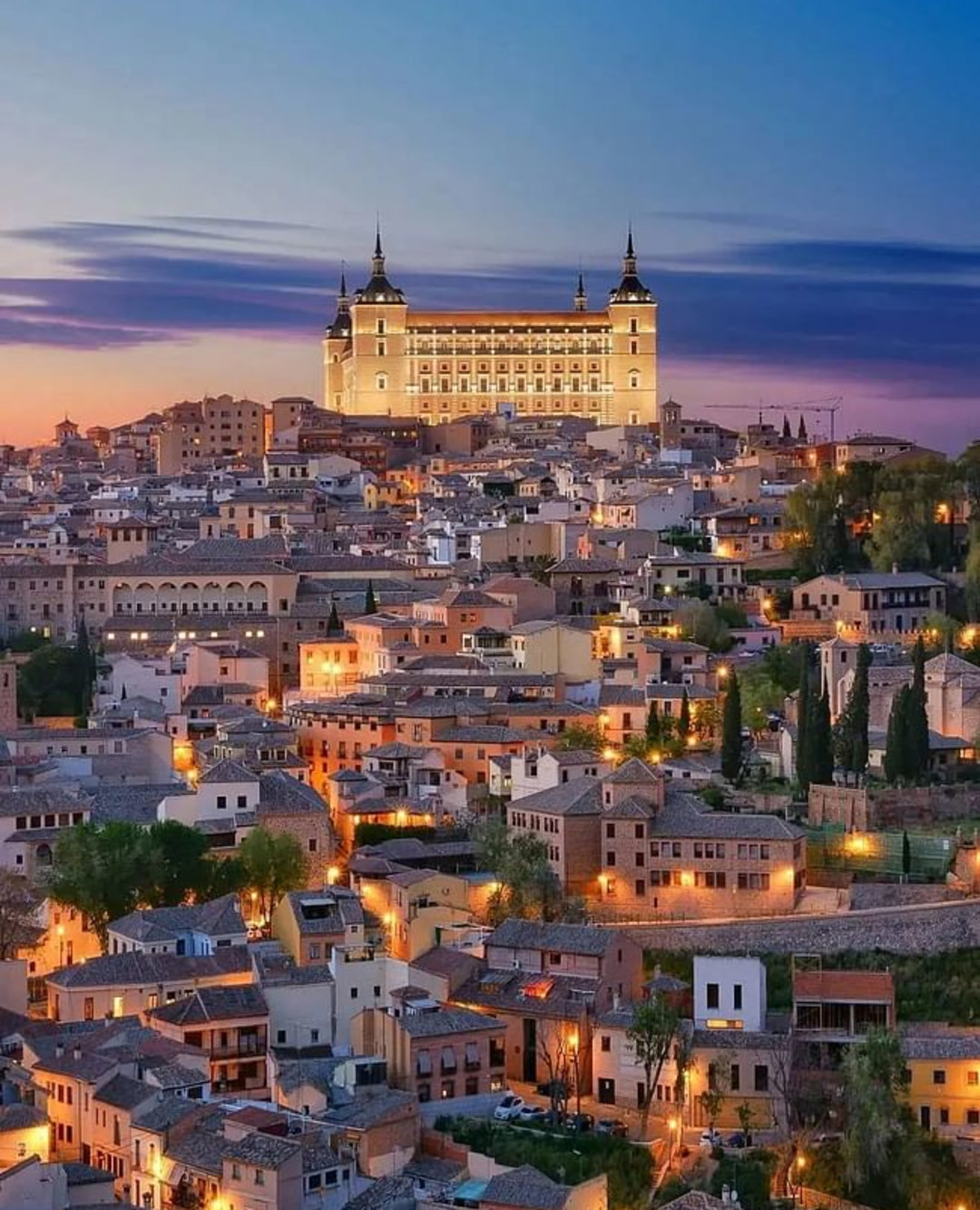
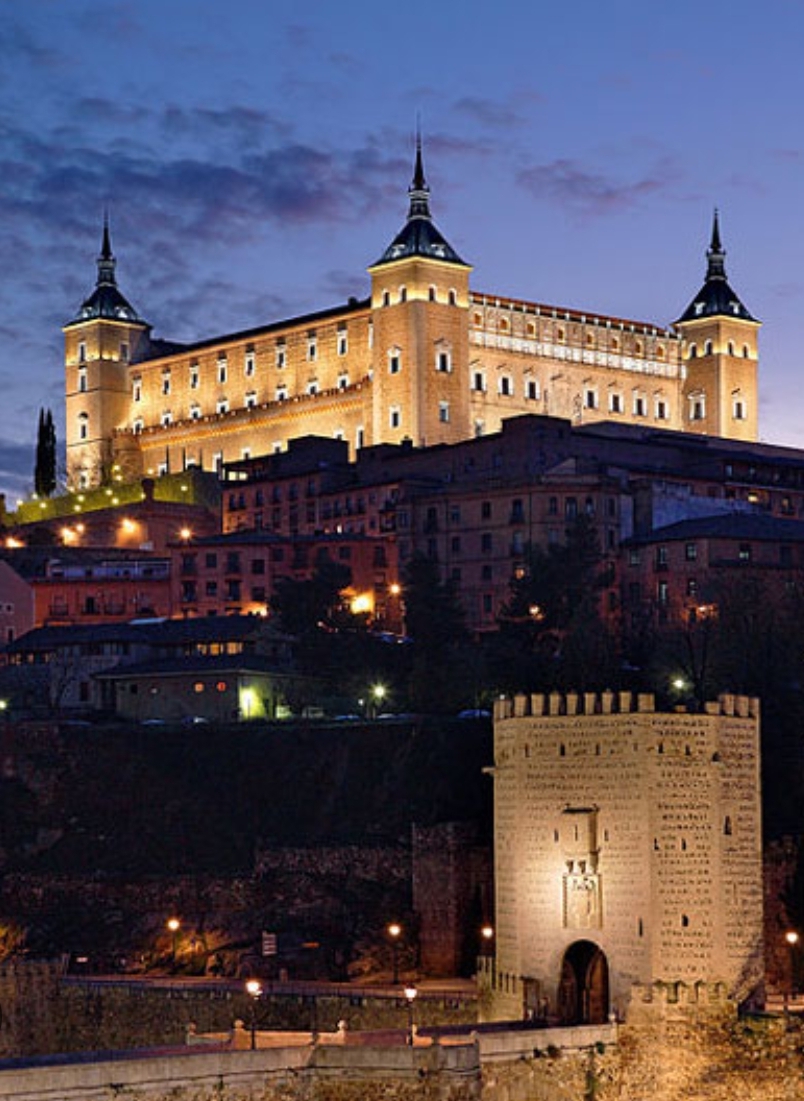
The Alcázar stands on the highest point of Toledo, a square bulk of stone with four towers rising sixty metres apiece, their pointed Madrid spires visible from almost anywhere in the city below. From the upper floors, the Tagus River bends around the old town like a slow grey arm, and the cathedral spire punches up through the rooflines of the medieval quarter.
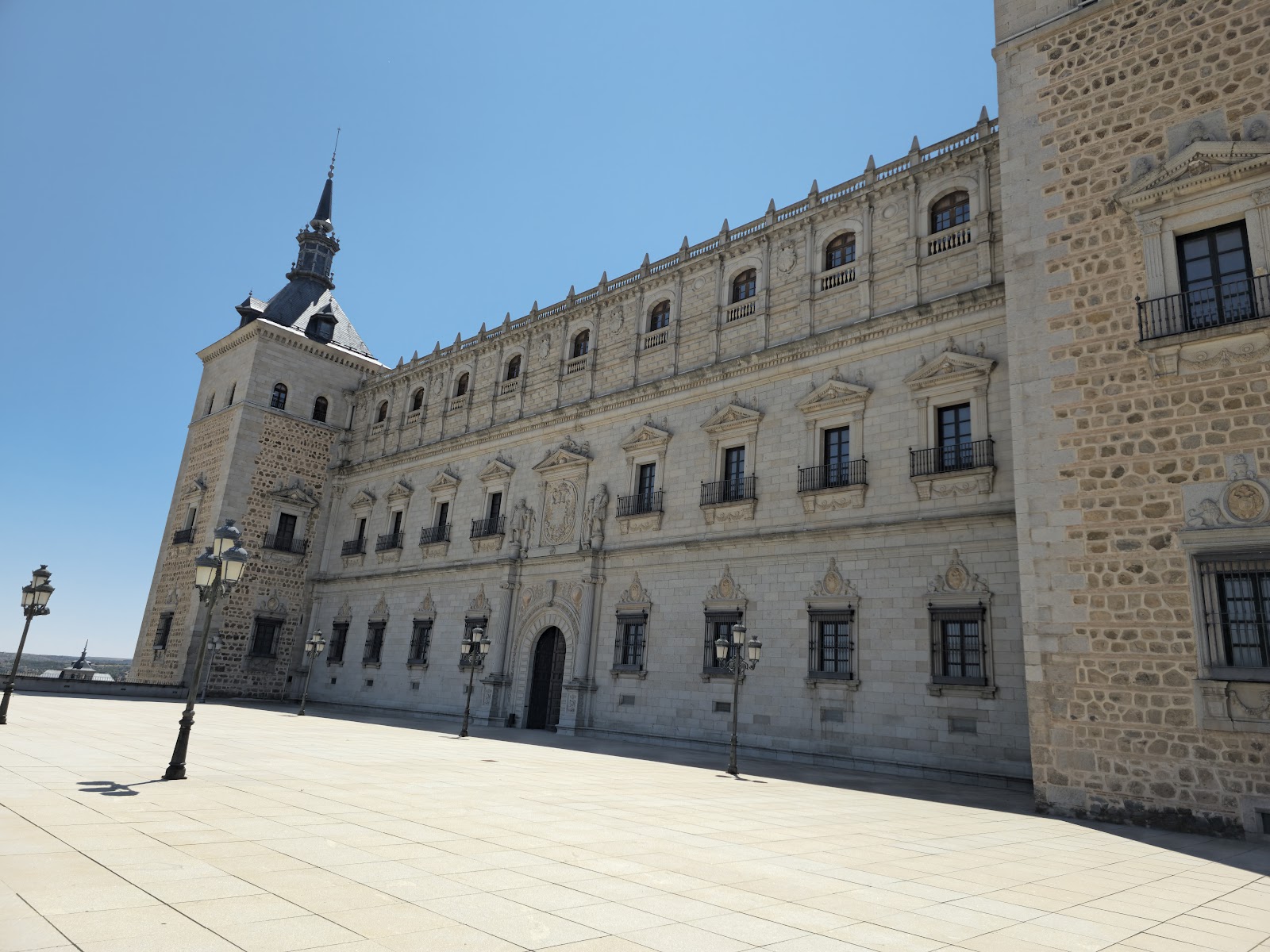
Today the building houses the Army Museum and, on an upper floor, the Regional Library of Castilla-La Mancha — one of the better-kept secrets for a view of the Toledo skyline. The Renaissance courtyard inside, with its Corinthian columns and imperial coat of arms, is worth the entrance fee on its own.
💛 What travellers fall for
People who come back tend to linger in Moscardó's office, preserved exactly as it was during the 1936 siege — papers on the desk, the telephone on the wall. The library floor, almost always quiet, gives you the kind of rooftop panorama most visitors never find. Go on a Wednesday for free entry.
The story behind Alcázar of Toledo
A Roman palace stood on this hill in the third century; by the tenth century Abd ar-Rahman III of Córdoba had turned the site into a fortress. Alfonso VI and Alfonso X the Wise later rebuilt it into a proper Alcázar with the square plan and corner towers still visible today.
The current structure dates from 1531, designed by Alonso de Covarrubias for Charles I — the same Charles who received Hernán Cortés here in 1521 after the conquest of the Aztecs. Philip II continued the work; Juan de Herrera completed the fortified towers. The building was gutted during the Spanish Civil War siege of 1936, when Colonel José Moscardó held it against Republican forces for months. Reconstruction ran from 1939 to 1957.
Good to know
From Toledo's train station it's a 20-minute uphill walk or a short ride on bus L5 or L12 to Zocodover, then a few minutes on foot. Open Tuesday through Sunday, 10:00–17:00; closed Mondays and major holidays. Budget at least ninety minutes. Last tickets sell thirty minutes before closing.
Where is Alcázar of Toledo?
More tickets & tours for Alcázar of Toledo
Book directly at the provider
What travellers say about Alcázar of Toledo
What a fantastic Town/City. Lots of public parking. The view is beautiful once you get to the top of the hill. On the way up the hill you will see the usual tourist shops, the real local shops are a little harder to find but there are some around.
I recommend not taking this place too seriously, pick and choose what interests you and skip the rest. Being from the US, I really appreciate the "opposite" point of view on exploration of America. We had a good laugh in the armor room (see pics) and overall enjoyed the experience.
Alcazar is the historical crown jewel of Toledo, Spain. It will take atleast 2 hours to see everything and well worth it with permanent and temporary exhibitions, gardens, overlooks and even a full restaurant. Taxi stop is also here if needing a quick trip to the train. Or if you have time many shops are within 5 minutes walking.
The Alcázar of Toledo is one of the city’s most iconic historic landmarks, perched atop a hill overlooking the old town. Its massive and majestic architecture showcases a blend of Renaissance and Spanish military styles. Visiting it provides a unique opportunity to explore Toledo’s history, admire architectural art, and enjoy stunning views of the city.
Closed for renovations during our visit but you can still enter the space and see the foundations, the views from there are also very nice, like almost everywhere in Toledo.
More of Toledo
Discover where to stay, what to do and the best deals for your trip.
Explore Toledo →More attractions in Toledo
All of Toledo →


Background adapted from Wikipedia (CC BY-SA) · map data © OpenStreetMap contributors · ratings & place photos via Google · other photos with per-image credit. Ticket links may earn us a commission at no extra cost to you.