Jalapão State Park, Tocantins
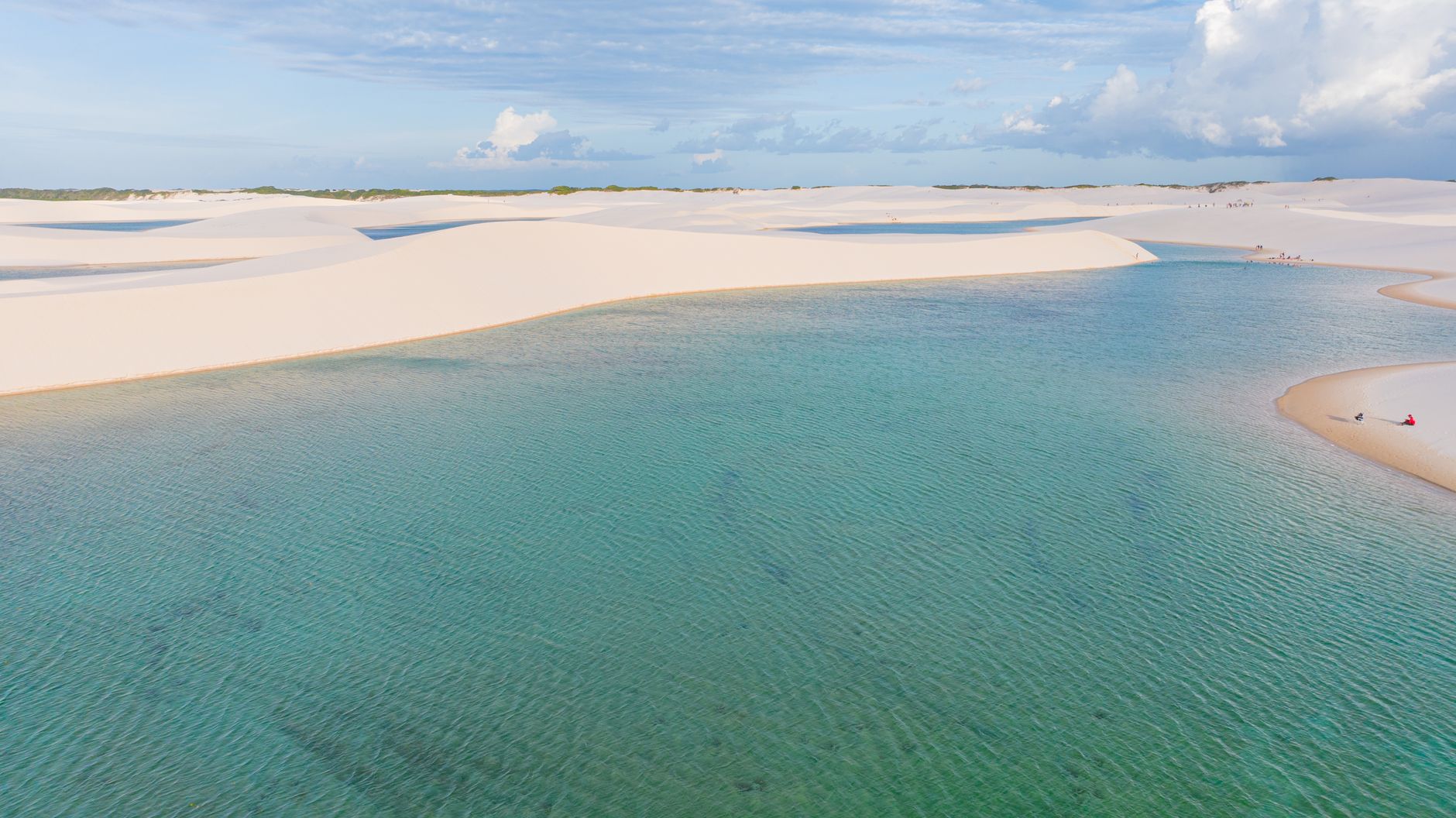
Jalapão is the Brazilian interior's best-kept secret: a vast, almost roadless wilderness in the state of Tocantins where rust-red sand dunes rise beside gin-clear rivers, fervedouros (natural springs that push water upward with such force you literally cannot sink) bubble out of the cerrado, and golden capim dourado grass is woven by local artisans into jewellery sold nowhere else on earth.

The Fervedouros and Canyons
The park's most extraordinary feature is its fervedouros — freshwater springs where underground pressure forces water upward at such velocity that it suspends swimmers at the surface regardless of how hard they try to dive down. Fervedouro do Ceiça and Fervedouro da Sussuapara are the most accessible and most beautiful, ringed by cerrado vegetation and frequented by kingfishers.
The Serra do Espírito Santo canyon cuts a dramatic red-rock gorge through the landscape, and the Cachoeira da Velha waterfall — one of the widest in Brazil — crashes across a broad basalt shelf in a sheet of white water that you can wade right up to the edge of during the dry season.

Practical Realities of Getting There
Jalapão is genuinely remote. The nearest city is Palmas, the state capital, from which the park is a 4–6 hour drive on unpaved roads that become impassable in the wet season. All visits require a high-clearance 4WD, and most travellers join a guided expedition departing from Palmas, typically 4–7 days long.
The best time to visit is June to September, when the rivers are low and clear, the fervedouros are at their most vivid, and the capim dourado grass turns a luminous gold. Local Quilombola communities near the village of Mumbuca produce the famous golden-grass handicrafts — buying directly from them ensures the income reaches the artisans.

More of Brazil
Discover where to stay, what to do and the best deals for your trip.
Explore Brazil →