
Zakynthos
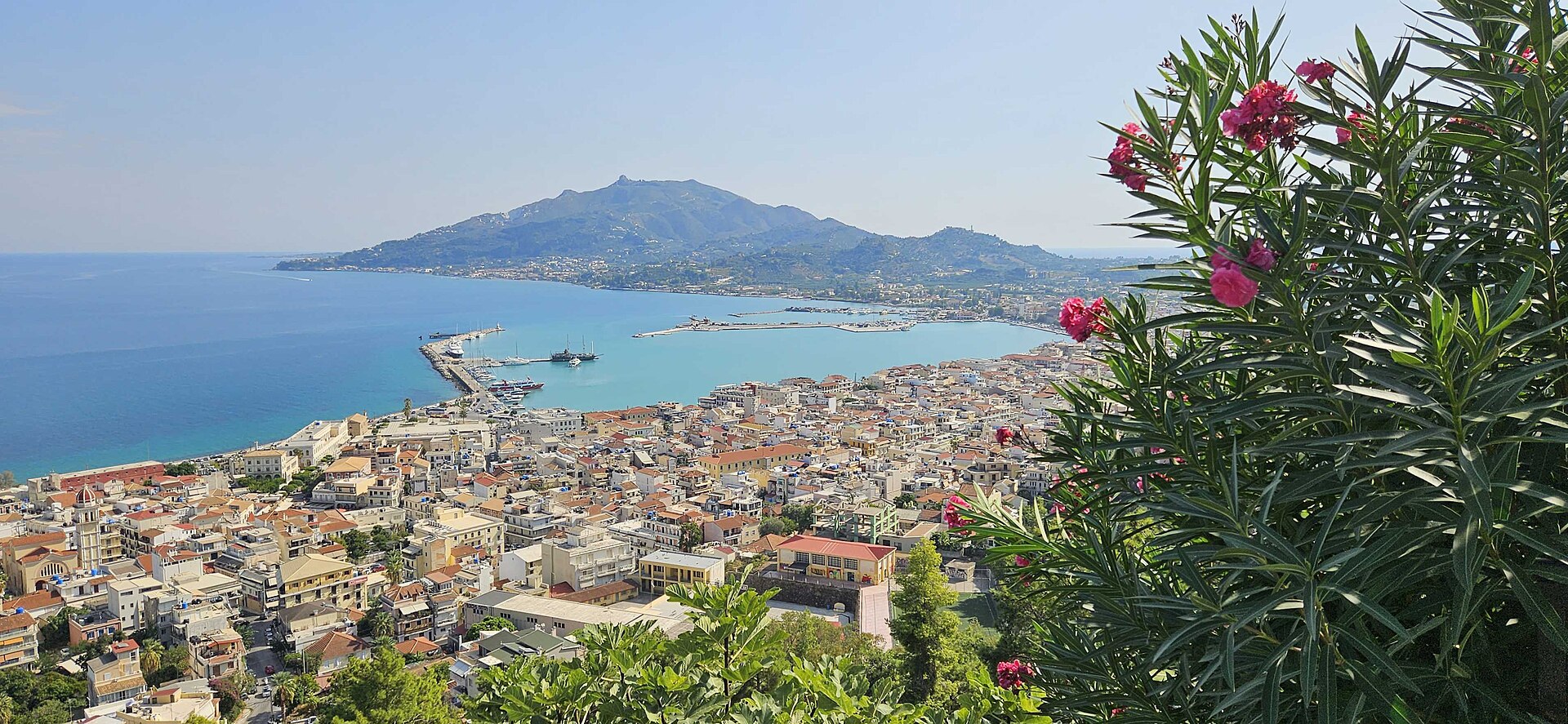
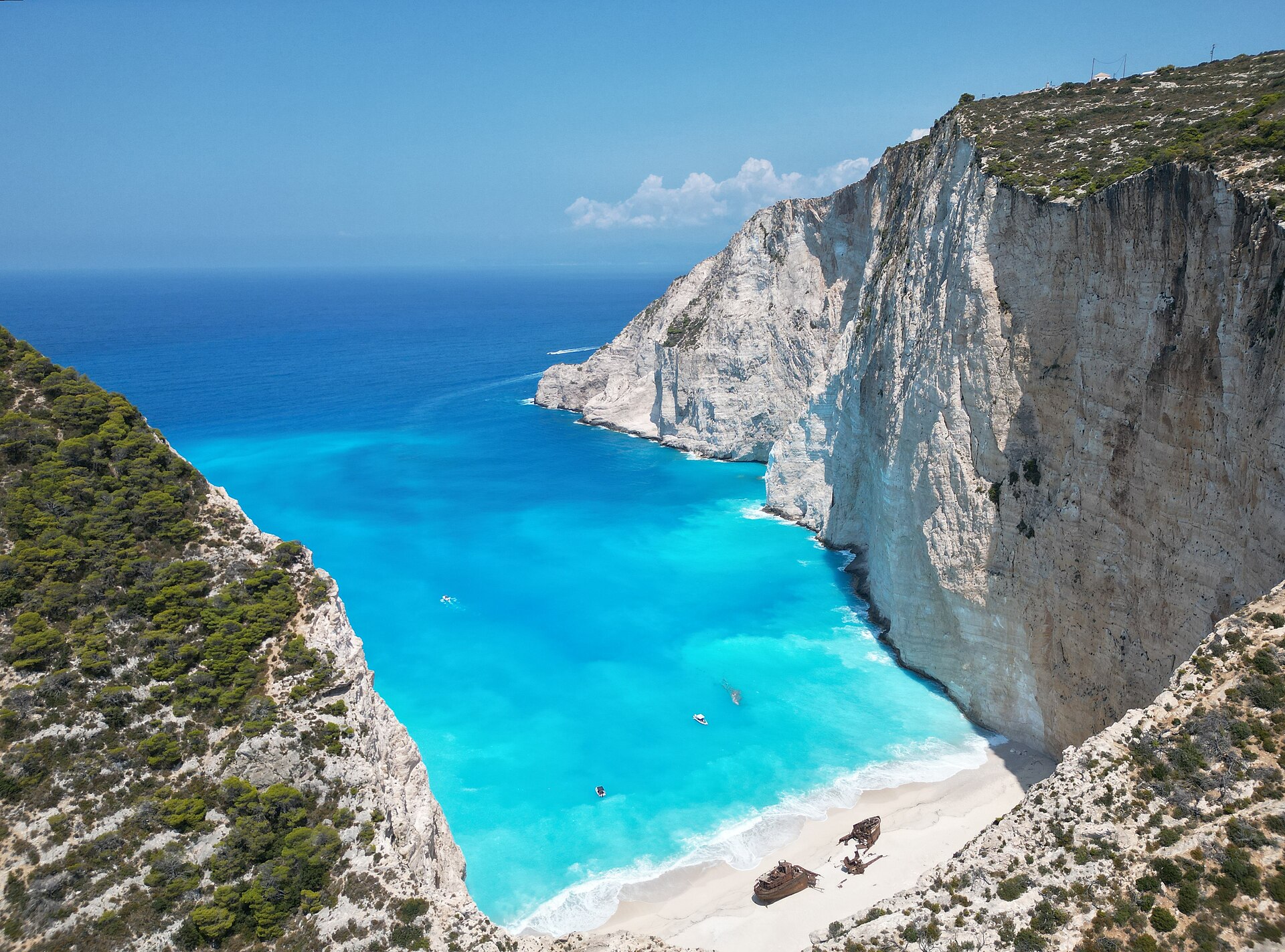
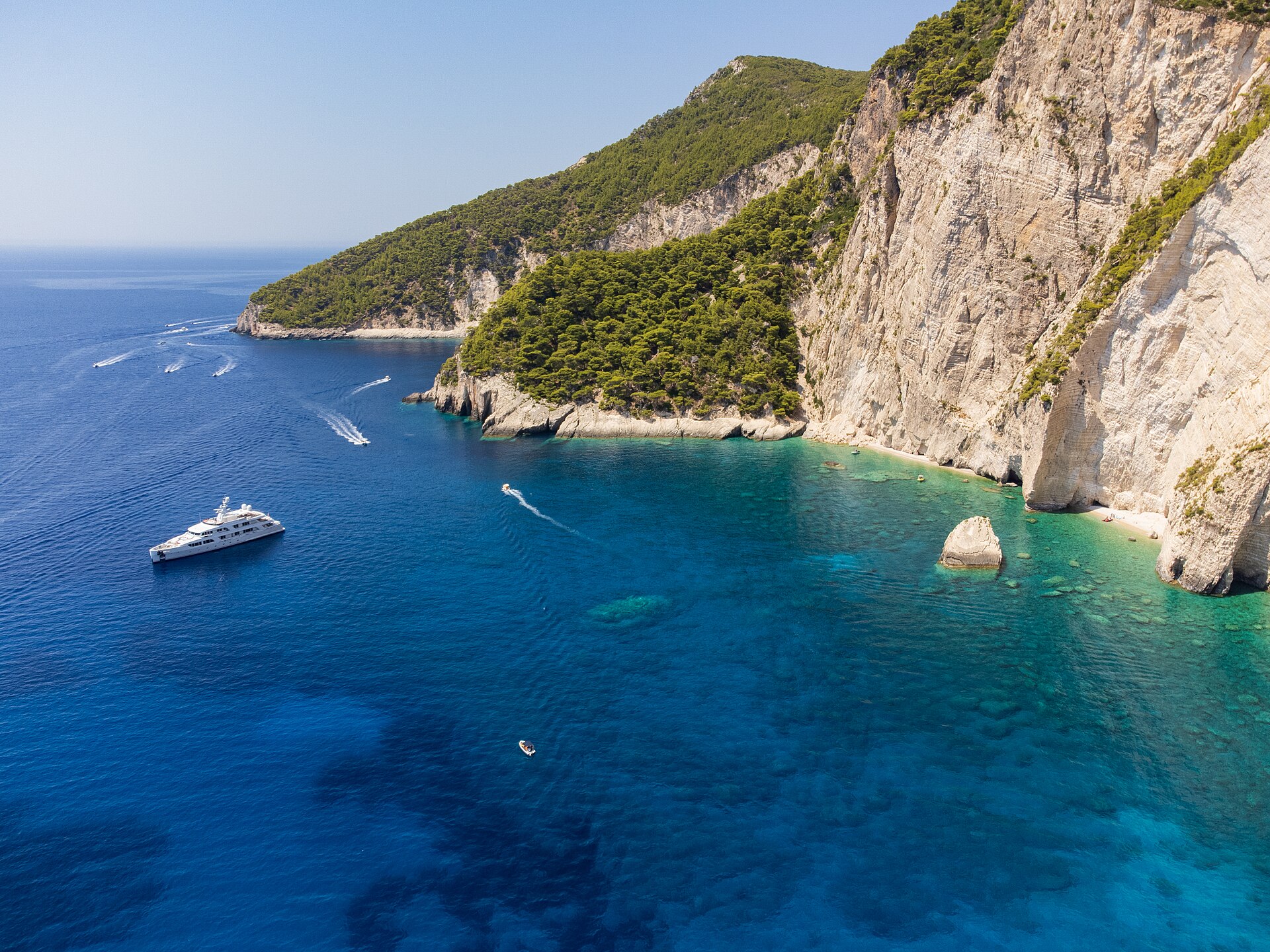
Zakynthos sits in the Ionian Sea with a reputation built almost entirely on one photograph — the rusted shipwreck on Navagio Beach, framed by white cliffs. That image is real, and it earns its fame. But the island is also the birthplace of the man who wrote the Greek national anthem, a place where a Renaissance anatomist washed ashore and never left, and a landscape shaped by Venetian stone-cutters for three centuries.
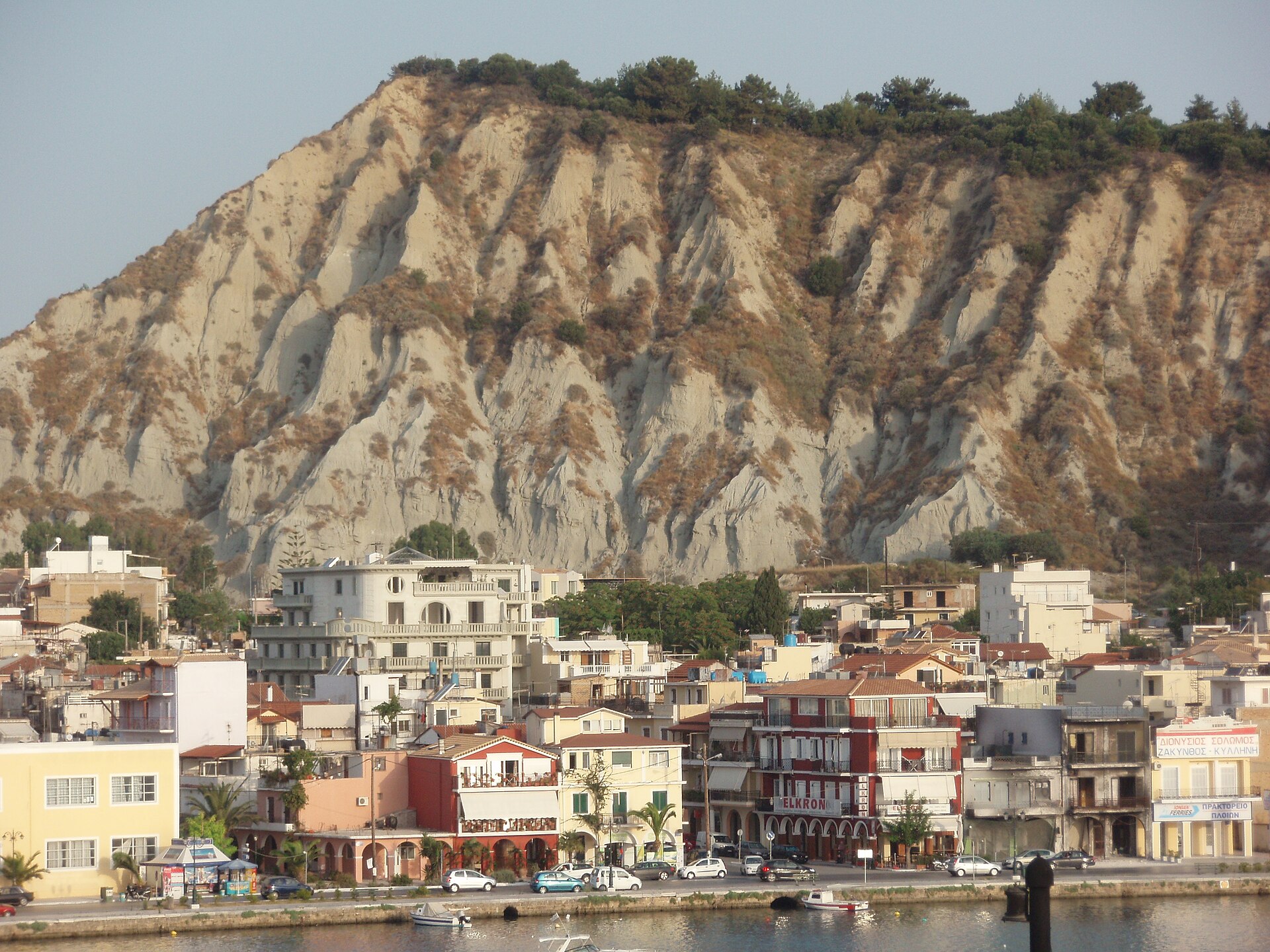
The main town, rebuilt after a catastrophic 1953 earthquake, carries its history in the arcaded square named for poet Dionysios Solomos and in the few Venetian-era buildings that survived the shaking. Beyond the town, olive groves give way to limestone cliffs, loggerhead turtle beaches, and villages the bus barely reaches.
💛 What travellers fall for
People who come back tend to rent a car from day one — the KTEL buses cover the town well enough but leave the best coastal roads to you. They also mention the Monastery of Anafonitria in the cooler morning hours, before the tour coaches arrive, and a late dinner on Solomos Square when the light on the campanile of Saint Dionysios turns amber.
How Zakynthos came to be
According to Homer, the island takes its name from Zakynthos, son of the Trojan king Dardanos, whose men settled here around the 15th or 16th century BC. The long middle chapter of its story belongs to Venice: from 1484 to 1797, Venetian rule left its mark in the architecture of the town, the fortress at Bohali — built over the ancient acropolis — and the olive cultivation that still defines the interior.
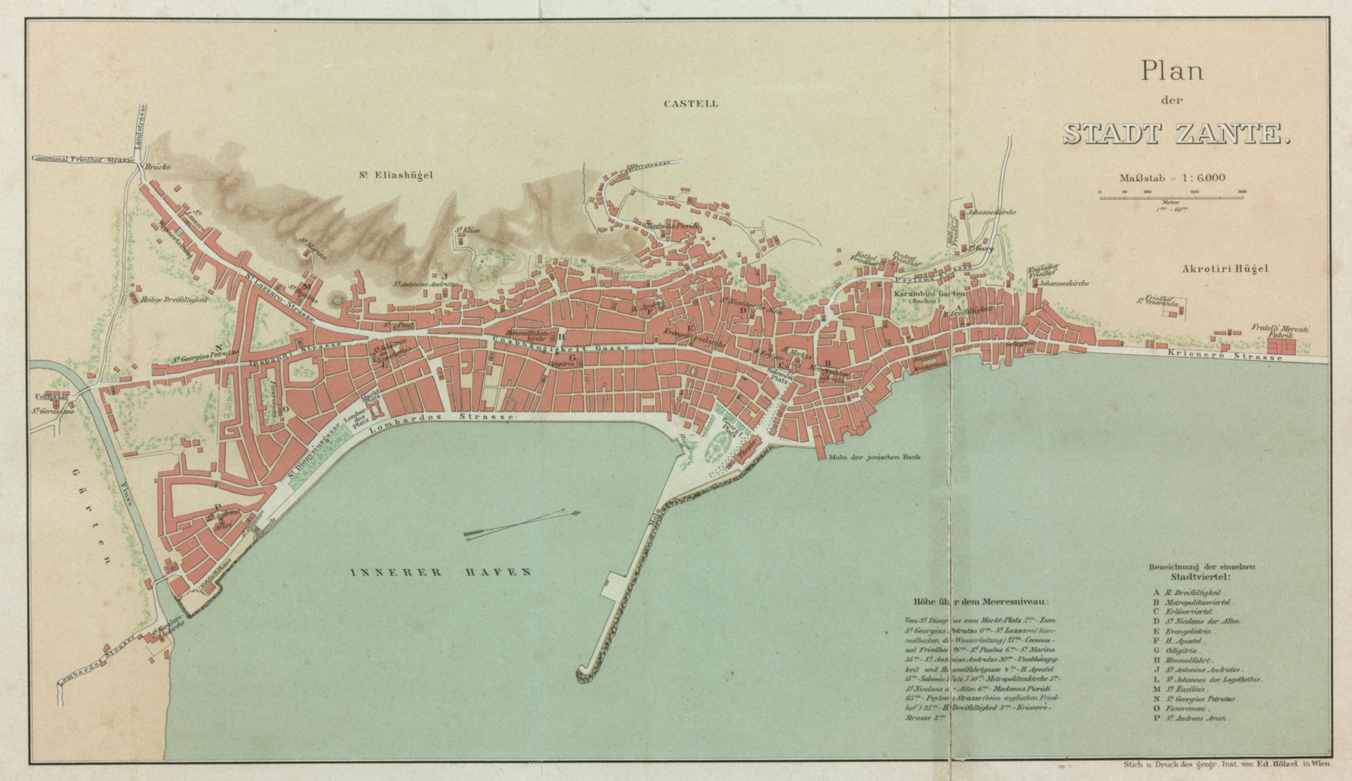
The British held the island from 1809, briefly making it the capital of the Ionian State and carrying out conservation work on the Bohali castle walls in 1812. Zakynthos joined the Greek state on 21 May 1864. Then, in August 1953, one of the most destructive earthquakes in modern Greek history levelled much of the historic town. What you walk through today is largely a mid-20th-century reconstruction, though the Church of Saint Dionysios and the Venetian-style Church of Agios Nikolaos Molos on Solomos Square survived.
Who and what shaped it
People who shaped it
Landmark buildings
See Zakynthos in motion
Plan your visit
On the map
When to go
Summers are hot and dry — August averages 27°C — with reliable sunshine from May through September, which is also when the island is at its busiest. January sits around 11°C with rain; the off-season is quiet, green, and considerably cheaper.
Right now
Background & history adapted from Wikipedia (CC BY-SA) · specs from Wikidata (CC0) · weather from Open-Meteo · map data © OpenStreetMap contributors · photos from Wikimedia Commons / Unsplash with per-image credit. No third-party reviews or social posts reproduced.