
Zaanse Schans
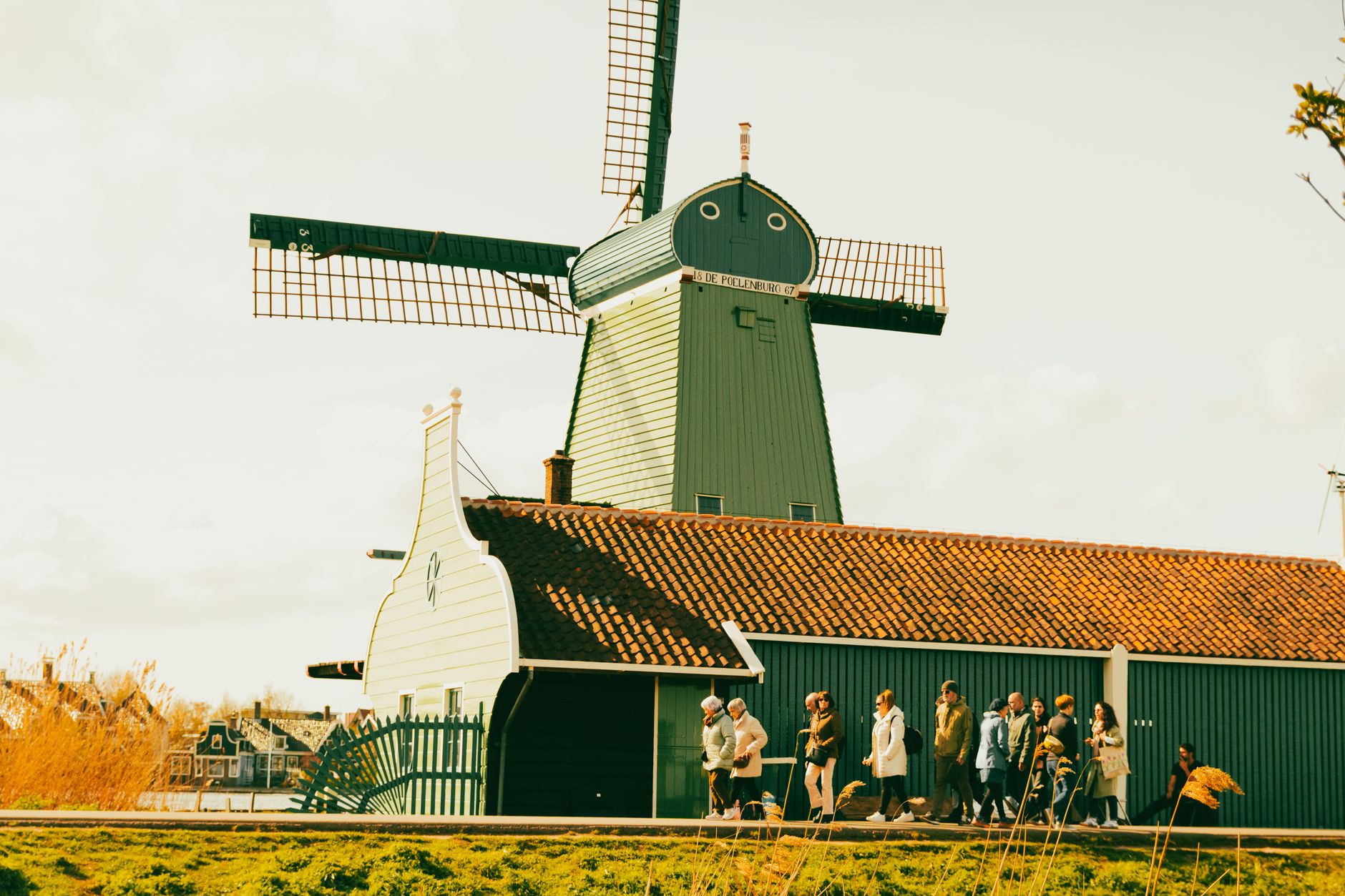
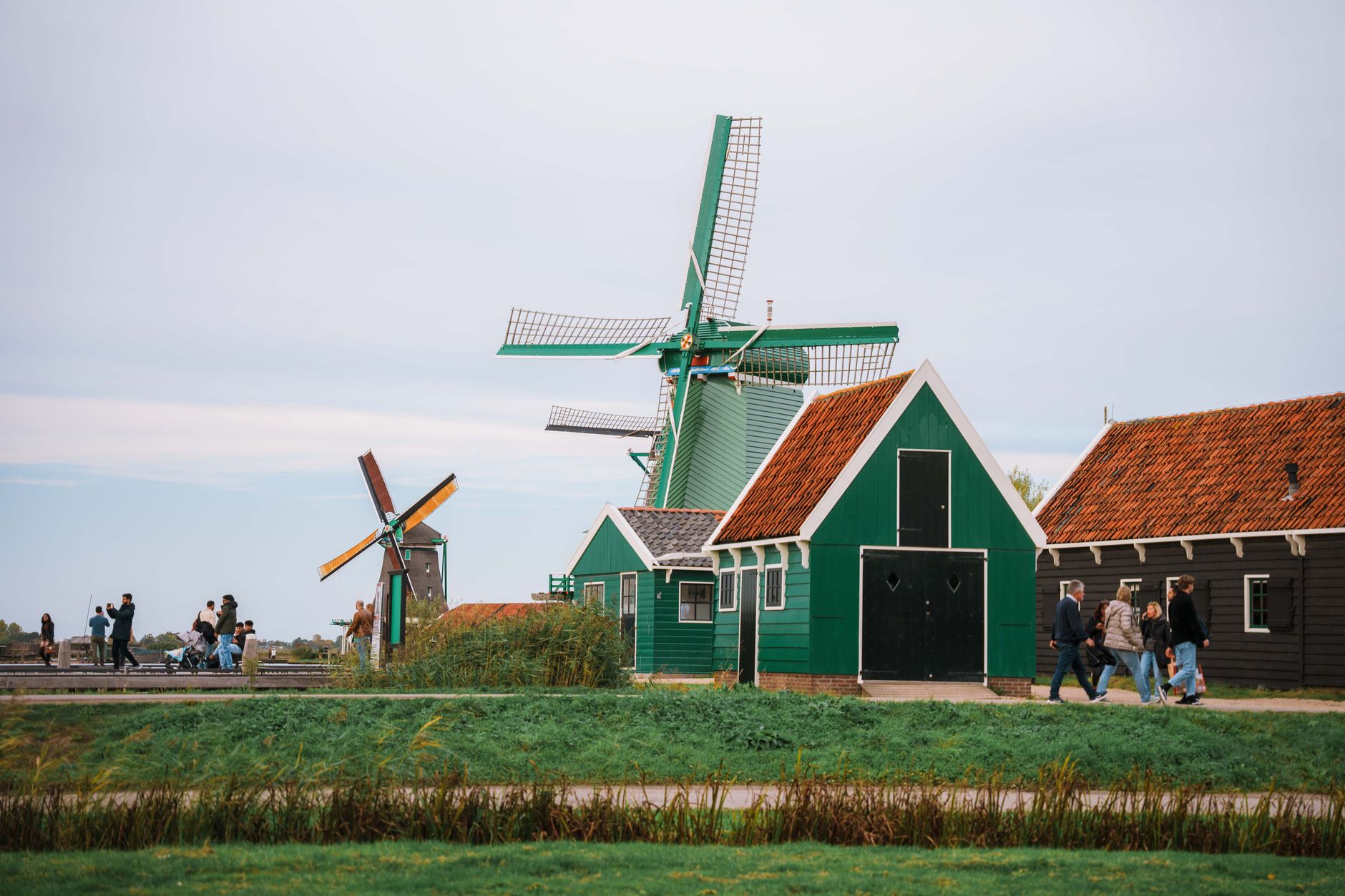
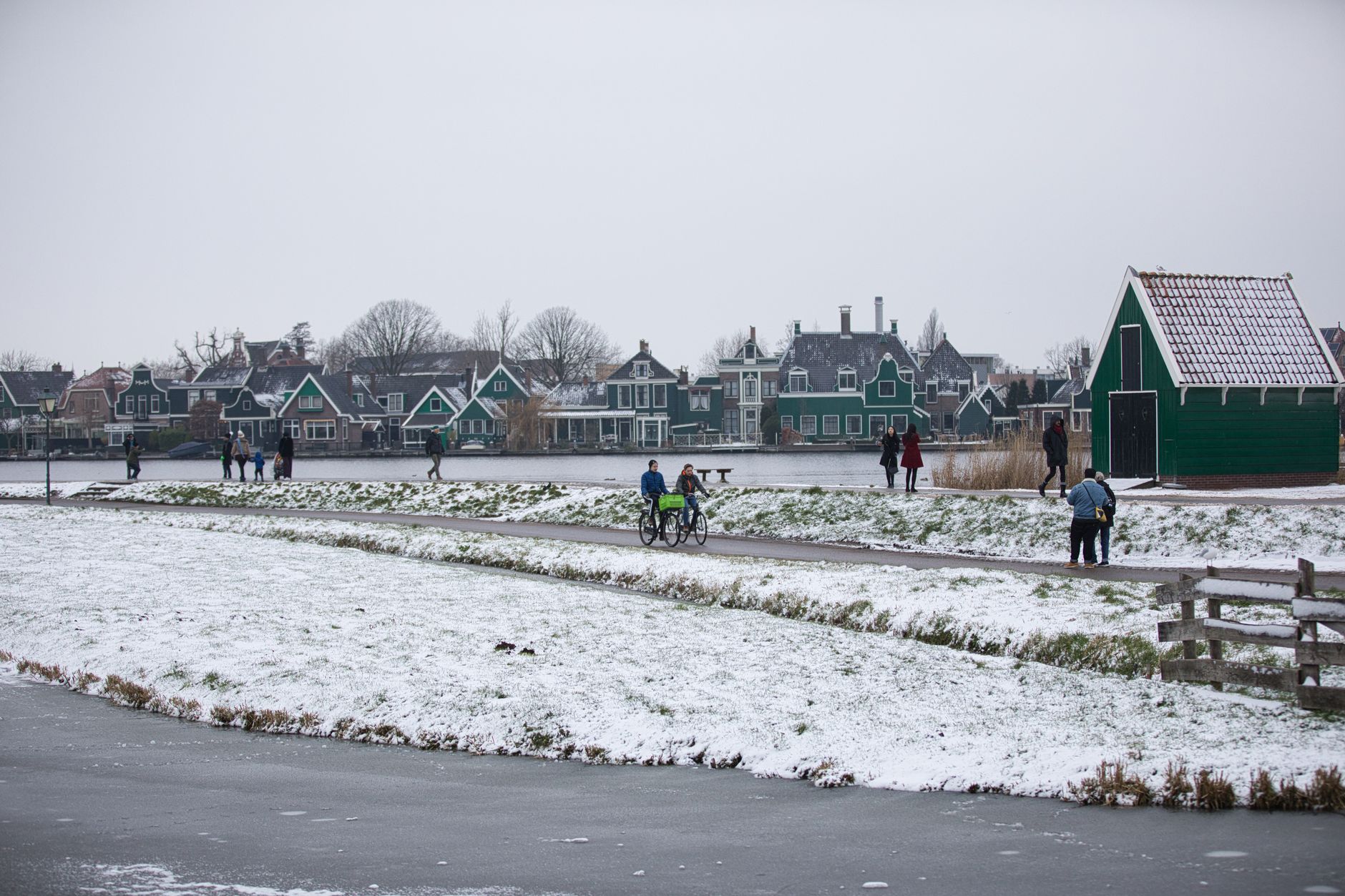
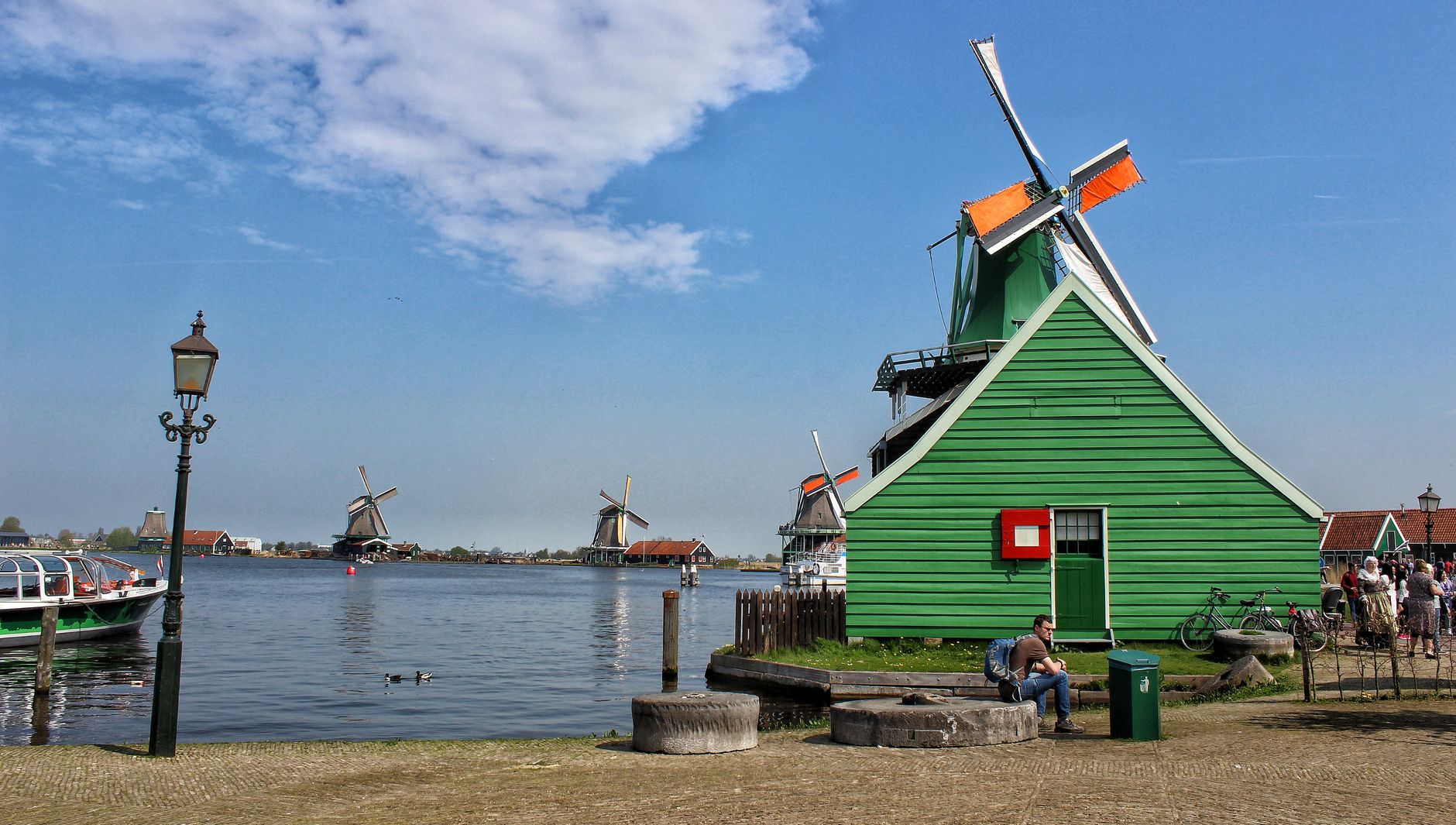
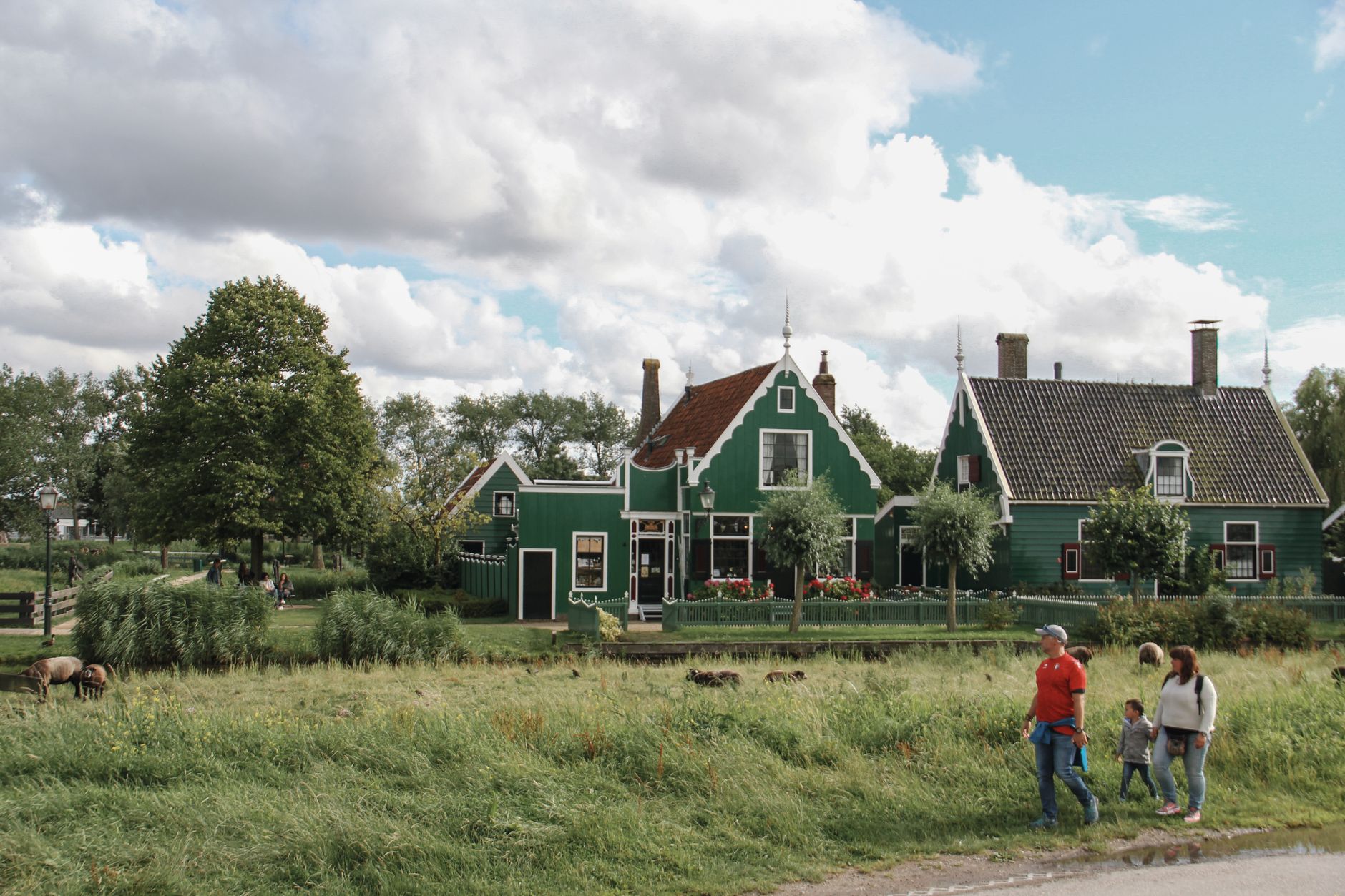
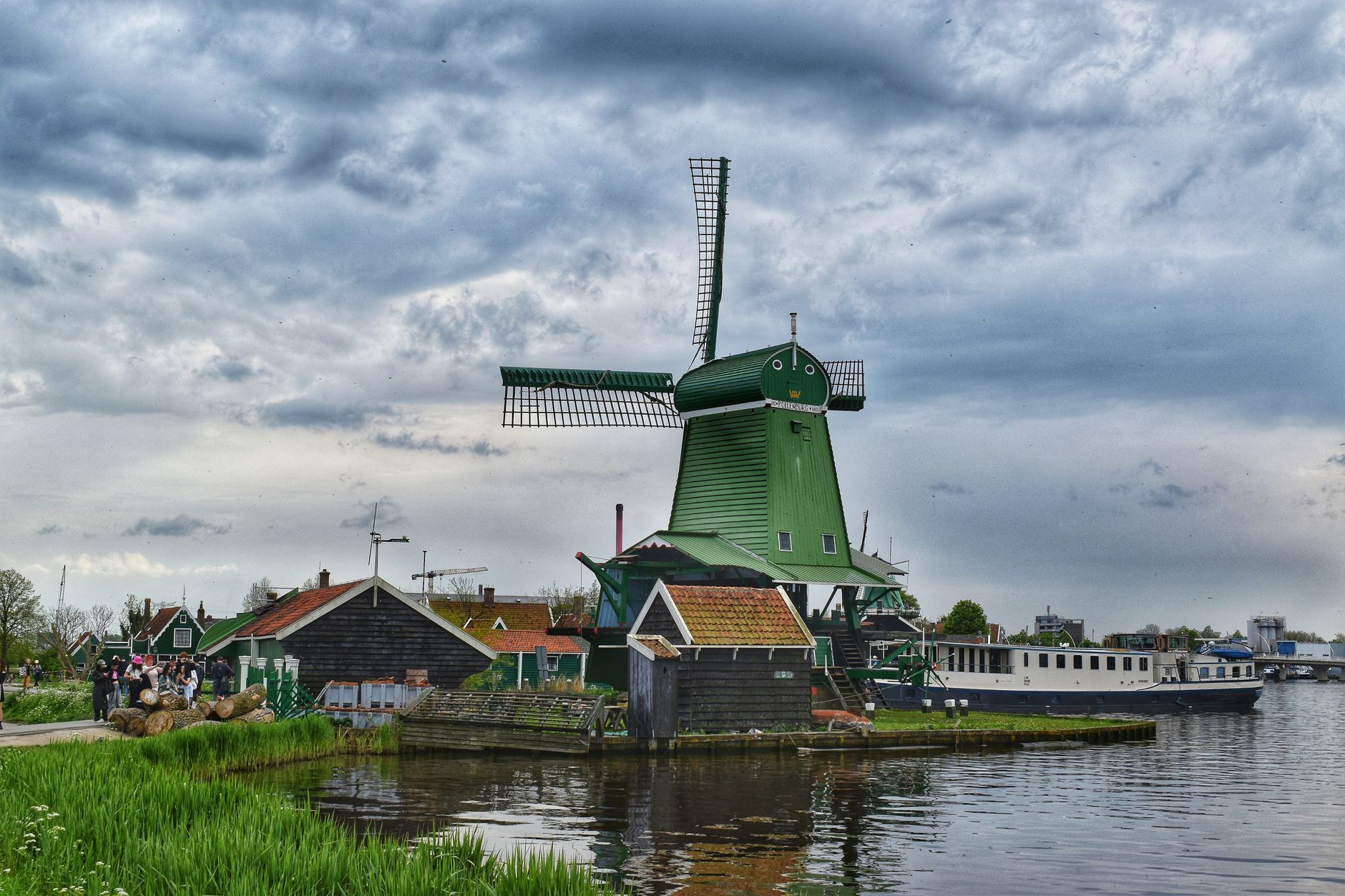
The first thing you notice is that someone has left a bicycle against a green-painted fence, and there's washing on the line. Zaanse Schans is not a reconstruction or a theme park — it's a neighbourhood of genuine 17th- and 18th-century Zaan-region buildings, relocated here board by board from the 1960s onward, where people still live and children cycle to school. The windmills turning overhead are real working mills, not props.
Thirteen windmill buildings stand along the Kalverringdijk, several of them grinding mustard, making paint pigment or pressing oil just as they did centuries ago. You can climb inside the operating ones between April and October, and the oldest — De Zoeker, from 1609 — has been doing its work for over four hundred years.
💛 What travellers fall for
People who come back tend to arrive on a weekday morning before the tour groups, walk the full length of Kalverringdijk, and linger inside De Kat or De Zoeker rather than photographing from the path. The Zaans Museum, just south of the village, rewards a proper hour — it's quieter than the mills and gives the industrial history real context.
How Zaanse Schans came to be
The idea of gathering the Zaanstreek's disappearing vernacular buildings into one place came from mayor Joris in 't Veld. Architect Jaap Schipper found the location — the Kalverpolder — and designed the site, while educator and painter Frans Mars, who had already founded the De Zaansche Molen mill-preservation association back in 1925, gave it its name. Between 1961 and 1974, historic houses, workshops and windmills from across the region arrived on lowboy trailers. The first mill, De Huisman (originally dating to 1786), had actually been moved to the site as early as 1955. Queen Juliana formally opened Zaanse Schans in 1972.
The foundation Stichting de Zaanse Schans, established in 1961, has overseen the site ever since, with a mandate to preserve it as a living place rather than a museum exhibit — a distinction that still holds: the houses are occupied, and the residents would prefer you keep a respectful distance.
Who and what shaped it
People who shaped it
Landmark buildings
See Zaanse Schans in motion
Plan your visit
On the map
When to go
The Netherlands runs on a temperate maritime rhythm: mild, damp winters and cool summers, with wind a near-constant companion — which is, at Zaanse Schans, entirely appropriate. April through October is the most rewarding window, when the majority of the windmills are open and the low northern light makes the green-painted timber look its best.
Right now
Background & history adapted from Wikipedia (CC BY-SA) · specs from Wikidata (CC0) · weather from Open-Meteo · map data © OpenStreetMap contributors · photos from Wikimedia Commons / Unsplash with per-image credit. No third-party reviews or social posts reproduced.