
Yunnan Province (Lijiang & Dali)



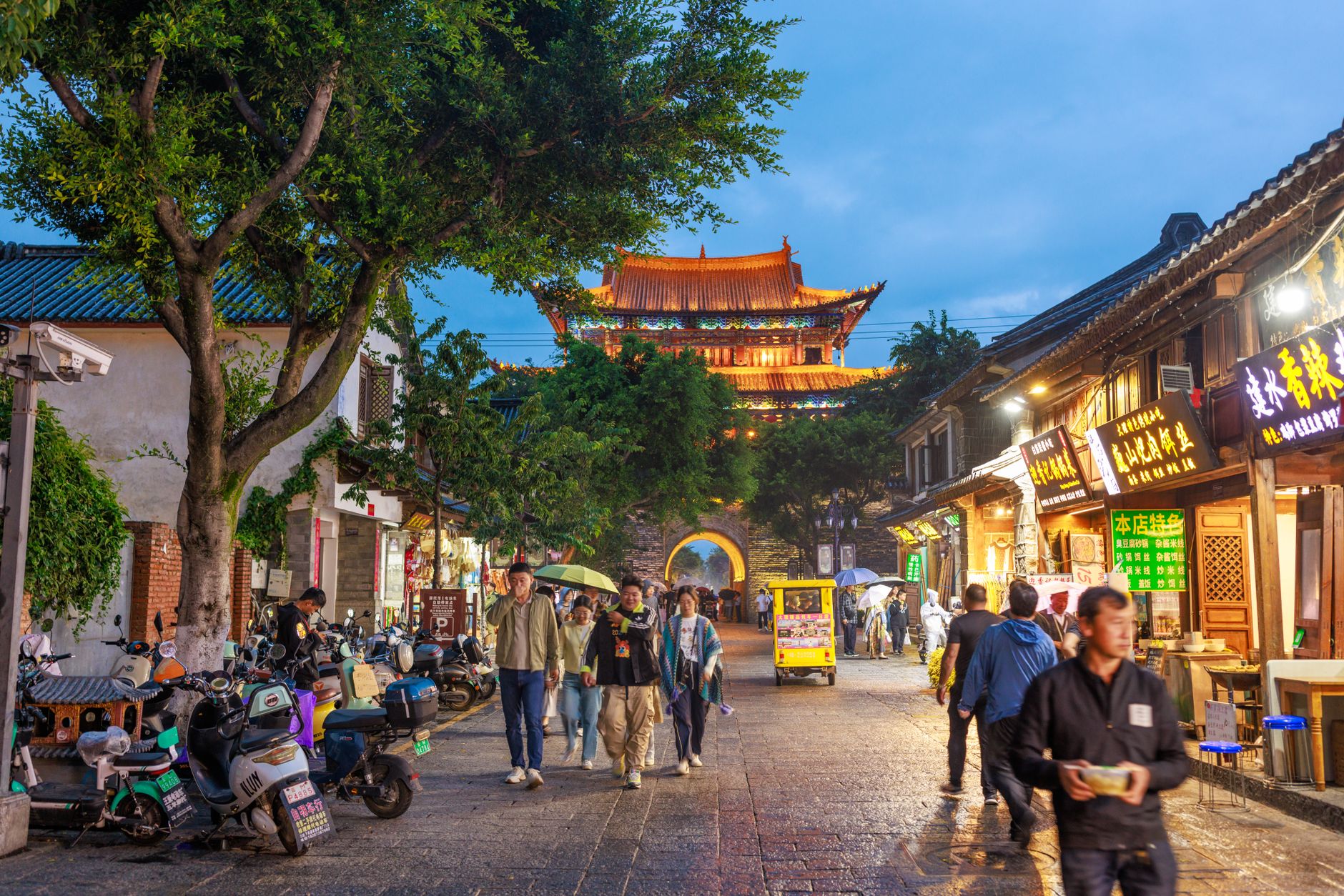
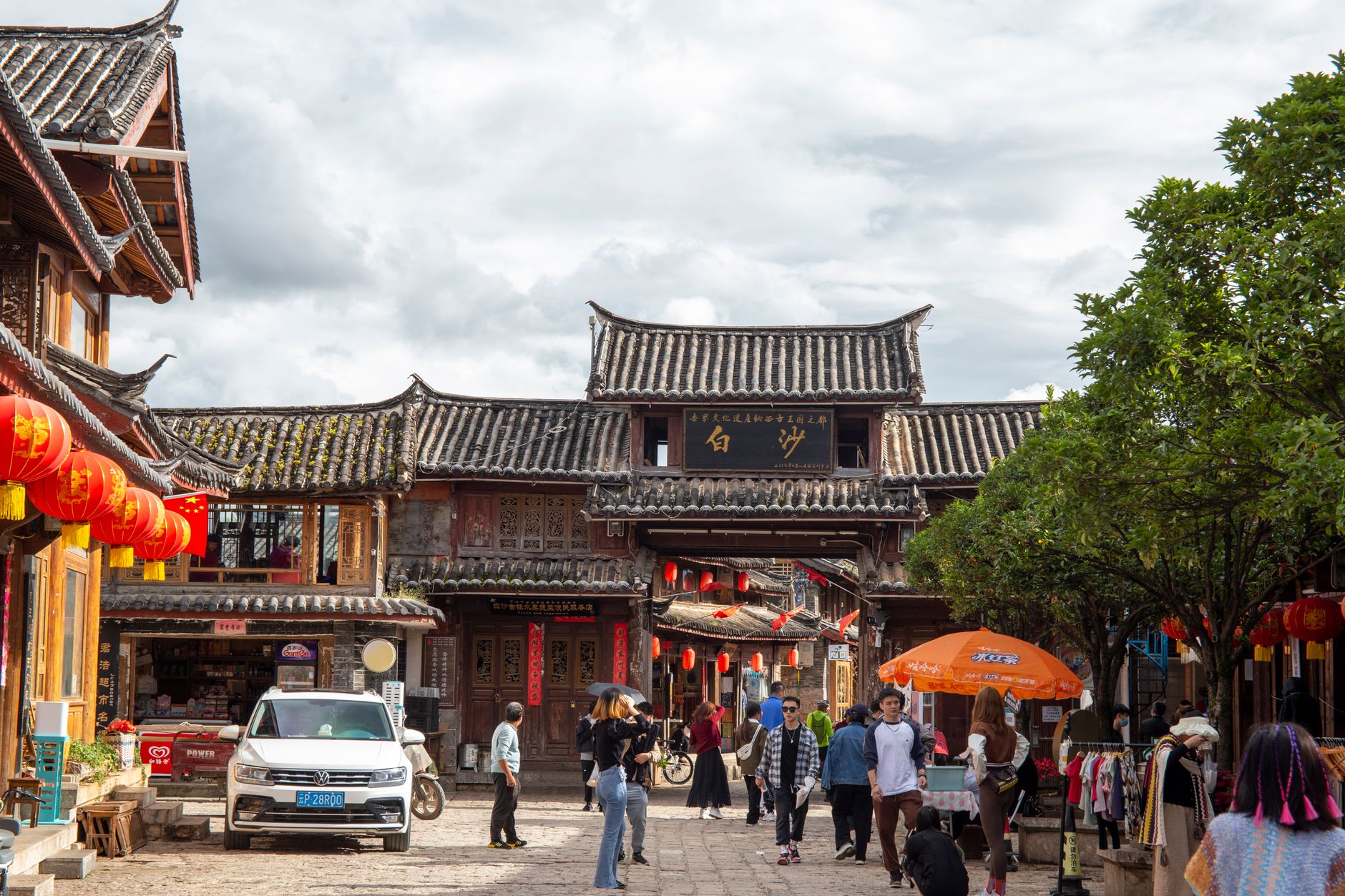

Yunnan's northwest corner holds two old towns that have almost nothing in common except altitude and the fact that people keep coming back. Lijiang's Dayan quarter runs on water — canals fed by Black Dragon Pool lace beneath 354 stone bridges, and at midnight a sluice opens to flush the bluestone lanes clean. Dali sits further south under the long wall of the Cangshan mountains, its Ming-dynasty grid still intact, its South Gate tower standing for over six hundred years above the road to Erhai Lake.
Between the two towns you'll find the Naxi and Bai cultures, yak butter tea sold at open-air markets, and a pace that rewards wandering over planning. A half-day inside each old town is enough to orient yourself; the surrounding countryside asks for more.
💛 What travellers fall for
People who return to this corner of Yunnan tend to plant themselves at Lijiang's Zhongyi Market early, when Naxi vendors are still arranging fresh walnuts. They also learn fast that Lijiang's 80 RMB entrance fee is a one-year pass — worth holding onto if you're coming back through. In Dali, the walk along the old city walls at dusk, with Cangshan going pink behind you, rarely gets old.
How Yunnan Province (Lijiang & Dali) came to be
Lijiang's Dayan quarter took shape in the late Song and early Yuan dynasties — roughly 800 years ago — under the Mu family, Naxi chieftains who held the city from its founding until the Yongzheng reign of the Qing. One architectural curiosity survives from their rule: Dayan was built without city walls. The character for 'Mu' enclosed in a frame reads as 'Kun,' meaning siege or predicament, so the walls were simply never raised. UNESCO recognised the old town in December 1997.
Dali has an older wound at its centre. The Kingdom of Dali, founded by Duan Siping in 937, ended in 1253 when Kublai Khan's Mongol cavalry rode in and captured the last king. The Yuan Dynasty made Dali the first administrative seat of the newly formed Yunnan Province before shifting the capital to Kunming. The Ming took the city in 1382 and built the walls and gate towers — including the South Gate and Wenxian Tower — that still define the old town today.
Who and what shaped it
People who shaped it
Landmark buildings
See Yunnan Province (Lijiang & Dali) in motion
Plan your visit
On the map
When to go
Both towns sit above 2,000 metres, so mornings and evenings run cool even in summer; Lijiang locals describe the Yunnan north as a place where you pass through all four seasons in a single day. June through September brings the bulk of the year's rain — roughly 80 percent of Lijiang's annual 970 mm falls in those months — while winter days are often clear and mild, though nights drop below freezing.
Right now
Background & history adapted from Wikipedia (CC BY-SA) · specs from Wikidata (CC0) · weather from Open-Meteo · map data © OpenStreetMap contributors · photos from Wikimedia Commons / Unsplash with per-image credit. No third-party reviews or social posts reproduced.