
Yellowstone National Park
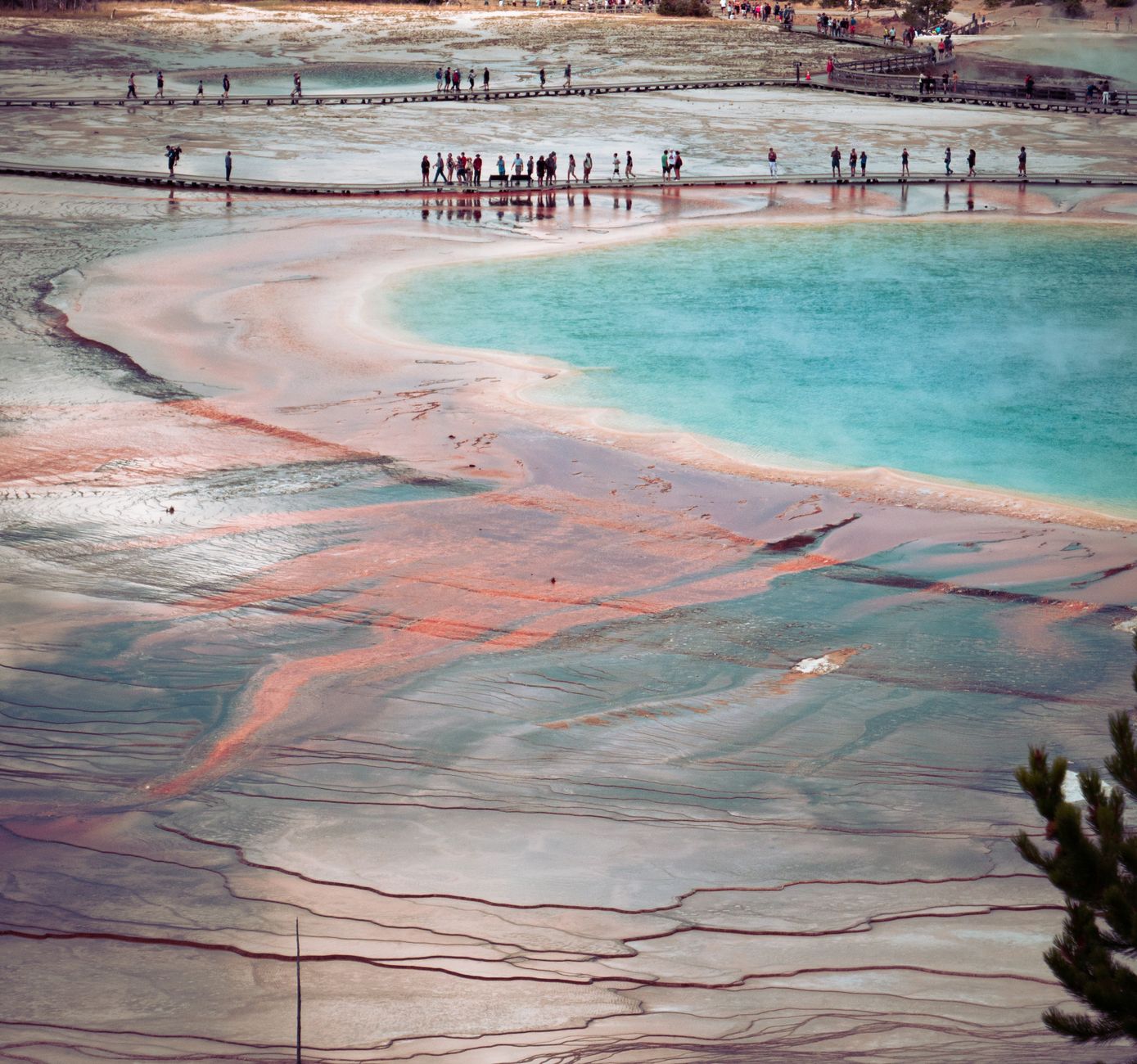
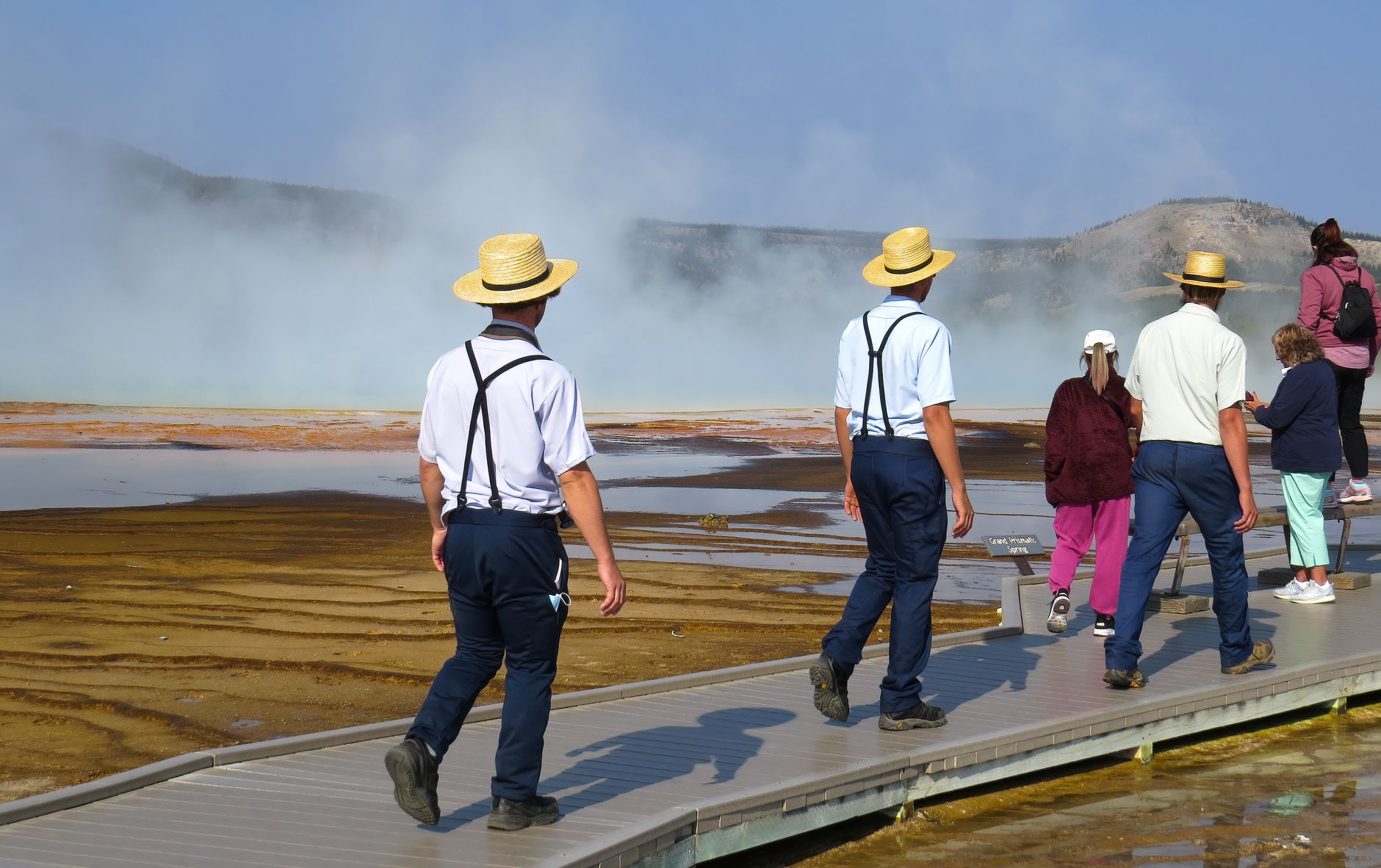
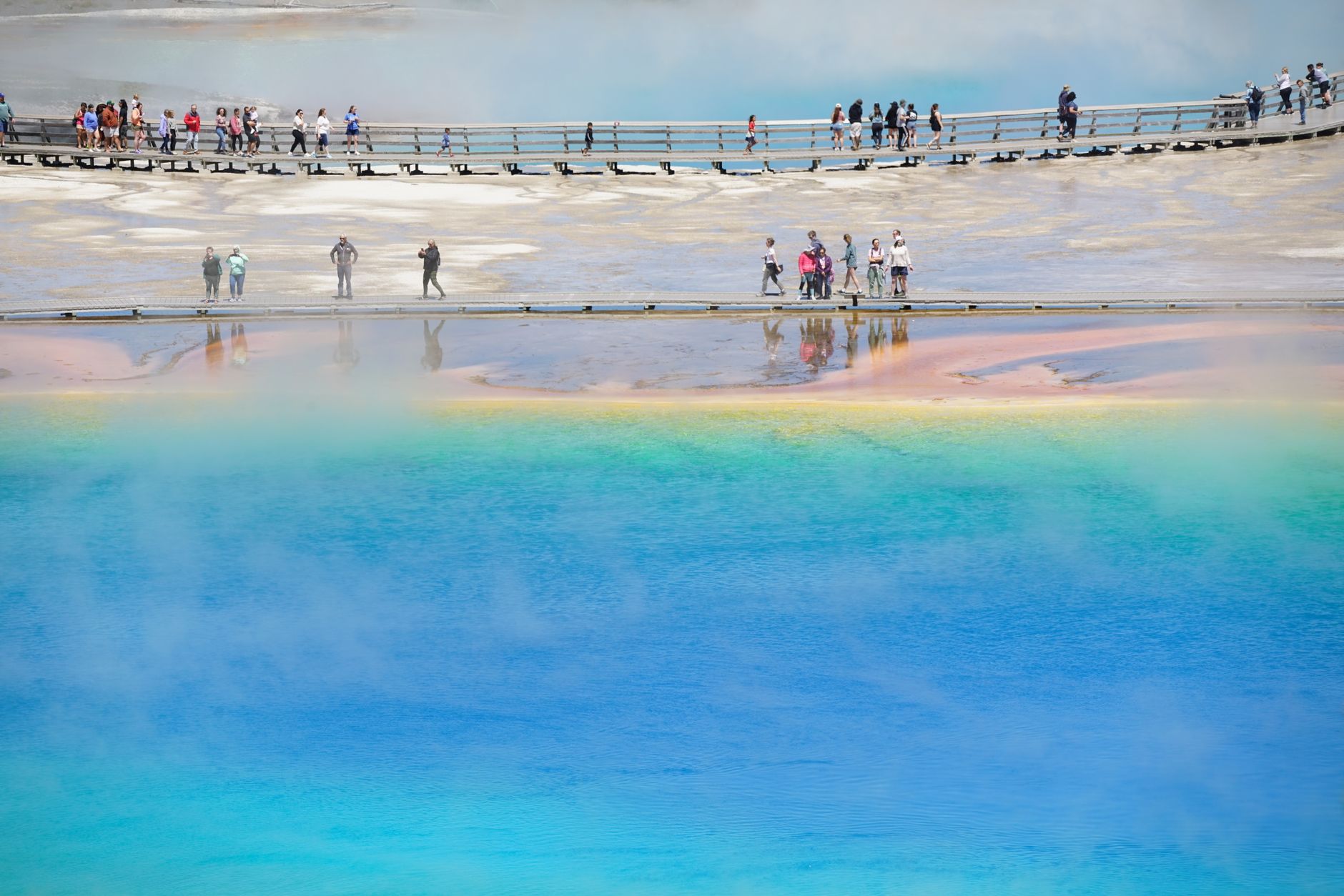
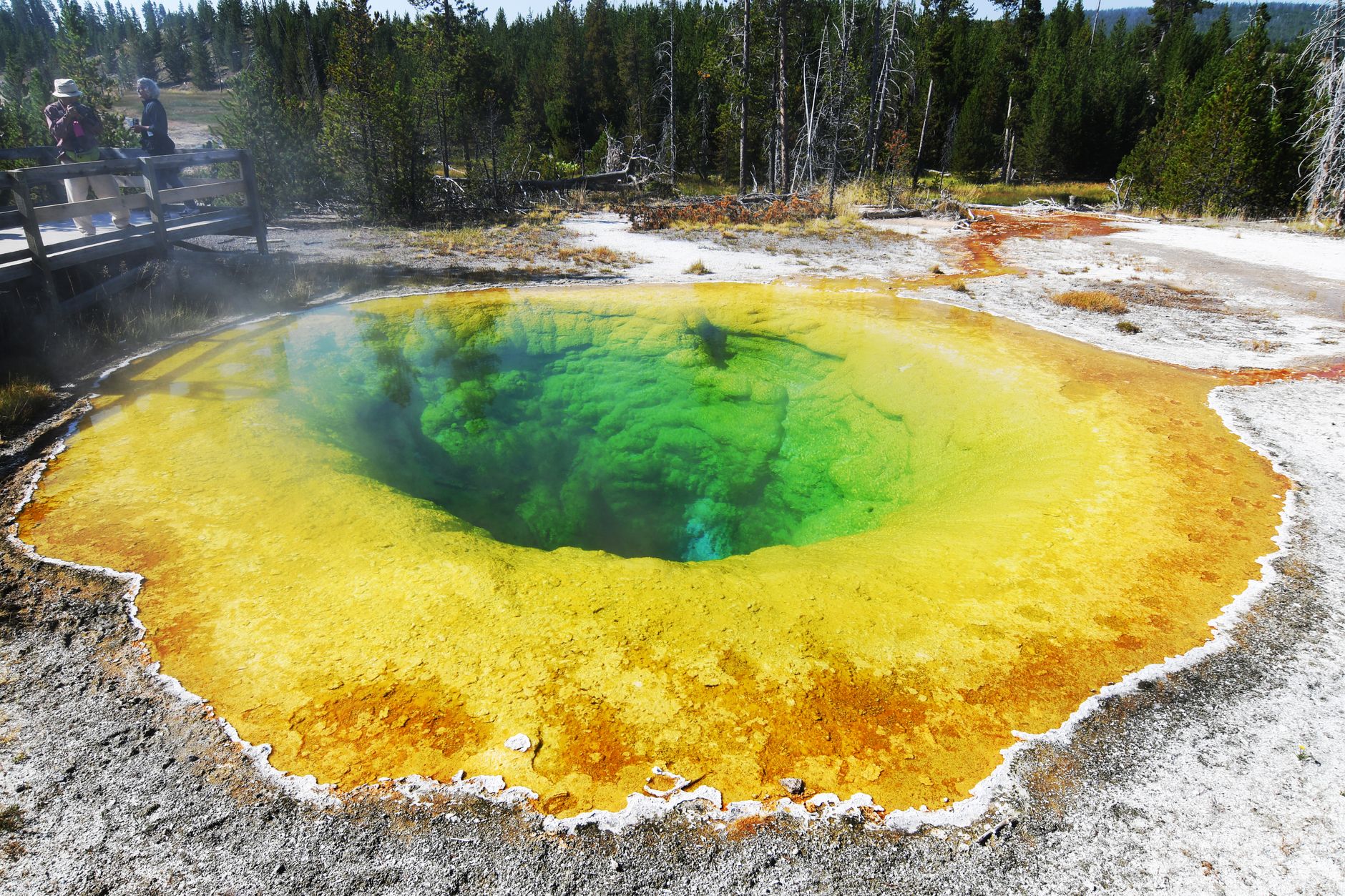

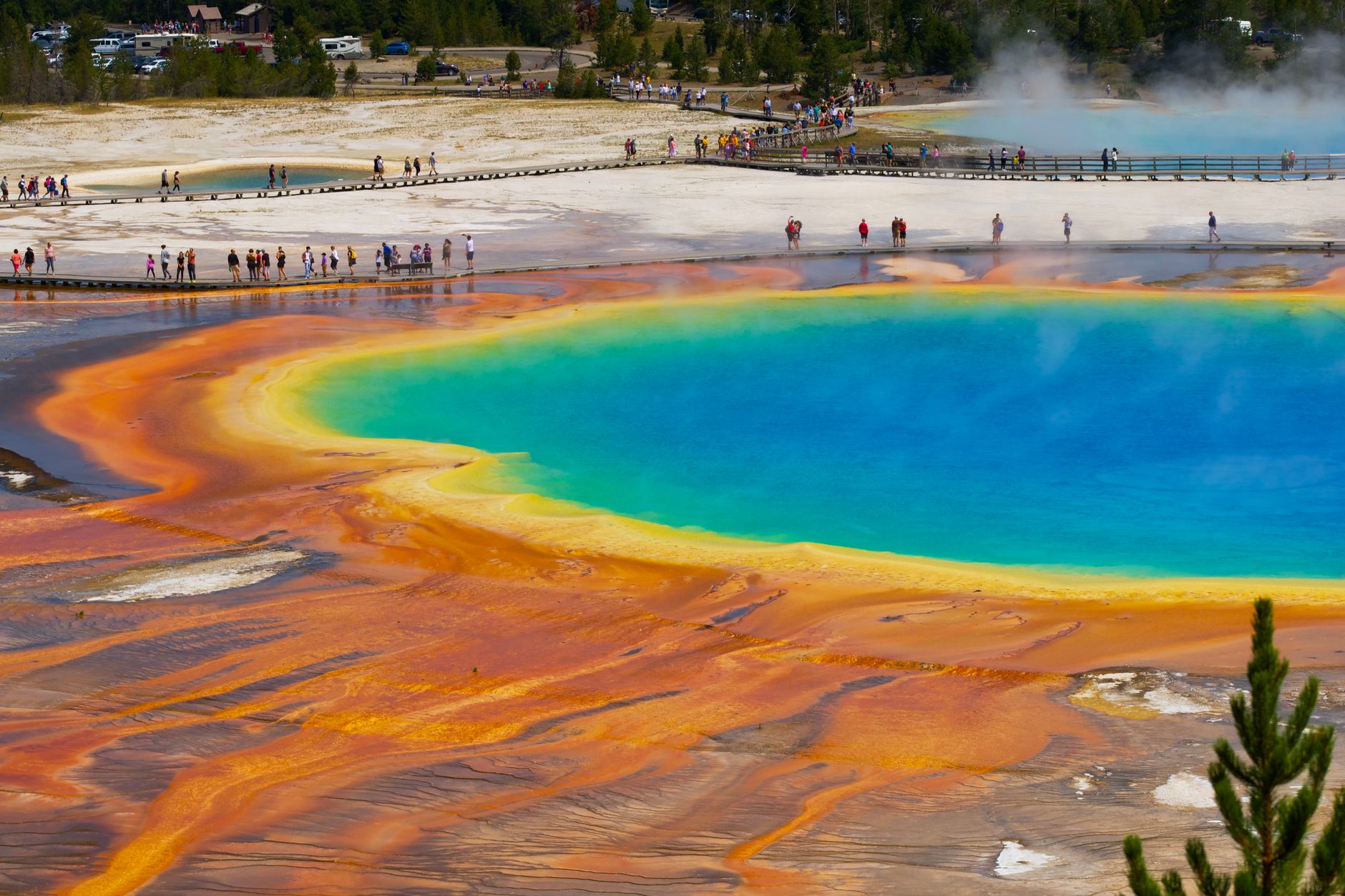
Yellowstone sits on top of a supervolcano — the largest on the continent — and the ground makes sure you know it. Steam rises from fissures in the earth, mud pots heave and plop, and Old Faithful sends a column of boiling water into the sky with the reliability of a train schedule. The park covers roughly 3,500 square miles across Wyoming, Montana, and Idaho, encompassing Yellowstone Lake, the broad wildlife corridors of Lamar Valley, and the travertine terraces at Mammoth Hot Springs.
This is a place where the geology is the spectacle. You can drive a road that traces a caldera rim, watch bison cross a river at dusk, and sleep inside the largest log structure in the world — all within the same day.
💛 What travellers fall for
People who return tend to anchor themselves in one district rather than chasing every geyser. Lamar Valley in early morning, before the tour buses arrive, is when the wolves and bears are most likely to be moving. Bring a thermos and binoculars, and give it at least two hours. The rangers at Norris Geyser Basin know the thermal field better than anyone — worth a conversation.
How Yellowstone National Park came to be
On March 1, 1872, President Ulysses S. Grant signed the Yellowstone National Park Protection Act, setting aside the land as the first national park in the United States — and, by most accounts, the world. The move followed Ferdinand Hayden's 1871 geological survey, which brought back photographs by William Henry Jackson and paintings by Thomas Moran that made the landscape legible to Congress in a way that written reports alone could not. The park's first superintendent, Nathaniel Langford, was appointed without salary, funding, or staff.
For thirty years, the U.S. Army managed what Congress had created but declined to properly fund, operating out of Fort Yellowstone at Mammoth Hot Springs — forty of those original buildings still stand. The National Park Service took over in 1917. By then, the Northern Pacific Railroad had already changed the calculus: 300 visitors arrived in 1872; 5,000 came in 1883.
Who and what shaped it
People who shaped it
Landmark buildings
See Yellowstone National Park in motion
Plan your visit
On the map
When to go
Summers are short and can swing between warm afternoons and cold nights even in July; snow is possible at elevation any month of the year. Winters are severe, with temperatures well below freezing and most interior roads closed to wheeled vehicles.
Right now
Background & history adapted from Wikipedia (CC BY-SA) · specs from Wikidata (CC0) · weather from Open-Meteo · map data © OpenStreetMap contributors · photos from Wikimedia Commons / Unsplash with per-image credit. No third-party reviews or social posts reproduced.