
Yamashina
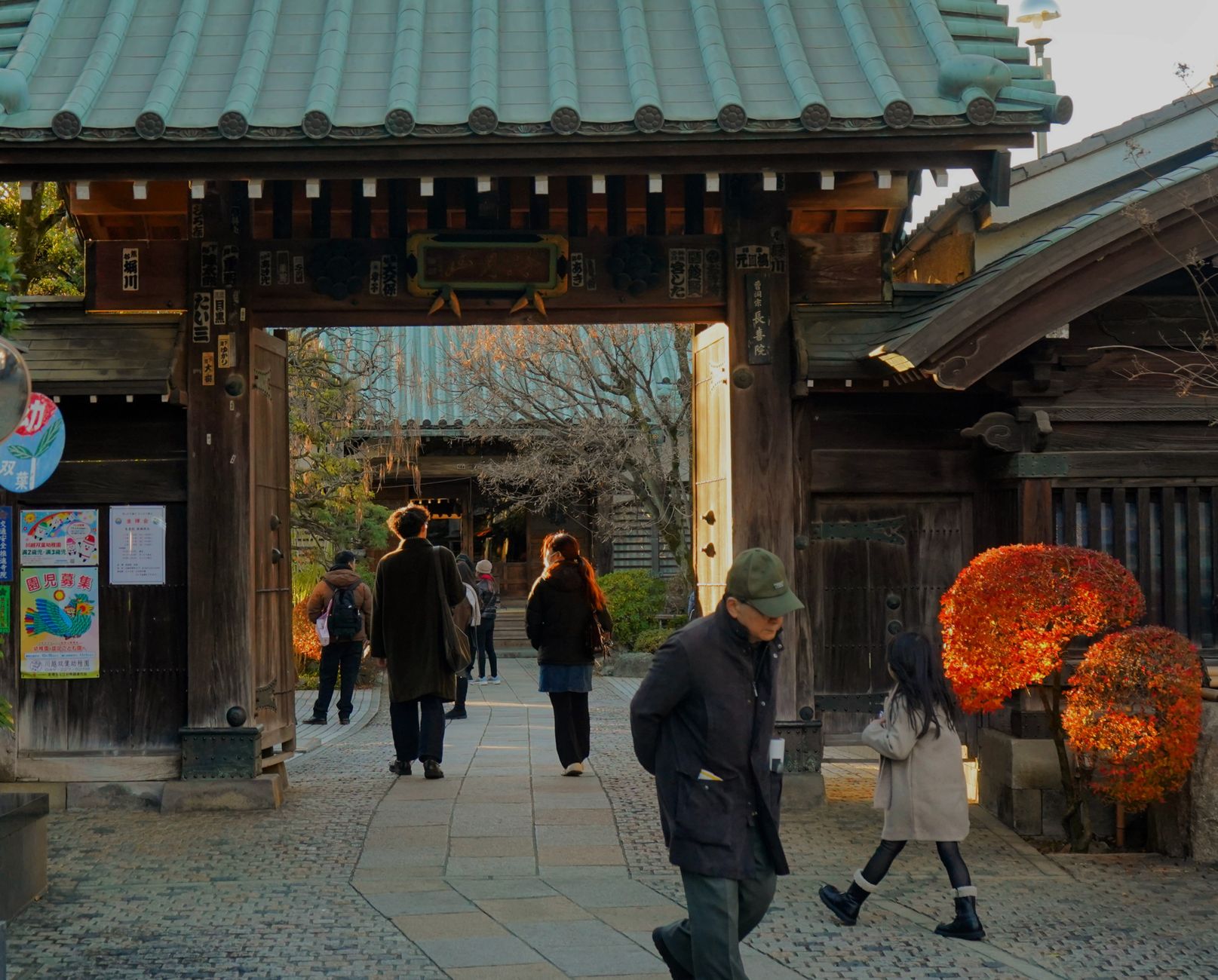
One stop from Kyoto Station on the JR Biwako Line — five minutes, and you're somewhere else entirely. Yamashina sits in its own basin, ringed by forested hills, and the shift is immediate: quieter streets, a canal threading east to west, pottery wholesalers behind ordinary shopfronts, and temple approaches that go from subway exit to cedar shade in under ten minutes.
This is where Kyoto keeps its oldest things. The five-storied pagoda at Daigoji, completed in 951, is the oldest wooden building in the city. The tomb of Emperor Tenji is the oldest imperial mausoleum here. Yamashina has been accumulating history for well over a millennium, without much fuss about it.
💛 What travellers fall for
People who come back tend to time it for early November, when the maple-lined path to Bishamondo turns a particular shade of deep red. They also mention the Kiyomizuyaki Danchi — the pottery district — where you can walk into wholesale shops and handle pieces that never make it to the tourist markets across the hill.
Deals in Yamashina
Book directly at the provider

How Yamashina came to be
Yamashina's recorded history begins in 669, when the Nakatomi clan's Kamatari founded Yamashina-dera Temple. The imperial mausoleum of Emperor Tenji followed in the late seventh century, anchoring the basin as a place of consequence. By the Muromachi period, the Buddhist leader Rennyo had established Yamashina Hongwan-ji Temple here in 1478 — a major centre of the Jodo Shinshu sect, until it was burned in the sectarian violence of the Tenbun-hokke Rebellion in 1532.
Through the Edo period, Yamashina served as a post town on the Tokaido road, its position between Kyoto and the passes east giving it steady traffic. Pottery kilns migrated over the hill from Kiyomizu Temple as early as the fifteenth and sixteenth centuries, establishing the craft community that still operates in the Kiyomizuyaki Danchi today. The ward was separated from Higashiyama in 1976, finally giving administrative form to what had always been its own place.
Who and what shaped it
People who shaped it
Landmark buildings
See Yamashina in motion
Plan your visit
On the map
When to go
Spring (April–May) and autumn (October–November) are the most rewarding seasons — warm enough to walk between temples comfortably, and the foliage at both ends is genuine. Summer is hot and humid, peaking around 29°C in August, with typhoon risk stretching into early October; January is cold but dry, averaging around 5°C.
Right now
Background & history adapted from Wikipedia (CC BY-SA) · specs from Wikidata (CC0) · weather from Open-Meteo · map data © OpenStreetMap contributors · photos from Wikimedia Commons / Unsplash with per-image credit. No third-party reviews or social posts reproduced.