
Turku
Turku wears its age plainly. Founded in 1229 and once the second most important city in the Swedish kingdom after Stockholm, it was the capital of Finland before Emperor Alexander I moved that honour to Helsinki in 1812 — a slight the city has had two centuries to get over. The Aura River still runs through the centre, and on its bank stands a medieval castle that has been here longer than the concept of Finland itself.
What you get in Turku is a city that has burned down, been demoted, and rebuilt itself around two universities and a very long memory. It moves at a pace that rewards slowing down.
💛 What travellers fall for
People who come back tend to mention the same few things: walking the Aura riverbank at midnight in June when the sky refuses to go dark, taking bus line 1 all the way to the harbour just to approach the castle the way it was meant to be seen from the water side, and spending far longer than planned inside Turku Cathedral once they find Karin Månsdotter's tomb.
Deals in Turku
Book directly at the provider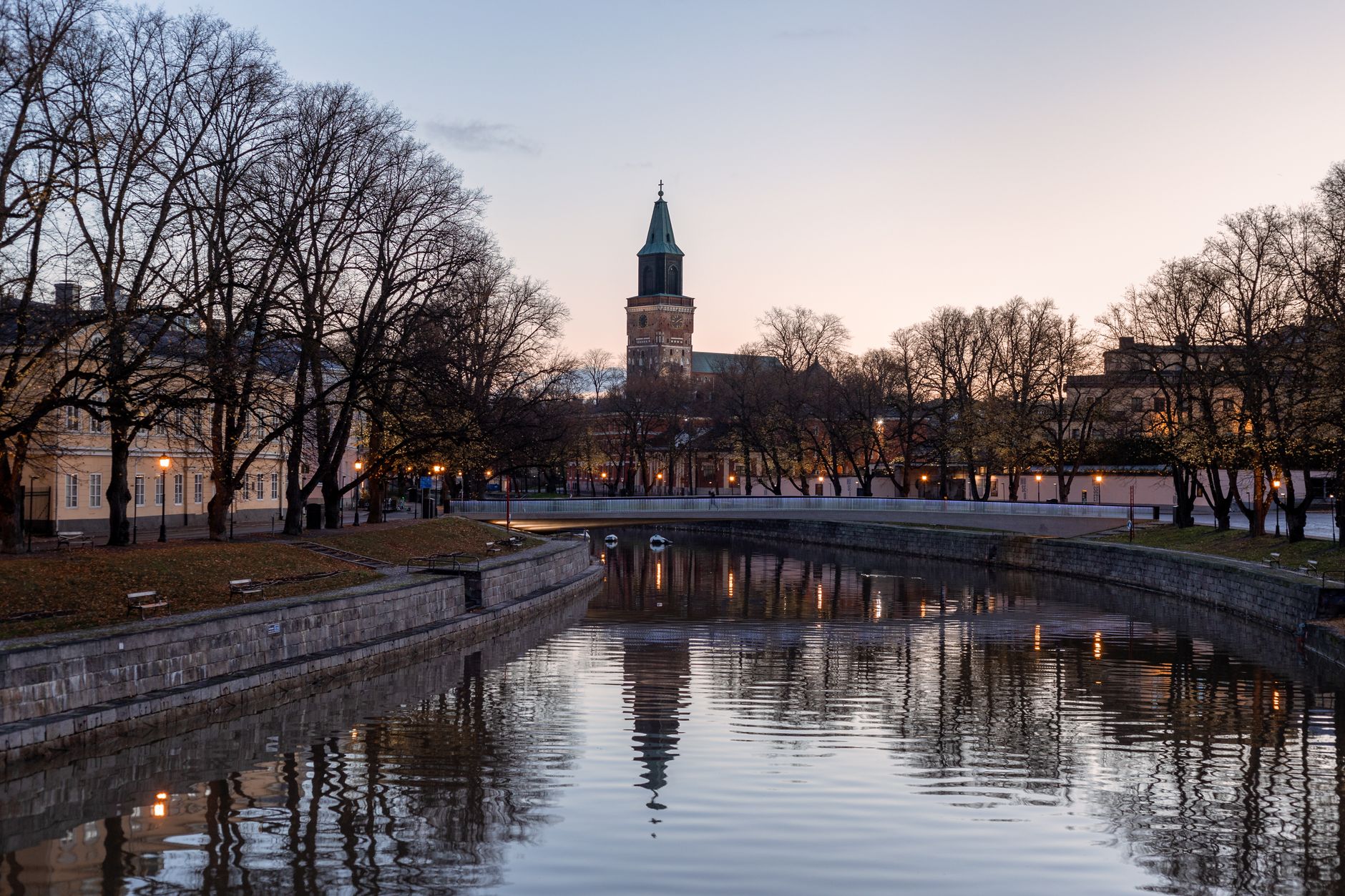


How Turku came to be
Pope Gregory IX set things in motion on 23 January 1229, approving the move of the episcopal seat to the area now known as Turku. A town seal followed by 1309, a mayor by the 1320s, and by the 16th century Turku was a serious place — Duke John, son of Gustav Vasa, governed Finland from the castle and brought Renaissance thinking with him. The 1640 founding of Turku Academy made it an intellectual centre too.
Then came the Great Fire of 1827, which erased most of the city in a single event. The Royal Academy relocated to Helsinki and became the University of Helsinki. Turku rebuilt — the cathedral's 101-metre spire and its restored interior date from the 1830s — and eventually founded two new universities of its own: Åbo Akademi in 1918 and the University of Turku in 1920.
Who and what shaped it
People who shaped it
Landmark buildings
See Turku in motion
Plan your visit
On the map
When to go
Summers are mild and genuinely light — white nights run from mid-May to early August, with July averaging highs around 22°C. Winters are cold and dark, dropping a few degrees below freezing, which makes the castle and cathedral visits more atmospheric but requires proper layers.
Right now
Background & history adapted from Wikipedia (CC BY-SA) · specs from Wikidata (CC0) · weather from Open-Meteo · map data © OpenStreetMap contributors · photos from Wikimedia Commons / Unsplash with per-image credit. No third-party reviews or social posts reproduced.