
Troy
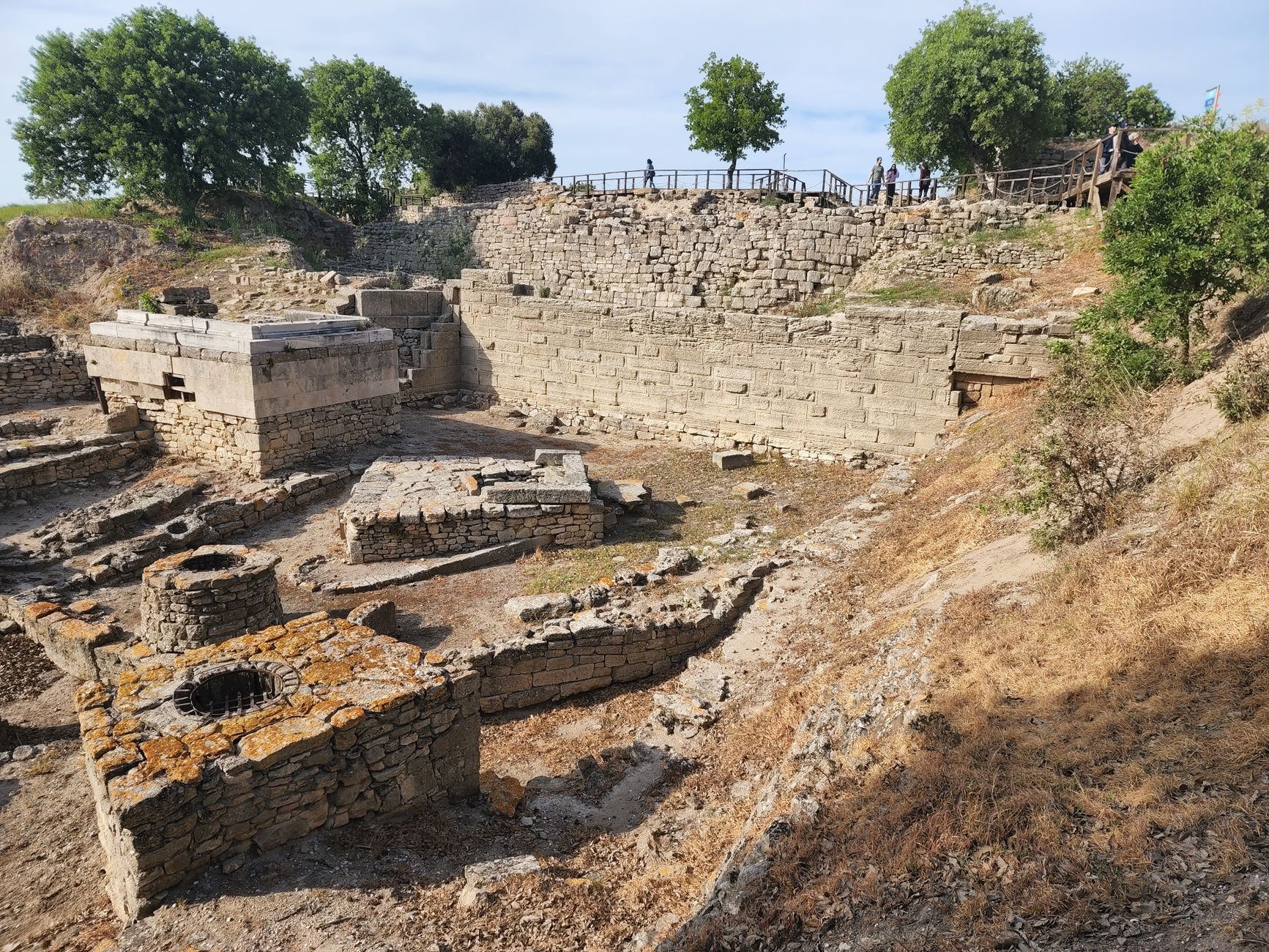

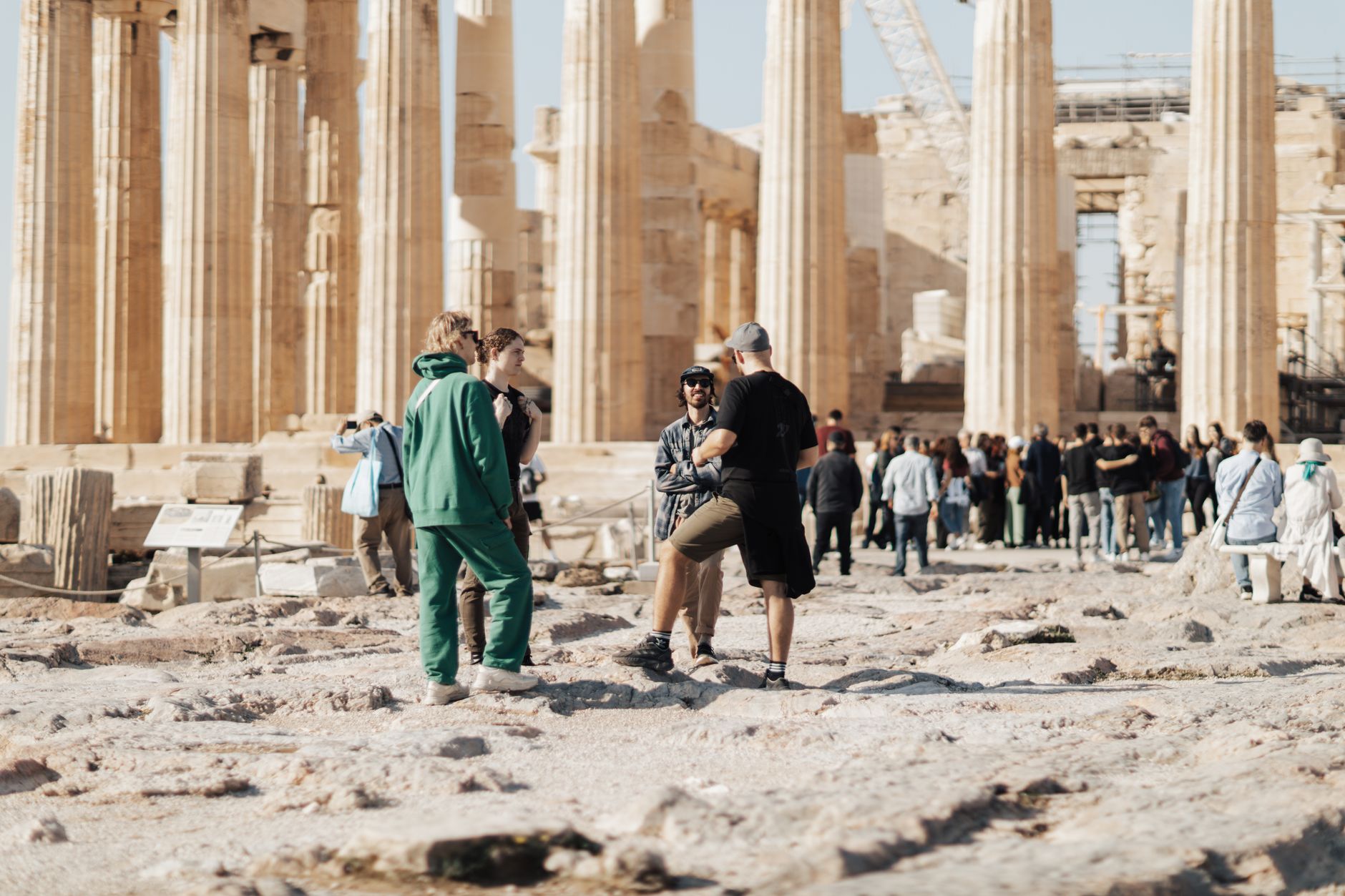
The walls you walk past at Troy are roughly 3,300 years old — limestone courses from around 1300 BCE, still standing at shoulder height in places, still casting a shadow. The site sits on a low hill called Hisarlık, about 4.8 kilometres from the Dardanelles, though when the city was alive the sea came much closer; centuries of river sediment from the Scamander and Simois have since pushed the coastline away.
Nine cities were built and destroyed on this same patch of ground over four millennia, each one laid over the last. What you see is a palimpsest of foundations, gates and streets from different eras — Greek, Roman, Bronze Age — compressed into a space smaller than most people expect.
How Troy came to be
People have lived on this hill since around 3500 BCE, and the city was already fortified by 3000 BCE. Over the following four thousand years it was rebuilt at least nine times — archaeologists label the layers Troy I through Troy IX — each settlement rising on the rubble of the last. The Troy of Homer's war, if it existed, is thought to correspond to the seventh layer.
The modern excavation story begins with Frank Calvert, a British-American amateur archaeologist who started digging at Hisarlık in 1860 and later persuaded Heinrich Schliemann to follow. Schliemann worked the site from 1870 to 1890, famously cutting through layers he didn't understand in search of Homeric gold. More careful work has continued since; Rüstem Aslan of Çanakkale Onsekiz Mart University has led excavations since 2014. UNESCO added Troy to its World Heritage list in 1998.
Who and what shaped it
People who shaped it
Landmark buildings
See Troy in motion
Plan your visit
On the map
When to go
April through June and September through October offer the most comfortable conditions — daytime temperatures between 15 and 25°C with manageable crowds. July and August push toward 30°C; if that's when you're going, arrive at opening time.
Right now
Background & history adapted from Wikipedia (CC BY-SA) · specs from Wikidata (CC0) · weather from Open-Meteo · map data © OpenStreetMap contributors · photos from Wikimedia Commons / Unsplash with per-image credit. No third-party reviews or social posts reproduced.