
Region

Suzhou

Suzhou
Photo by Marstion on Pexels
Suzhou
Photo by Rui Wang on Pexels
Suzhou
Photo by Garrison Gao on Pexels
Suzhou
Photo by Qing Luo on Pexels
Suzhou
Photo by Abdus Samad Mahkri on Pexels
Suzhou
Photo by Garrison Gao on Pexels
City break Culture & history Romantic getaway

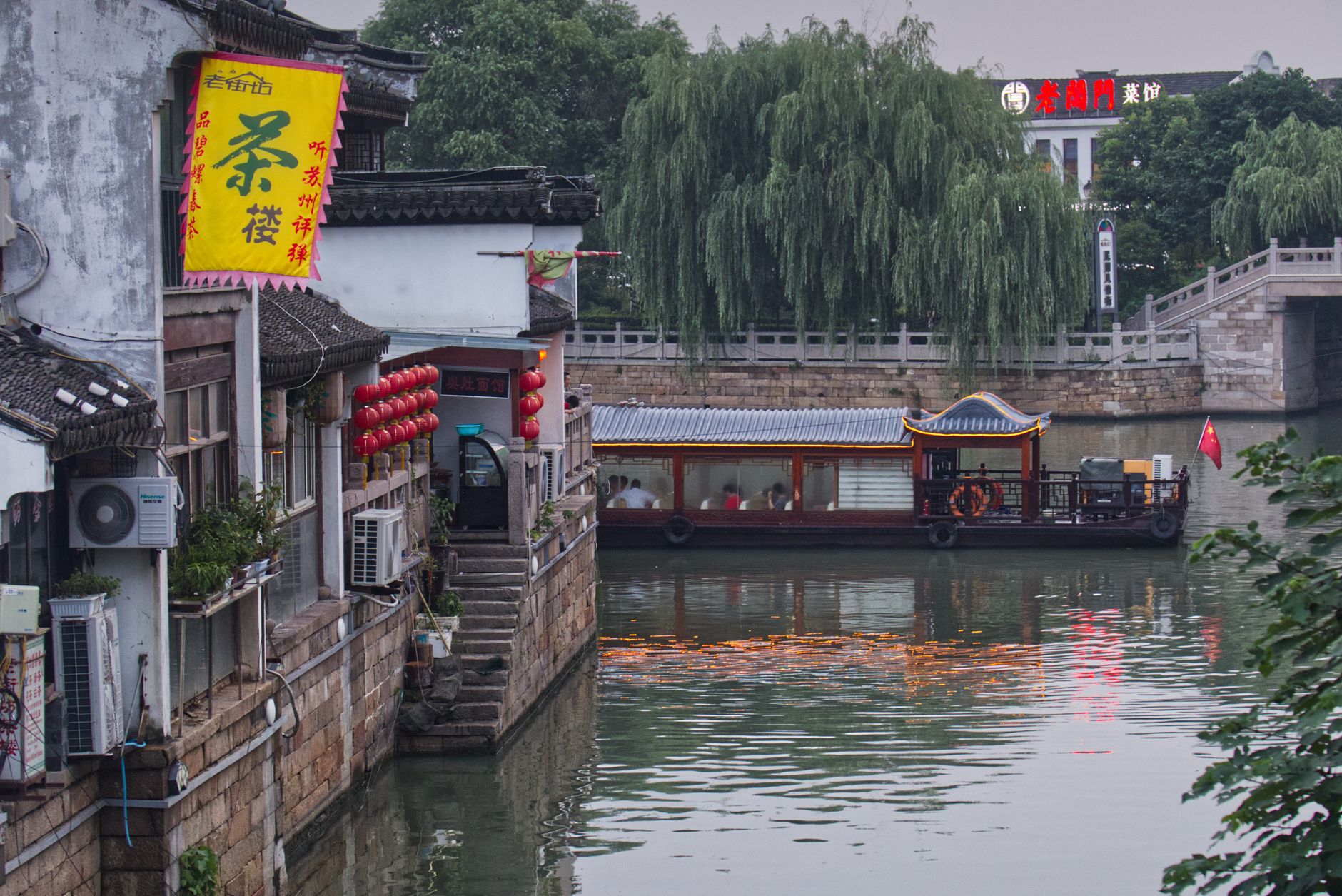
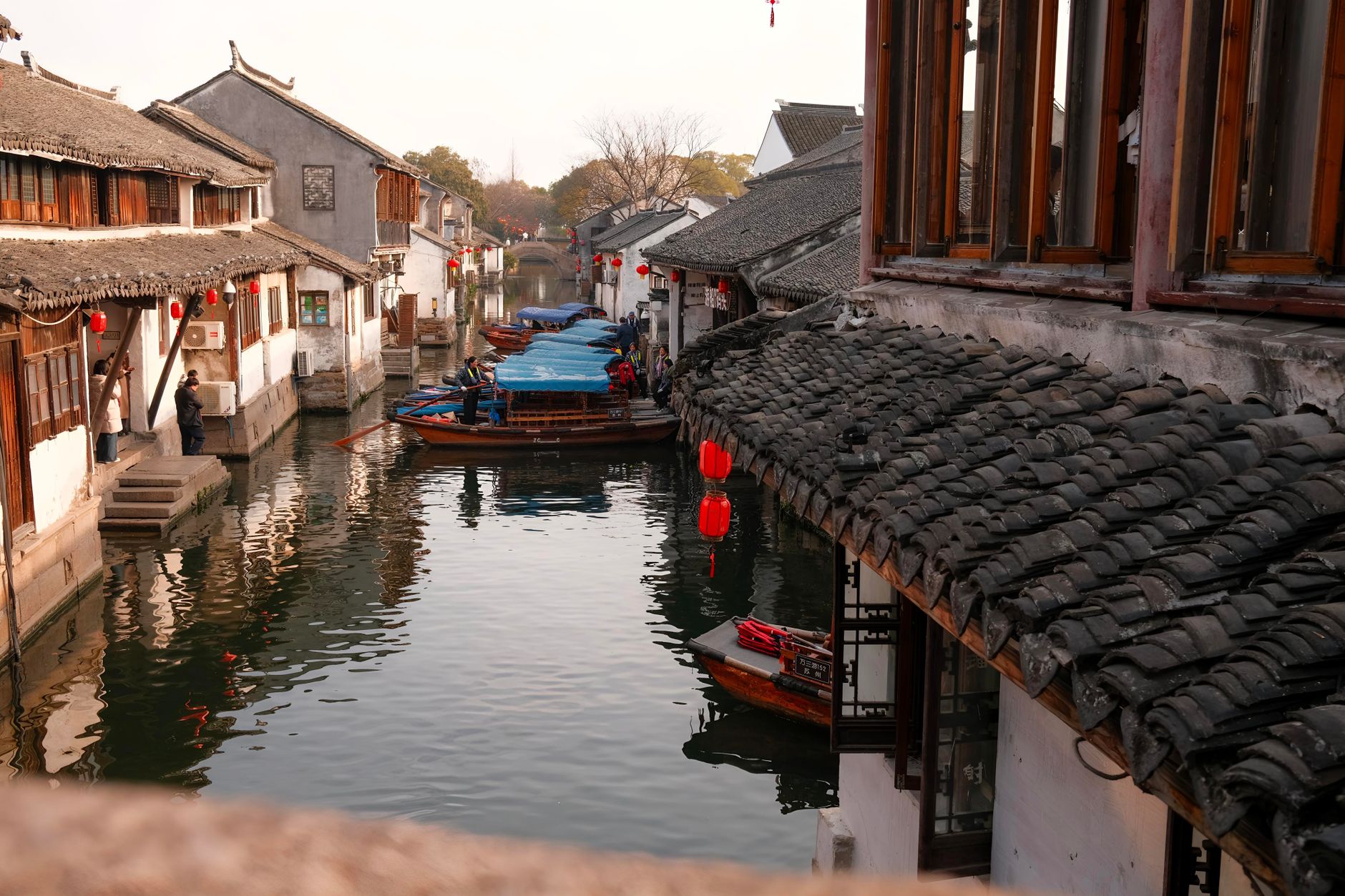
Suzhou is a city that works on you slowly. The classical gardens — a dozen of them, several UNESCO-listed — are not grand in the way of palaces; they are intricate, composed, designed to make a small plot of land feel like a world. Rockeries stand in for mountains. A window frames a single bamboo stalk like a painting.

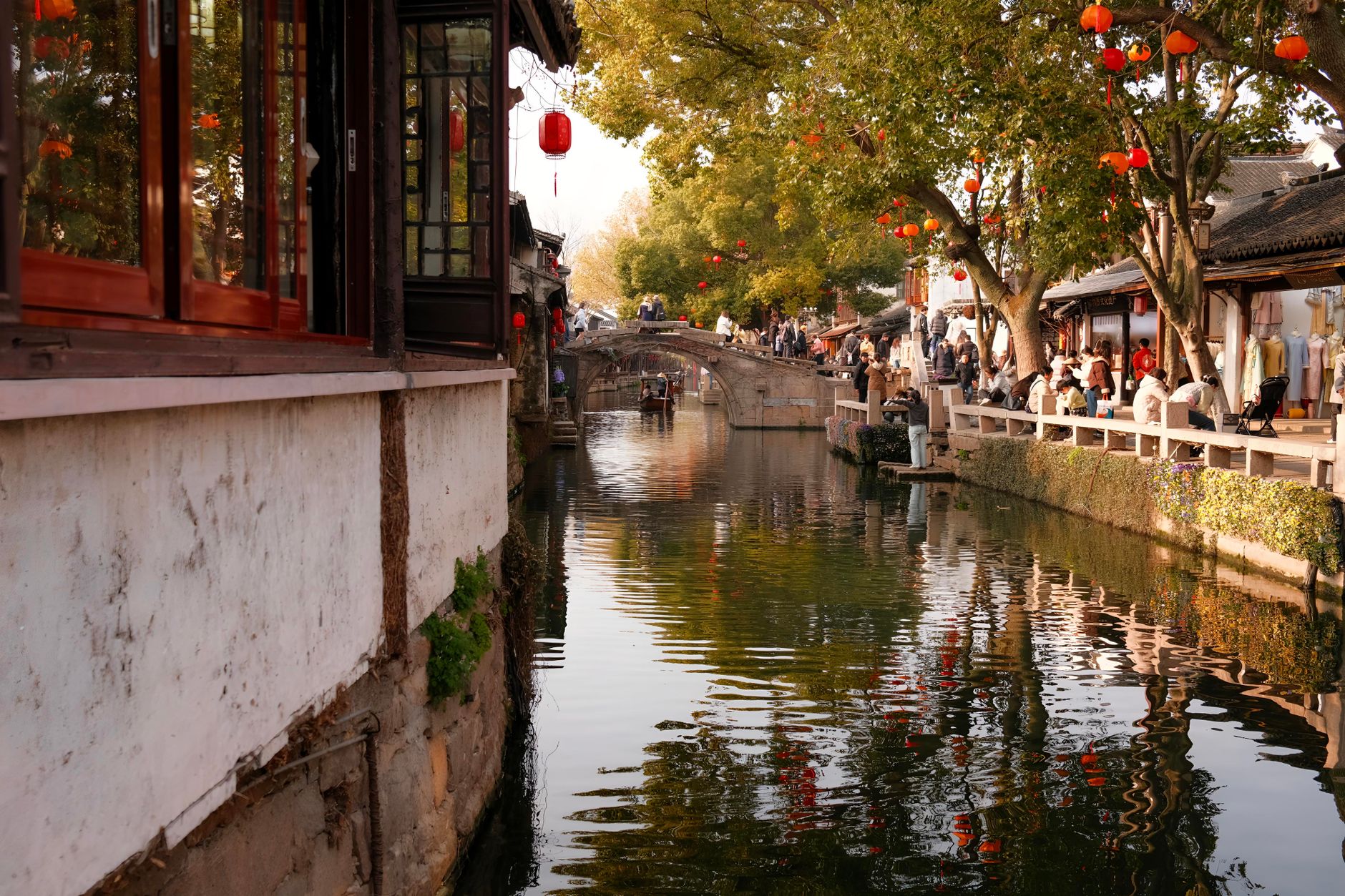
Most visitors arrive from Shanghai in under an hour, stay a day, and leave having barely scratched the surface. The canal streets, the leaning Song-dynasty pagodas, the 2006 I.M. Pei museum that quietly converses with the old city around it — Suzhou rewards the traveller who lingers past the first garden.

Good to know
High-speed trains from Shanghai take around 25 minutes; Suzhou has four railway stations, with Suzhou Railway Station and Suzhou North the most useful. A metro network of six lines covers the city cheaply (base fare 2 yuan). Spring and autumn are the most comfortable seasons for walking the gardens and canal streets.
The story

How Suzhou came to be

The city was founded in 514 BCE by General Wu Zixu, on orders from He Lu, king of the Wu state — making it one of China's oldest continuously inhabited cities. The name Suzhou came later, under the Sui dynasty in 589 CE, when the south was absorbed into a reunified empire.

Suzhou's peak came during the Ming and early Qing dynasties, when wealthy landowning families built the layered garden-estates that still define the city. Scholars and artists followed. The poet Bai Juyi had already left his mark in 825 CE, commissioning Shantang Street — a 3.5-kilometre canal-side thoroughfare still walkable today. The Taiping Rebellion of 1860 and the Japanese occupation of 1937 both caused serious damage; systematic restoration of the gardens began in the 1950s.

People & landmarks

Who and what shaped it

People who shaped it

I.M. Pei
Architect (1917–2019) whose family hailed from Suzhou; classical gardens inspired his modernist designs including the Louvre Pyramid and Suzhou Museum (2006).
Tsung-Dao Lee
Physicist (1926–2024) born in Suzhou; won Nobel Prize in Physics 1957 at age 30.
Cheng Kaijia
Nuclear physicist (1918–2018) from Suzhou; key figure in China's nuclear weapons development.
Fan Zhongyan
Poet and writer who founded Suzhou Confucian Temple in AD 1035.
Bai Juyi
Tang dynasty poet who commissioned Shantang Street in AD 825, a 3.5 km canal-side thoroughfare still walkable today.

Landmark buildings

Humble Administrator's Garden
UNESCO World Heritage classical garden; among four most famous in China, designed to make small plots feel like worlds through rockeries and framed views.
Lingering Garden
UNESCO World Heritage classical garden; one of four most celebrated in China.
Lion Grove Garden
UNESCO World Heritage classical garden; among four most famous in China.
Canglang Pavilion
Classical garden; one of four most famous in China.
Yunyan Temple Pagoda (Huqiu Tower)
Eight-sided stone pagoda, seven stories, built 961 CE (Northern Song); thousand-year-old unofficial symbol of Suzhou.
Beisi Pagoda
Built 1131–1162 during Song Dynasty; 76 meters tall.
Ruiguang Tower
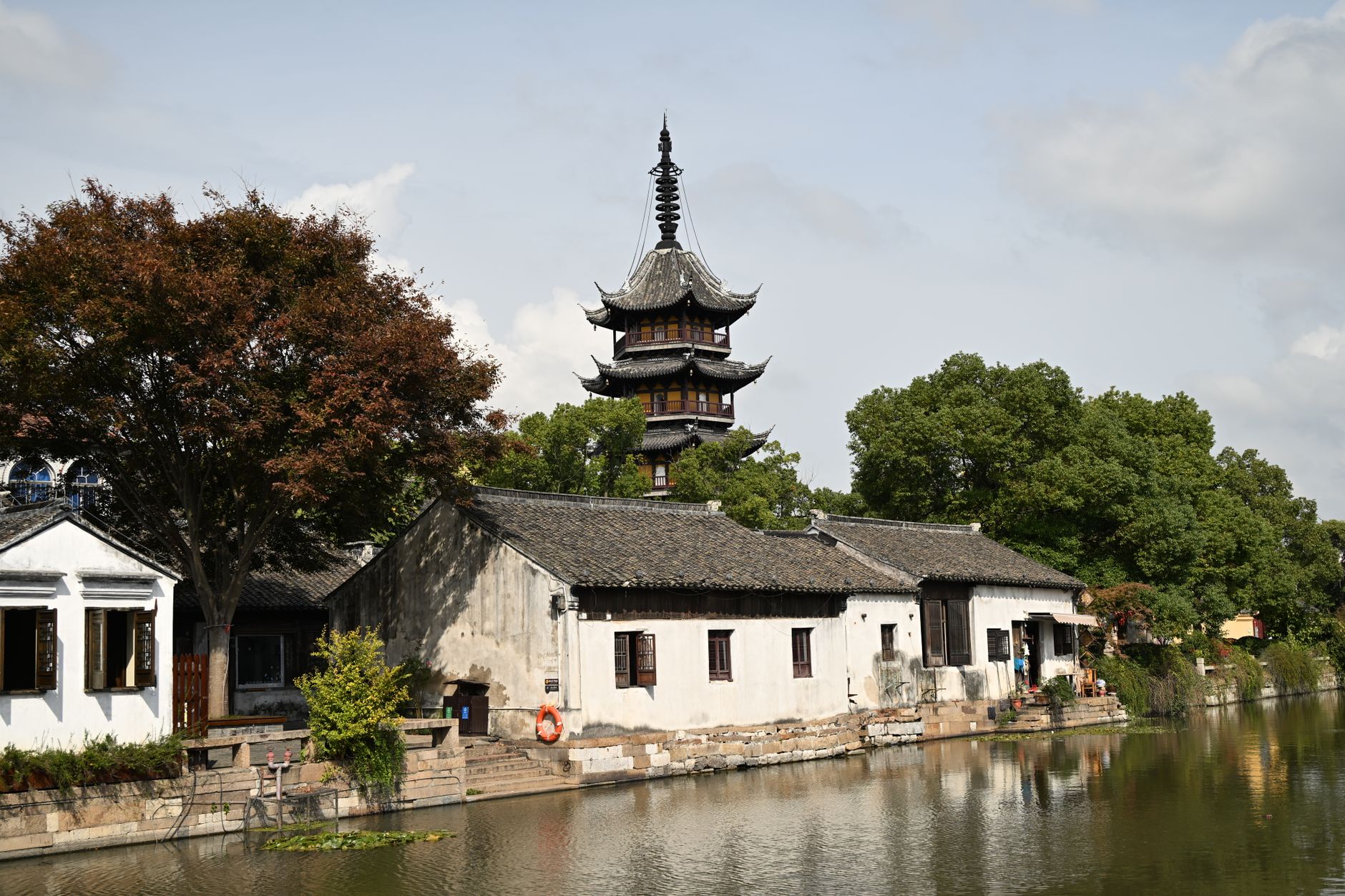
Seven-storey pagoda originally built as Buddhist temple during Northern Song Dynasty; later converted to Taoist shrine.
Shantang Street
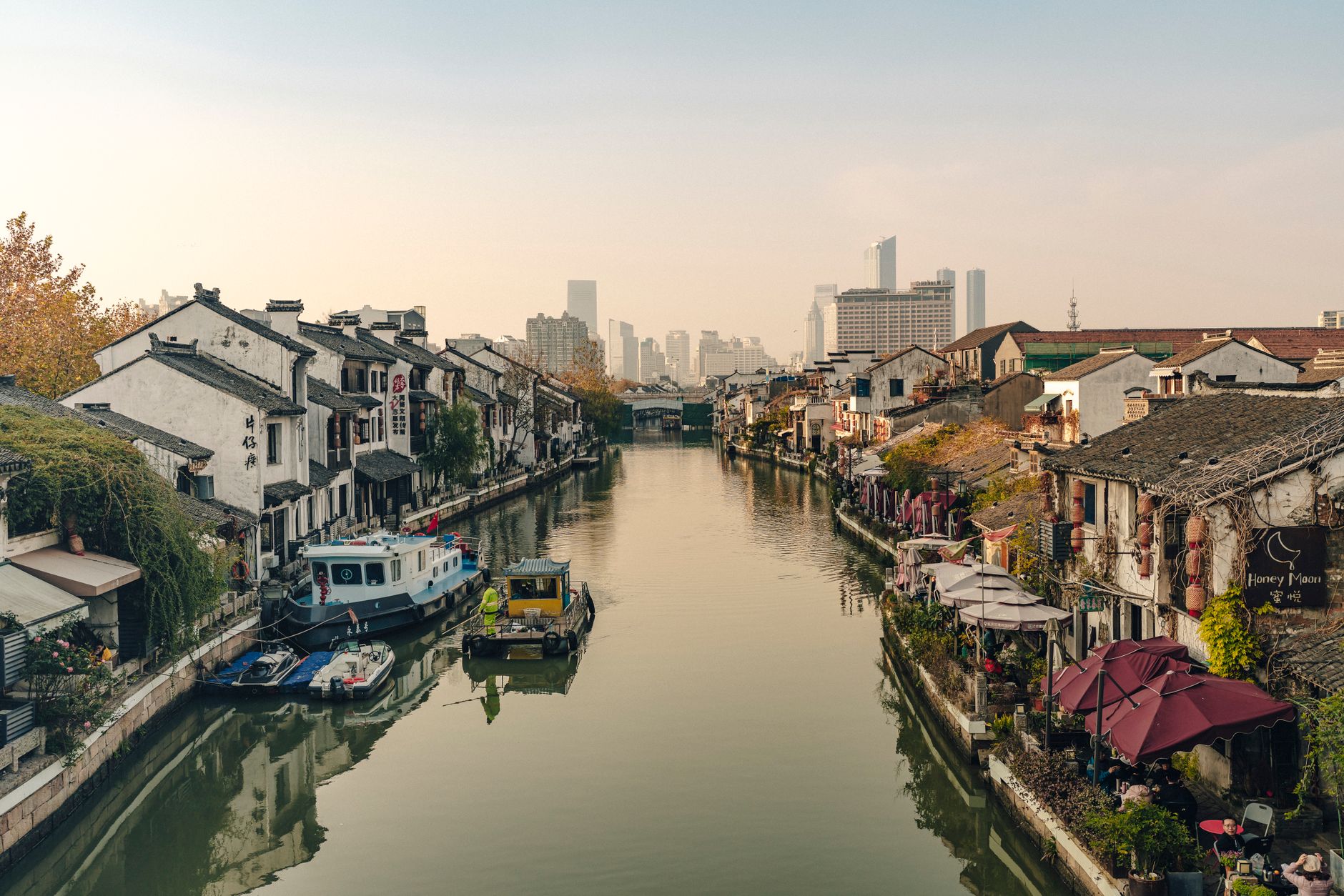
Canal-side thoroughfare over 1,100 years old, 3.5 km long, commissioned by poet Bai Juyi in AD 825; known as 'Suzhou's No.1 Ancient Street'.
Panmen Gate
Historic landmark 2,500 years old; remains of city's ancient fortifications.
Suzhou Museum
Designed by I.M. Pei in 2006; combines modern forms with traditional Chinese aesthetics.
Gate of the Orient (Dongfang Zhimen)
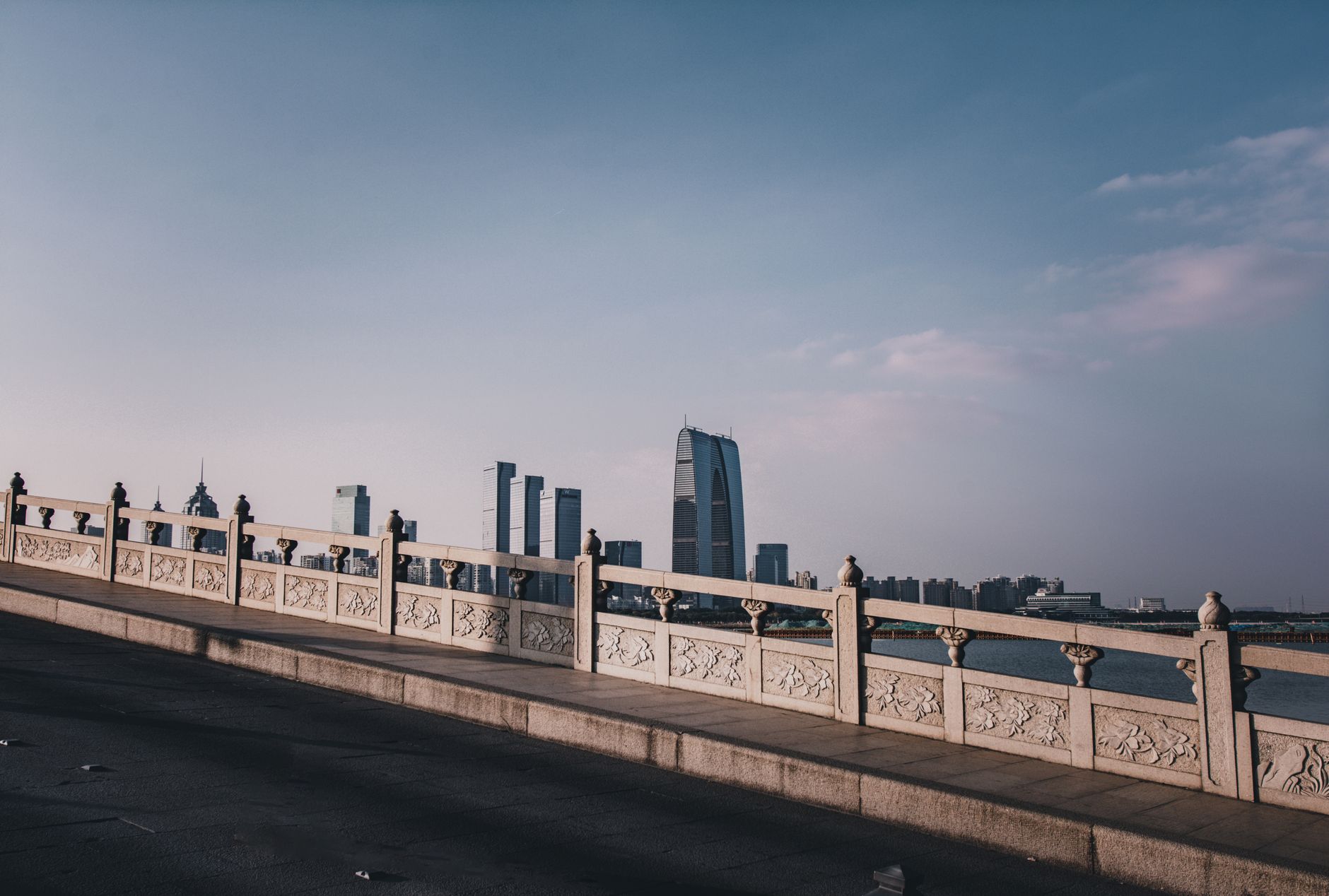
Second tallest skyscraper in Suzhou, located on Lake Jinji; nicknamed 'the pants' for its unusual shape.
Practical

Plan your visit

On the map

When to go

Summers are hot and humid, with temperatures regularly above 35°C and heavy rain in June and July. Spring (March–May) and autumn (September–November) bring mild temperatures and clearer skies — the most practical windows for spending time outdoors. Winters are cool and occasionally damp but rarely severe.

Right now

31°C
Partly cloudy
Sat
⛈️
35°
27°
Sun
⛈️
33°
26°
Mon
⛈️
32°
27°
Tue
⛈️
30°
27°
Weather data: Open-Meteo

Background & history adapted from Wikipedia (CC BY-SA) · specs from Wikidata (CC0) · weather from Open-Meteo · map data © OpenStreetMap contributors · photos from Wikimedia Commons / Unsplash with per-image credit. No third-party reviews or social posts reproduced.

Top