
Suoi Tranh
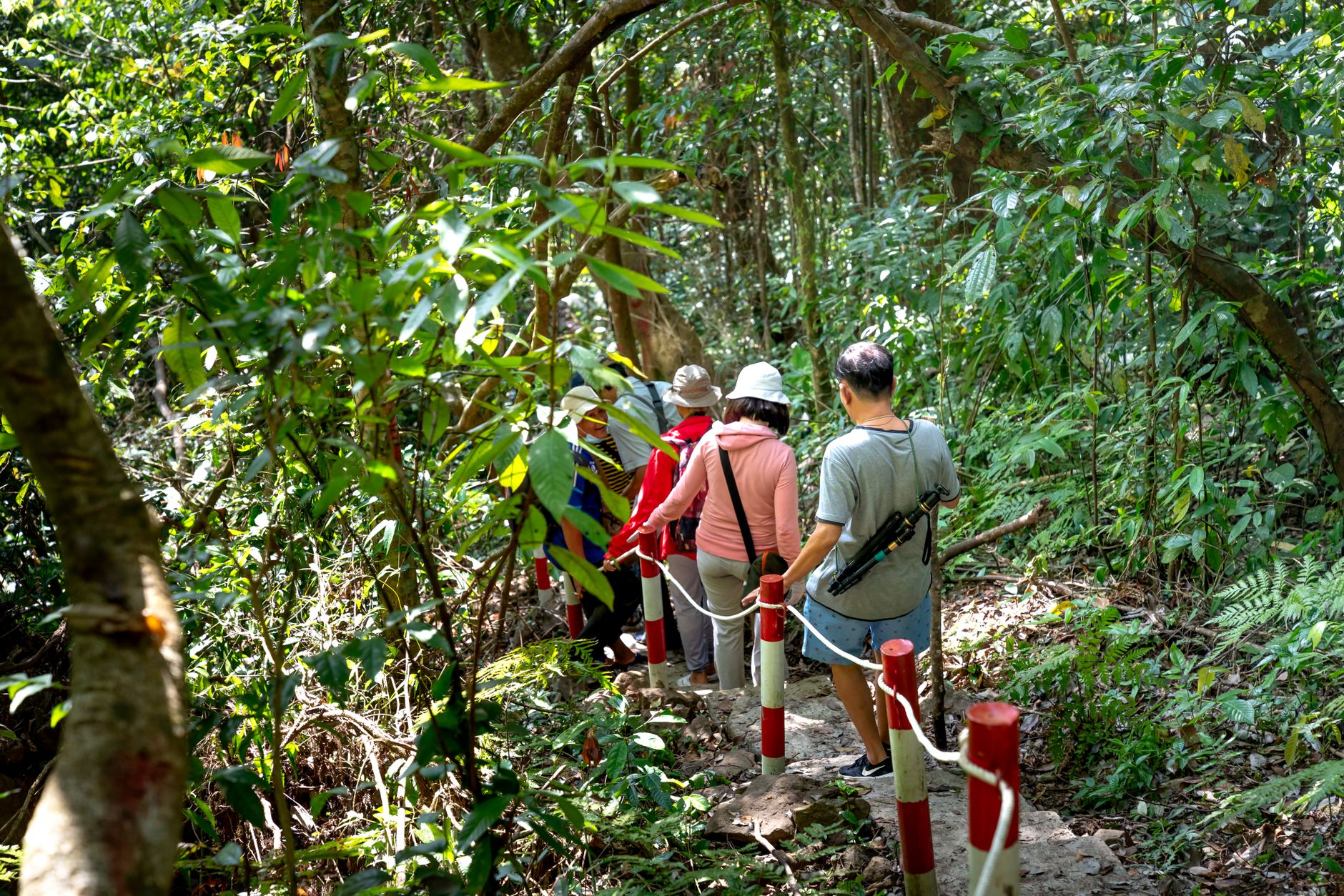
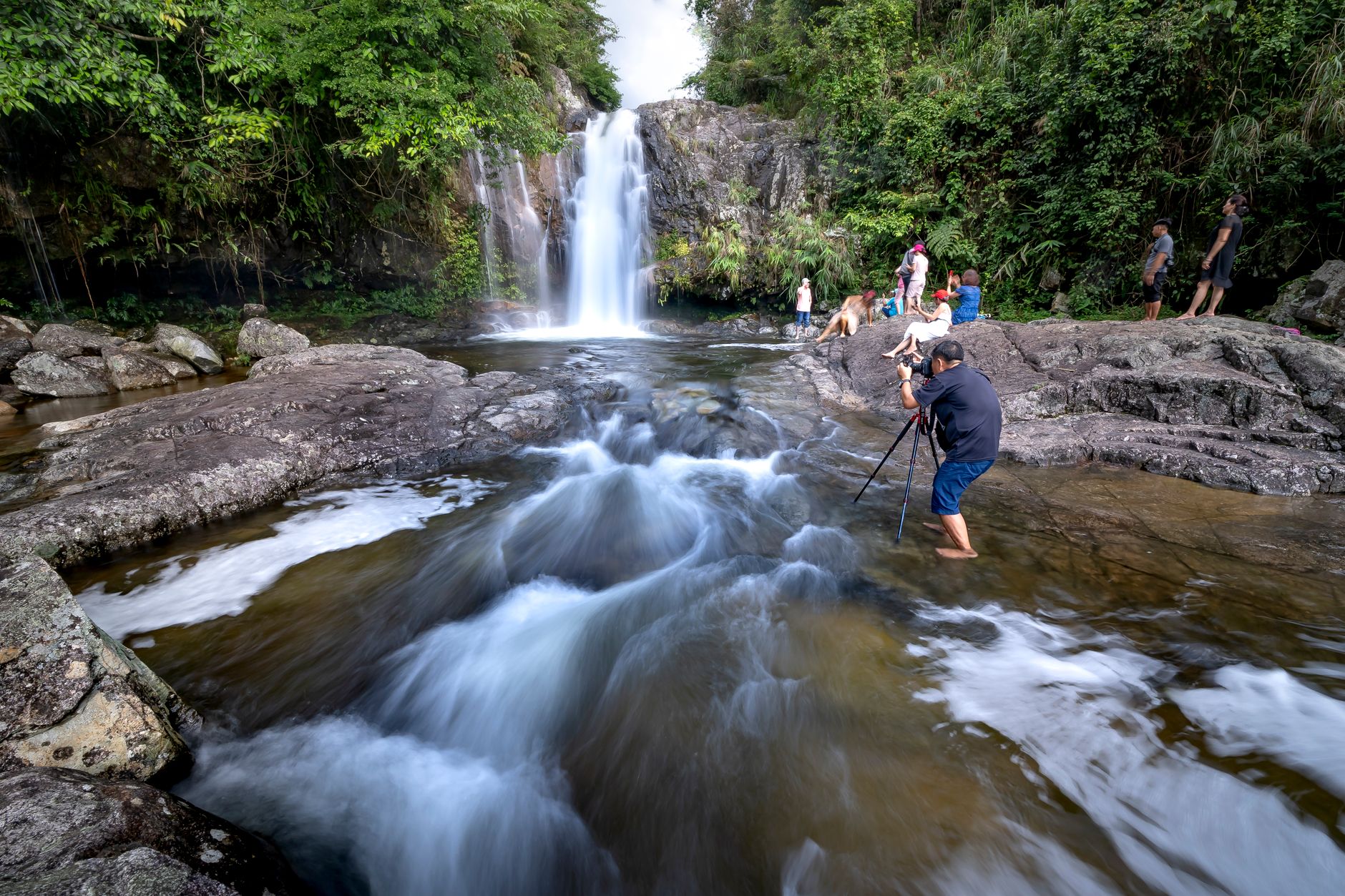
The path to Suoi Tranh is paved with uneven stones, shaded by a canopy dense enough that the air cools noticeably before you hear the water. Moss blackens the rocks along the way, so watch your footing — the forest floor here is genuinely wet, genuinely alive, with wild orchids and freshwater shrimp in the stream below.
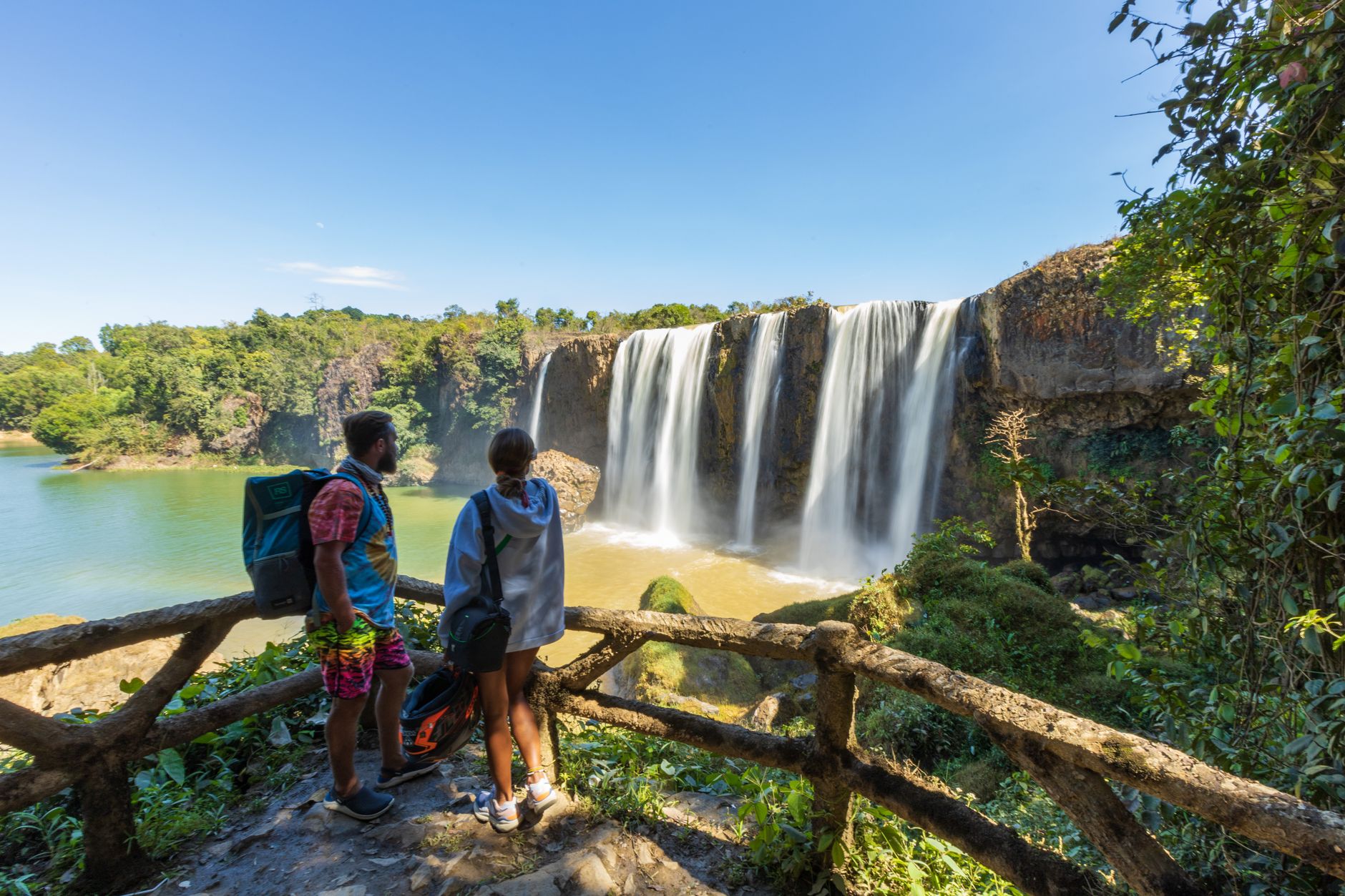
The waterfall itself is modest: roughly two metres of drop into a clear pool no deeper than your chest. What carries the place is the 15-kilometre stream behind it, fed by the Ham Ninh mountains, threading through multiple terrains before it reaches you. Grab a glass of nước thốt nốt at the entrance — palm sugar water, 10,000 VND — and take the three-quarter-kilometre walk slowly.
💛 What travellers fall for
People who return tend to time it for a weekday morning in the wet season, when the falls are running full and the tour groups haven't arrived yet. The Bat Cave — 200 metres up, 50 metres deep, stalactites intact — gets skipped by most visitors, which is reason enough to climb it.
Deals in Suoi Tranh
Book directly at the provider


How Suoi Tranh came to be
Before it had a name, the stream at Suoi Tranh was simply where people came after work — a local bathing and gathering spot, a backdrop for island festivals. That changed in 1963, when the poet Dong Ho visited and found the scene — dark forest pressed against a quiet, clear-running stream — so composed it reminded him of a painting. He named it Suoi Tranh: Painting Stream.
The name stuck, and tourist infrastructure followed gradually, though slowly enough that the place never quite became the resort it might have. What you visit today is still recognisably what Dong Ho described: forest, water, rock, and not much else asking for your attention.
Who and what shaped it
People who shaped it
Landmark buildings
See Suoi Tranh in motion
Plan your visit
On the map
When to go
June through November is the season worth planning around — the rainy season fills the stream and brings the waterfall to full volume, while rain typically holds off until afternoon, leaving mornings clear and comfortable. From November to April the water can slow to almost nothing, and the waterfall may disappear entirely.
Right now
Background & history adapted from Wikipedia (CC BY-SA) · specs from Wikidata (CC0) · weather from Open-Meteo · map data © OpenStreetMap contributors · photos from Wikimedia Commons / Unsplash with per-image credit. No third-party reviews or social posts reproduced.