
Saint-Pierre
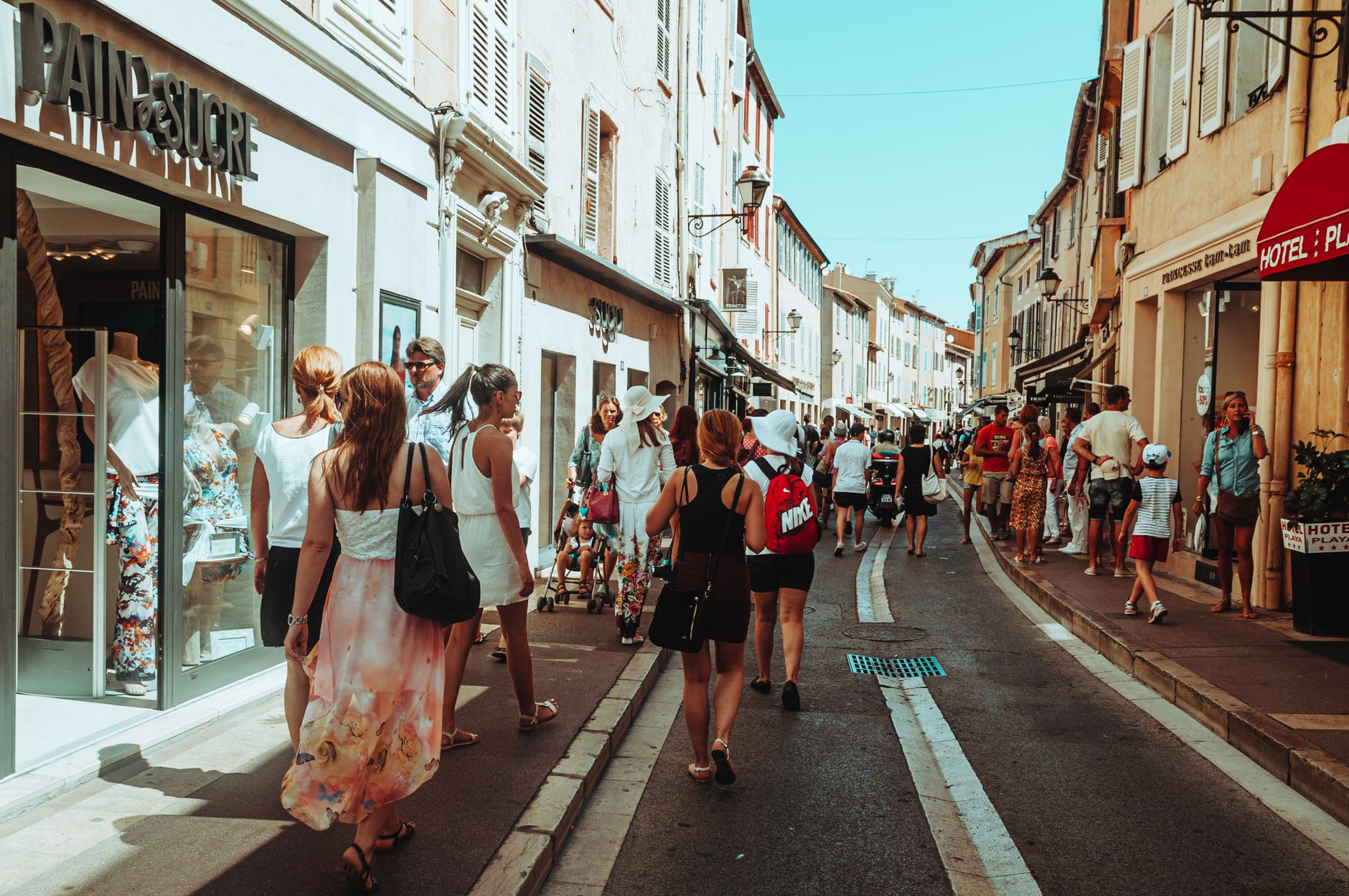
Saint-Pierre wakes before the sun. By five in the morning, the Saturday market is already in motion along streets that were laid out in a grid in 1735 — the same rational geometry imposed by Governor Mahé de La Bourdonnais when he pushed the French colonial project south across Réunion. The air carries vanilla and clove, both of which were introduced to this island in the 18th and 19th centuries and still grow a few kilometres away at Domaine du Café Grillé.
This is the south's main city, and it carries its layers visibly: a town hall that began as a royal storehouse for East India Company coffee, a Tamil temple built where a boat ran aground, a 42-metre mosque minaret rising above low colonial rooftops. The TAAF — France's administration for its Southern and Antarctic territories — keeps its headquarters here, which tells you something about how far this city reaches beyond the obvious.
💛 What travellers fall for
People who come back tend to time it around the Saturday market, arriving early enough to watch the stalls fill. La Saga du Rhum draws a second visit almost every time — the guided tour through the old Isautier distillery is unhurried, and the tasting at the end is genuinely good. The Kervéguen Warehouse, volcanic stone darkened with age, rewards a slow walk around the outside even when it isn't open.
Deals in Saint-Pierre
Book directly at the provider


How Saint-Pierre came to be
Bertrand-François Mahé de La Bourdonnais founded Saint-Pierre in 1735 with a specific mandate: open the southern half of Réunion to cultivation. Coffee came first, stored in what is now the Hôtel de Ville — then a royal warehouse for the East India Company, completed in 1773. The shift to sugar cane arrived with the 19th century, accelerated by the completion of the Saint-Étienne Canal in 1825, which brought irrigation to fields that had been too dry for large-scale farming.
The port followed, built between 1854 and 1882 to handle the Asia–Europe trade routes. The Kervéguen Warehouse, still standing in volcanic stone, was the logistics centre for those sugar exports. Saint-Pierre became a commune officially in 1790, and its original grid has largely held — you can still read La Bourdonnais's plan in the street layout today.
Who and what shaped it
People who shaped it
Landmark buildings
See Saint-Pierre in motion
Plan your visit
On the map
When to go
The dry season, May through November, brings clear skies and lower humidity — the most comfortable time to be on foot in the city. December through April is summer here: temperatures climb toward 27°C, rainfall peaks in January and February, and cyclone risk is real, though it rarely disrupts travel entirely.
Right now
Background & history adapted from Wikipedia (CC BY-SA) · specs from Wikidata (CC0) · weather from Open-Meteo · map data © OpenStreetMap contributors · photos from Wikimedia Commons / Unsplash with per-image credit. No third-party reviews or social posts reproduced.