
Rovinj
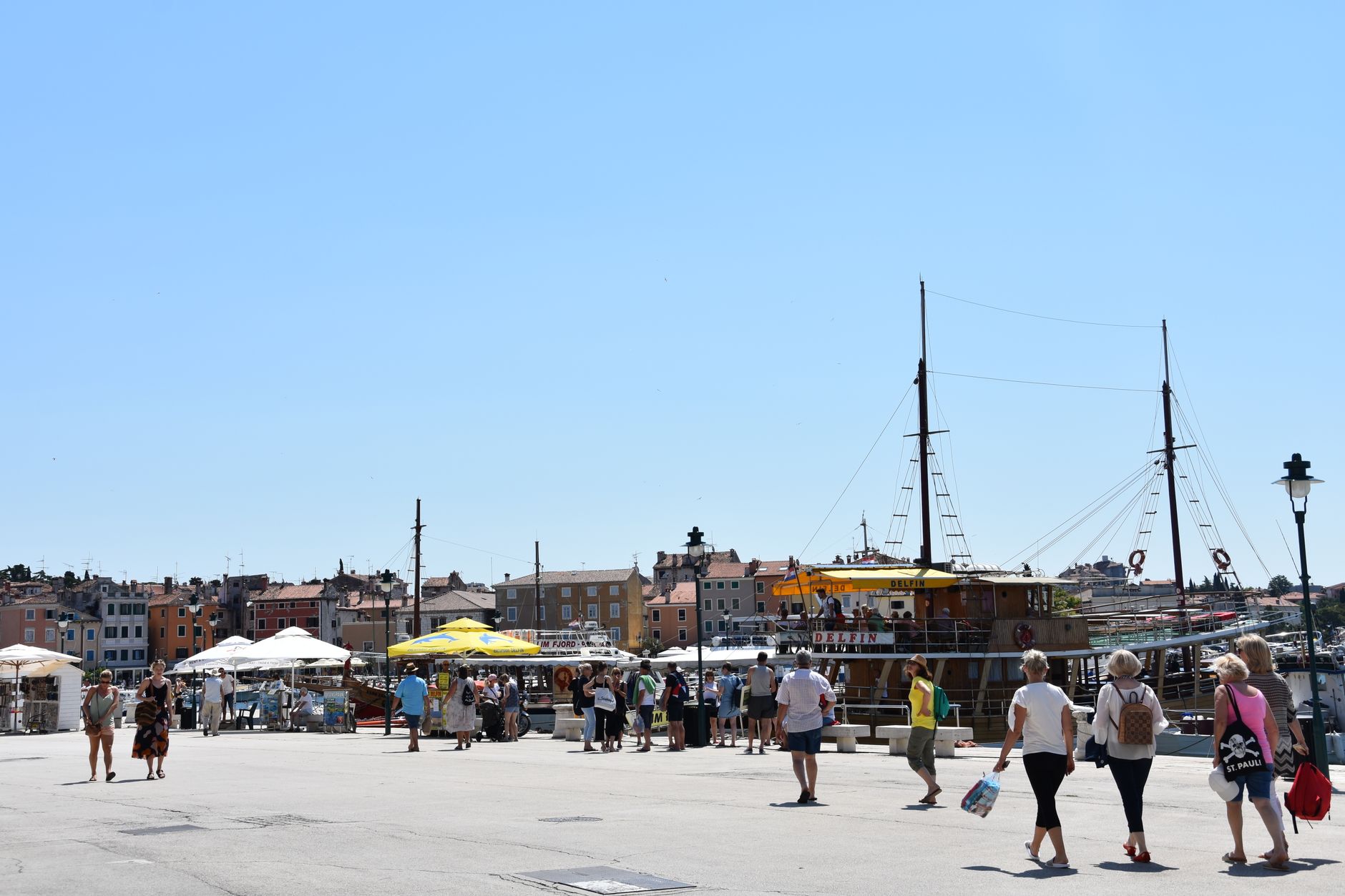
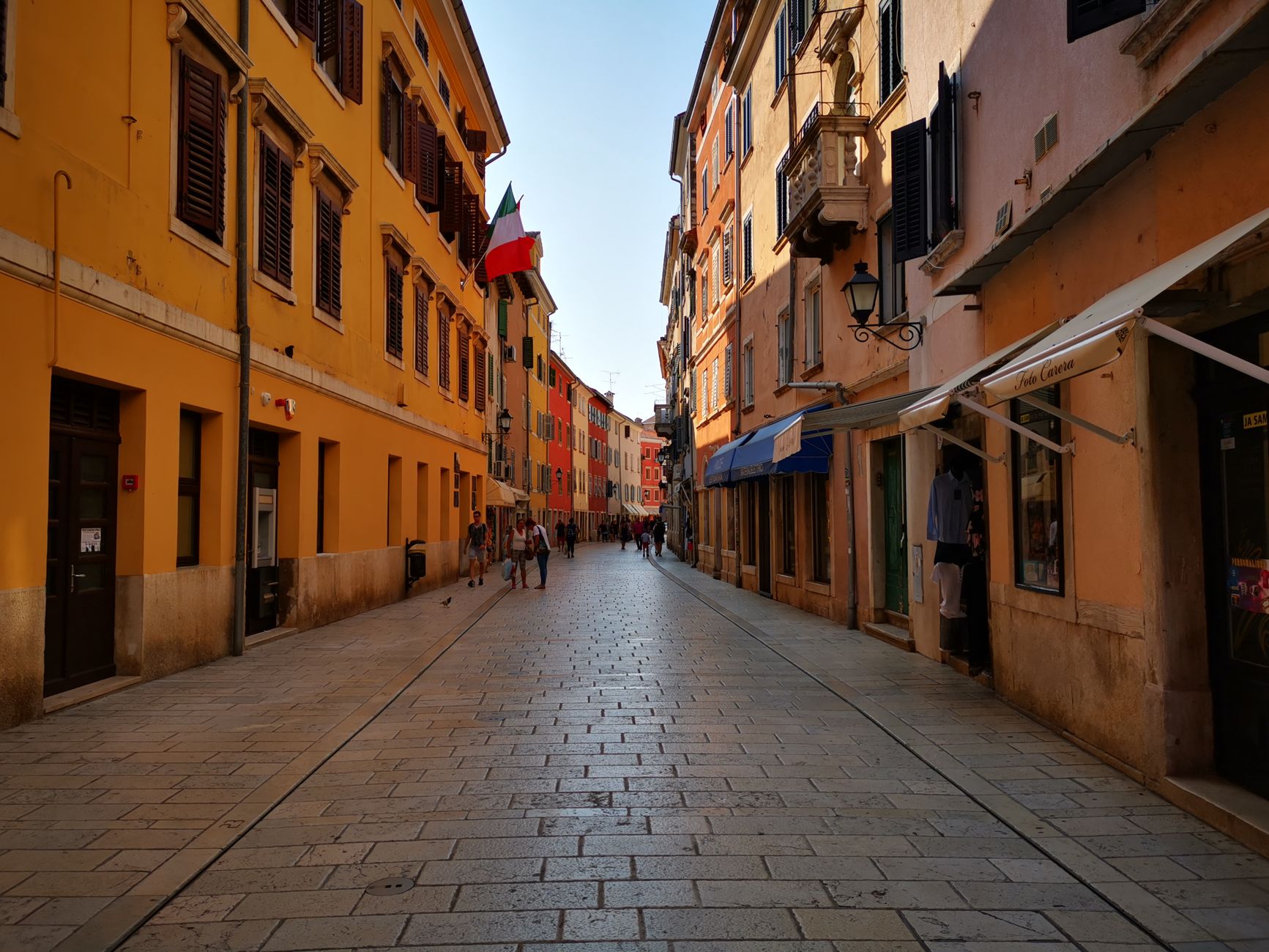
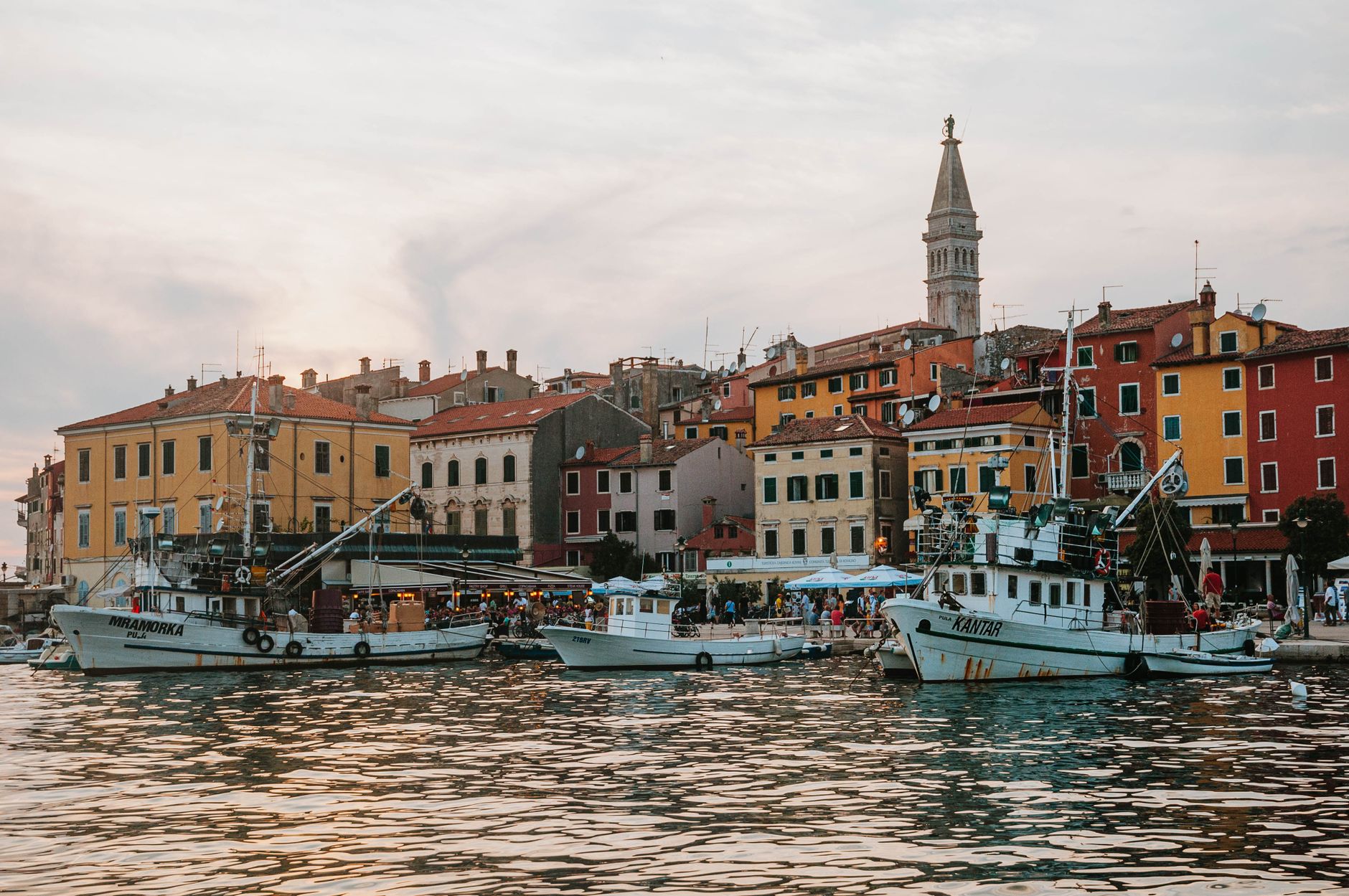
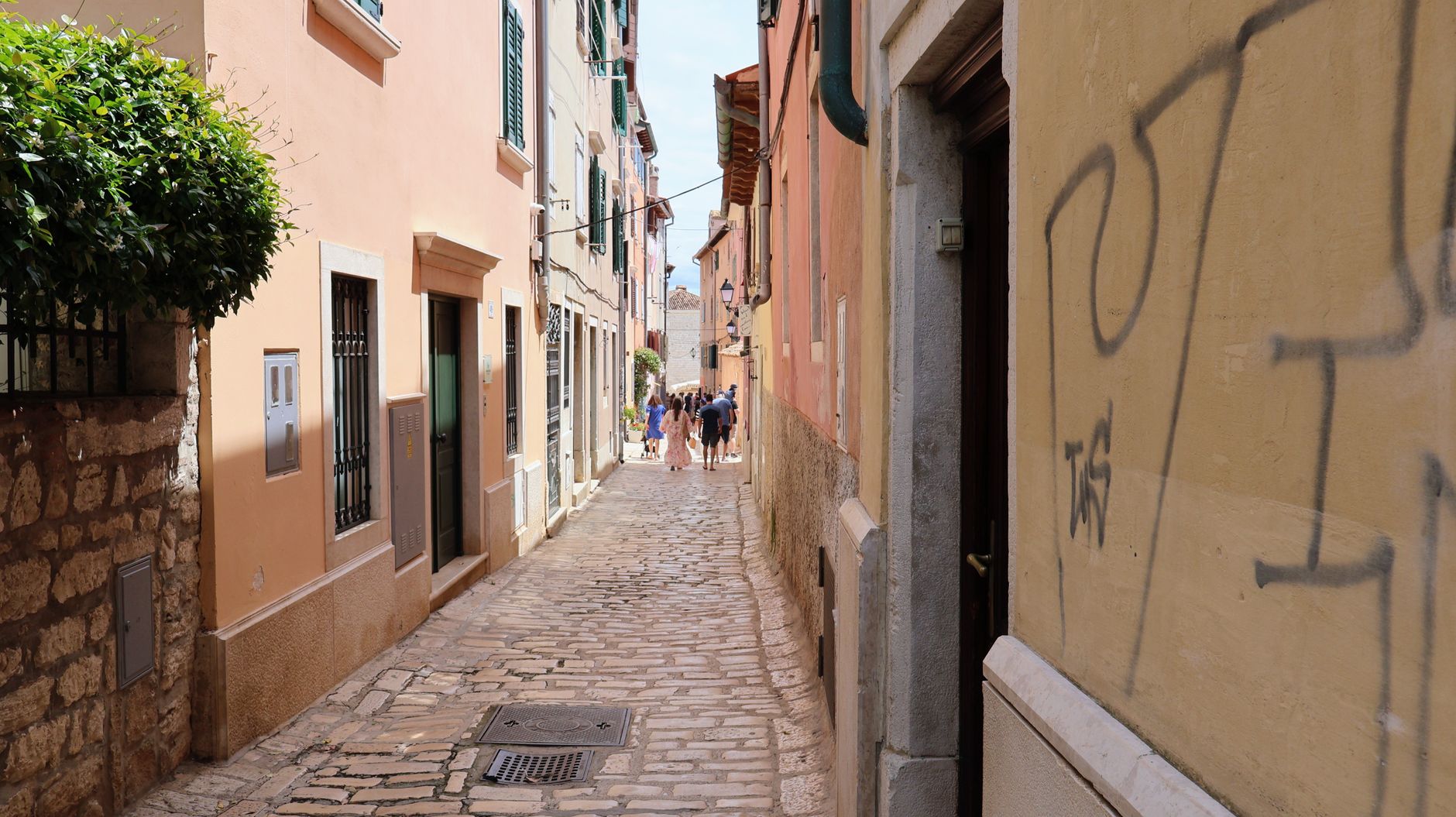
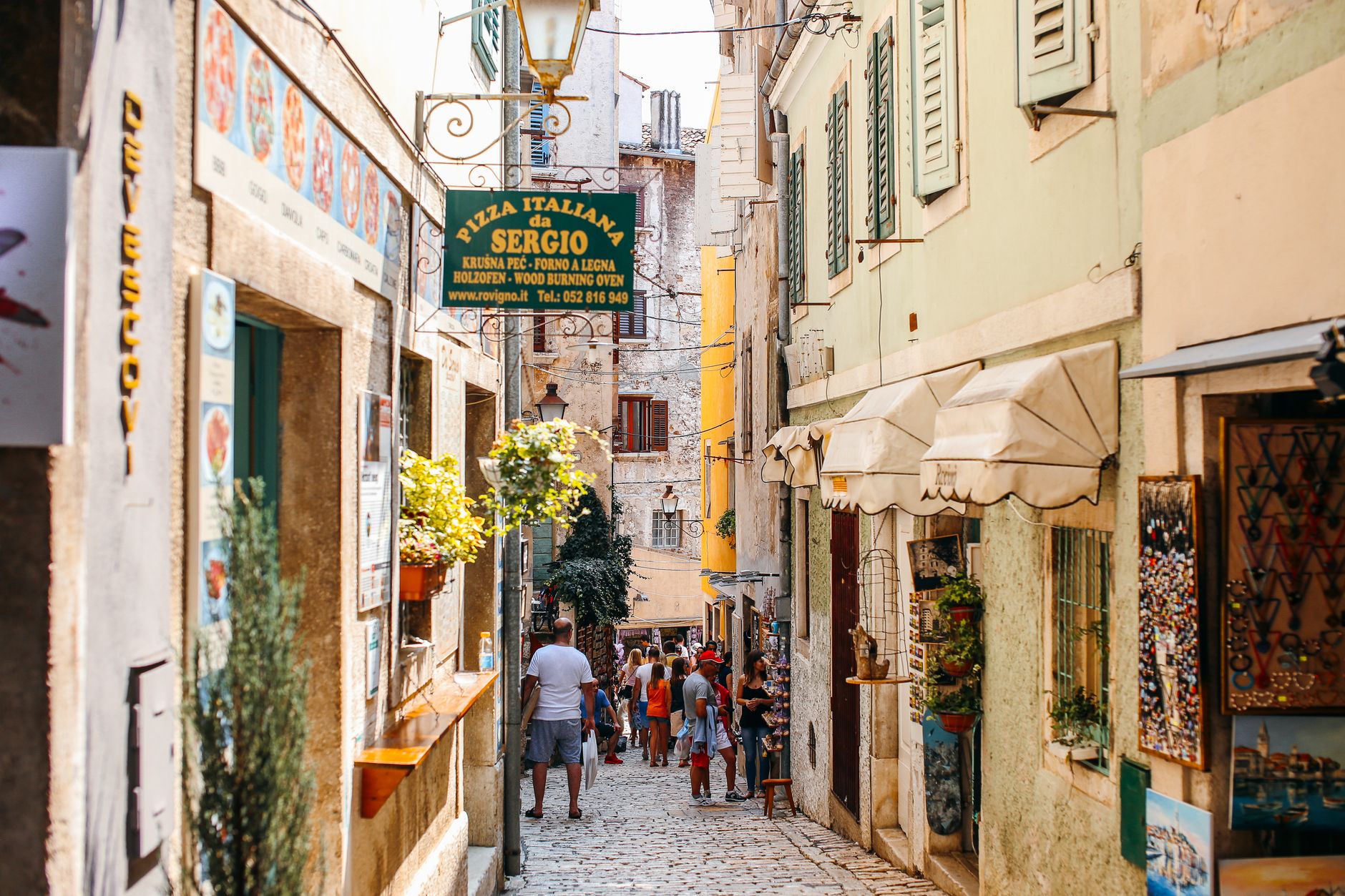
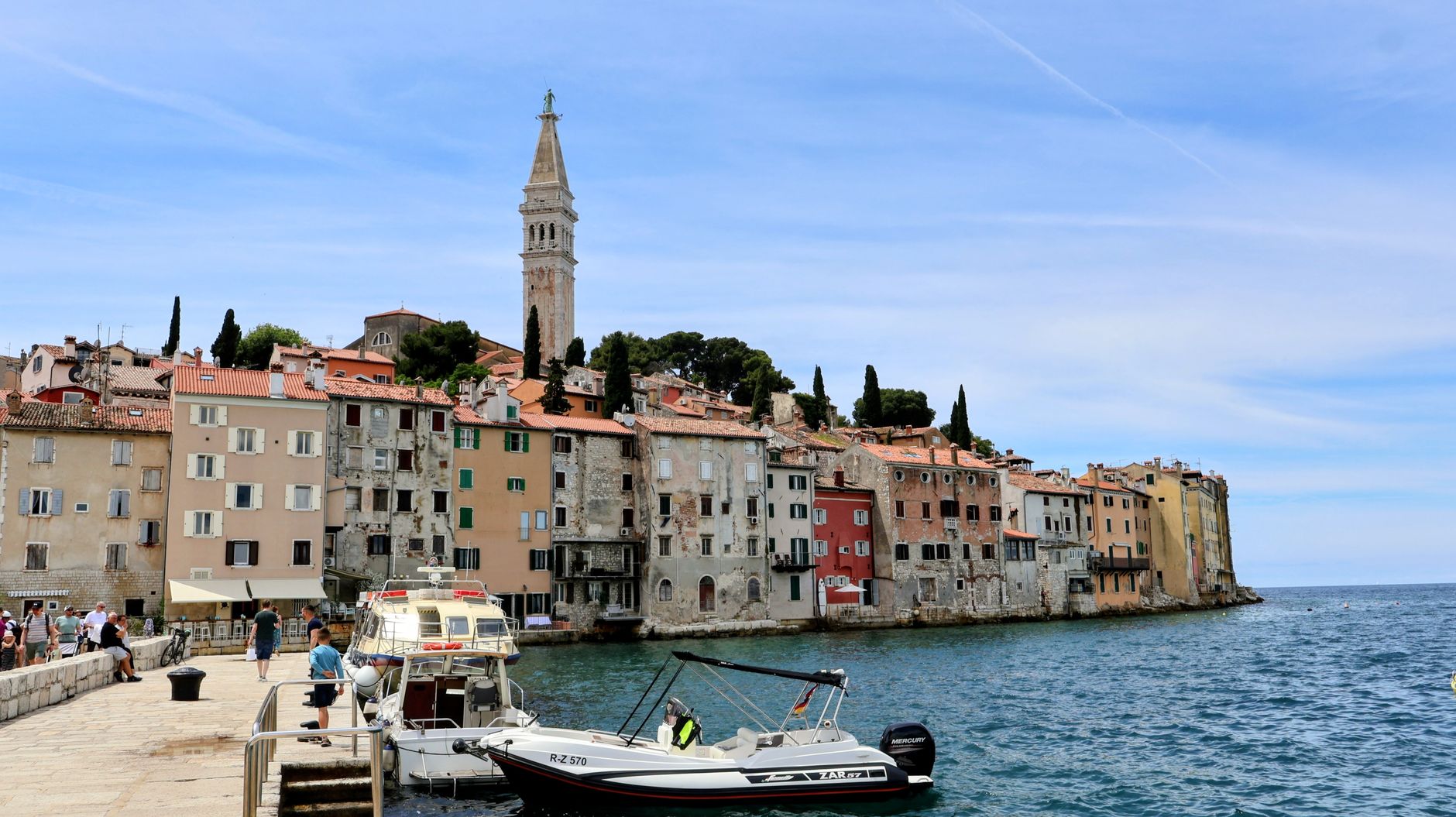
Stand at the top of Rovinj's old town and the view makes the geography plain: a dense tangle of terracotta rooftops climbing a former island, now stitched to the Istrian mainland since 1763, with the Adriatic pressing in on three sides. The 60-metre bell tower of St. Euphemia's Baroque church rises above everything else, visible from the sea long before you arrive.
The old town was declared a cultural monument in 1963, and its peculiar chimneys — a legal condition of obtaining civil rights under Venetian rule — give the skyline a silhouette you won't find anywhere else on this coast. Rovinj rewards slower travel: the streets are steep and narrow, the light off the water changes by the hour, and the fishing harbour still functions.
💛 What travellers fall for
Return visitors tend to time their arrivals for shoulder season — late May or early September — when the harbour restaurants have space and the light is long. The walk up through the old town gates, particularly the Gate Under the Wall (dated by inscription to 1590), is quieter then, and St. Euphemia's sarcophagus of the martyr Euphemia, brought here in 800 AD, gets the attention it deserves.
How Rovinj came to be
Rovinj's origins sit somewhere between the 3rd and 5th centuries AD; by the 7th century it appears in written record as 'Castrum Rubini' in the Cosmographia of the Anonymous of Ravenna, already walled and fortified. Venice took formal control in 1283 and held it for over five centuries, shaping the architecture, the street plan, and the legal customs — including the chimney law — that still define the old town's character.
The fall of Venice in 1797 handed the city to Austria, and the 19th century brought an unlikely industrial surge: a steam pasta mill in 1847, a cement kiln, a tobacco factory, a glass and fish canning works, and a marine biology institute by 1891. After passing through Italian sovereignty (1920–1947) and Yugoslavia (1947–1991), Rovinj became part of independent Croatia in 1991, receiving city status within Istria the following year.
Who and what shaped it
People who shaped it
Landmark buildings
See Rovinj in motion
Plan your visit
On the map
When to go
Rovinj has a humid subtropical climate — summers are warm and dry, with July and August the hottest months and the most visitor pressure. Spring and autumn bring mild temperatures and far fewer crowds; winters are cool and quiet, averaging close to 5°C, with most of the year's rain falling between October and January.
Right now
Background & history adapted from Wikipedia (CC BY-SA) · specs from Wikidata (CC0) · weather from Open-Meteo · map data © OpenStreetMap contributors · photos from Wikimedia Commons / Unsplash with per-image credit. No third-party reviews or social posts reproduced.