
Rotorua City Centre
The smell hits you first — sulphur, faint and unmistakable, drifting off the ground even in the middle of town. Rotorua City Centre sits on a geothermal field that doesn't let you forget it, with wisps of steam rising from park edges and lakefront vents as you walk between a café and a bus stop. The Government Gardens stretch out beside the lake, anchored by the 1908 Bath House, a red-and-white Tudor Revival building that was built to rival the great European spa towns.
The centre is compact enough to cover on foot in an afternoon, but the layers take longer. Ōhinemutu, the original Māori lakeside settlement, sits just minutes from the main streets, with the carved meeting house Tama-te-Kapua and St. Faith's Anglican Church — both decorated with whakairo carvings and tukutuku panels — facing out over Lake Rotorua.
💛 What travellers fall for
People who come back tend to arrive early at the Government Gardens before the tour groups do, when the rose gardens are quiet and the steam from the geothermal vents catches the morning light. They also know to walk down to Ōhinemutu rather than just read about it — the lakefront there feels entirely different from the main strip, and the carvings inside St. Faith's reward the short detour.
Deals in Rotorua City Centre
Book directly at the provider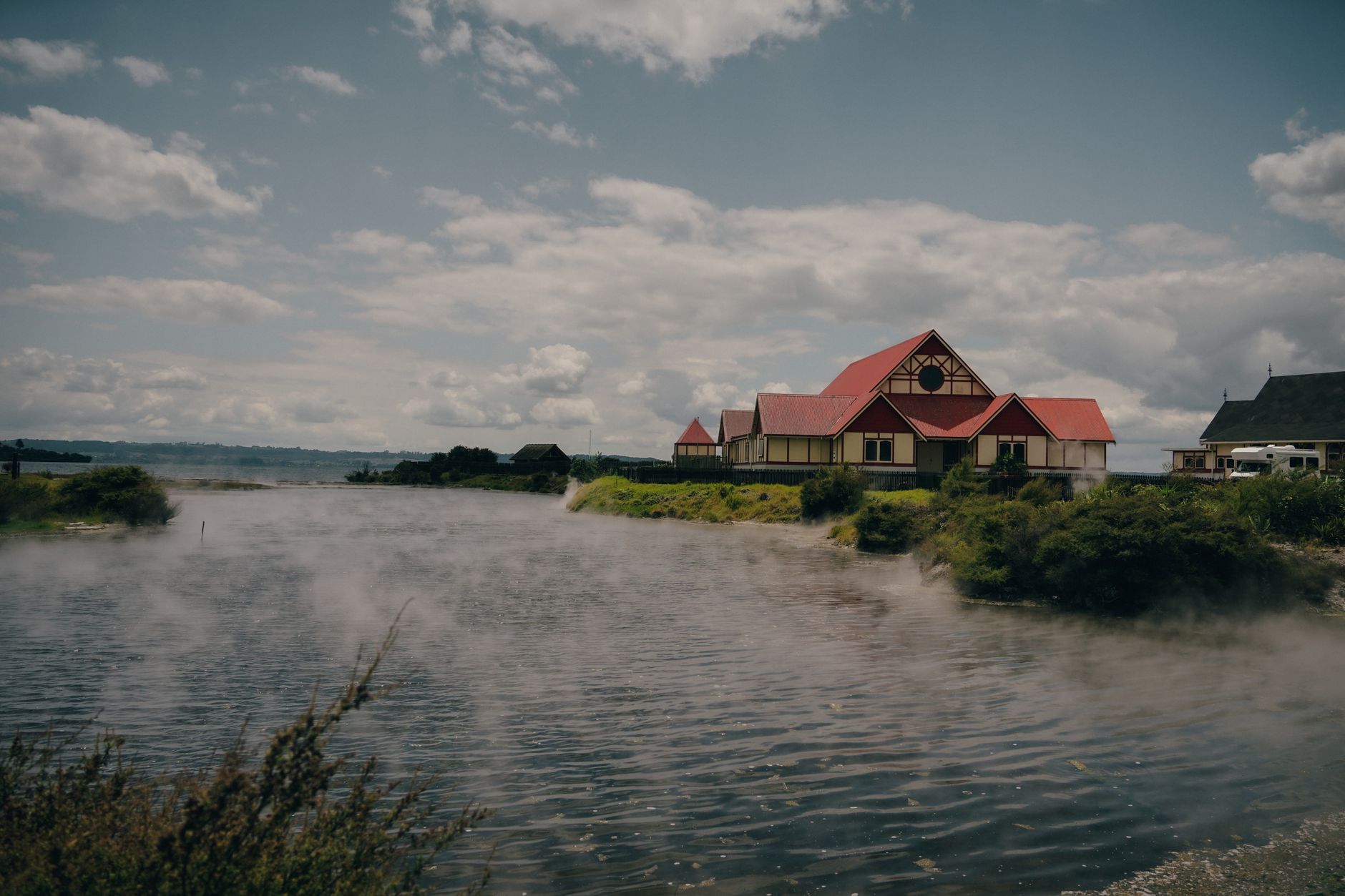


How Rotorua City Centre came to be
The city centre was laid out in the early 1870s on the Pukeroa–Oruawhata block, land leased from Ngāti Whakaue near their existing lakeside settlement of Ōhinemutu. The Fenton Agreement of 1880, struck between Ngāti Whakaue chiefs and the Crown, formalised the arrangement; by 1888 the government had become sole owner of the land. The town was constituted a special district in 1881, a borough in 1922, and finally a city in 1962.
The arrival of the Auckland railway branch line in 1894 opened Rotorua to wider tourism, and the government leaned into that by opening the Bath House in 1908 — a deliberate echo of European spa culture, modelled in part on the bathhouse at Bad Nauheim in Germany. Te Arawa people became New Zealand's first professional guides during this era, shaping how visitors understood the land. The lakefront area saw significant reinvestment again in the 2010s and 2020s through a multi-million-dollar revitalisation project.
Who and what shaped it
Landmark buildings
See Rotorua City Centre in motion
Plan your visit
On the map
When to go
Summers (December–February) are mild rather than hot, with daytime highs around 22–23°C and cool evenings. Winter (June–August) brings genuine cold — average lows around 5°C, frost on roughly 57 nights a year, and occasional dips below zero — so pack accordingly if you're visiting between June and August. Rainfall spreads fairly evenly across the year, with no single season dramatically wetter than another.
Right now
Background & history adapted from Wikipedia (CC BY-SA) · specs from Wikidata (CC0) · weather from Open-Meteo · map data © OpenStreetMap contributors · photos from Wikimedia Commons / Unsplash with per-image credit. No third-party reviews or social posts reproduced.