
Rothenburg ob der Tauber



The clock on Rothenburg's market square runs a mechanical drama every hour: wooden figures re-enact the legend of mayor Georg Nusch drinking down a three-litre tankard of wine to spare his city from a besieging army. It's kitsch and wonderful in equal measure, and it tells you something true — this town has been performing its own past for a long time.
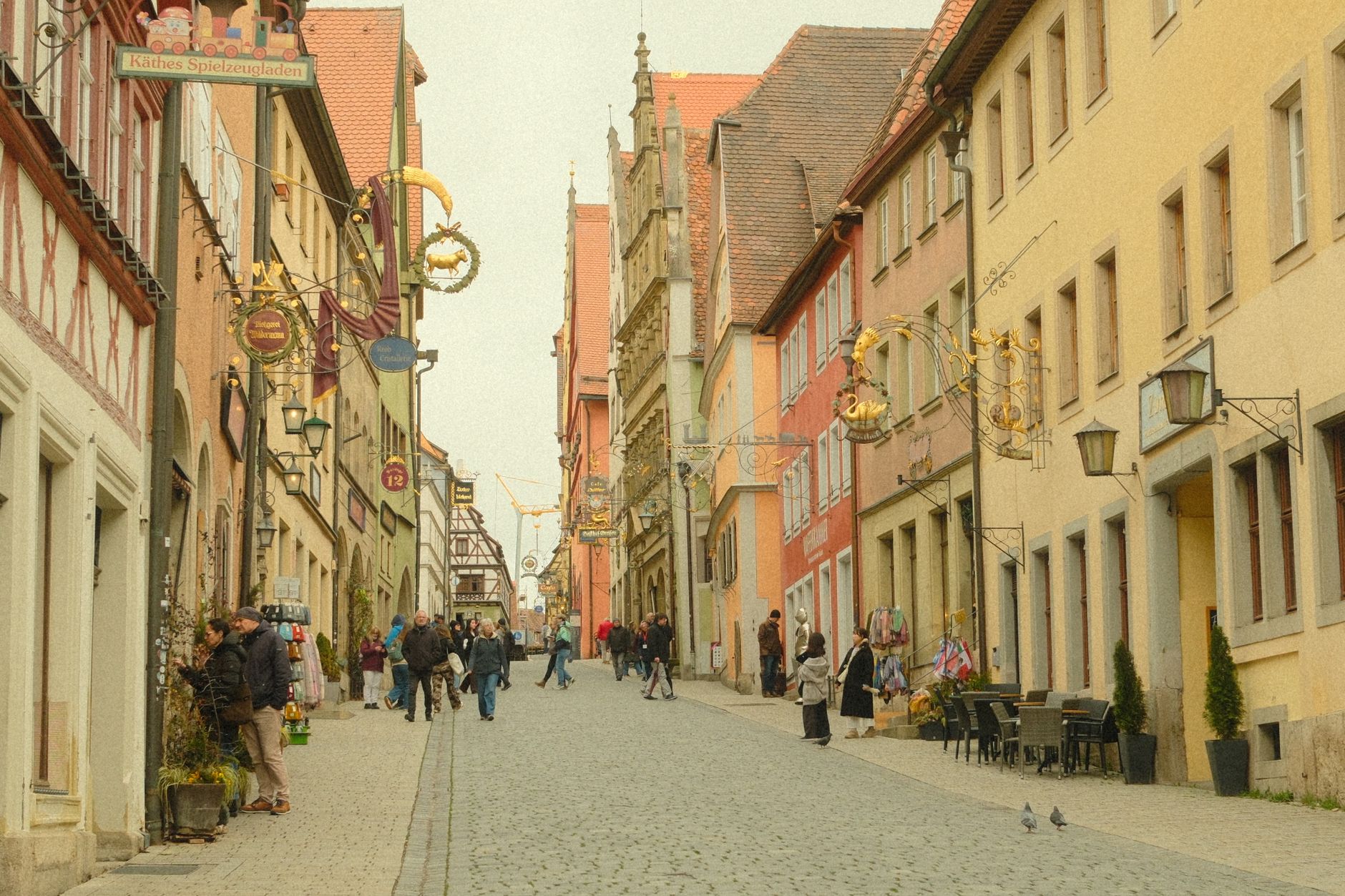
Rothenburg ob der Tauber sits above the River Tauber on a sandstone plateau, ringed by four kilometres of medieval wall with 42 towers still standing. Walk the full circuit and you're looking down over half-timbered rooftops, kitchen gardens, and a valley that hasn't changed its basic shape in centuries.
💛 What travellers fall for
People who return tend to arrive early or late in the day, before the tour groups reach the Plönlein. They climb the Rathaus tower's 220 steps for the 360-degree view, spend a quiet hour in the Burggarten where the old castle used to stand, and make a point of seeing Tilman Riemenschneider's Holy Blood altarpiece in St. James' Church up close.
Deals in Rothenburg ob der Tauber
Book directly at the provider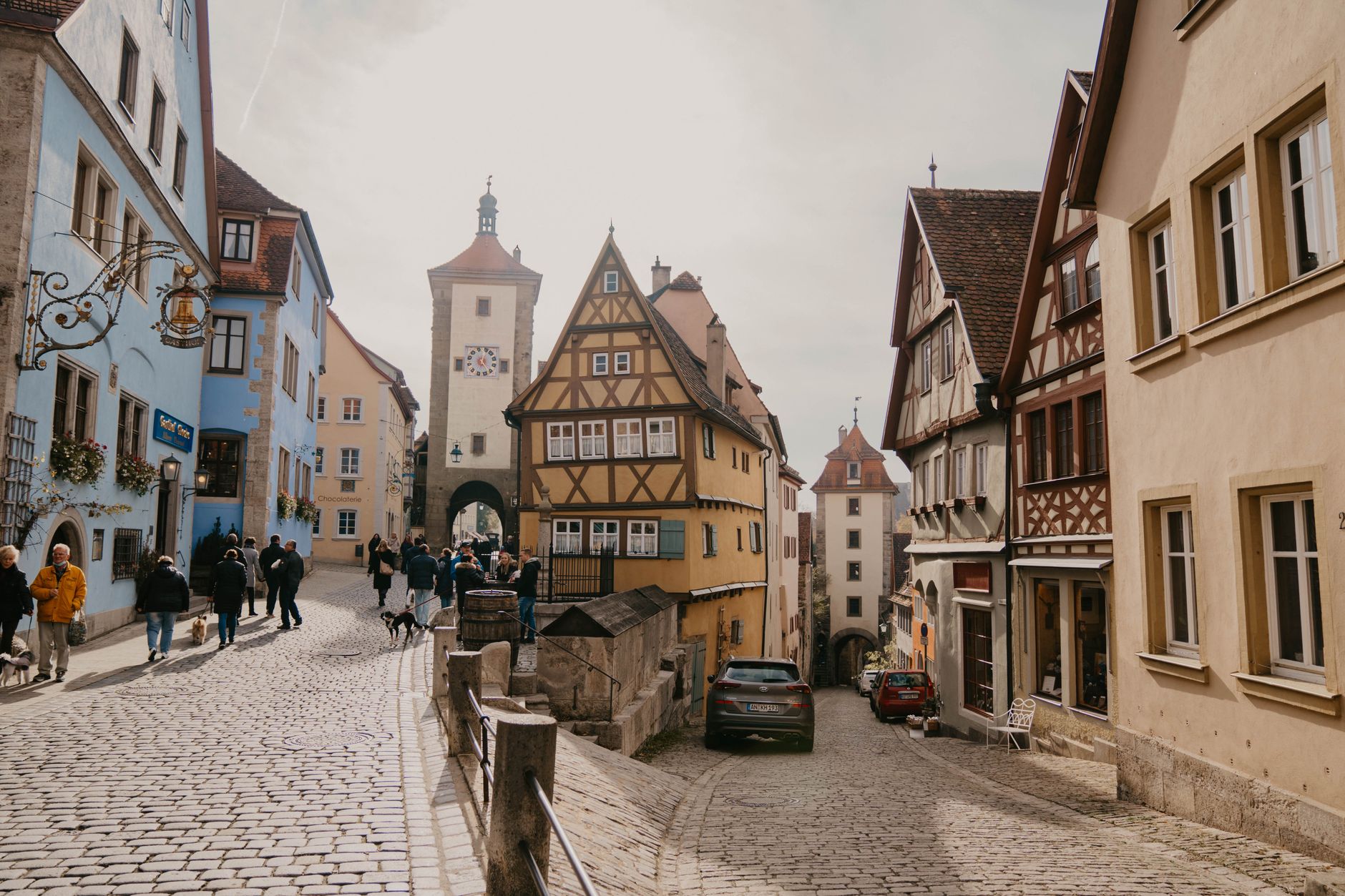

How Rothenburg ob der Tauber came to be
The town traces its founding to around 1170, when the Staufer dynasty held a castle on the plateau. By 1274 Rothenburg had become a Free Imperial City, and around 1400 it reached its commercial peak under mayor Heinrich Töppler, who left behind a small residential-defensive castle still standing in the Tauber Valley below.
The Thirty Years' War brought General Tilly's 40,000-strong Catholic army to the gates in 1631; a gunpowder explosion breached the walls and the city surrendered. In April 1945, American artillery was aimed at the old town before John McCloy intervened to prevent the attack, a decision that allowed roughly 55% of the medieval fabric to survive the war intact. Rothenburg became part of Bavaria in 1802, ending over five centuries of imperial independence.
Who and what shaped it
People who shaped it
Landmark buildings
See Rothenburg ob der Tauber in motion
Plan your visit
On the map
When to go
Summers are warm and dry enough for the full wall walk, though July and August bring the heaviest visitor numbers. Spring and autumn offer cooler, quieter days with softer light; winter turns the town stark and photogenic, and the Christmas market draws its own crowds to the market square.
Right now
Background & history adapted from Wikipedia (CC BY-SA) · specs from Wikidata (CC0) · weather from Open-Meteo · map data © OpenStreetMap contributors · photos from Wikimedia Commons / Unsplash with per-image credit. No third-party reviews or social posts reproduced.