
Region

Rhodes

Rhodes
Photo by George Alex on Pexels
Rhodes
Photo by George Alex on Pexels
Rhodes
Photo by George Alex on Pexels
Rhodes
Photo by George Alex on Pexels
Rhodes
Photo by Tomasz on Pexels
Rhodes
Photo by Mark Thomas on Pexels
Culture & history Islands & tropical Beach & sun

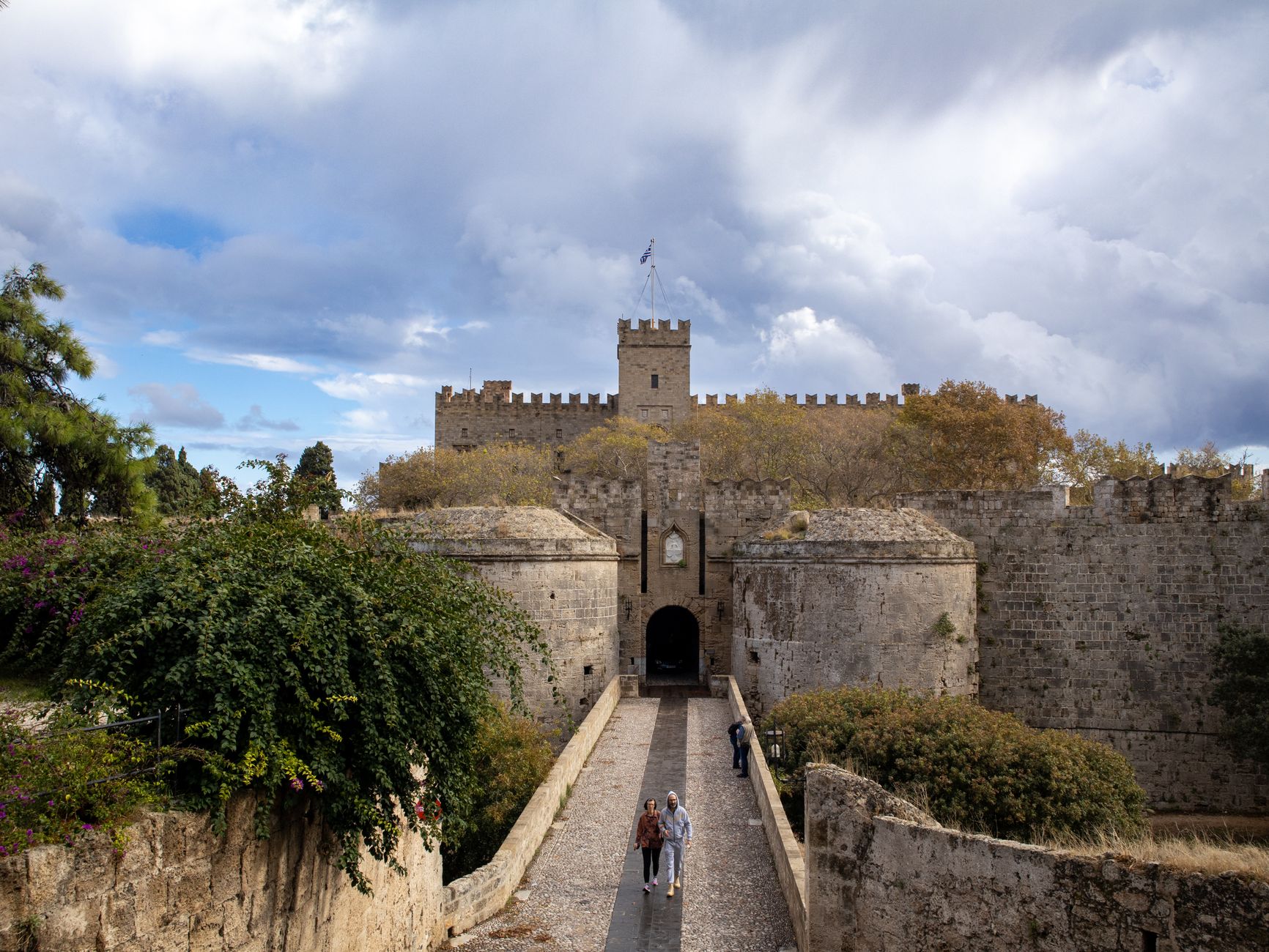
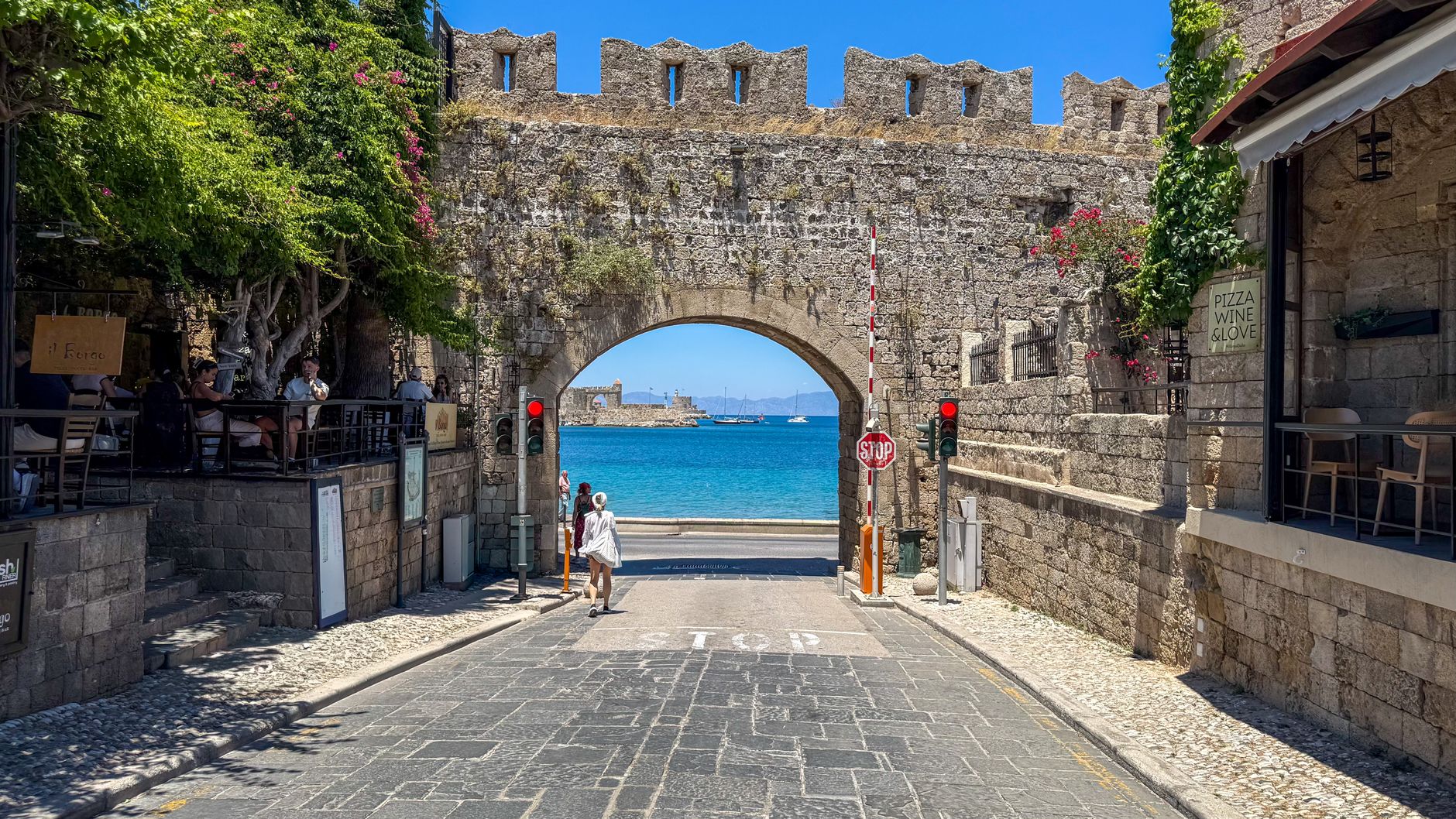
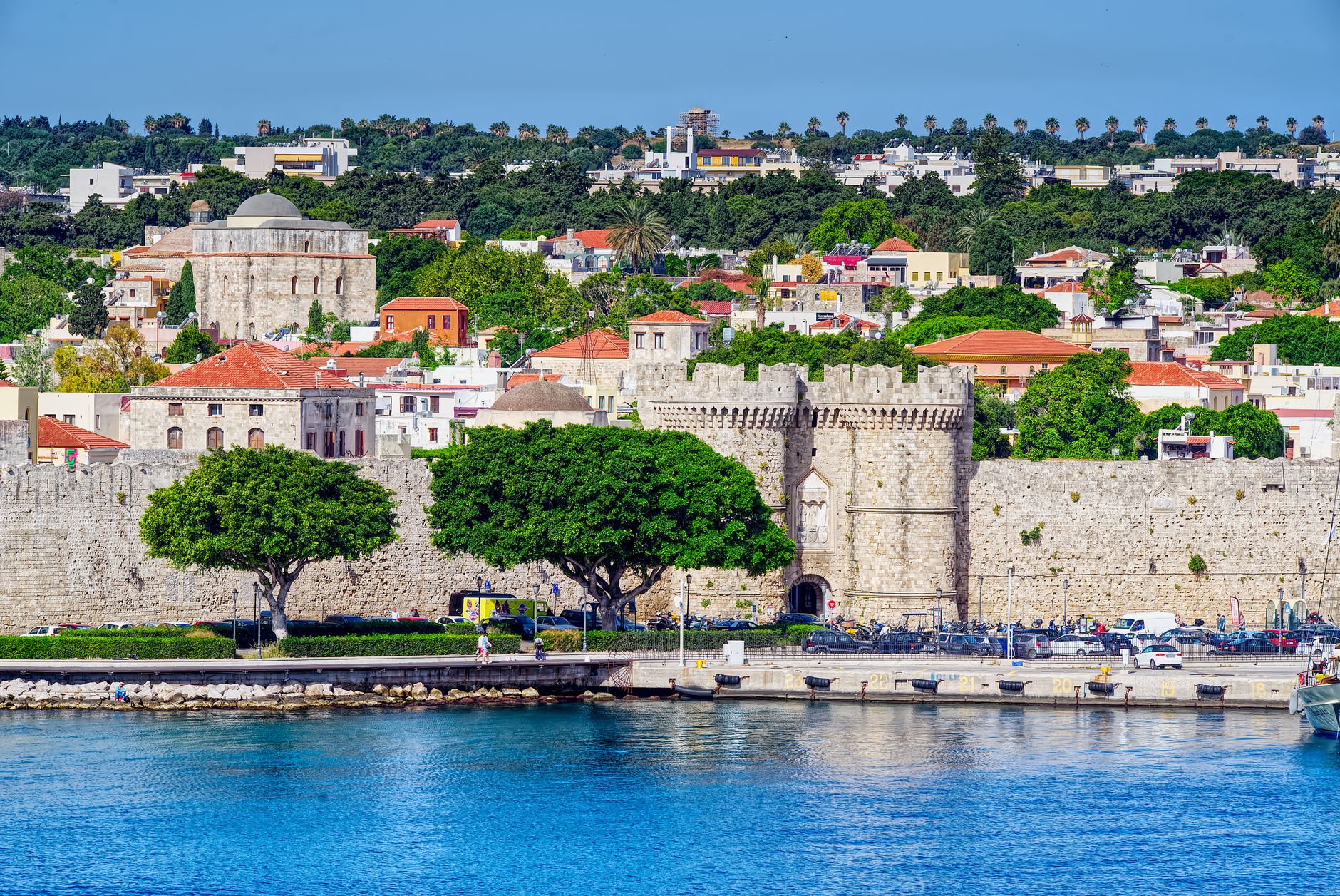
Rhodes carries more history per square kilometre than almost anywhere in the Aegean. The medieval Old Town — still lived in, still creaking with commerce — was laid out by the Knights of Saint John and enclosed by walls and a moat they built in the 14th century. Walk the Street of the Knights at dusk, 600 metres of Gothic stonework with barely a power cable in sight, and the UNESCO designation starts to feel like an understatement.

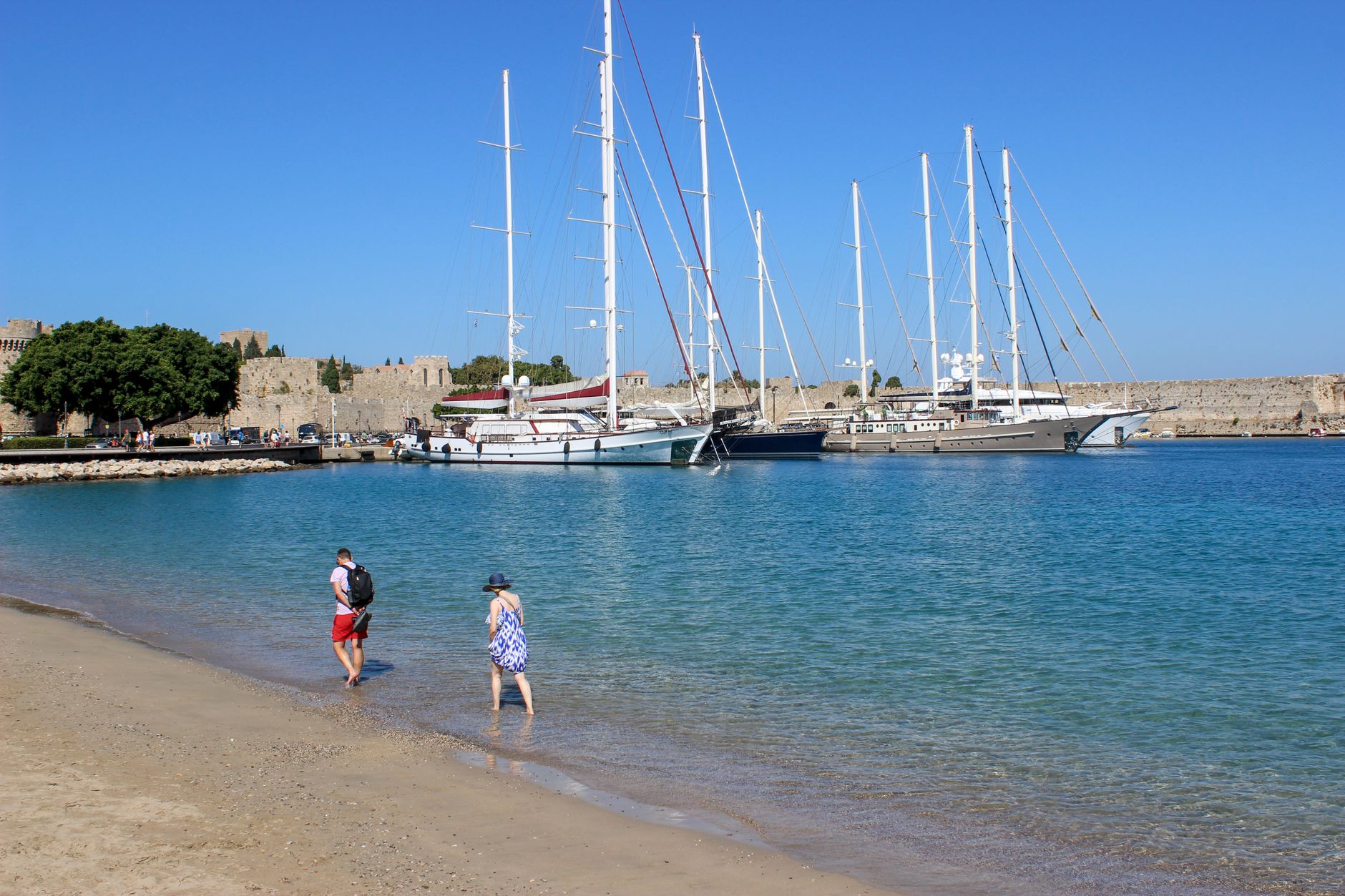
Beyond the walled city, the island stretches south through olive groves and limestone hills to the Acropolis of Lindos, perched above a whitewashed village and a harbour. The coastline shifts from wide sandy bays on the northwest to quieter coves as you move down the eastern shore.

💛 What travellers fall for

People who come back tend to base themselves inside the Old Town walls at least one night — the streets empty after midnight and the place becomes entirely different. They also mention Kallithea Springs, the Italian-era spa complex reopened in 2007, as somewhere worth an afternoon that most day-trippers overlook.

Good to know
Diagoras Airport (RHO) has direct connections across Europe. May, June and September give you warm weather without July and August's crowds and heat. A car is worth hiring for a day or two to reach the island's southern castles and quieter villages.
The story

How Rhodes came to be

The city of Rhodes was founded in 408 BC when three older city-states — Ialyssos, Lindos and Kameiros — merged and built a new capital on a grid plan drawn up by the architect Hippodamus. It was prosperous enough to commission the Colossus, a giant bronze statue completed around 282 BC and counted among the Seven Wonders of the Ancient World, though an earthquake destroyed it less than sixty years later. Rome absorbed the island in 164 BC; Byzantium held it for centuries after.

The Knights of Saint John arrived in 1309 and spent two centuries fortifying the city with walls, a palace, a great hospital and the Gothic streetscape that survives today. Suleiman the Magnificent took Rhodes in 1522, adding mosques to the skyline the Knights had shaped. Italian administration followed from 1912, then German occupation from 1943 to 1945. Rhodes joined the Greek state in 1947.

People & landmarks

Who and what shaped it

People who shaped it

Cleobulus of Lindos
6th century BC philosopher, one of Seven Sages of Ancient Greece, from Lindos.
Hipparchus
2nd century BC astronomer and mathematician who founded trigonometry, worked in Rhodes.
Chares of Lindos
Sculptor who built the Colossus of Rhodes between 304–293 BC.
Hippodamus
Architect who designed the city of Rhodes in 408 BC with straight roads crossing at right angles.
Lawrence Durrell
Writer and poet who resided on Rhodes 1945–1947 and published travel book 'Reflections on a Marine Venus' in 1953.

Landmark buildings

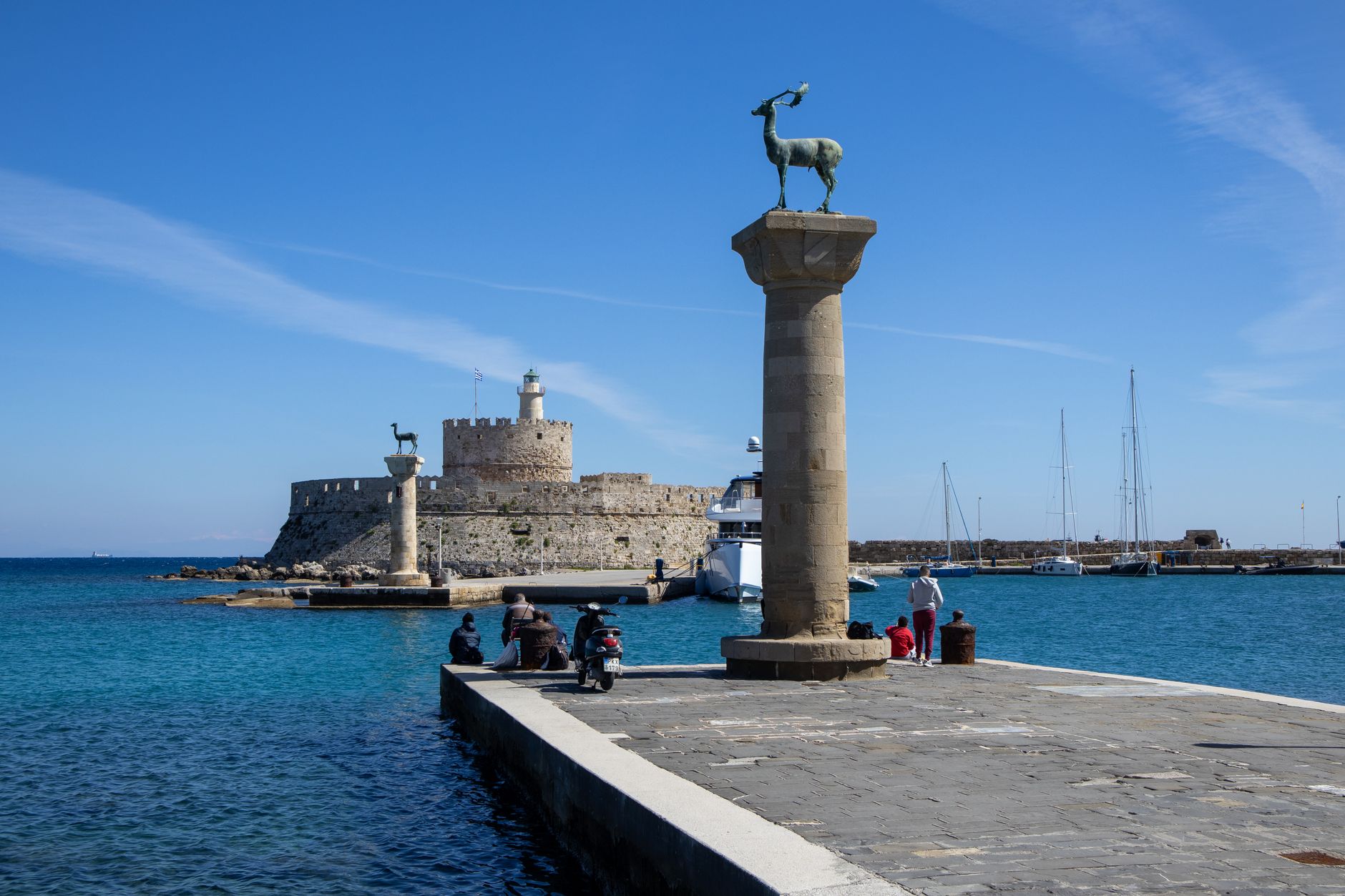
Colossus of Rhodes
Giant bronze statue completed 282 BC, counted among Seven Wonders of Ancient World; destroyed by earthquake 226 BC.
Palace of the Grand Master
Medieval fortress built by Knights of Saint John in 14th century; centerpiece of Old Town Upper Town.
Street of the Knights
600-meter medieval street with Gothic stonework built by Knights of Saint John; UNESCO-protected ensemble.
Archaeological Museum of Rhodes
Housed in Hospital of Knights, completed 1489; contains Hellenistic to Early Christian collections.
Acropolis of Lindos
Hellenistic acropolis perched above whitewashed village; partially restored by Knights of Saint John.
Suleymaniye Mosque
Built after Ottoman conquest in 1522 under Sultan Suleiman the Magnificent; re-imagined 1808.
Castle of Monolithos
Venetian medieval castle on hilltop with sea views.
Castle of Asklipio
Built 1479 by Grand Master D'Aubusson at site of ancient lighthouse.
Medieval Castle of Lindos
Historic fortification within Acropolis of Lindos; housed Governor's Palace of Knights of Saint John.
Church of Panagia tou Kastrou
11th-century, largest and oldest preserved church in Old Town; originally Orthodox, renamed under Knights, converted to mosque during Ottoman period.
Old Town of Rhodes
UNESCO World Heritage site designated 1988; medieval walled city built by Knights of Saint John in 14th century.
Kallithea Springs
Water known for beneficial qualities since ancient times; Italian facilities inaugurated 1927, reopened 2007.
Practical

Plan your visit

On the map

When to go

Summers are long, dry and reliably hot — July and August regularly exceed 30°C. Spring and autumn are mild and clear, with the sea warm enough to swim well into October. Winters are brief and rarely severe, though some coastal facilities close between November and March.

Right now

☀️
28°C
Clear
Sat
35°
27°
Sun
34°
26°
Mon
34°
26°
Tue
☀️
36°
28°
Weather data: Open-Meteo

Background & history adapted from Wikipedia (CC BY-SA) · specs from Wikidata (CC0) · weather from Open-Meteo · map data © OpenStreetMap contributors · photos from Wikimedia Commons / Unsplash with per-image credit. No third-party reviews or social posts reproduced.

Top