
Pyramids of Giza
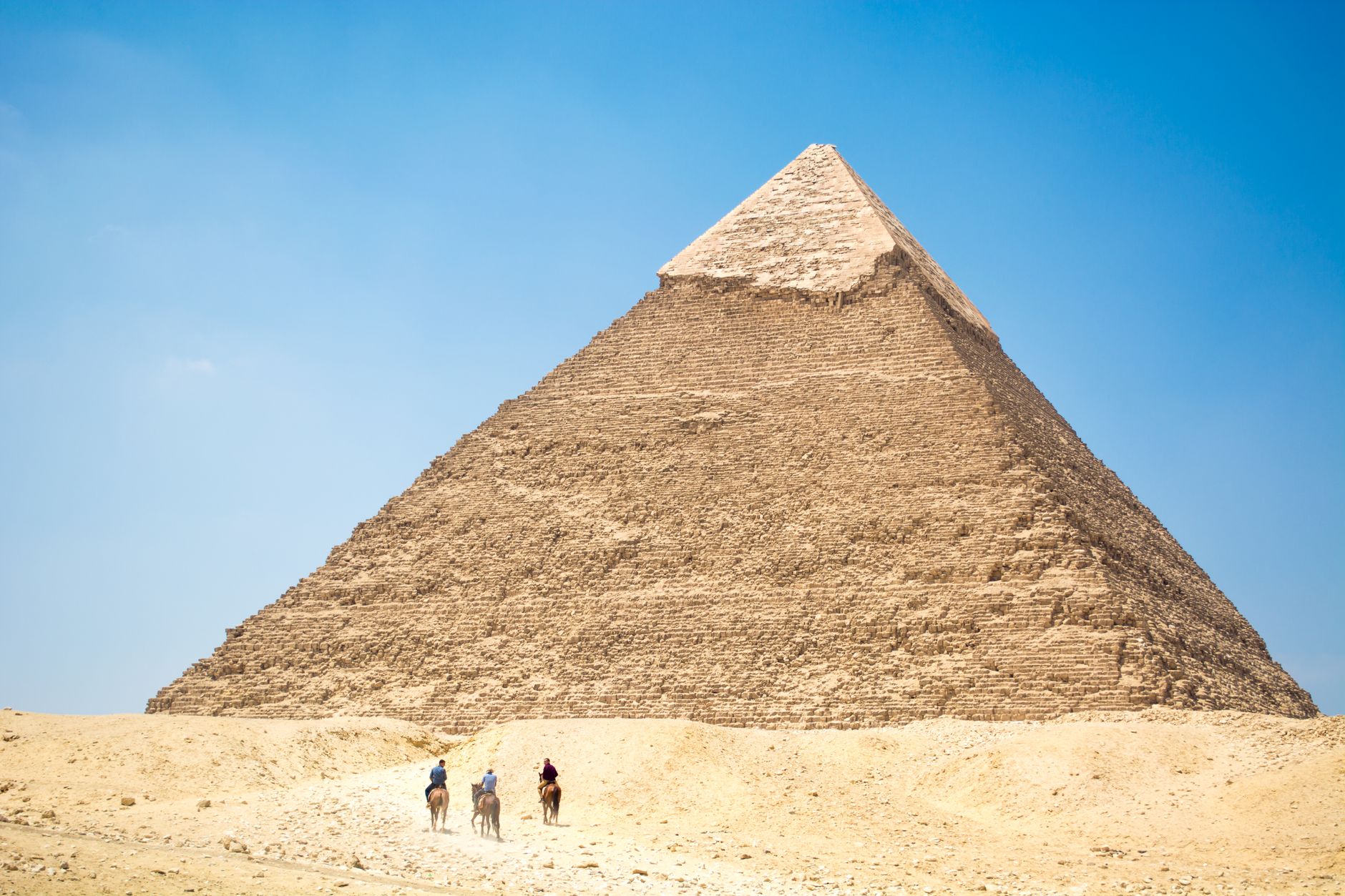
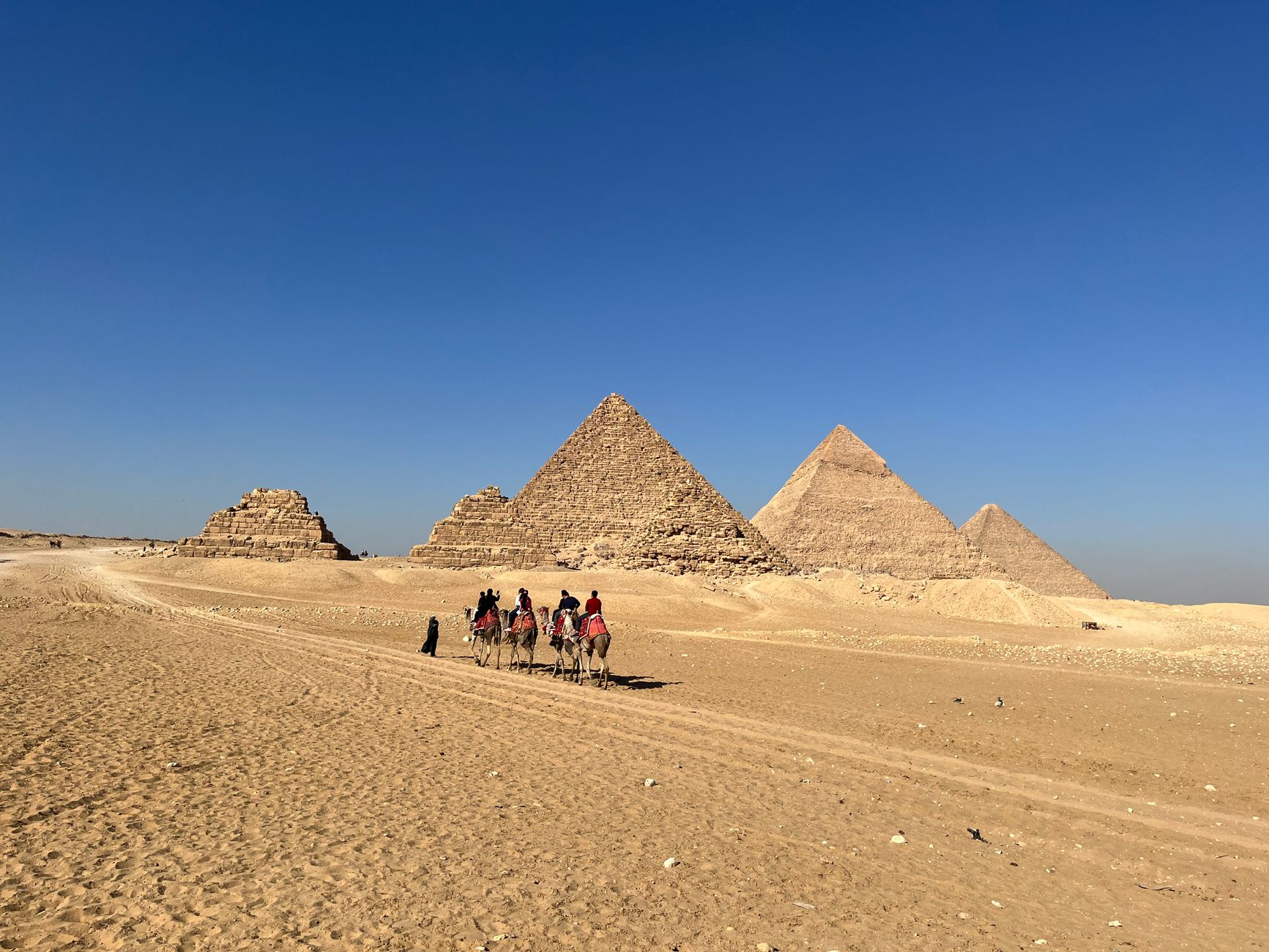

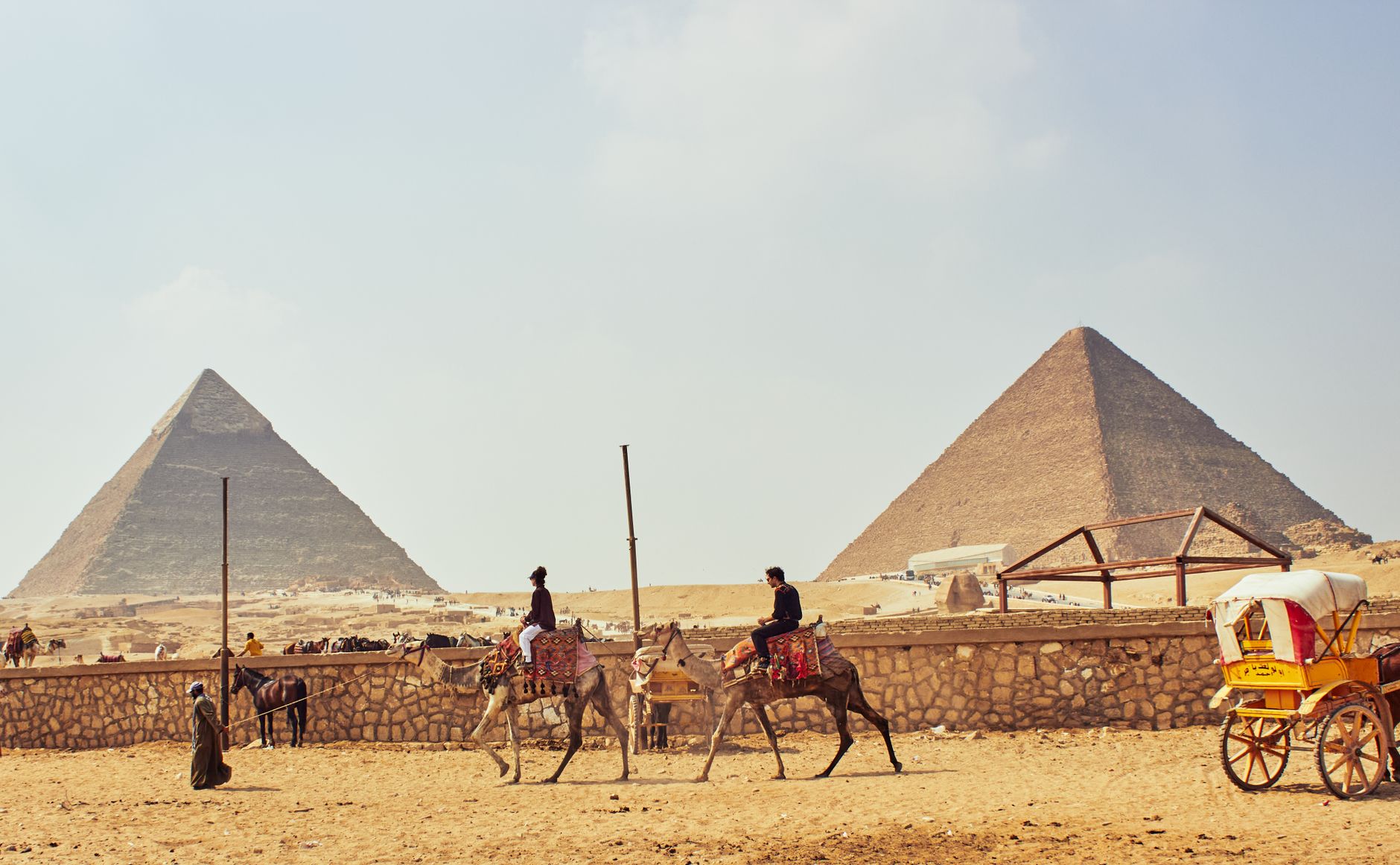
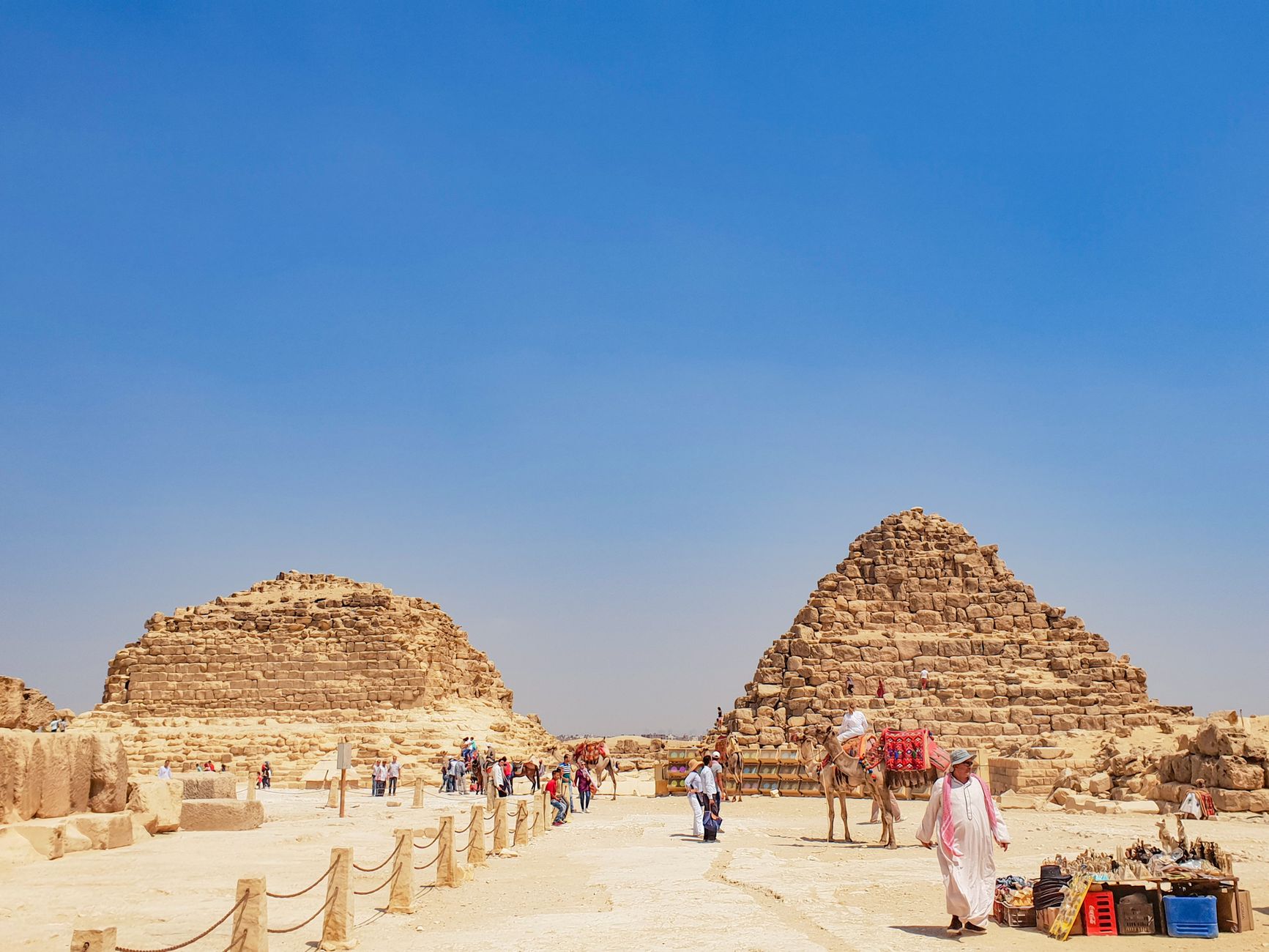
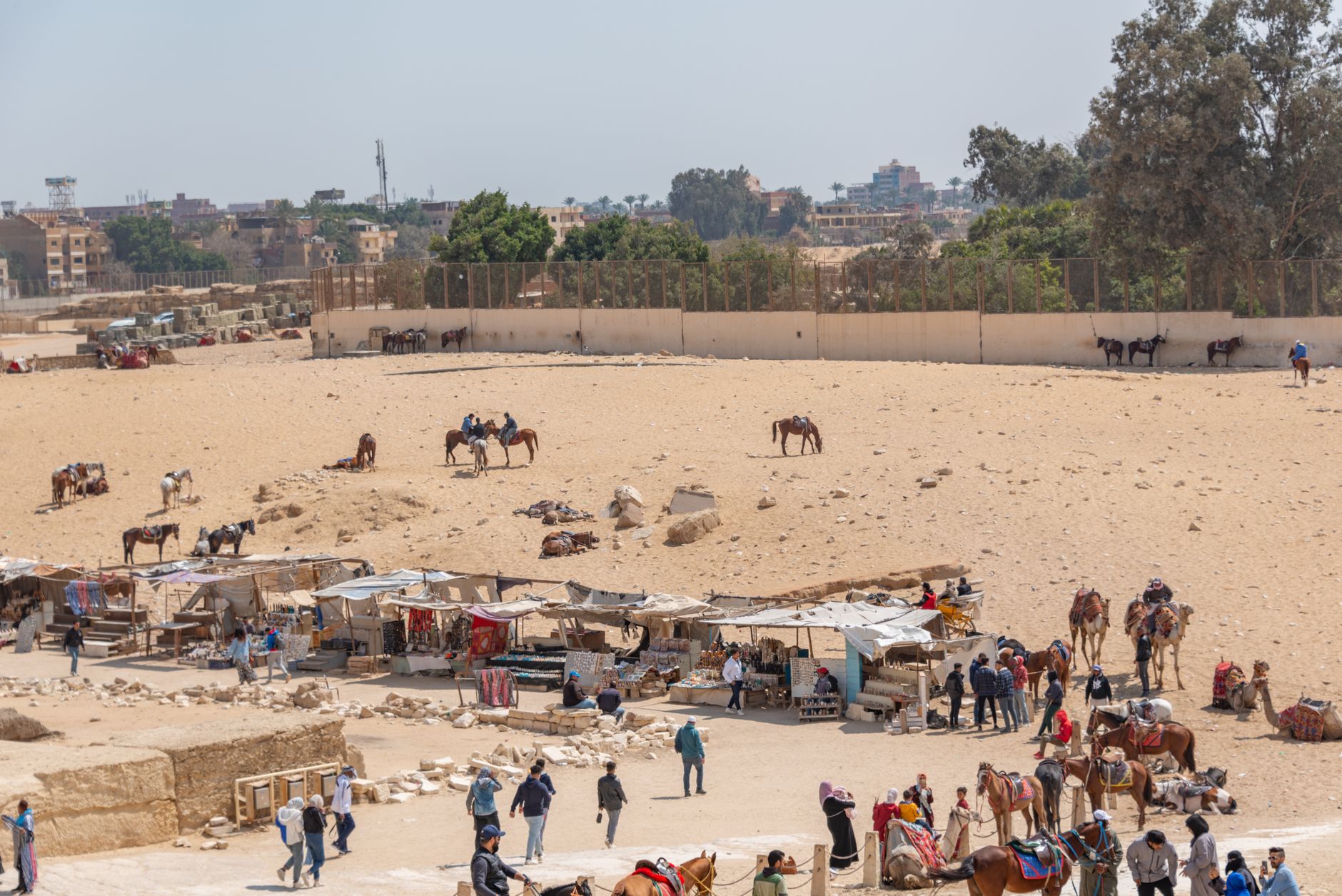
Stand at the base of the Great Pyramid and the numbers stop being abstract. Each of the 2.3 million blocks that make up Khufu's tomb weighs more than most cars, and the structure held the title of tallest thing humans had ever built for over 3,700 years. The plateau at Giza holds three pyramids, the Great Sphinx, causeways, temples, and satellite structures — a city of the dead that has outlasted every civilization that came to admire it.
The site sits on the west bank of the Nile, about 15 kilometres from central Cairo, and the two are genuinely inseparable in practice even if the plateau has its own gravitational pull. Give it more time than you think you need.
How Pyramids of Giza came to be
All three pyramids were raised during the 4th Dynasty, in a single concentrated burst of construction between roughly 2589 and 2504 BCE. Pharaoh Khufu commissioned the first and largest; his son Khafre followed with the second, which still wears a collar of original casing stones near its peak; Khafre's son Menkaure completed the trio. The project drew on tens of thousands of salaried and corvée workers who lived in a purpose-built settlement nearby — not the slave army of popular imagination.
The Great Sphinx, carved from the limestone bedrock using copper tools, is generally attributed by Egyptologists to Khafre. Hemiunu, Khufu's vizier, is credited with overseeing the engineering of the Great Pyramid itself — the most precisely constructed of the three. UNESCO recognised the entire Memphis necropolis, including Giza, as a World Heritage Site in 1979.
Who and what shaped it
People who shaped it
Landmark buildings
See Pyramids of Giza in motion
Plan your visit
On the map
When to go
Summers (June–August) are fierce — temperatures regularly exceed 38°C on the open plateau with little shade — so early morning arrival is less a tip than a necessity. Spring (March–May) and autumn (September–November) offer the most forgiving conditions; winters are mild by day but can drop sharply after dark.
Right now
Background & history adapted from Wikipedia (CC BY-SA) · specs from Wikidata (CC0) · weather from Open-Meteo · map data © OpenStreetMap contributors · photos from Wikimedia Commons / Unsplash with per-image credit. No third-party reviews or social posts reproduced.