
Preah Khan
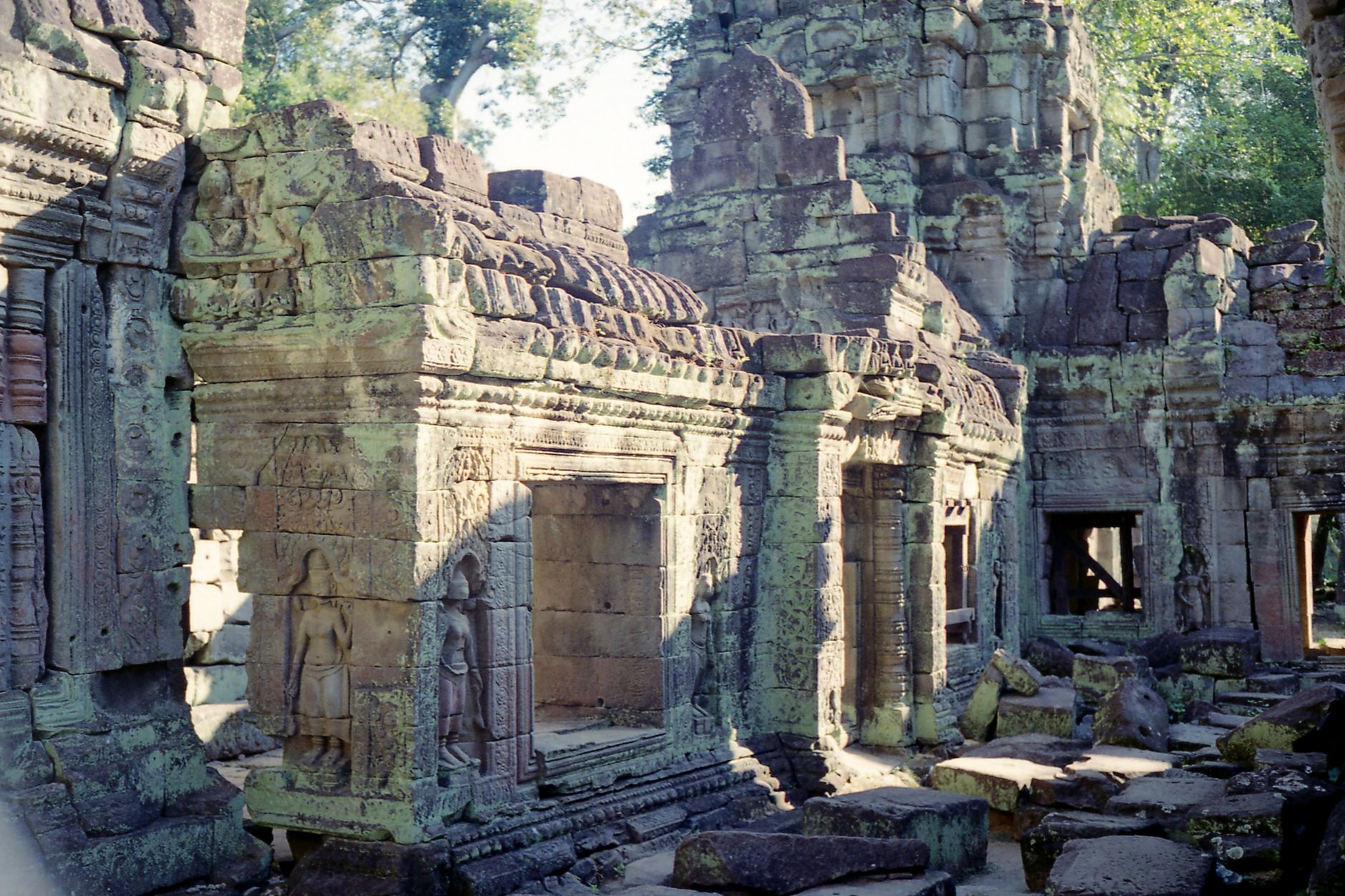
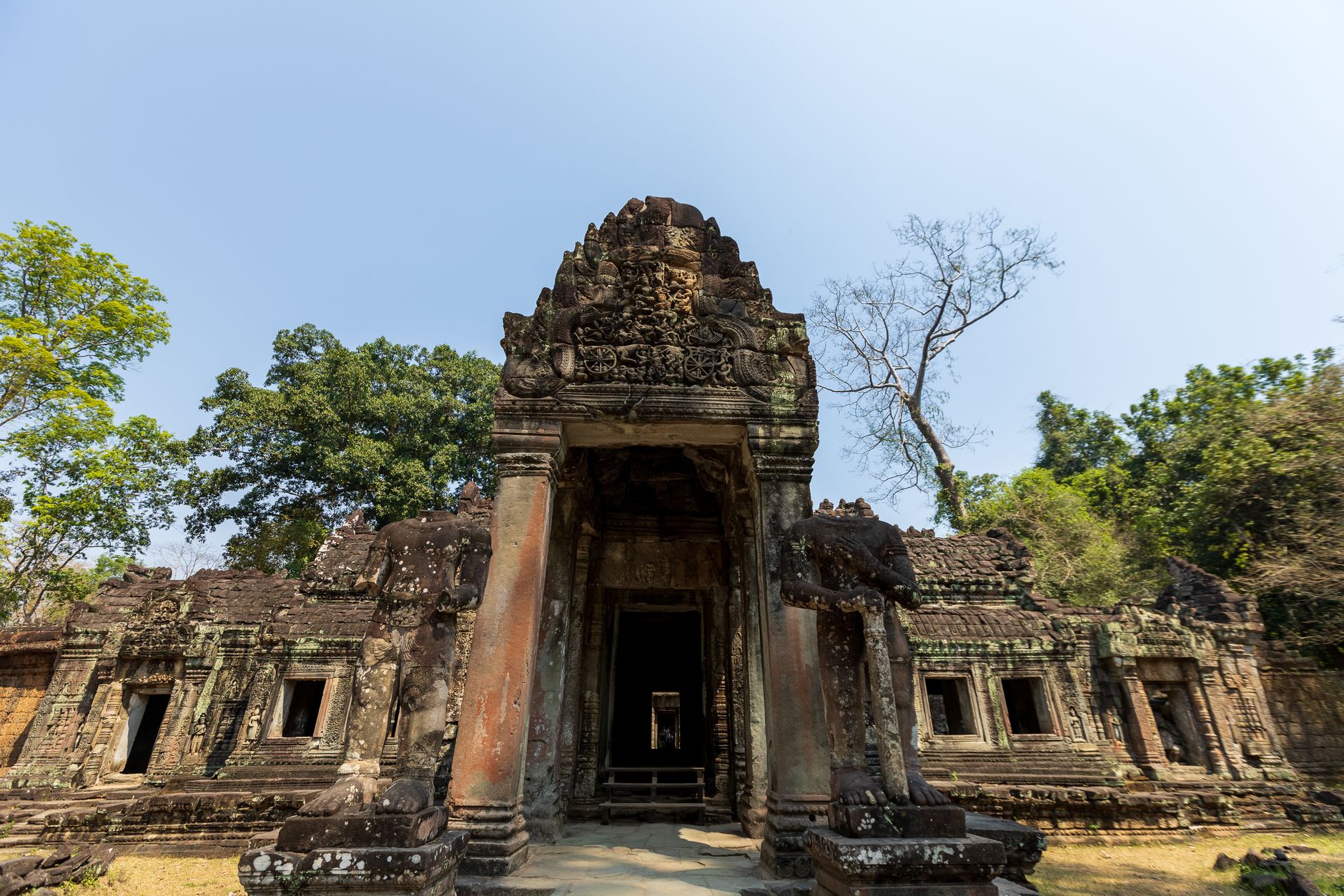
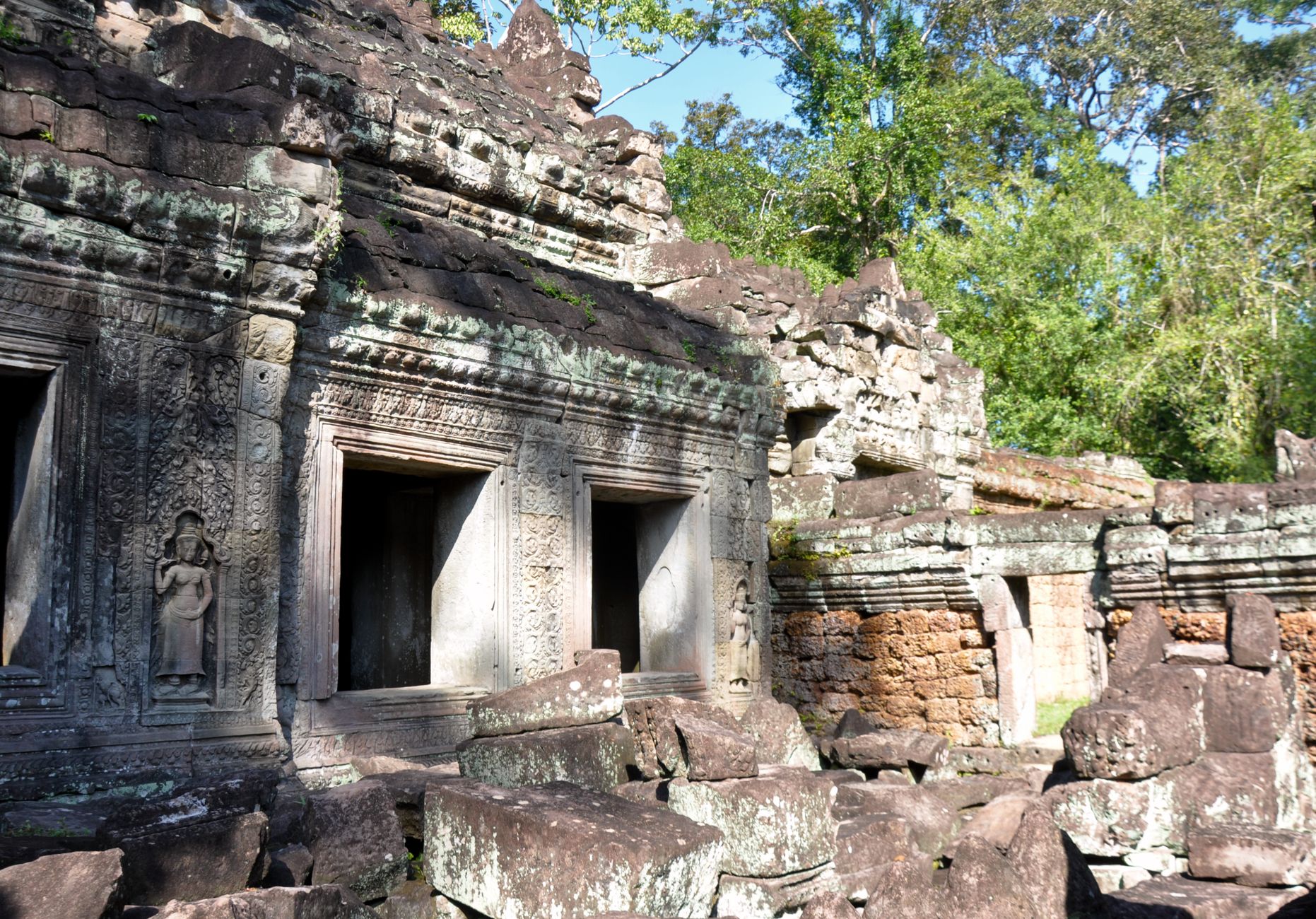
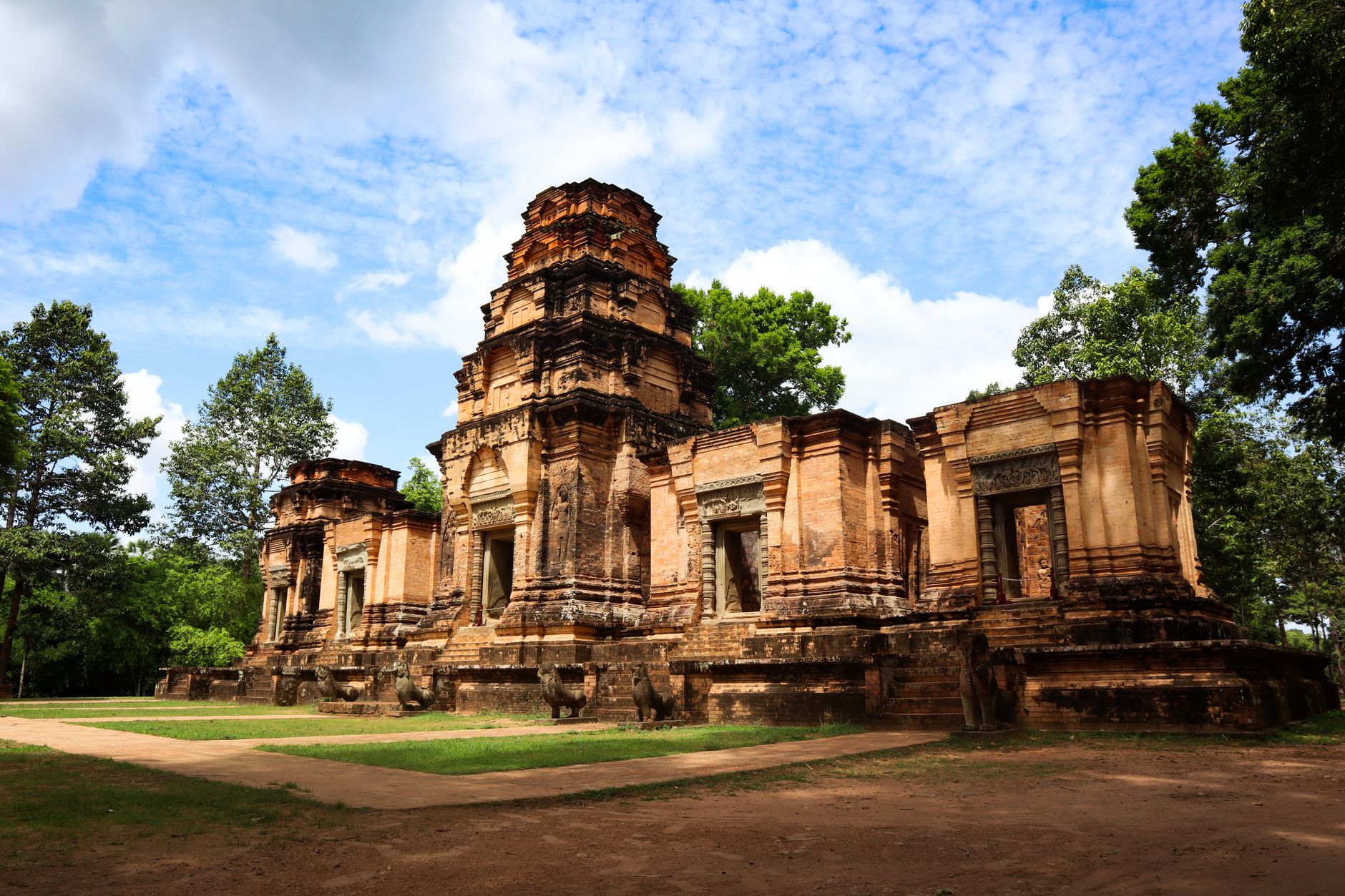
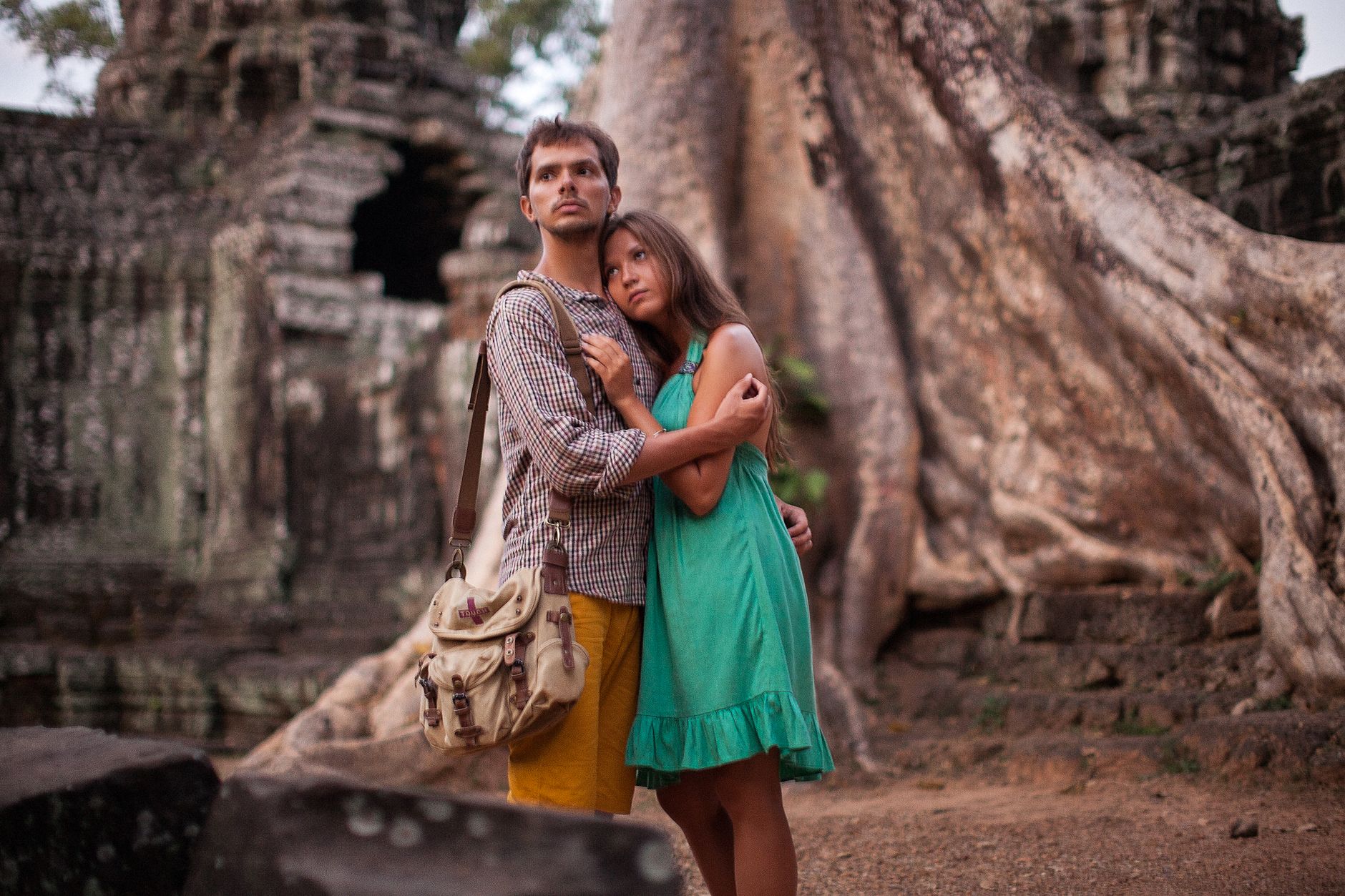
Walk the eastern causeway at Preah Khan and the first thing you notice is the scale of the garudas — stone figures holding nagas, spaced every 50 metres along an outer wall that encloses 56 hectares of forest and ruin. This is not a tidied-up monument. Silk-cotton and strangler-fig trees grow directly through the towers, roots spreading over carved lintels like slow water over stone.
Built in the late 12th century by Jayavarman VII, Preah Khan was a working city within the Angkor complex — part temple, part monastery, part university. Today its long eastern gallery, ceiling largely collapsed, lets in shafts of light between trees that have claimed the upper courses of stone entirely.
💛 What travellers fall for
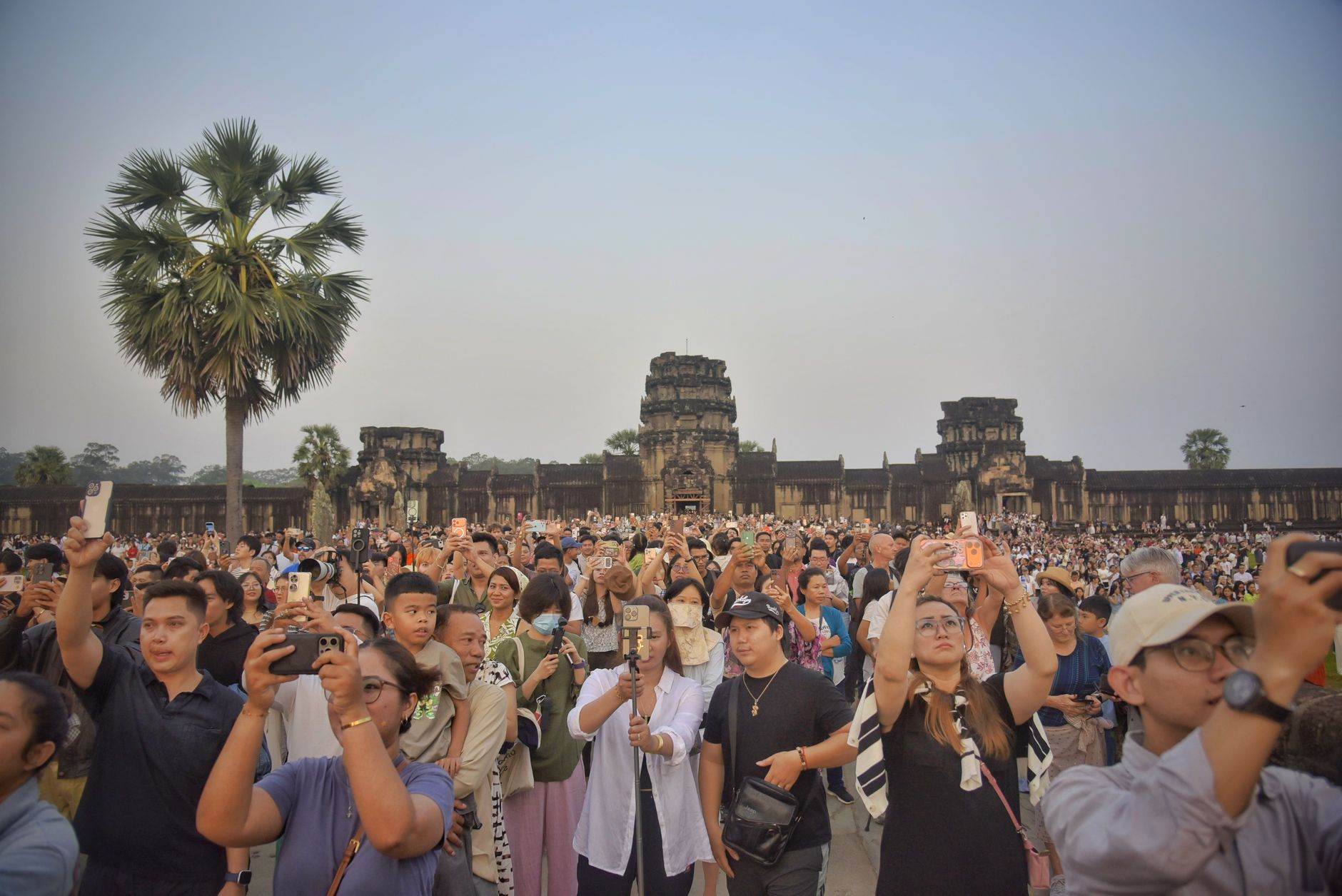
People who come back tend to arrive at 7:30, when the ticket gates open, and head straight for the eastern entrance rather than the western one most tuk-tuks default to. That approach — down the stone causeway, through the first gopura before the tour groups arrive — is a different temple from the one you get at 10 AM.
Deals in Preah Khan
Book directly at the provider
How Preah Khan came to be
Jayavarman VII built Preah Khan on ground that carried specific meaning: this was the site where, in 1181, he defeated the Cham forces that had sacked Angkor. The temple became an act of both commemoration and devotion — the central sanctuary was dedicated in 1191 to his father, Dharanindravarman II, represented as the bodhisattva Avalokiteśvara.
After the 15th century, when Khmer royalty withdrew their patronage, the forest moved in. French conservator Maurice Glaize documented the site during the first clearing works between 1927 and 1932, and partial anastylosis followed in 1939. The World Monuments Fund has maintained it since 1991, stabilising structures including the Hall of Dancers and the House of Fire, though much of the complex remains deliberately unrestored.
Who and what shaped it
People who shaped it
Landmark buildings
See Preah Khan in motion
Plan your visit
On the map
When to go
November is the steadiest month — the southwest monsoon has ended, the countryside is still green, and the December crowds have not yet arrived; temperatures sit around 28–30°C. If you visit in the wet season (May–October), expect heavy humidity and afternoon downpours, but also flooded gallery floors that catch the light, and tourist numbers low enough that you can walk entire corridors alone.
Right now
Background & history adapted from Wikipedia (CC BY-SA) · specs from Wikidata (CC0) · weather from Open-Meteo · map data © OpenStreetMap contributors · photos from Wikimedia Commons / Unsplash with per-image credit. No third-party reviews or social posts reproduced.