
Region

Polonnaruwa

Polonnaruwa
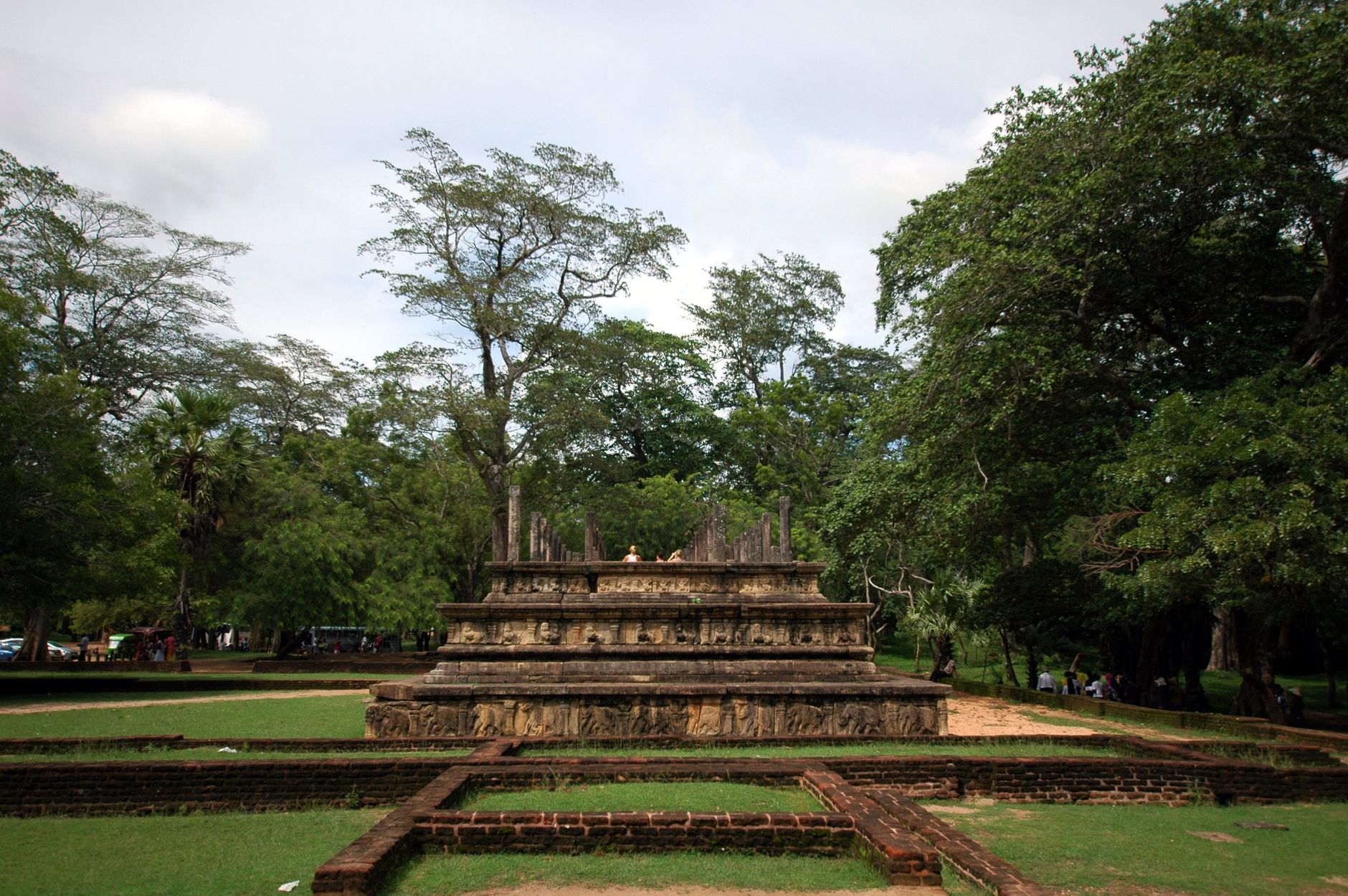
Photo by Alfred Franz on Pexels
Polonnaruwa
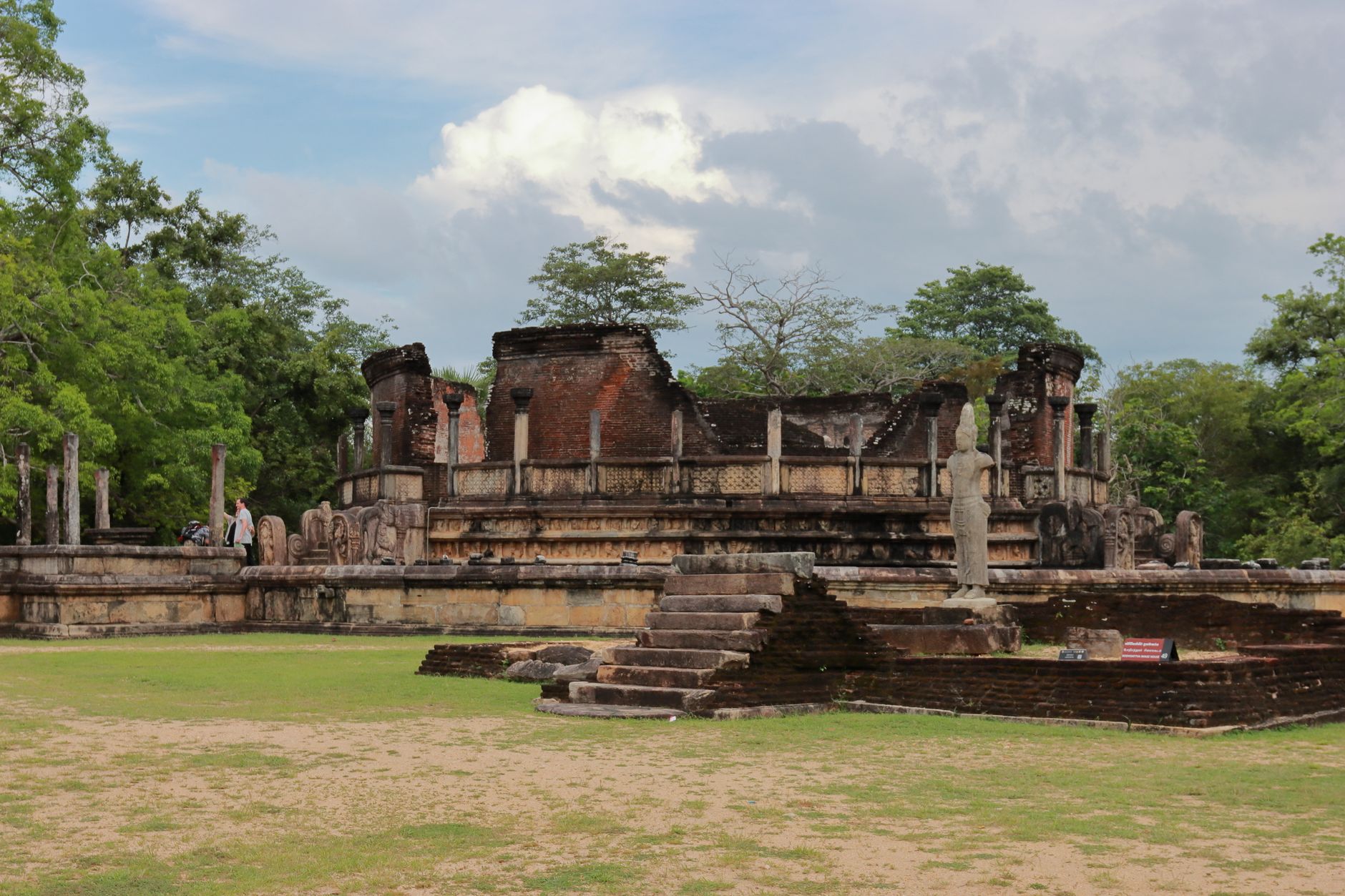
Photo by රත්න දීපය - Rathna Deepaya on Pexels
Polonnaruwa
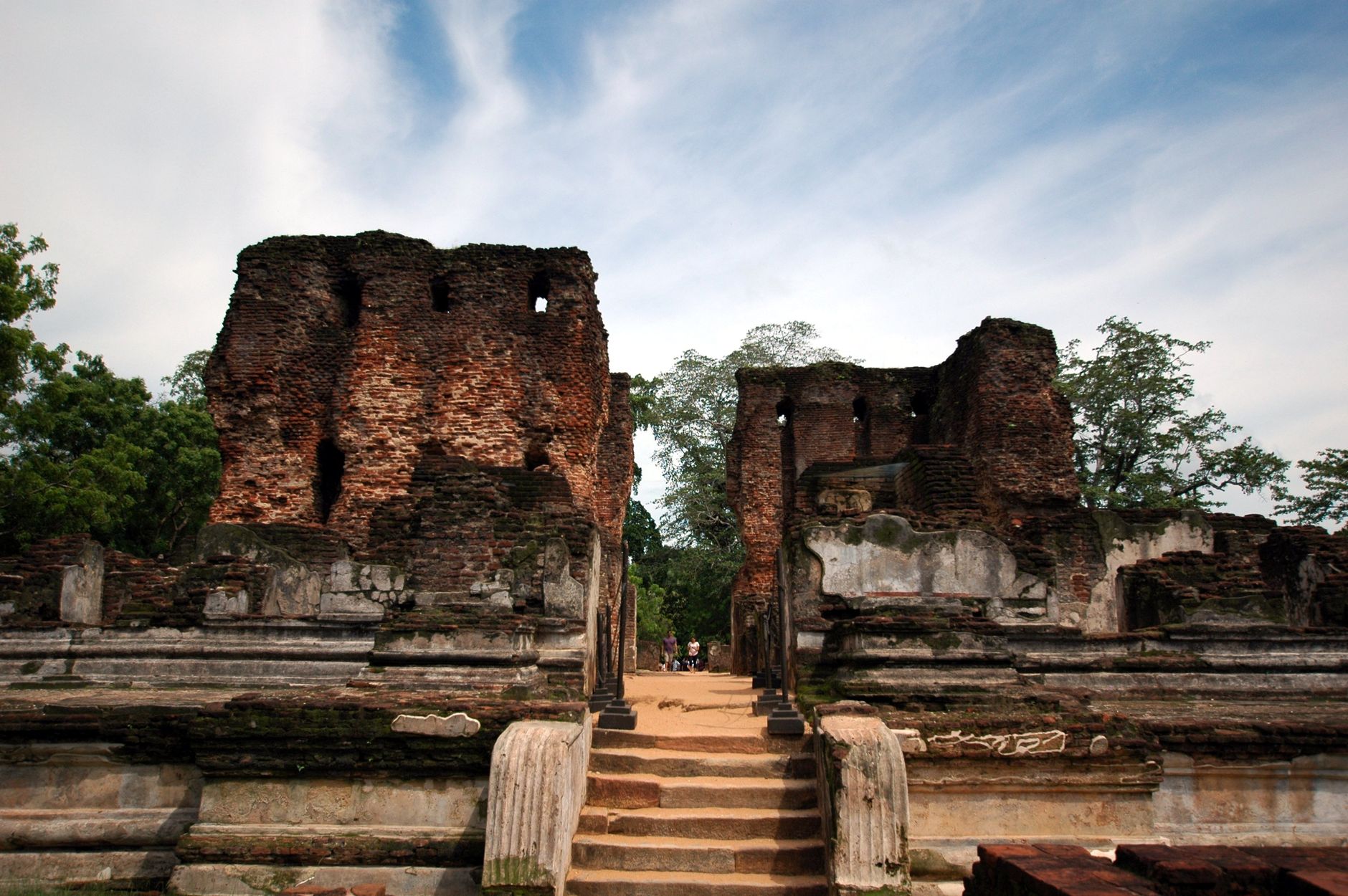
Photo by Alfred Franz on Pexels
Polonnaruwa
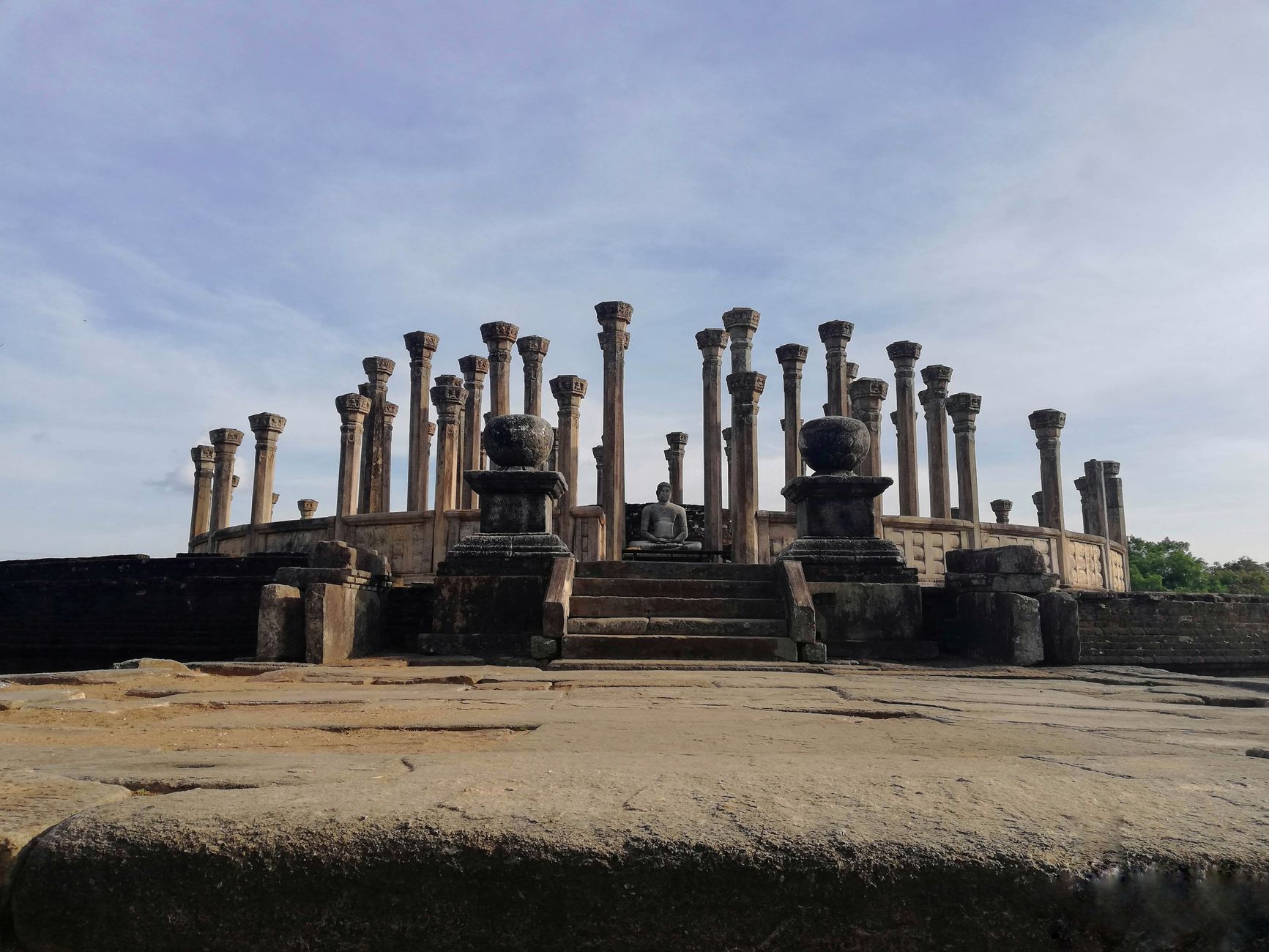
Photo by Ravi Rajapaksha on Pexels
Polonnaruwa
Photo by Niranjan M on Pexels
Polonnaruwa
Photo by Keegan Checks on Pexels
Culture & history Nature & outdoors

At Gal Vihara, a 14-metre reclining Buddha lies carved directly into a granite face, its expression unchanged since Parakramabahu I commissioned it in the 12th century. That kind of scale — stone worked with such precision that it still reads as serene rather than monumental — sets the tone for everything Polonnaruwa offers.

This was Sri Lanka's medieval capital for roughly two and a half centuries, and what remains is a coherent ancient city rather than scattered ruins. Dagobas, Hindu temples, a vast reservoir and a royal palace spread across a flat, forested plain you can cover by bicycle, moving between sacred and civic spaces at your own pace.

Good to know
Dambulla is the closest jump-off point, about an hour by bus. Rent a bicycle at the entrance — the site follows a one-way vehicle route and a bike is genuinely the right pace. Visit the museum at the ticket counter first; it contextualises the bronzes and stonework you'll see in situ. Budget four to five hours minimum. Dress with covered shoulders and knees, and carry shoes you can slip off easily.
The story

How Polonnaruwa came to be

Polonnaruwa began as a military outpost before the Chola dynasty seized Anuradhapura in 993 CE and made it their capital, renaming it Jananathamangalam. When Vijayabahu I drove out the Cholas after 1070, he inherited a functioning city and kept it as his seat of power. It was Parakramabahu I, reigning from 1153 to 1186, who shaped the place most decisively — commissioning the Royal Palace, the Gal Vihara rock temple, and the Parakrama Samudra, a reservoir covering 22 square kilometres that remains an engineering landmark.

Nissanka Malla, who followed, added the Rankot Vihara dagoba, now the tallest structure on site at 55 metres. The city's end came in 1214 when the warlord Kalinga Magha invaded and burned it. UNESCO designated the ancient city a World Heritage Site in 1982.

People & landmarks

Who and what shaped it

People who shaped it

Vijayabahu I
Captured Polonnaruwa from Chola rule after 1070 AD; established it as the first capital of his kingdom.
Parakramabahu I
Reigned 1153–1186; commissioned the Royal Palace, Gal Vihara rock temple, and Parakrama Samudra reservoir.
Nissanka Malla
Reigned 1187–1196; completed the Rankot Vihara dagoba, the tallest structure at Polonnaruwa (55 m).
Kalinga Magha
Warlord who invaded and destroyed Polonnaruwa by fire in 1214, ending its period as capital.

Landmark buildings

Gal Vihara
Rock temple with four Buddha statues carved into granite; reclining Buddha 14 m long, commissioned by Parakramabahu I in the 12th century.
Rankot Vihara
Dagoba standing 55 m tall; largest in Polonnaruwa, fourth largest in Sri Lanka, completed by Nissanka Malla in the 12th century.
Royal Palace
Massive structure 31 m by 13 m with 50 rooms supported by 30 columns; built by Parakramabahu I (1153–1186).
Vatadage
Circular 12th-century building with dagoba on concentric terraces; said to have housed the Sacred Tooth Relic of Buddha.
Parakrama Samudra
Vast reservoir covering 22 square kilometres; testament to advanced hydraulic engineering under Parakramabahu I.
Shiva Devale No. 1
Hindu temple built c. 1200 AD; superb bronzes found here now housed at Colombo Museum.
Pabalu Vehera
Dagaba from the reign of Parakramabahu I (1153–1186); third largest in Polonnaruwa.
Sacred Quadrangle (Dalada Maluwa)
Compact area containing a concentrated collection of significant religious buildings.
Practical

Plan your visit

On the map

When to go

Polonnaruwa sits in Sri Lanka's dry zone, averaging around 27°C year-round with May pushing to 36°C — hot enough that mornings matter. January through March and October are the most comfortable months; June to August are driest, though the heat is still real.

Right now

27°C
Partly cloudy
Sat
35°
27°
Sun
🌧️
35°
27°
Mon
⛈️
34°
26°
Tue
35°
27°
Weather data: Open-Meteo

Background & history adapted from Wikipedia (CC BY-SA) · specs from Wikidata (CC0) · weather from Open-Meteo · map data © OpenStreetMap contributors · photos from Wikimedia Commons / Unsplash with per-image credit. No third-party reviews or social posts reproduced.

Top