
Pie de la Popa
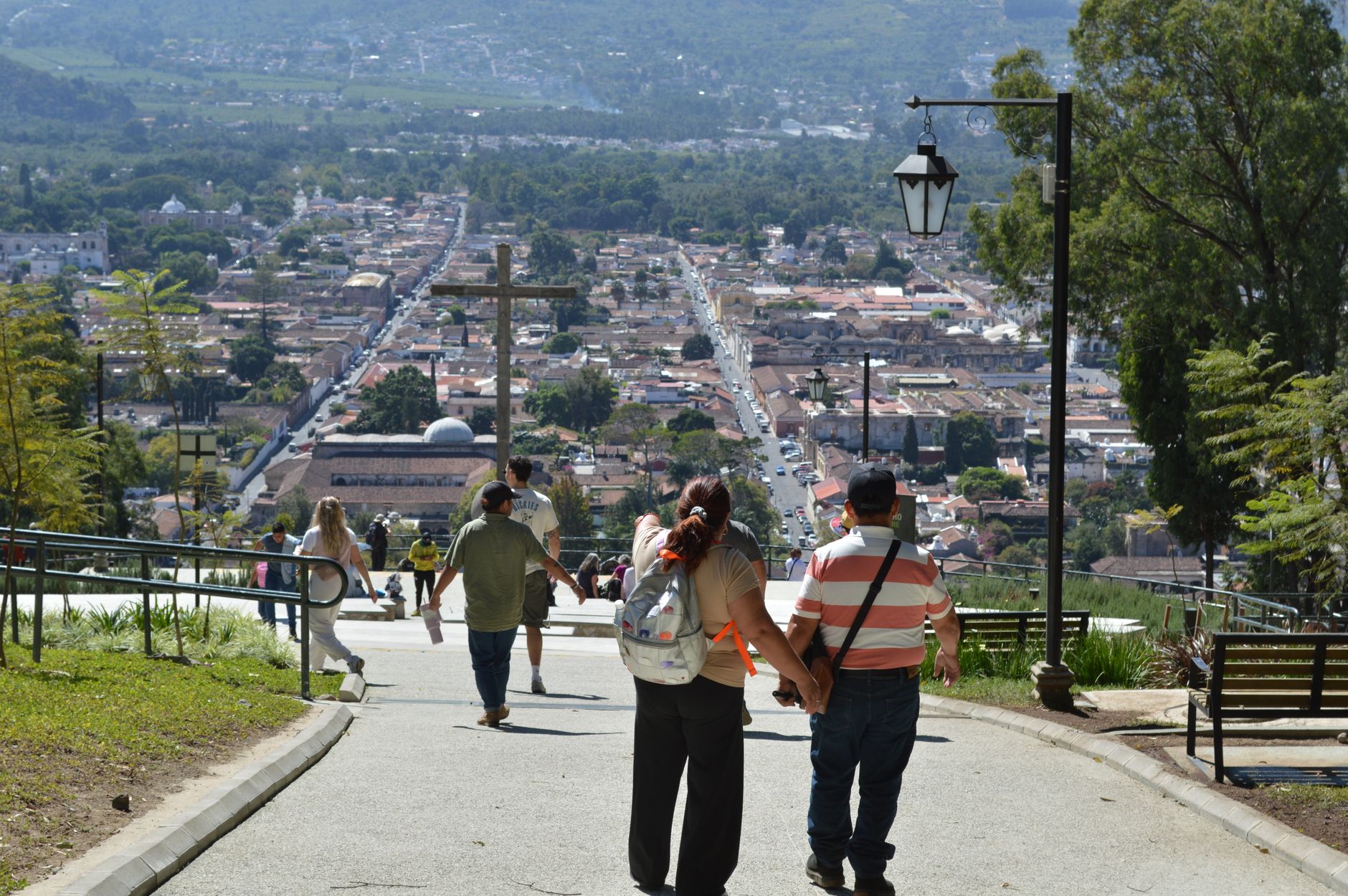
From the top of Pie de la Popa — the hill Cartagena's Spanish founders named after a ship's stern because its silhouette looked like one — you can see the whole city laid out below: the walled centro, the Caribbean glittering past Bocagrande, the bay curving south toward Manga. The concrete cross at the summit has been lit by electric light since the first day of the twentieth century, and on the morning of February 2nd each year, thousands of pilgrims climb on foot before dawn to reach it.
The neighborhood that grew up around the hill from the 1960s onward is a working city — universities, clinics, ordinary streets — while the Augustinian convent at the peak, white-walled and red-roofed, holds a colonial painting of a Black Virgin whose feast day still pulls Cartagena up the hill.
💛 What travellers fall for
People who've made the trip more than once tend to negotiate a round-trip fare with a taxi driver and ask them to wait — around 35,000 pesos buys you that flexibility. The gold altarpiece inside the chapel stops most visitors cold. Get there when the doors open at 8:30 to have the cloister courtyard largely to yourself.
Deals in Pie de la Popa
Book directly at the provider

How Pie de la Popa came to be
In 1510, Spanish explorers looking up at this coastal hill from the sea thought its profile resembled the stern of a galley and called it Cerro de la Galera — the summit, la popa. A century later, an Augustinian Recollect friar named Alonso de la Cruz Paredes arrived in Cartagena carrying a vision: the Virgin had instructed him to build a monastery on the highest point of a coastal city. Construction of the church and convent ran from 1606 to 1611, funded by a wealthy Neapolitan named Don Fabricio Sánchez. The original wooden chapel had been raised a few years earlier through the preaching of Fray Vicente Mallol.
The convent was seized and abandoned during secularization in 1822, left empty for over a century before the Augustinian Recollects returned in 1963. Pope John Paul II visited on July 6, 1986, and canonically crowned the Virgin of La Candelaria — the colonial painting of the Black Virgin that has been the hill's devotional center since the convent's founding.
Who and what shaped it
People who shaped it
Landmark buildings
See Pie de la Popa in motion
Plan your visit
On the map
When to go
Cartagena is tropical and hot year-round, and the exposed hilltop offers little shade — mornings are the cooler option. The rainy season runs May through November, when brief afternoon downpours can reduce the panoramic views to cloud.
Right now
Background & history adapted from Wikipedia (CC BY-SA) · specs from Wikidata (CC0) · weather from Open-Meteo · map data © OpenStreetMap contributors · photos from Wikimedia Commons / Unsplash with per-image credit. No third-party reviews or social posts reproduced.