
Region

Paphos

Paphos
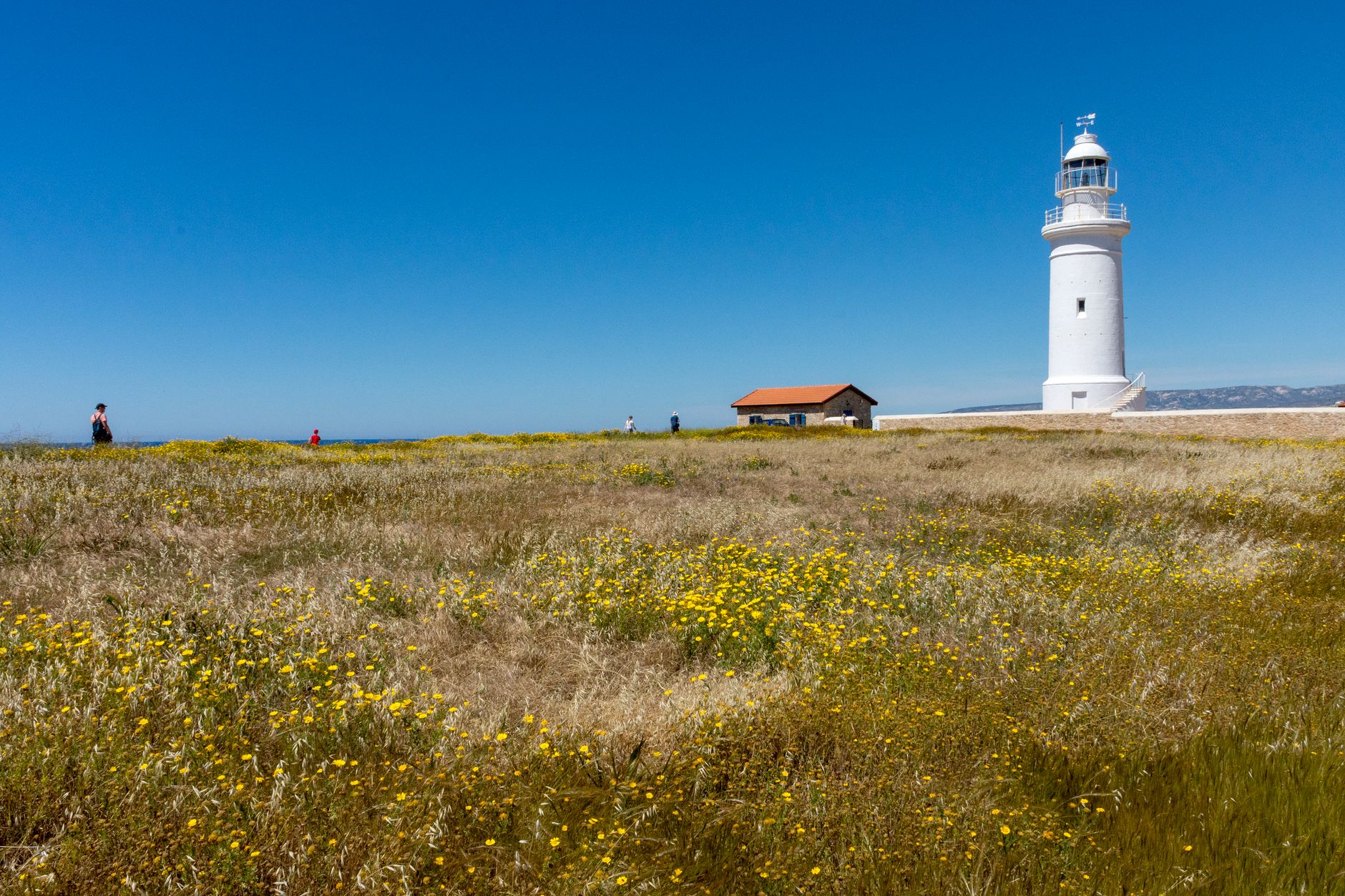
Photo by Erik Karits on Pexels
Paphos
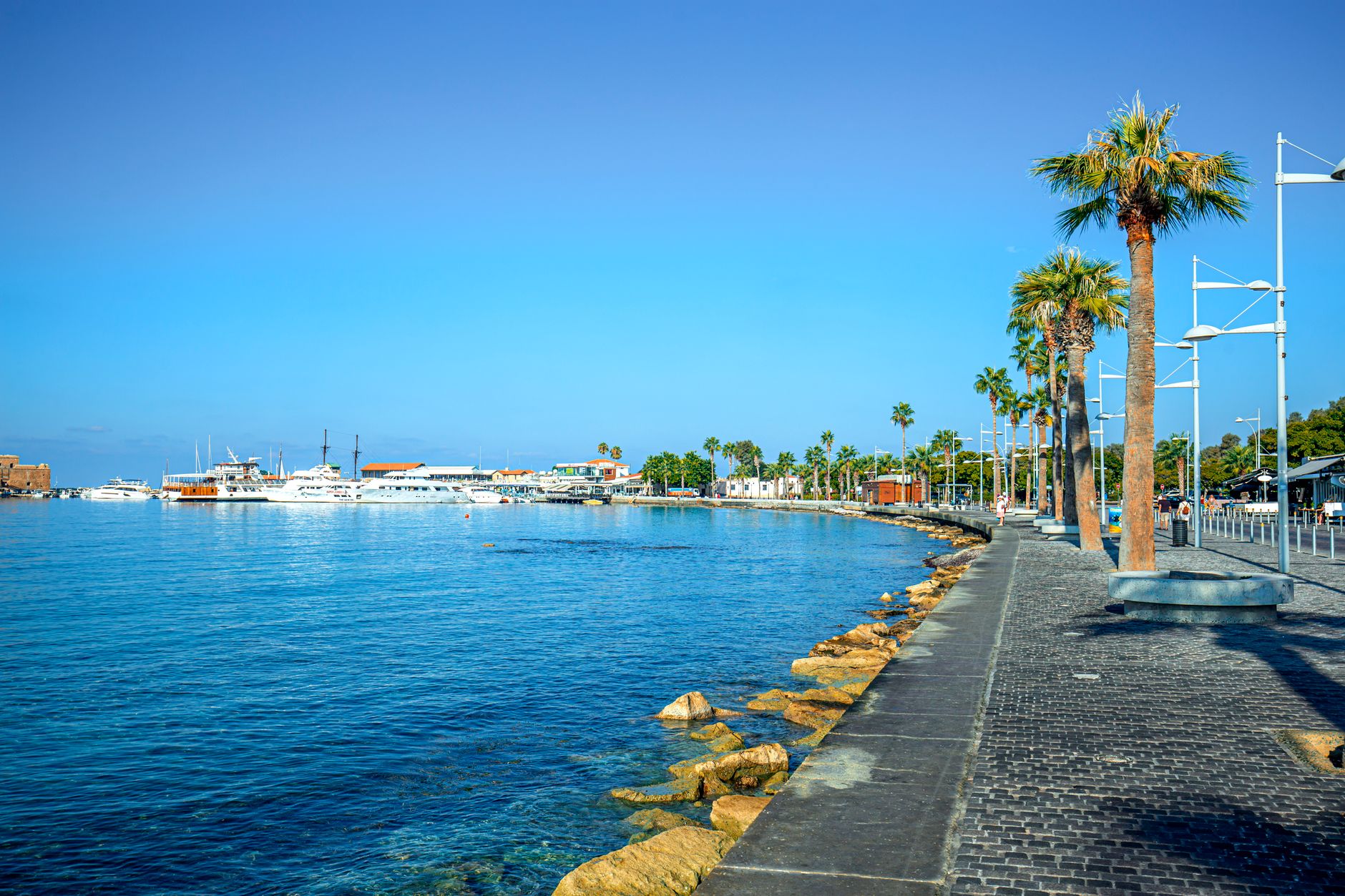
Photo by Jeremy de Blok on Pexels
Paphos
Photo by Erik Karits on Pexels
Paphos
Photo by Erik Karits on Pexels
Paphos
Photo by Alexander Grigorian on Pexels
Paphos
Photo by Erik Karits on Pexels

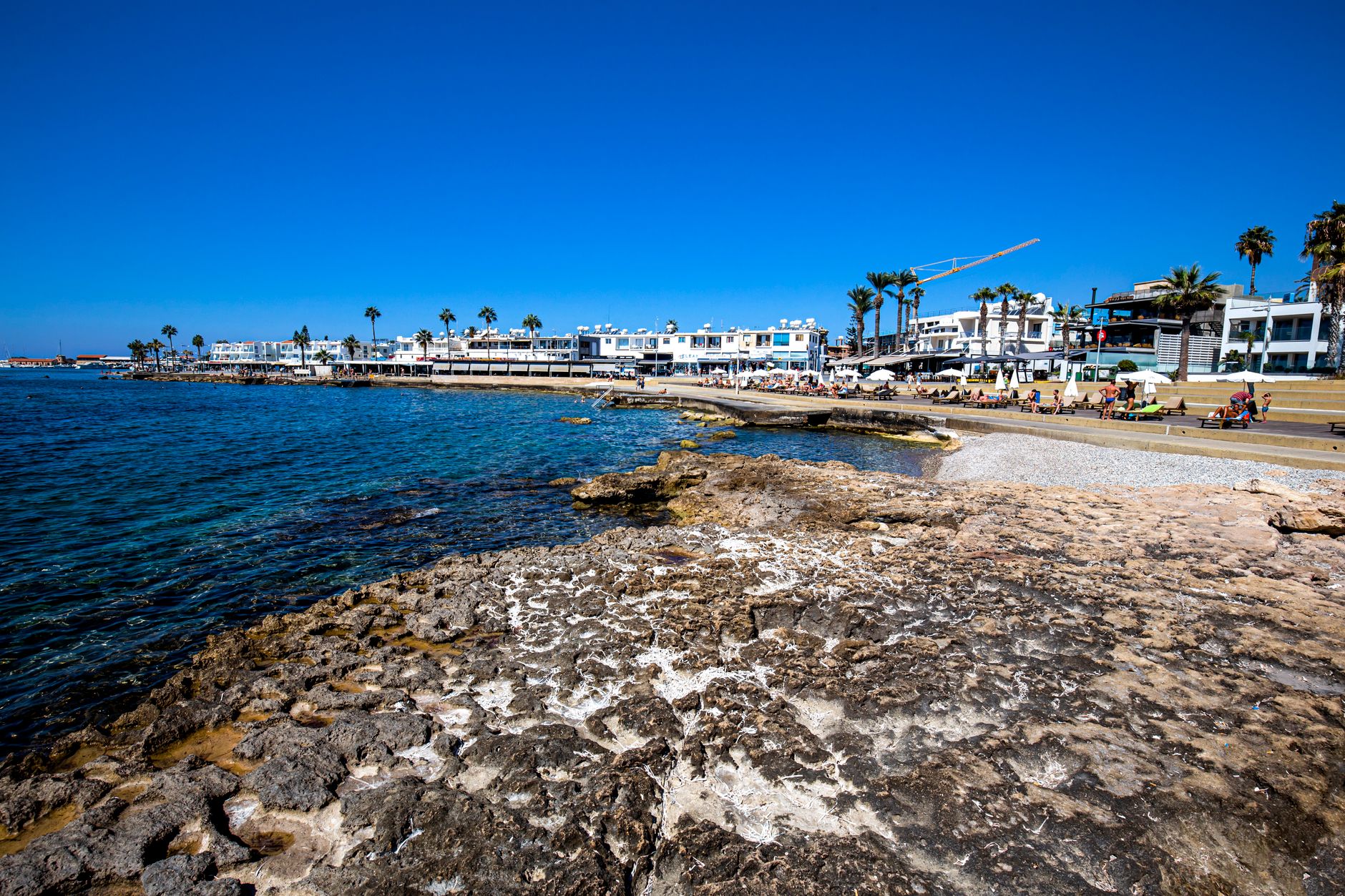
Paphos sits at the southwestern edge of Cyprus, where the Mediterranean meets limestone cliffs and the land holds more history than most places know what to do with. The myths came first — this is where Aphrodite was said to have risen from the sea foam — and then the Greeks, the Ptolemies, the Romans, the Arabs, the British, each leaving something behind in the rock or the soil.

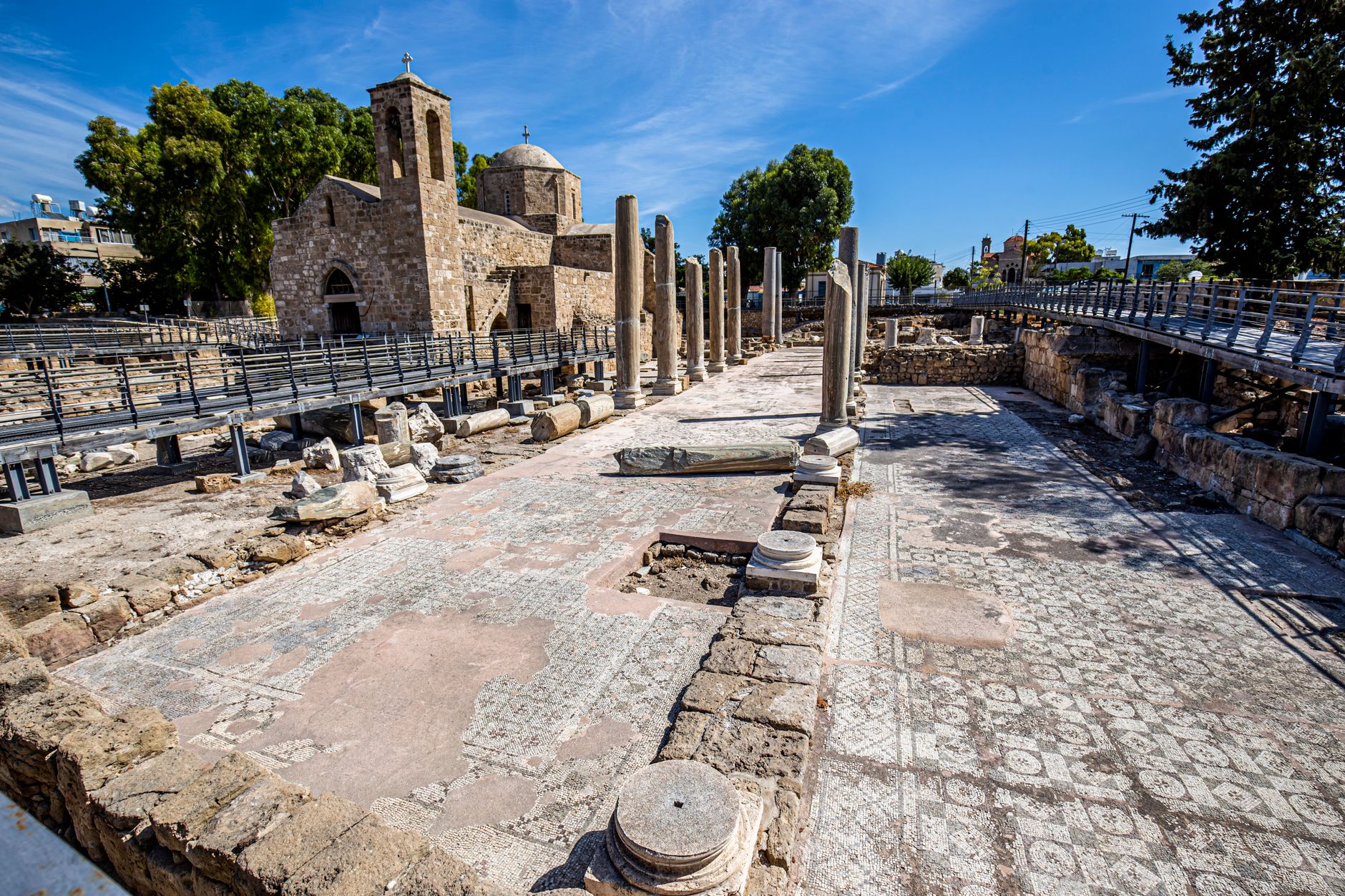
What you find today is a coastal town built over and around one of the eastern Mediterranean's most significant archaeological landscapes. The mosaics alone — Roman-era floors depicting Dionysus, Theseus, Orpheus — are reason enough to come. UNESCO agreed in 1980, designating Nea Pafos a World Heritage Site. The excavations are still ongoing.

Good to know
Bus 612 (€1.50, ~30 min) connects Paphos Airport directly to Kato Paphos and the harbour. A single bus ticket costs €2 since January 2024, or €6.50 for a 24-hour pass. Spring and autumn give you the sites without the full heat of summer.
The story

How Paphos came to be

Old Paphos was settled by Mycenaean Greeks and became the site of a celebrated temple to Aphrodite, drawing pilgrims from across the ancient world. The Cinyrad dynasty ruled there for centuries until Ptolemy I of Egypt ended their line in 294 BCE. A generation earlier, around 320 BC, the city's last Greek king, Nikokles, had already founded New Paphos closer to the coast — a city that would become the administrative capital of Cyprus under both Ptolemaic and Roman rule.

Rome's conquest in 58 BCE folded Cyprus into its empire, and it was to New Paphos that Saint Paul came around AD 47. Muslim raiders destroyed much of the city in 960 CE, and it did not begin to recover as a modern town until after the British arrived in 1878. Polish archaeological teams have been excavating the site systematically since 1965.

People & landmarks

Who and what shaped it

People who shaped it

Nicocles
Last Greek king of Paphos; founded New Paphos around 320 BCE.
Saint Paul
Visited Paphos around AD 47; met with Proconsul Sergius Paulus.
Kazimierz Michałowski
Directed Polish archaeological expedition beginning June 1965.
Wiktor Andrzej Daszewski
Director of Polish excavations 1971–2007 at Paphos Archaeological Park.
Henryk Meyza
Director of Polish excavations 2008–2019.
Neophytos
Cypriot recluse and writer; founded Agios Neophytos Monastery in the 12th century.

Landmark buildings

Paphos Archaeological Park (Kato Pafos)
Contains major Greek and Roman city remains; UNESCO World Heritage Site since 1980; ongoing excavations.
House of Dionysus
2nd-century AD residential complex with 40 rooms and 15 mosaic floors; destroyed by 4th-century earthquake.
House of Aion
4th-century AD house with figural mosaics depicting five mythological scenes including Leda and the Swan.
House of Theseus
2nd-century AD palatial residence (110m × 76m); largest residential building on Cyprus, named for Theseus mosaic.
House of Orpheus
3rd-century AD wealthy Greco-Roman house with central court and mosaic of Orpheus among beasts.
Tombs of the Kings
Rock-cut tombs of Hellenistic and early Roman upper class, designed to resemble houses.
Paphos Theatre
Built by Ptolemies c. 300 BCE; survived until late 4th century AD; demonstrates Greek and Roman performing arts evolution.
Paphos Castle
Medieval fortress; used as prison and salt storage during British colonial period; declared ancient monument in 1935.
Chrysopolitissa Basilica
4th-century AD church; remains of one of the earliest Christian churches in the world.
Agios Neophytos Monastery
Founded 12th century by hermit Neophytos; built around excavated cave hermitage and chapel.
Practical

Plan your visit

On the map

When to go

Summers are long, dry and genuinely hot — the archaeological park offers little shade, so early mornings matter in July and August. Spring (March to May) and autumn (October to November) are the most comfortable seasons for walking the sites at length.

Right now

☀️
26°C
Clear
Sat
31°
25°
Sun
30°
24°
Mon
30°
25°
Tue
31°
25°
Weather data: Open-Meteo

Background & history adapted from Wikipedia (CC BY-SA) · specs from Wikidata (CC0) · weather from Open-Meteo · map data © OpenStreetMap contributors · photos from Wikimedia Commons / Unsplash with per-image credit. No third-party reviews or social posts reproduced.

Top