
Pamukkale
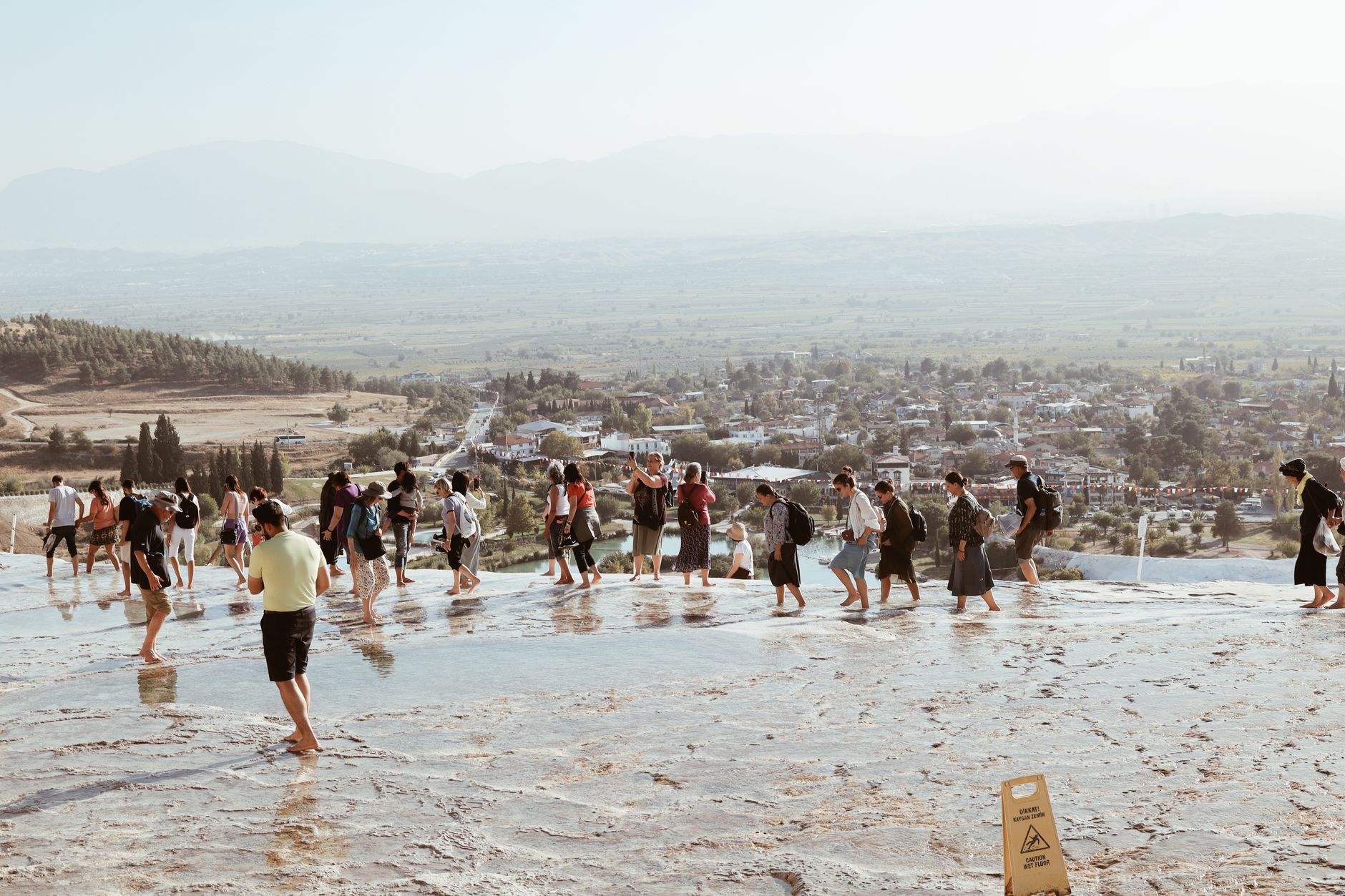
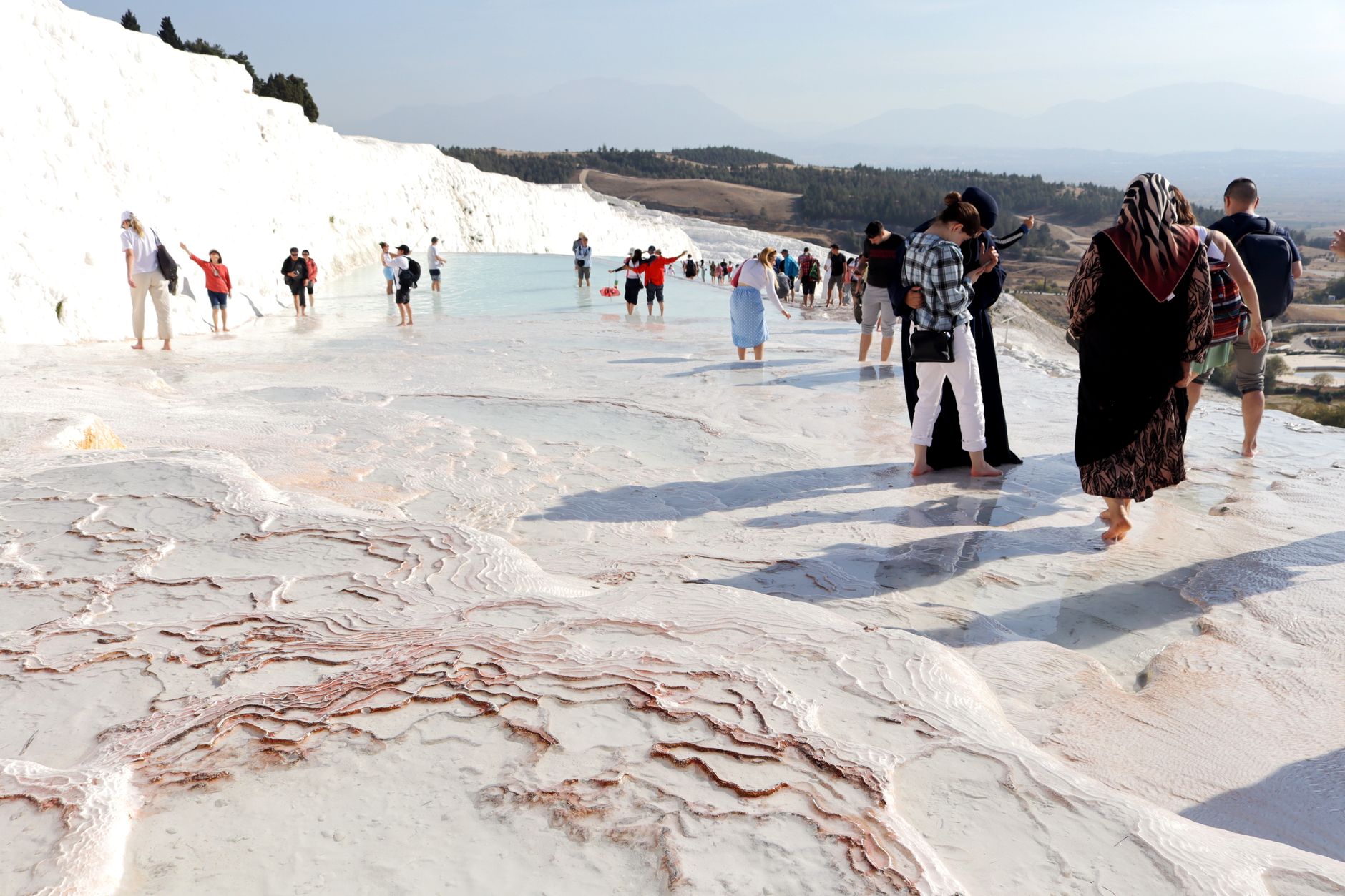
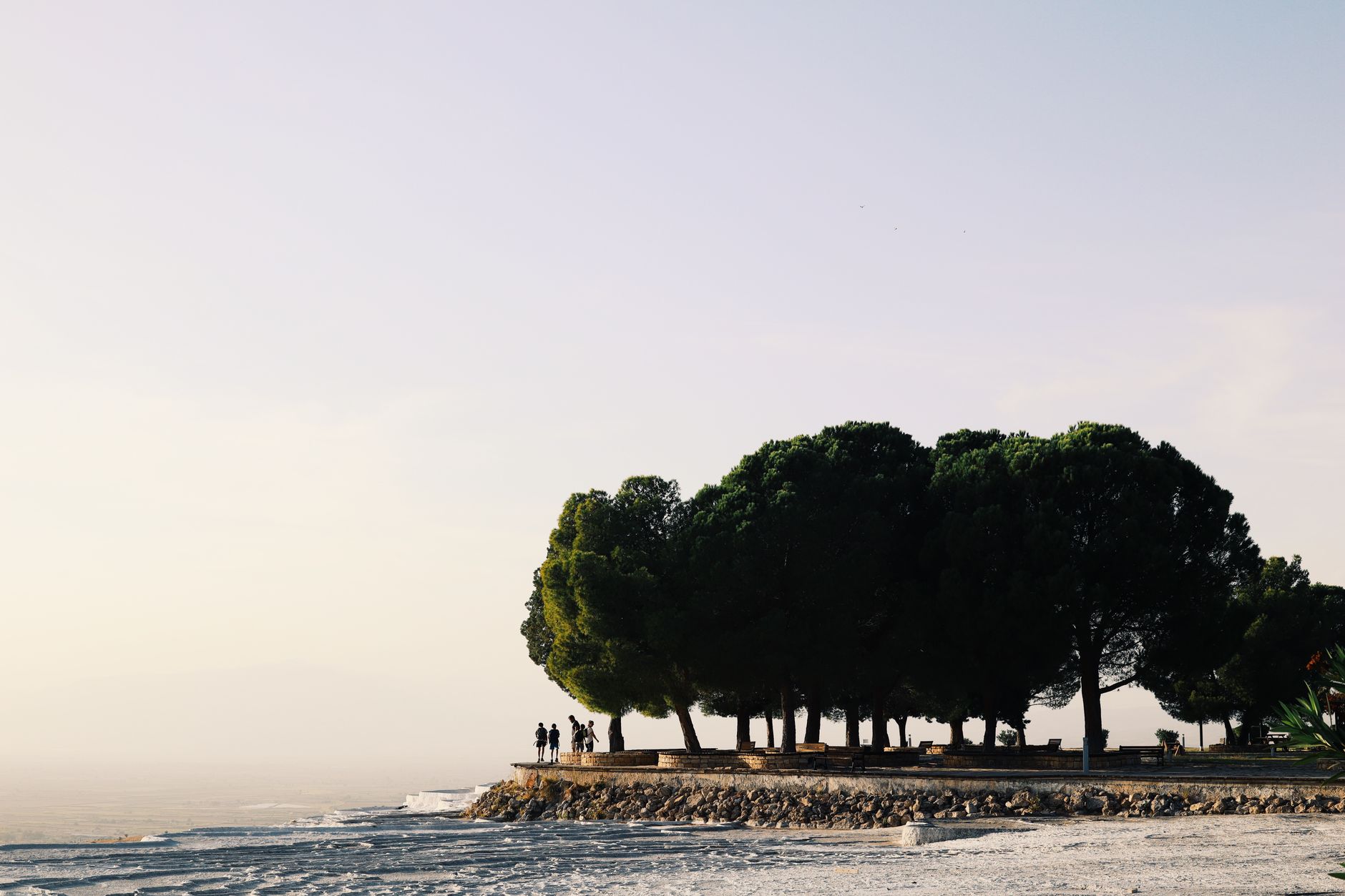
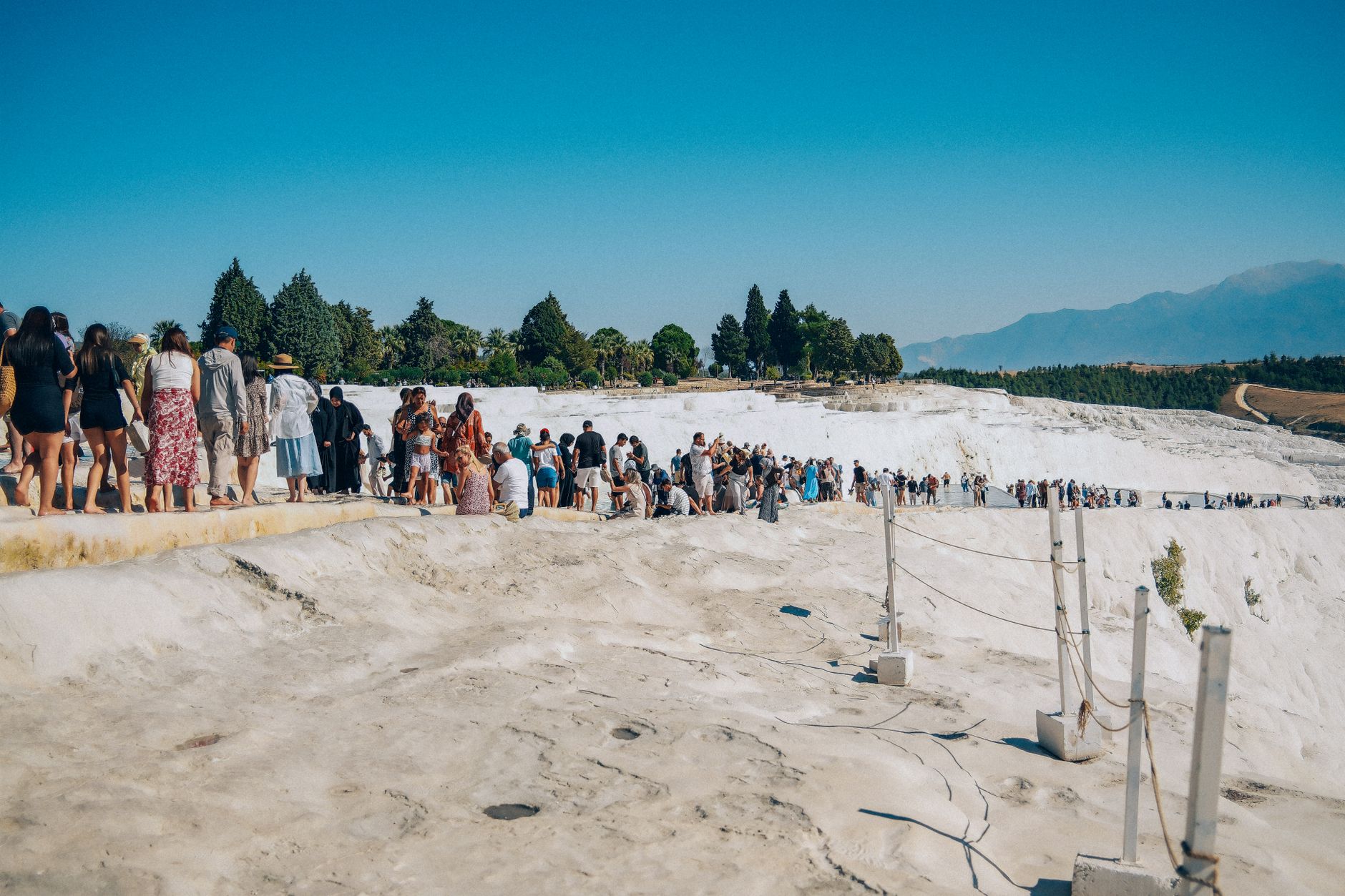
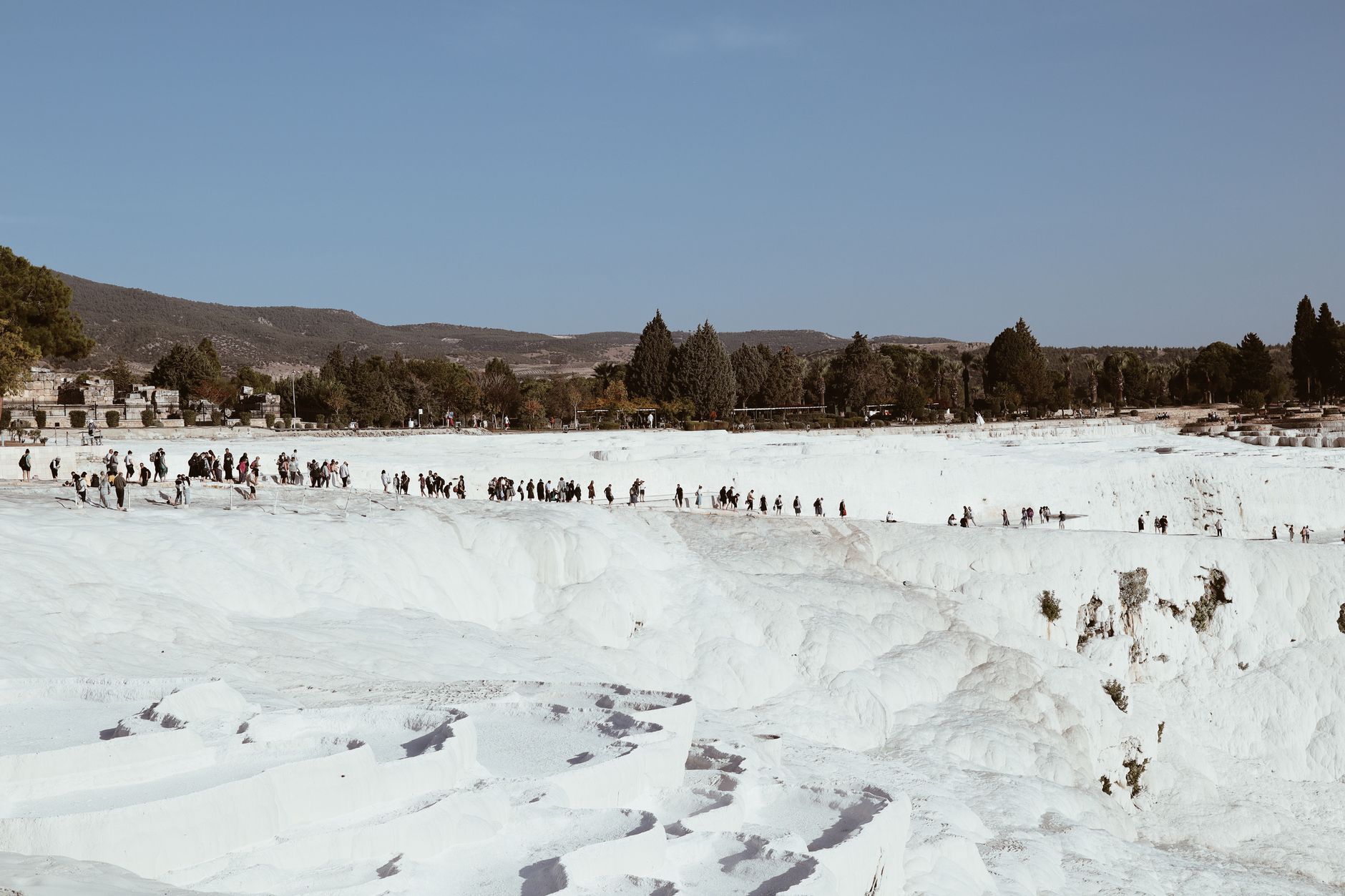
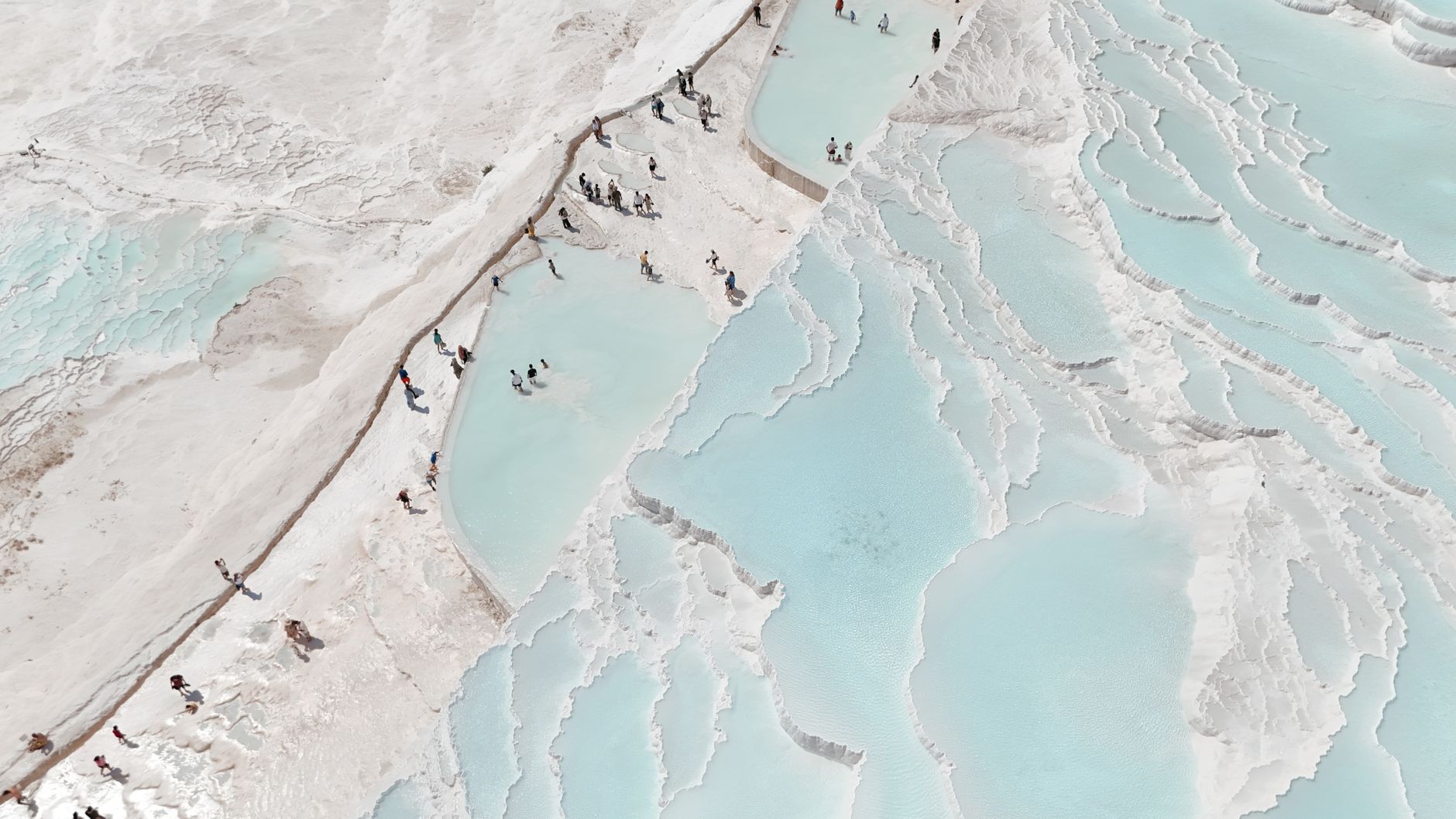
The first thing that stops you is the colour. Pamukkale's travertine terraces run 2,700 metres across a hillside in southwest Turkey — white calcium formations pooling warm mineral water at temperatures between 35°C and 100°C, the whole formation rising 160 metres above the valley floor. It looks geological and improbable, which it is.
On top of that hill sits Hierapolis, a Roman city with a 10,000-seat theatre, one of Turkey's largest ancient cemeteries, a Temple of Apollo, and a pool where marble columns lie submerged after collapsing in an earthquake. The two things together — the natural formation and the ruined city — make Pamukkale unlike anywhere else in the country.
💛 What travellers fall for
People who return tend to arrive at the South Gate by 7am, before tour groups, when the terraces are quiet and the water catches the early light differently. They skip the midday rush entirely, eat in the village rather than on-site, and budget the extra fee for Cleopatra's Pool — the submerged columns are genuinely worth it.
How Pamukkale came to be
Hierapolis began as a thermal spa in the late 2nd century BC under the Attalid kings of Pergamon, on ground the Phrygians had already considered sacred. When Attalus III bequeathed his kingdom to Rome in 133 BC, the city passed into the Roman province of Asia and grew accordingly — twice levelled by earthquakes (AD 17 and AD 60) and twice rebuilt with imperial backing. The theatre standing today was constructed in 129 AD for a visit by Emperor Hadrian and later renovated under Septimius Severus.
The city also became an early centre of Christianity. The Apostle Philip spent his final years here and was reportedly crucified in AD 80; an octagonal Martyrium was erected on the site between the 4th and 6th centuries. The Stoic philosopher Epictetus was born here. German archaeologist Carl Humann excavated the site in 1887, and in 1988 Hierapolis-Pamukkale became a UNESCO World Heritage Site.
Who and what shaped it
People who shaped it
Landmark buildings
See Pamukkale in motion
Plan your visit
On the map
When to go
Spring (April–May) and autumn (September–October) are the most comfortable seasons — warm enough to walk the terraces without the punishing summer heat, which regularly exceeds 35°C in July and August. Winter is mild and far quieter, though some poolside areas feel less inviting when the air is cool.
Right now
Background & history adapted from Wikipedia (CC BY-SA) · specs from Wikidata (CC0) · weather from Open-Meteo · map data © OpenStreetMap contributors · photos from Wikimedia Commons / Unsplash with per-image credit. No third-party reviews or social posts reproduced.