
Orangerie of Versailles
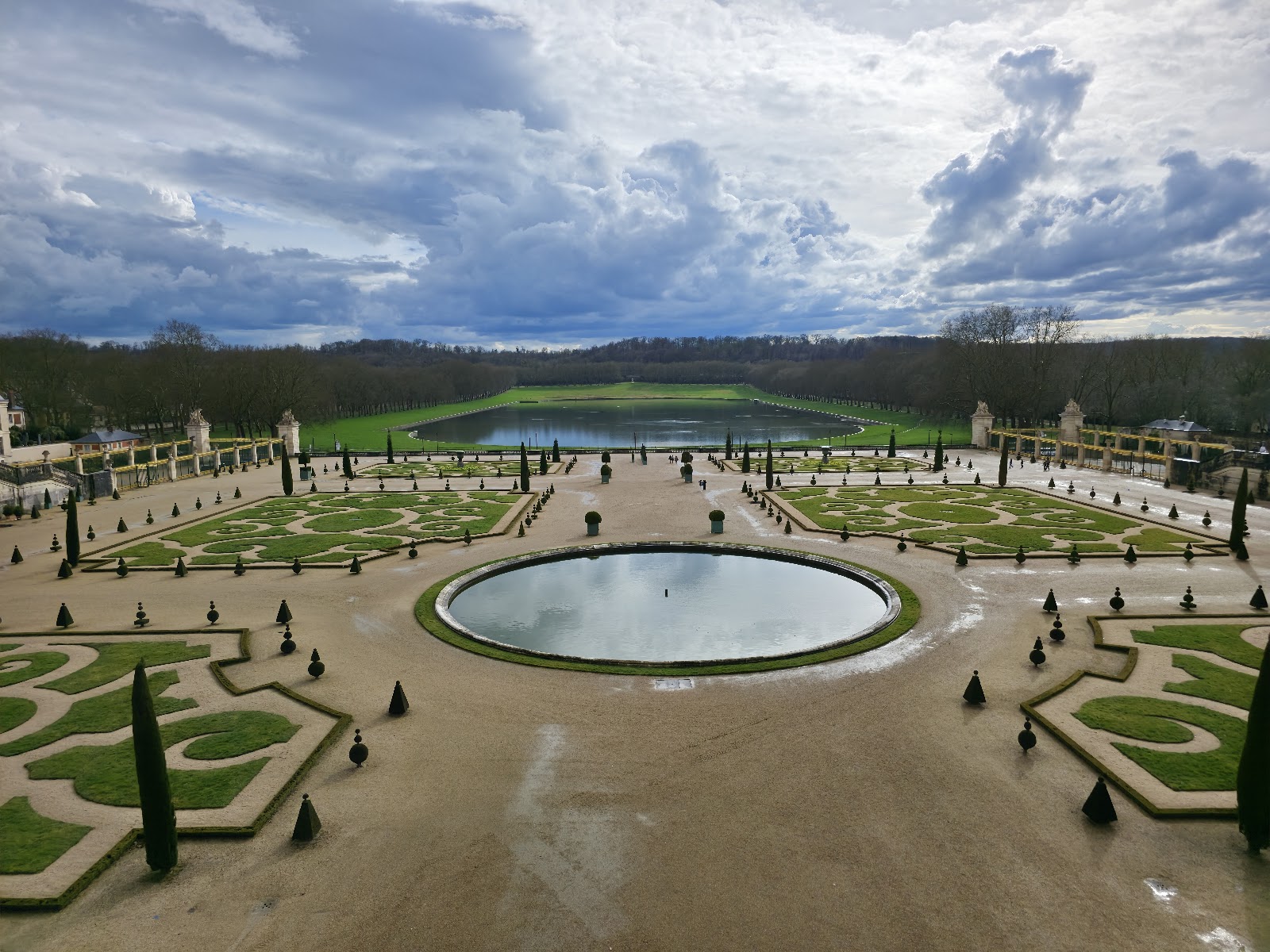
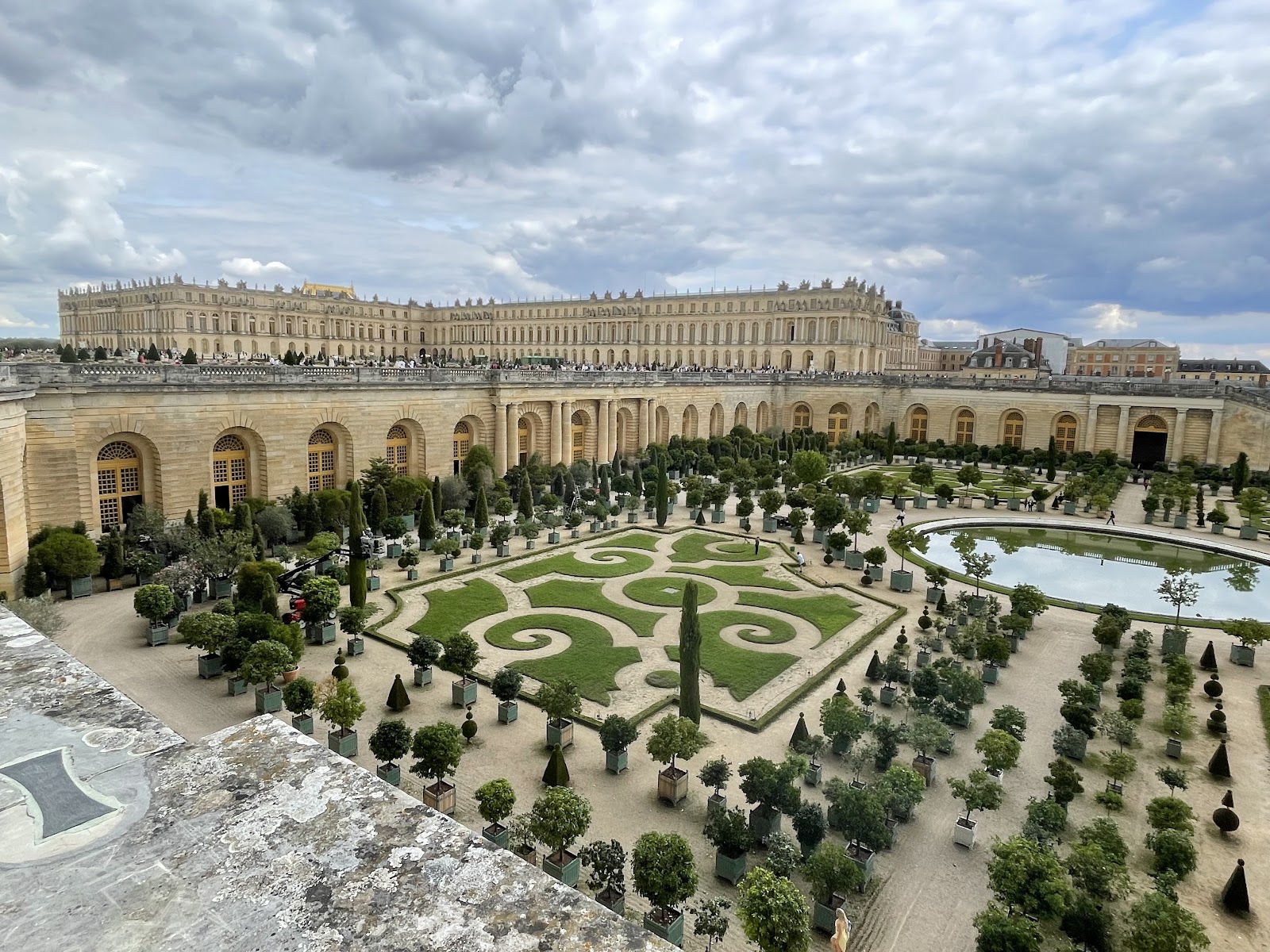
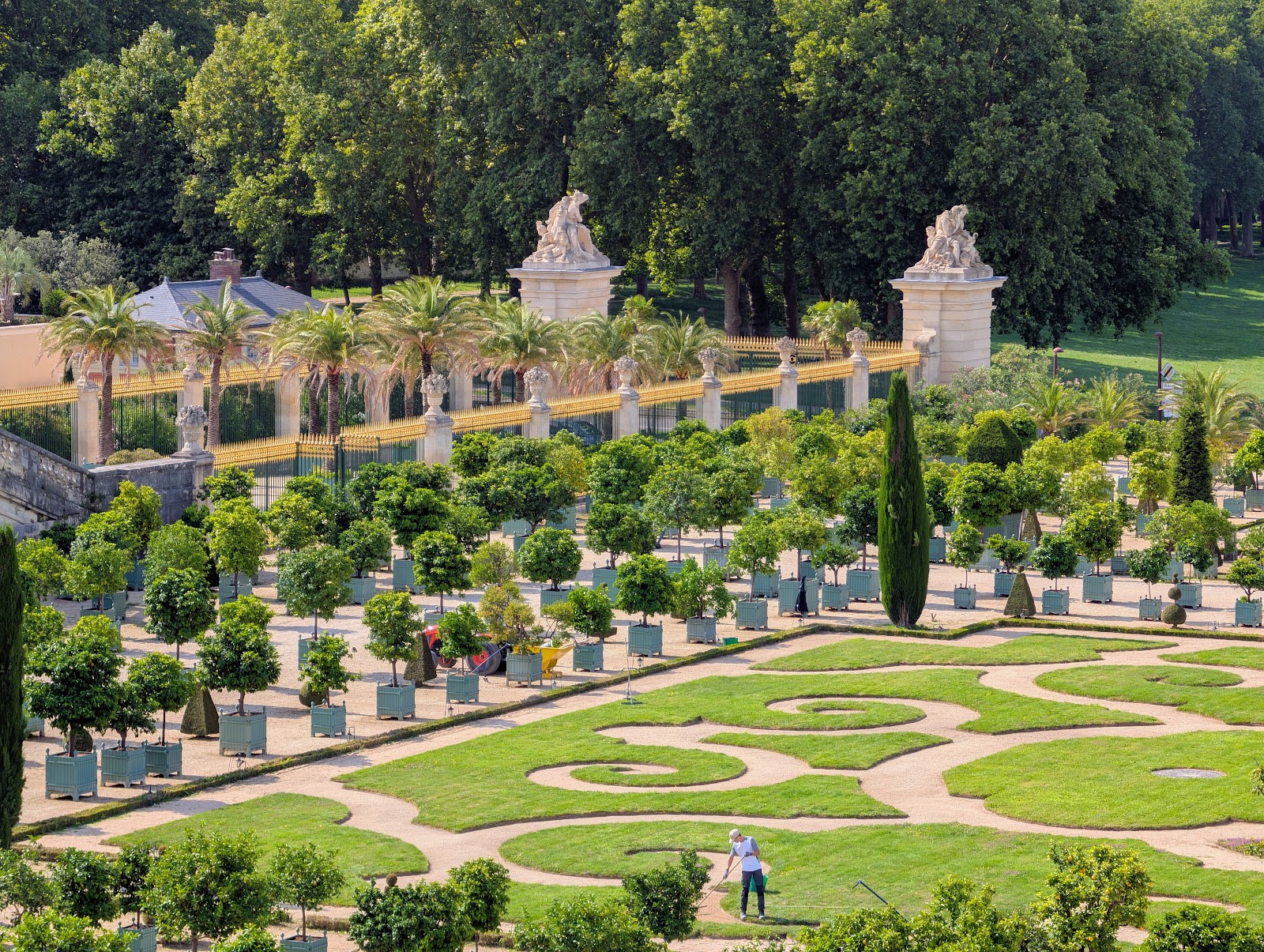
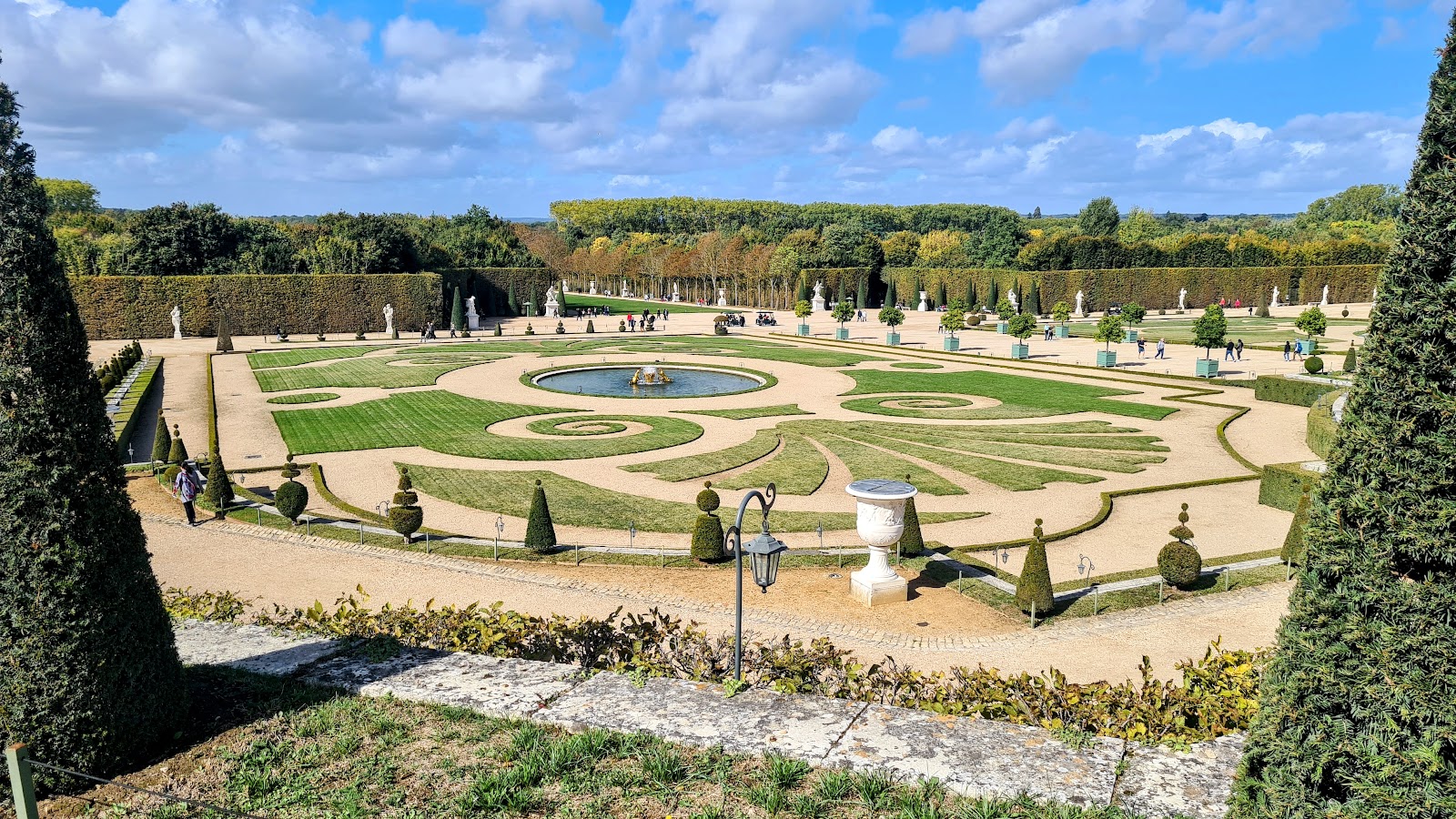
The central gallery of the Orangerie runs for more than 150 metres under the South Parterre, its walls cut four to five metres thick to hold the cold at bay without a single degree of artificial heat — a feat of architectural reasoning as much as horticulture. Down in the lower bed, a three-hectare parterre opens to the sky, and from May to October the orange trees come out in their wooden boxes, some of them more than two centuries old.
This is a working building, not a folly. It was designed to keep alive a collection that Louis XIV took personally enough to have certain trees potted in solid silver and placed in his state rooms. The scale of the thing only makes sense when you know that.
💛 What travellers fall for
People who come back tend to arrive from the Gardens side rather than the palace, walking down past the Parterre du Midi to reach the lower bed on their own terms. The circular pool at the centre of the parterre is a good place to stop — quieter than almost anywhere else on the estate, and the geometry of the space reads differently from ground level than from above.
The story behind Orangerie of Versailles
Louis Le Vau built the first orangery here in 1663, but it was too small almost immediately. Jules Hardouin-Mansart began work on a replacement in 1678 and finished it by 1686 — a structure so well resolved in its proportions and pure lines that it stands as one of his strongest buildings. The design owed a conceptual debt to Jean-Baptiste de La Quintinie, the royal horticulturalist who argued that thick masonry and careful orientation could protect exotic trees from northern winters without fire.
The collection itself had an unsentimental origin. In 1664, more than a thousand orange trees were transferred from Vaux-le-Vicomte after the estate was confiscated from Nicolas Fouquet. By the 1790s, the Orangerie held several thousand trees and was the largest facility of its kind in Europe.
Good to know
Take the RER C to Versailles Château Rive Gauche — ten minutes' walk to the palace entrance, then follow the south side of the gardens down. The parterre is free to enter on non-fountain days; come on a weekday in May or September when the trees are out but the crowds are thinner.
The trees are outside from May to October, which is when the parterre reads as a proper garden. In winter the space is more austere — the lower bed empties and the galleries close over the collection — but the architecture itself is worth the walk down on a clear day.
Where is Orangerie of Versailles?
More tickets & tours for Orangerie of Versailles
Book directly at the provider
What travellers say about Orangerie of Versailles
Orangerie of Versailles is a beautiful and elegant place with stunning architecture and peaceful gardens. The atmosphere feels royal and relaxing, making it a perfect spot to admire the beauty of Versailles. Definitely worth visiting.
Definitely one of the most picture ass places in Versailles, especially when you’re standing up on the veranda, looking down at it. It’s just perfectly made and perfectly maintained.
Need to visit with good weather. Incredible garden in Versailles. I visites 3 times with my family and my wife was in love so much.
gardens are beautiful BUT false advertising- there was different price on the site and in person (higher), neither one of the fountains was working while we were there ( about 3.5 hours, it said there is fountain show every 10 minutes)
An amazing garden grove on the south end of the estate. It is the first large grove you encounter after passing through the ticketing gates. I did not venture below as I did not think we had enough time. The view from the balcony is amazing. A must see when visiting Versailles.
More of Versailles
Discover where to stay, what to do and the best deals for your trip.
Explore Versailles →More attractions in Versailles
All of Versailles →
Background adapted from Wikipedia (CC BY-SA) · map data © OpenStreetMap contributors · ratings & place photos via Google · other photos with per-image credit. Ticket links may earn us a commission at no extra cost to you.