
Oberammergau
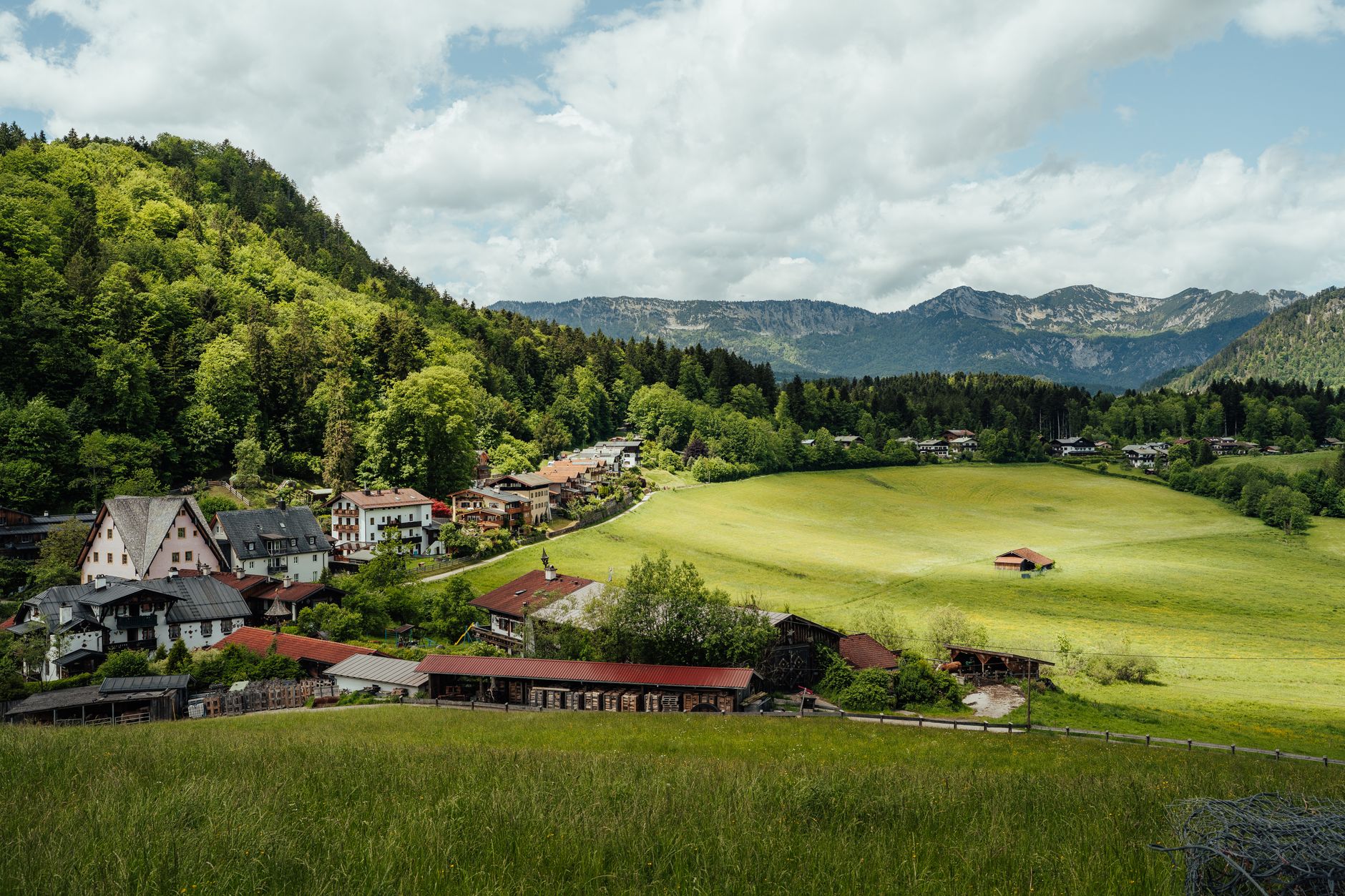
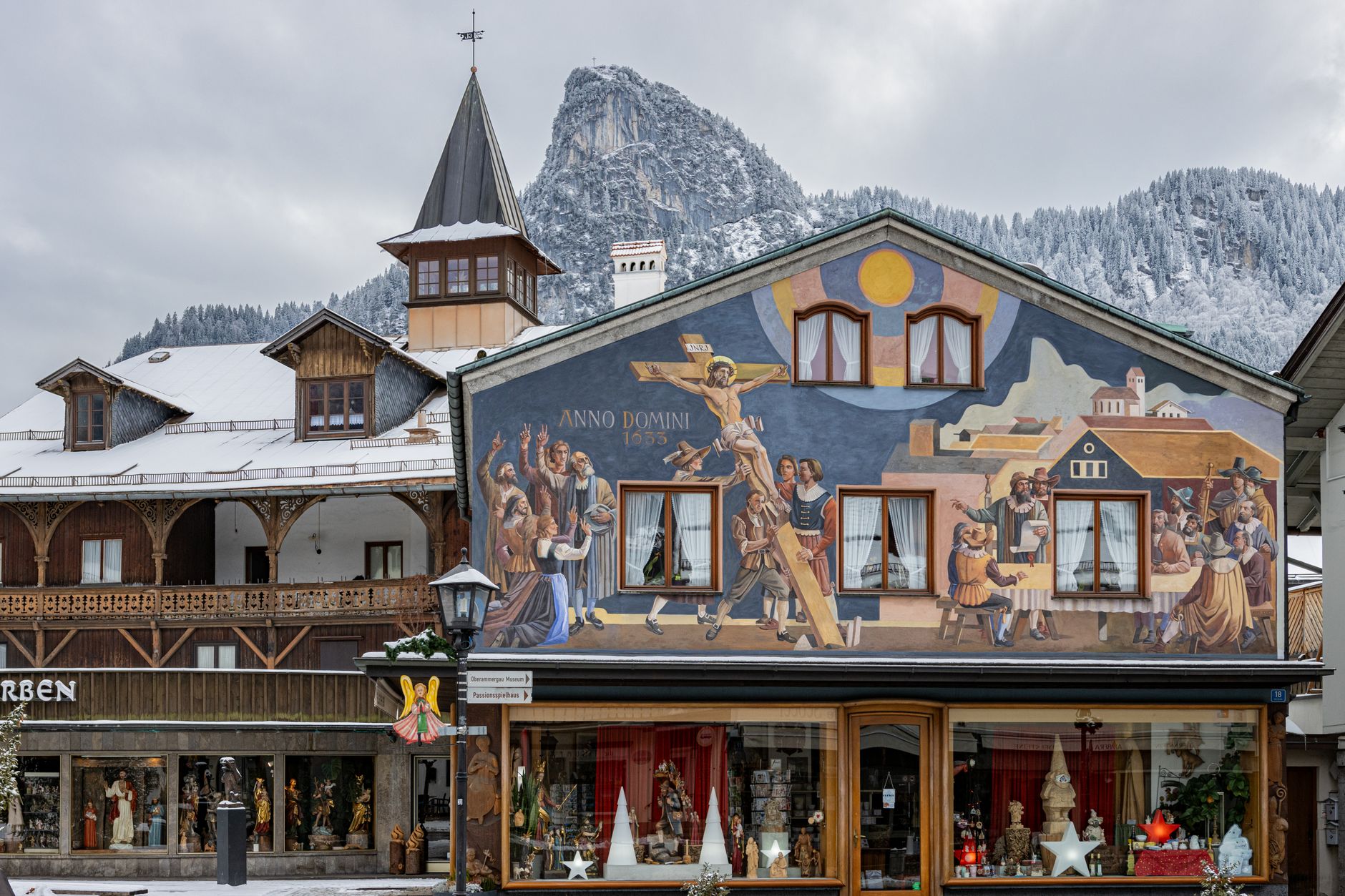
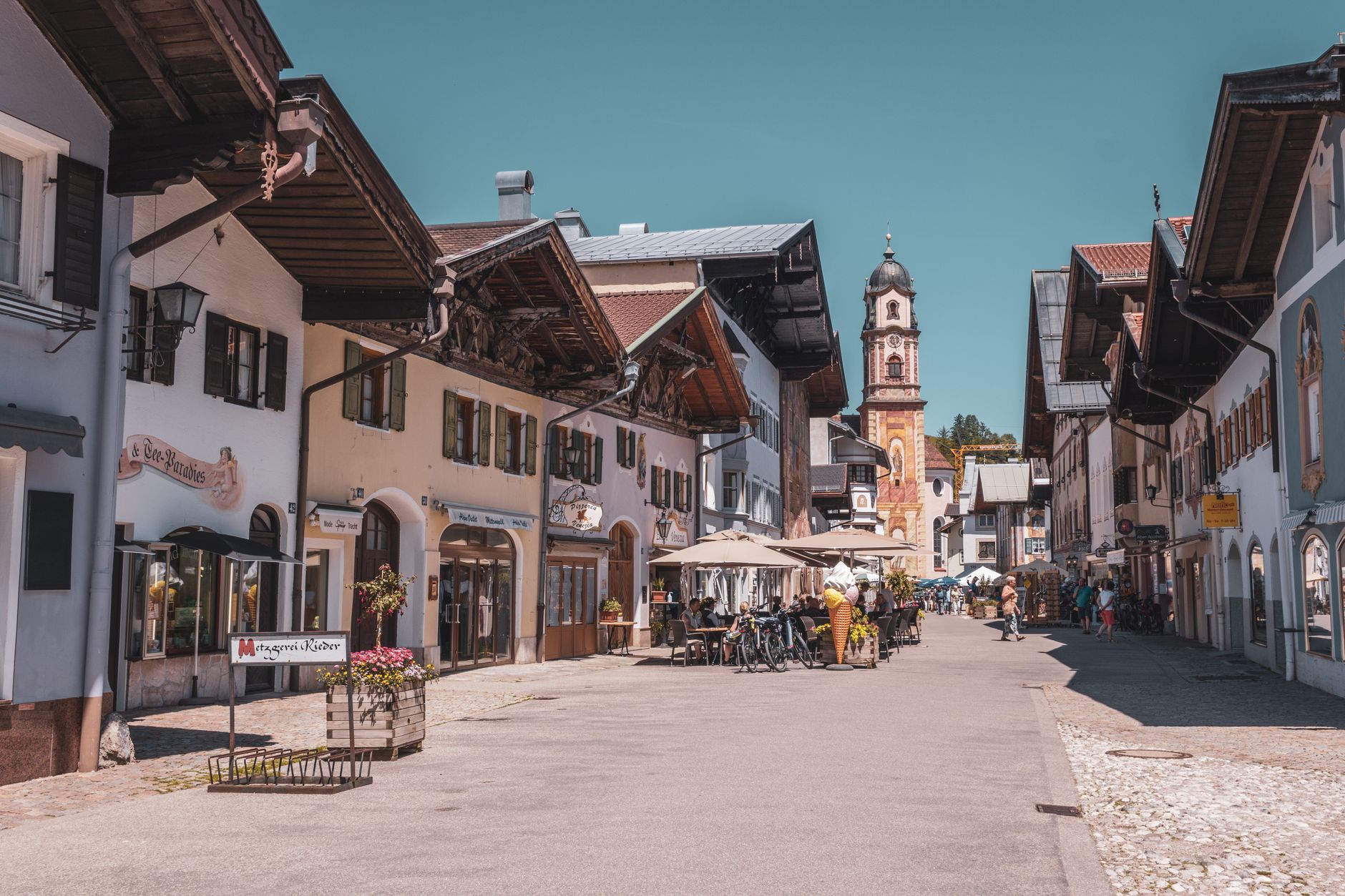
Walk through Oberammergau on an ordinary Tuesday and you'll find houses covered floor to gable in painted scenes — fairy tales, biblical episodes, trompe-l'œil columns that fool the eye from twenty metres. This is Lüftlmalerei, a tradition the village has been refining since the 18th century, and it gives the place a quality no other Bavarian town quite replicates: the sense that the walls themselves are trying to tell you something.
Oberammergau is a working village of around 5,400 people, not a theme park. The Bavarian State Woodcarving School is here. The NATO School is here. And every ten years, the entire community stages a Passion Play that has been running, by vow, since 1634.
💛 What travellers fall for
People who come back tend to time a visit to Ettal Abbey, a few kilometres down the valley — the frescoed dome of the Baroque church is worth the walk alone, and the monks have been brewing beer for over four centuries. The Pilatushaus on Verlegergasse is easy to miss but worth finding for its painted exterior. Go on a clear morning when the light hits the facades straight on.
Deals in Oberammergau
Book directly at the provider

How Oberammergau came to be
The name Ambergove appears in documents around 1150, but the event that shaped everything came five centuries later. In the autumn of 1633, plague reached the village. Eighty-one people died over roughly thirty-three days. On 28 October 1633, the surviving villagers made a vow: perform a play of the Passion of Christ every ten years and the plague would pass. It did. The first performance followed in 1634, and the cycle has continued — with interruptions for wars — ever since. From 1680 the performances settled into decade years, a rhythm that still holds.
The physical village took shape around parallel traditions. Emperor Ludwig the Bavarian founded Ettal Monastery in 1330, anchoring the valley with a Benedictine presence that persists today. The painter Franz Seraph Zwinck (1748–1792) helped codify Lüftlmalerei on local facades, including on his own house, known as Zum Lüftl. The Baroque church of St. Peter and Paul went up between 1735 and 1749 to designs by Joseph Schmuzer. A railroad arrived in 1899. UNESCO added the Passion Play to its Intangible Cultural Heritage list in 2014.
Who and what shaped it
People who shaped it
Landmark buildings
See Oberammergau in motion
Plan your visit
On the map
When to go
Summers are mild and Alpine — pleasant for walking but with the possibility of sudden rain. If you come for the Passion Play in May, pack for temperatures between 5°C and 9°C and dress in genuine layers; the open-air theater offers no shelter from a cold evening.
Right now
Background & history adapted from Wikipedia (CC BY-SA) · specs from Wikidata (CC0) · weather from Open-Meteo · map data © OpenStreetMap contributors · photos from Wikimedia Commons / Unsplash with per-image credit. No third-party reviews or social posts reproduced.