
Niagara Falls
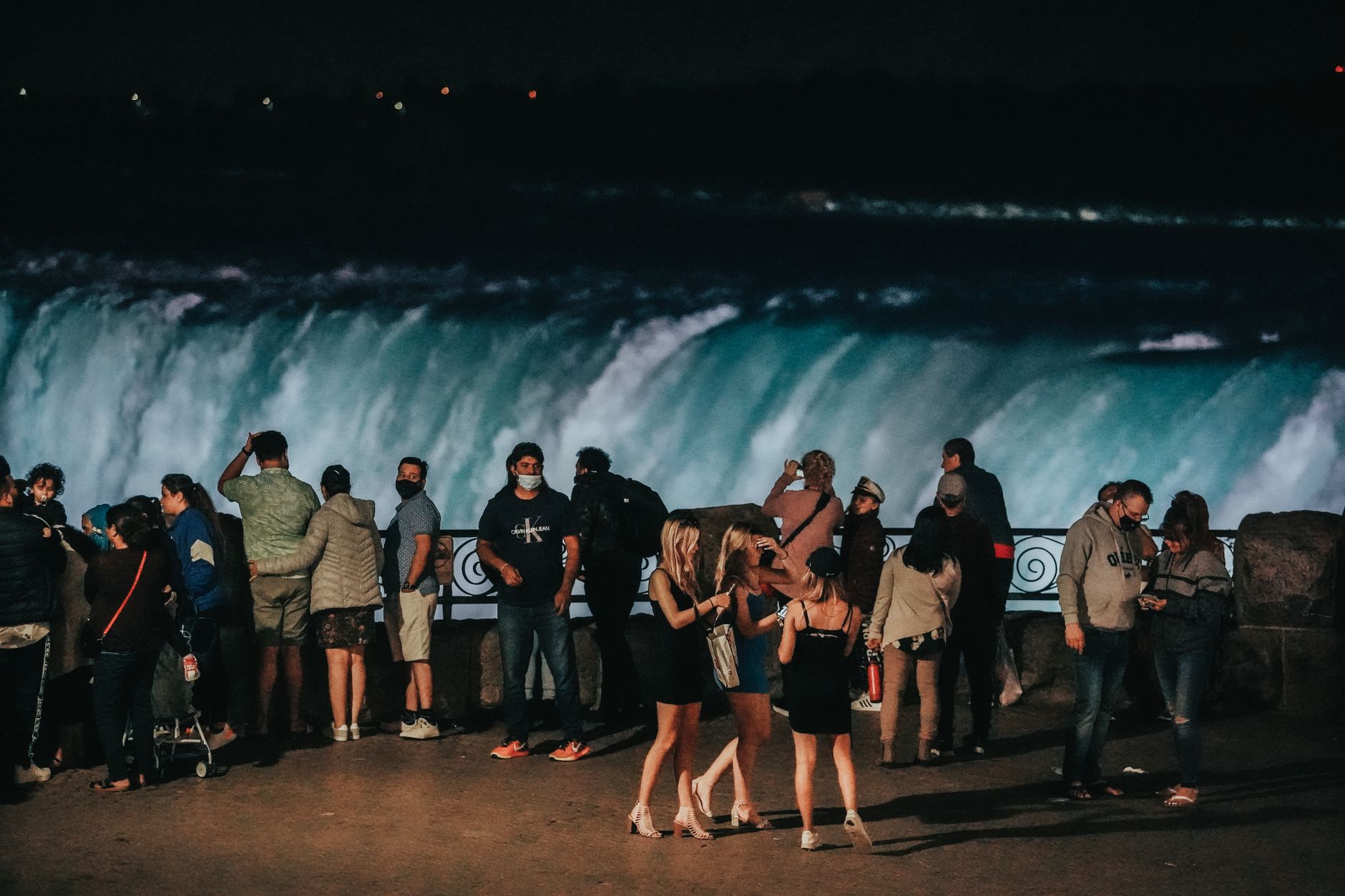
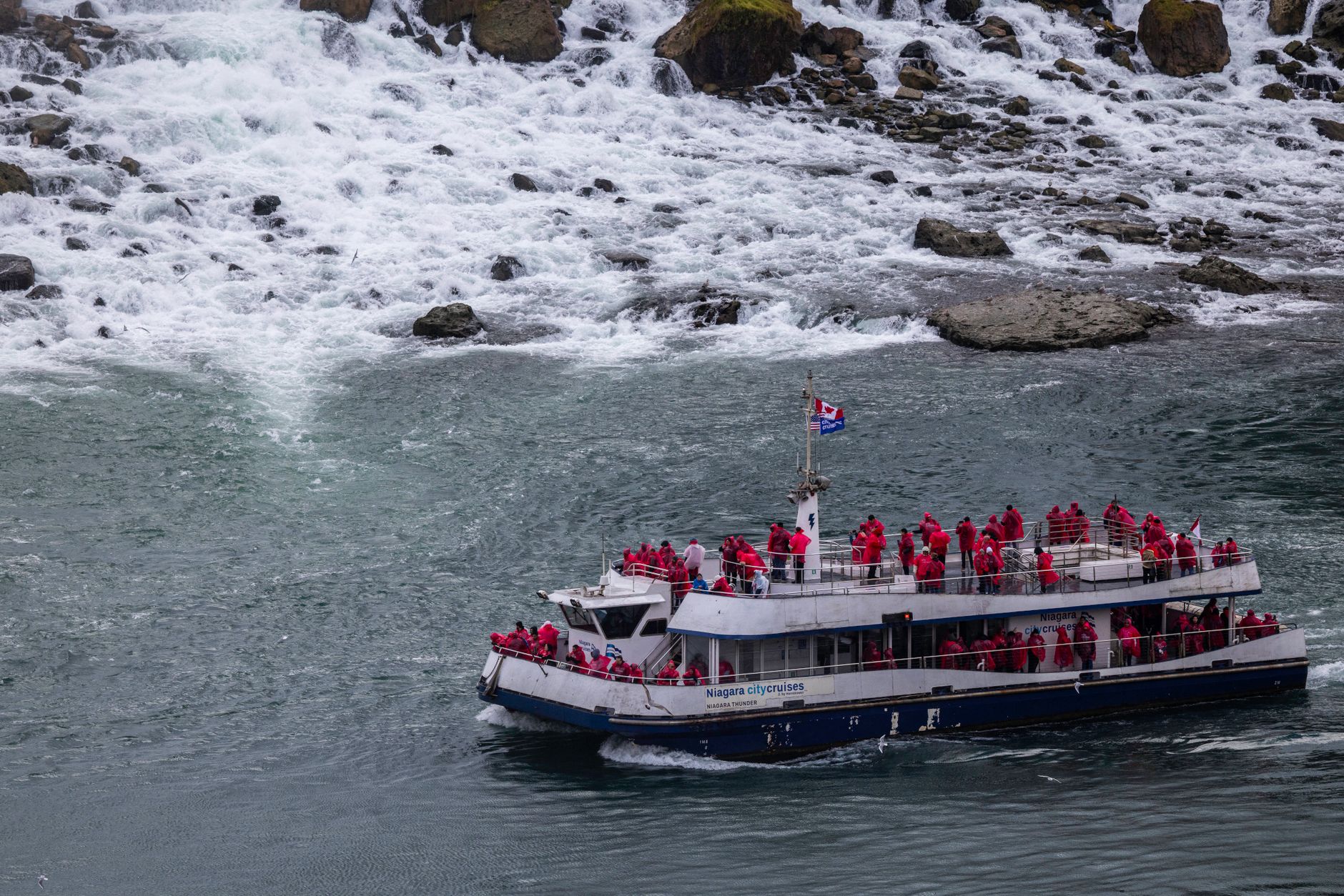
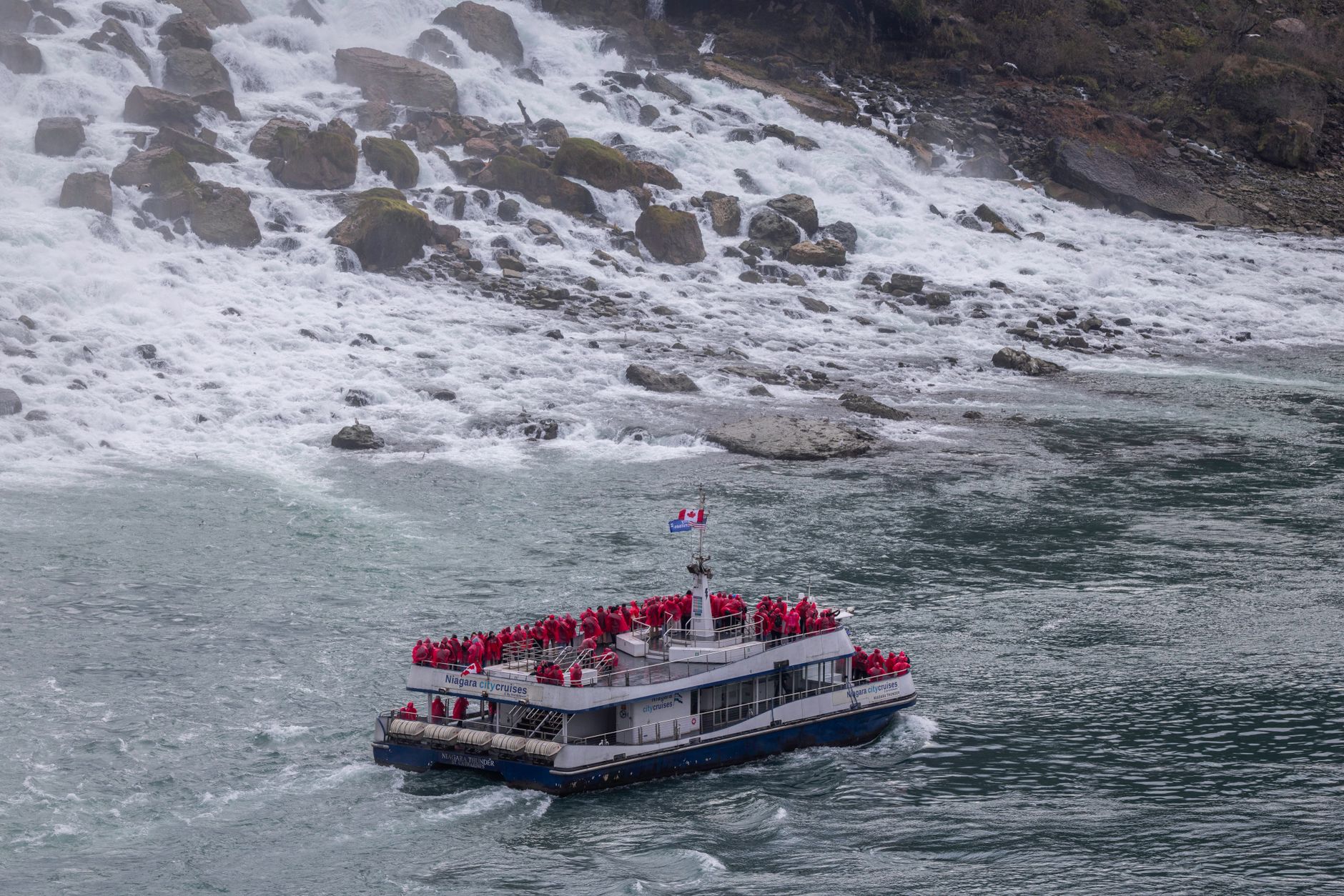
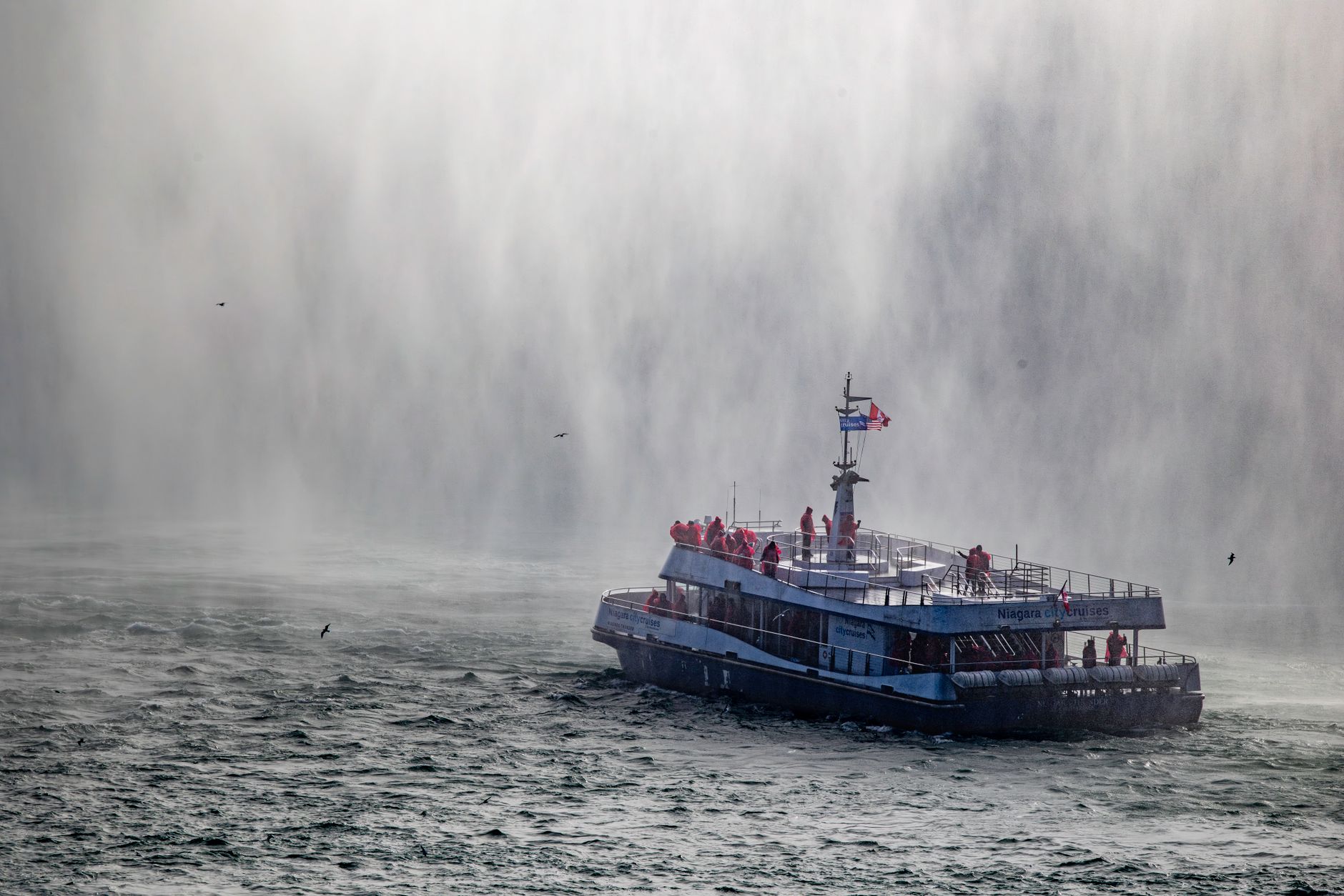
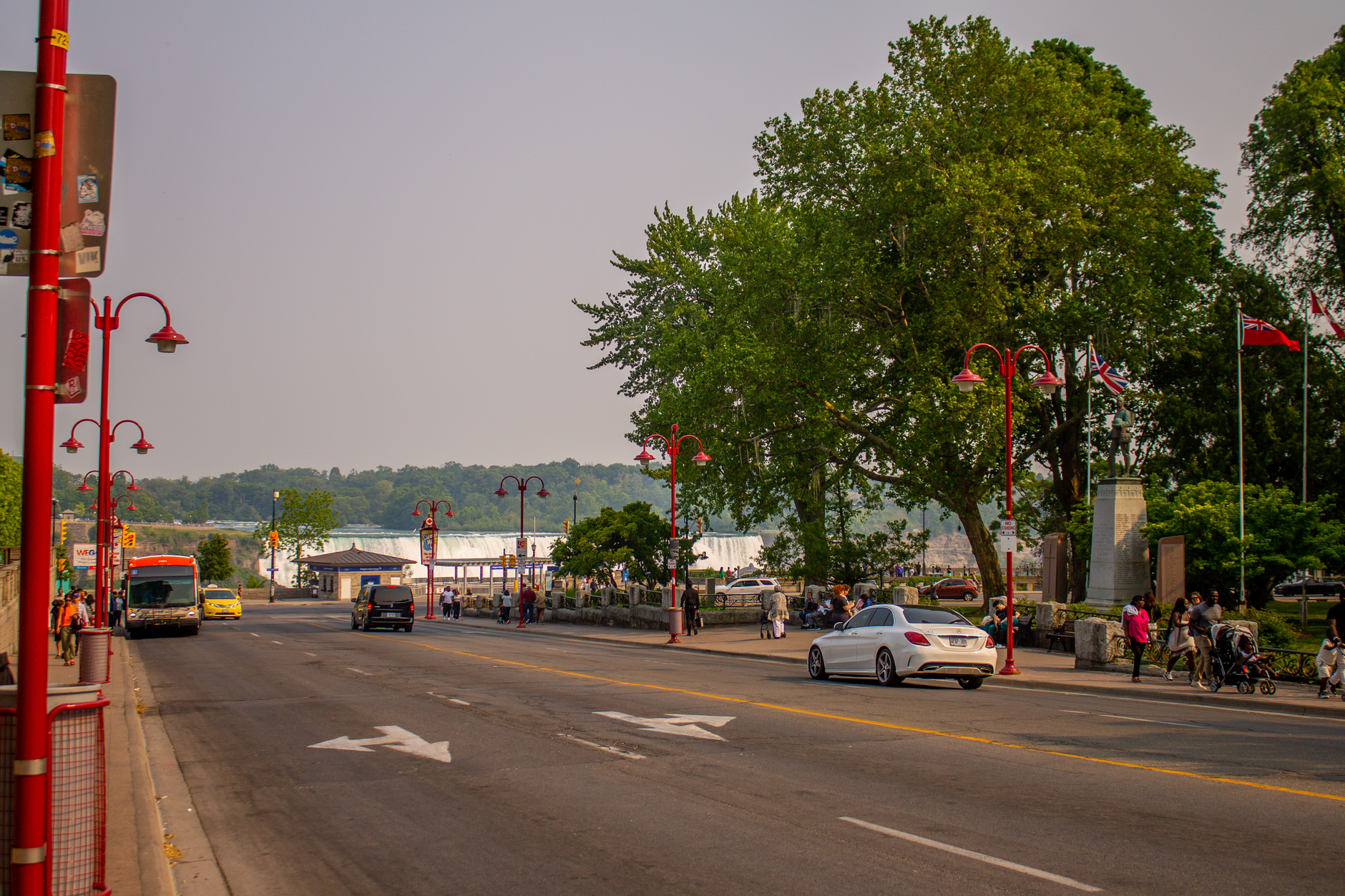
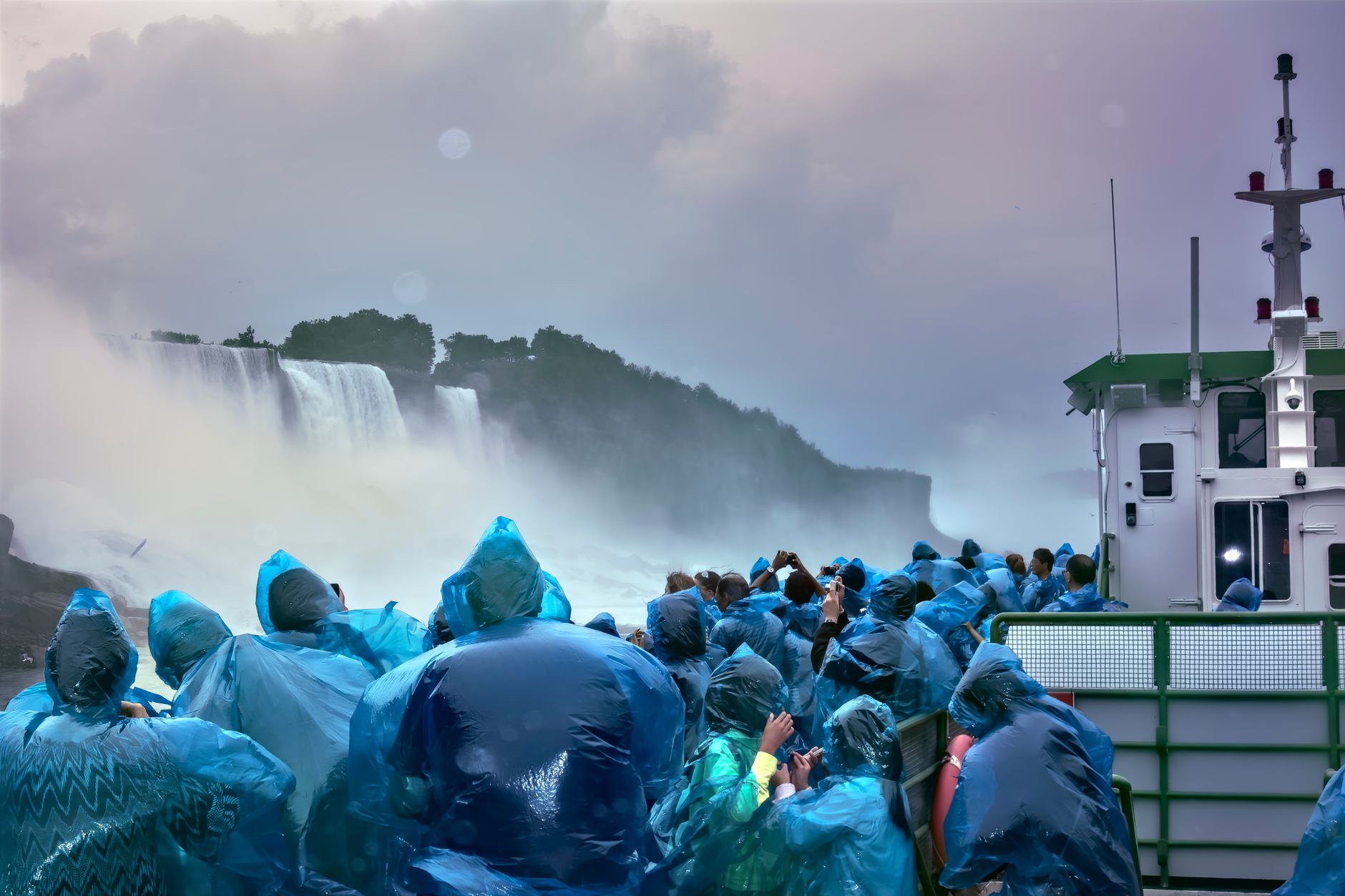
The numbers take a moment to land: Horseshoe Falls drops roughly 167 feet and stretches more than 2,500 feet across, and on a heavy-flow day about 168,000 cubic metres of water per minute goes over the edge. You feel it before you see it — a low, continuous thunder that builds as you walk toward the railings. Niagara Falls straddles the border between New York State and Ontario, which means you can experience the same cascade from two countries, two currencies, and two entirely different scales of development.
The American side is quieter, greener, and anchored by what became the United States' first state park. The Canadian side trades that restraint for height — observation towers, a giant Ferris wheel, a revolving restaurant — and a closer, wetter view of Horseshoe Falls. Neither is wrong. They're just different arguments about how to stand next to something this large.
💛 What travellers fall for
People who come back tend to time a return visit for winter, when the mist freezes into elaborate ice formations along the gorge walls and the crowds thin to almost nothing. The Niagara Parks Power Station tunnel tour is worth booking in advance — the scale of the underground infrastructure surprises even repeat visitors who thought they'd already seen everything.
How Niagara Falls came to be
The falls themselves are about 12,000 years old, carved out as glacial meltwater found its way south at the end of the last Ice Age. French explorer Father Louis Hennepin reached them in December 1678 — the first European to document what he saw — and for the next two centuries the gorge remained more spectacle than resource. That changed with the Erie Canal in 1825, and decisively again in 1895, when the first large-scale hydroelectric station opened on the Niagara River. A year later, Nikola Tesla demonstrated that alternating current could carry that power all the way to Buffalo, a transmission distance that effectively proved AC's case to the world.
The falls have attracted a parallel history of spectacle: Jean François Gravelet crossed the gorge on a tightrope in 1859; Annie Edson Taylor, a 63-year-old schoolteacher, became the first person to survive going over in a barrel in 1901. In June 1969, engineers temporarily dammed the American Falls entirely — for months the rock face ran dry — before dynamiting the dam in November and letting the river return.
Who and what shaped it
People who shaped it
Landmark buildings
See Niagara Falls in motion
Plan your visit
On the map
When to go
Summers are warm and humid (mid-70s°F/low-20s°C), with the heaviest crowds from late June through August. Winters are cold and sometimes brutal — temperatures regularly fall below freezing — but the ice formations on the gorge walls make for an entirely different and less-visited experience. Spring and early autumn offer the most comfortable temperatures and noticeably shorter lines.
Right now
Background & history adapted from Wikipedia (CC BY-SA) · specs from Wikidata (CC0) · weather from Open-Meteo · map data © OpenStreetMap contributors · photos from Wikimedia Commons / Unsplash with per-image credit. No third-party reviews or social posts reproduced.