
Ngardmau
Ngardmau sits at the northern end of Babeldaob, Palau's largest island, and its defining feature is water — specifically the Taki, the tallest waterfall in Micronesia, pouring off the flanks of Mount Ngerchelchuus into a cool pool you can swim in. The state is home to Palau's largest rainforest, three small hamlets totalling fewer than 200 people, and rivers where saltwater crocodiles move through the mangroves largely unbothered.
The old name for this place was Ongedechuul. Local legend holds that the waterfall is the head of an eel that transformed into the river itself — and the forest around it, full of endemic birds including the endangered Micronesian megapode, has the density and quiet of somewhere that takes that story seriously.
💛 What travellers fall for
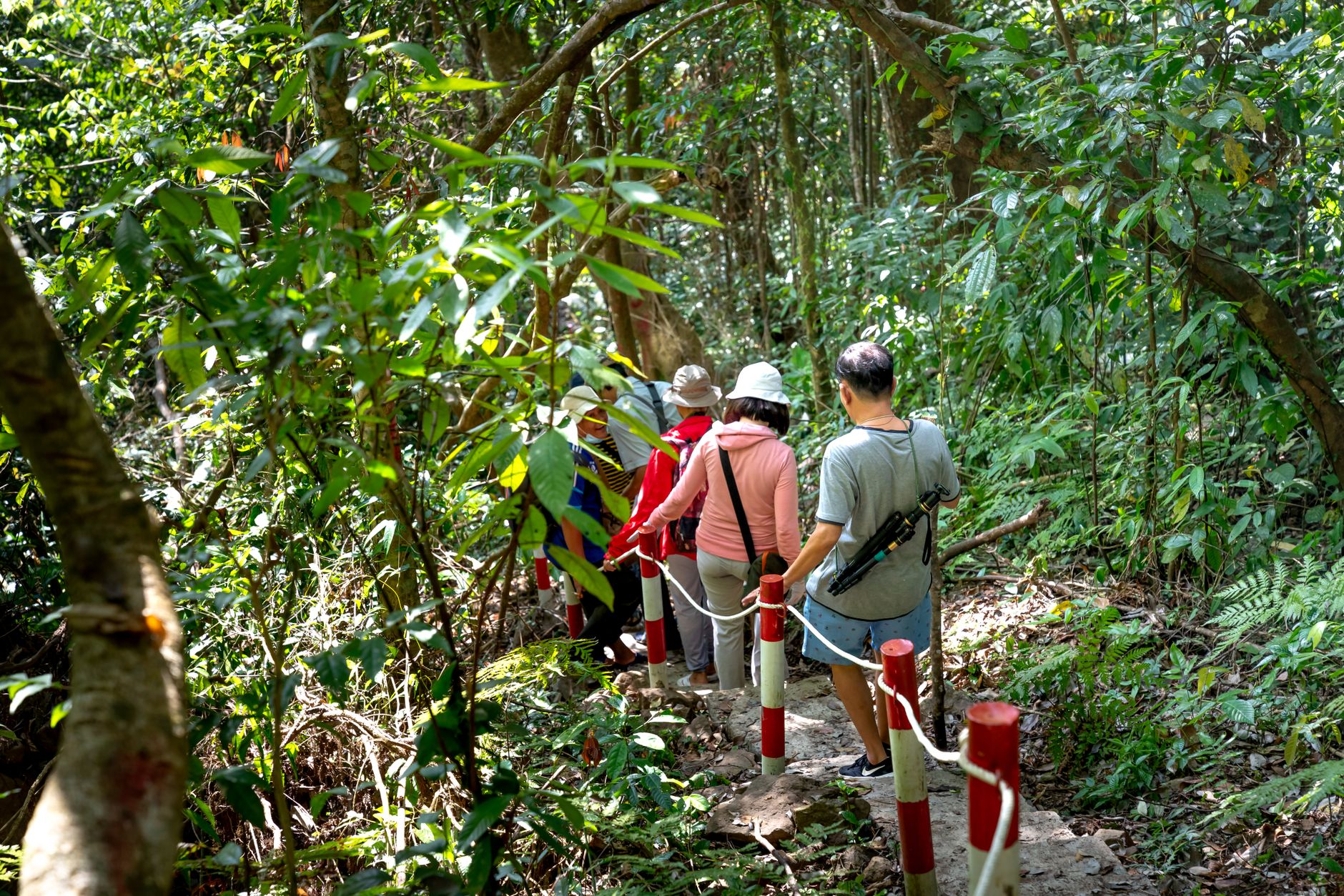
People who make the return trip tend to go straight past the monorail and take the jungle path — steep cut stairs, a stream ford, walking sticks from the rack at the trailhead. They also mention eating mangrove clam fresh with lemon, prepared by the women's association Ngaratumtum. The bungalows in the woods above the falls are worth booking ahead.
Deals in Ngardmau
Book directly at the provider


How Ngardmau came to be
Bauxite mining shaped Ngardmau's modern landscape more than anything else. In the early twentieth century, under Japanese administration, ore was extracted from these hills and carried out on a narrow-gauge rail system whose tracks are still visible in the forest today. A Japanese WWII tank near the falls is doing the same slow return to the jungle.
The school that opened in 1966 occupies a building that originally served Japanese students during the South Seas Mandate period — layers of colonial administration compressed into a single structure. Ngardmau's state constitution was adopted in 1984, formalising a government for a community that has always been small: 46 households across the three hamlets of Ngetbong, Ngerutoi, and Urdmau.
Who and what shaped it
Landmark buildings
See Ngardmau in motion
Plan your visit
On the map
When to go
Palau is warm year-round, and Ngardmau's rainforest earns its name regardless of season — expect the trail to be damp and the canopy to hold humidity. The dry season, roughly November through April, gives you a better chance of the path being merely muddy rather than actively slick.
Right now
Background & history adapted from Wikipedia (CC BY-SA) · specs from Wikidata (CC0) · weather from Open-Meteo · map data © OpenStreetMap contributors · photos from Wikimedia Commons / Unsplash with per-image credit. No third-party reviews or social posts reproduced.