
Namche Bazaar
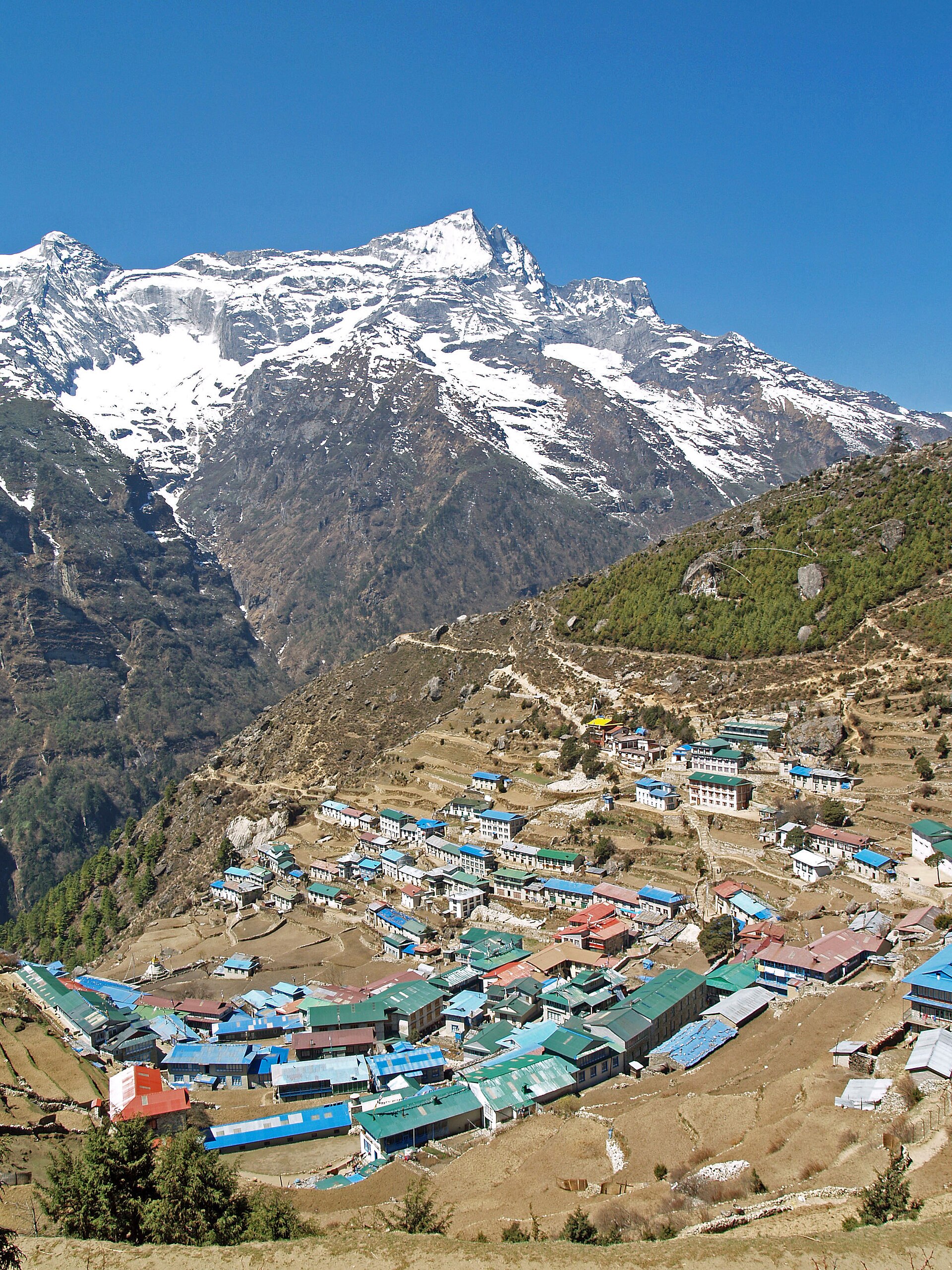
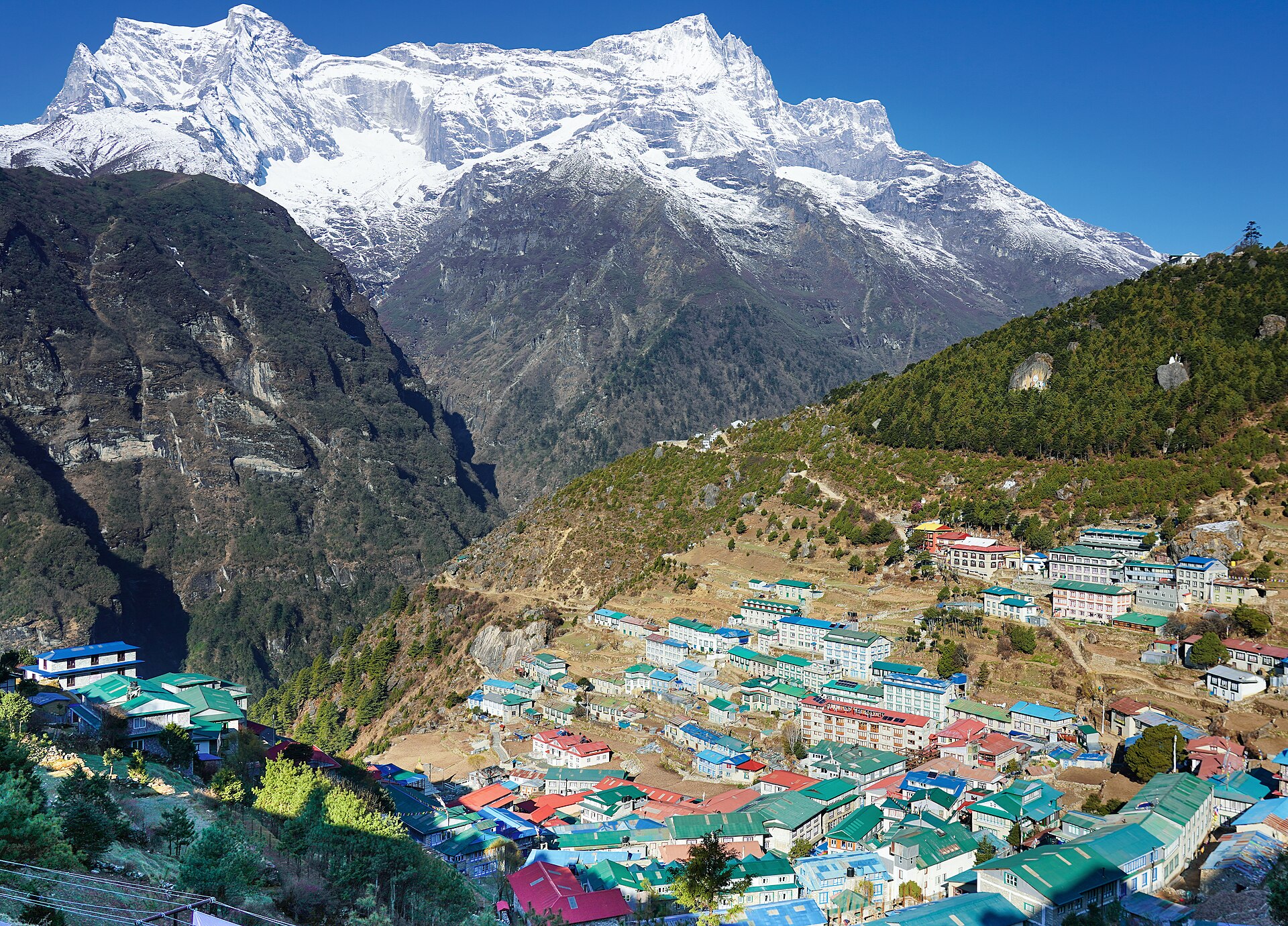
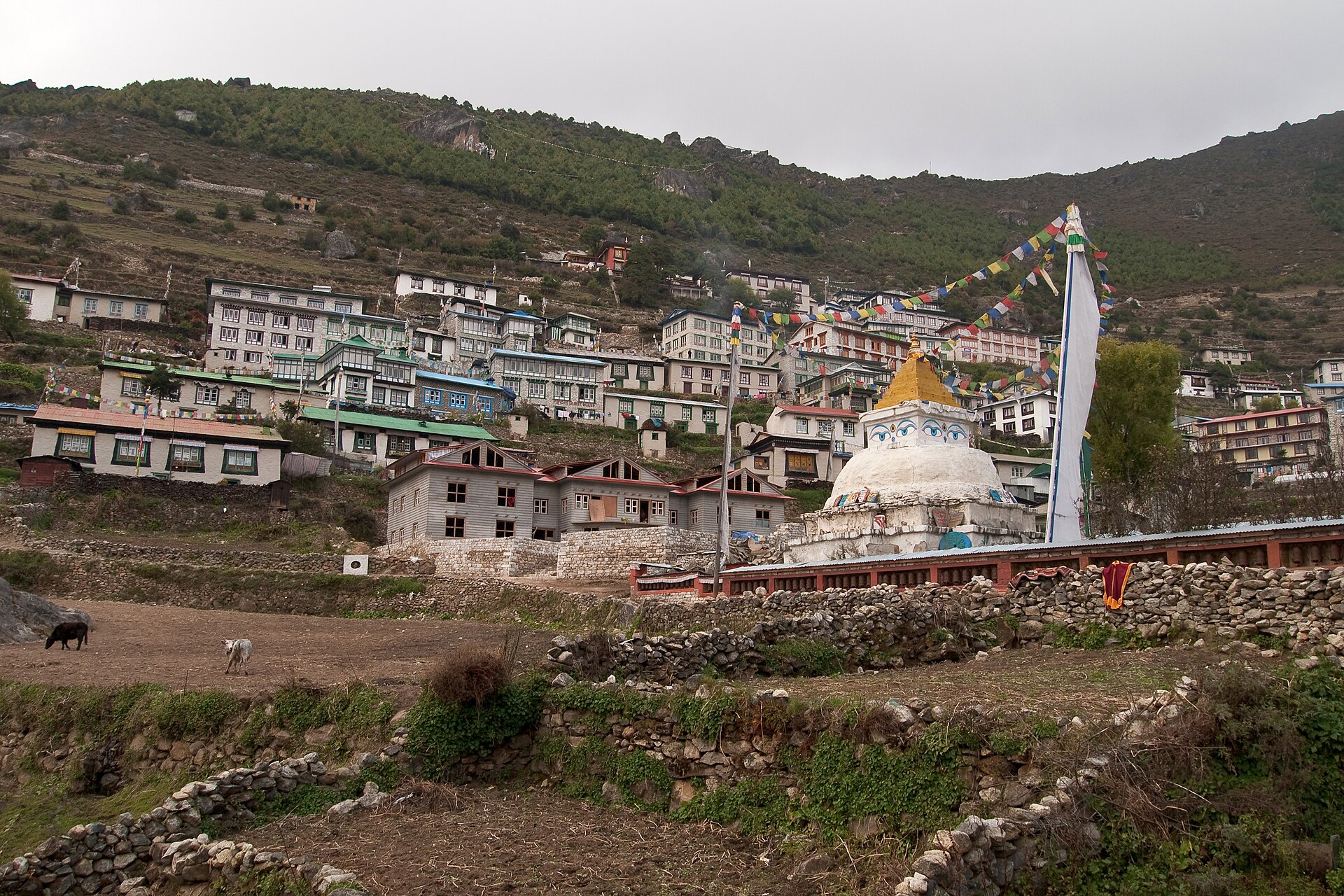
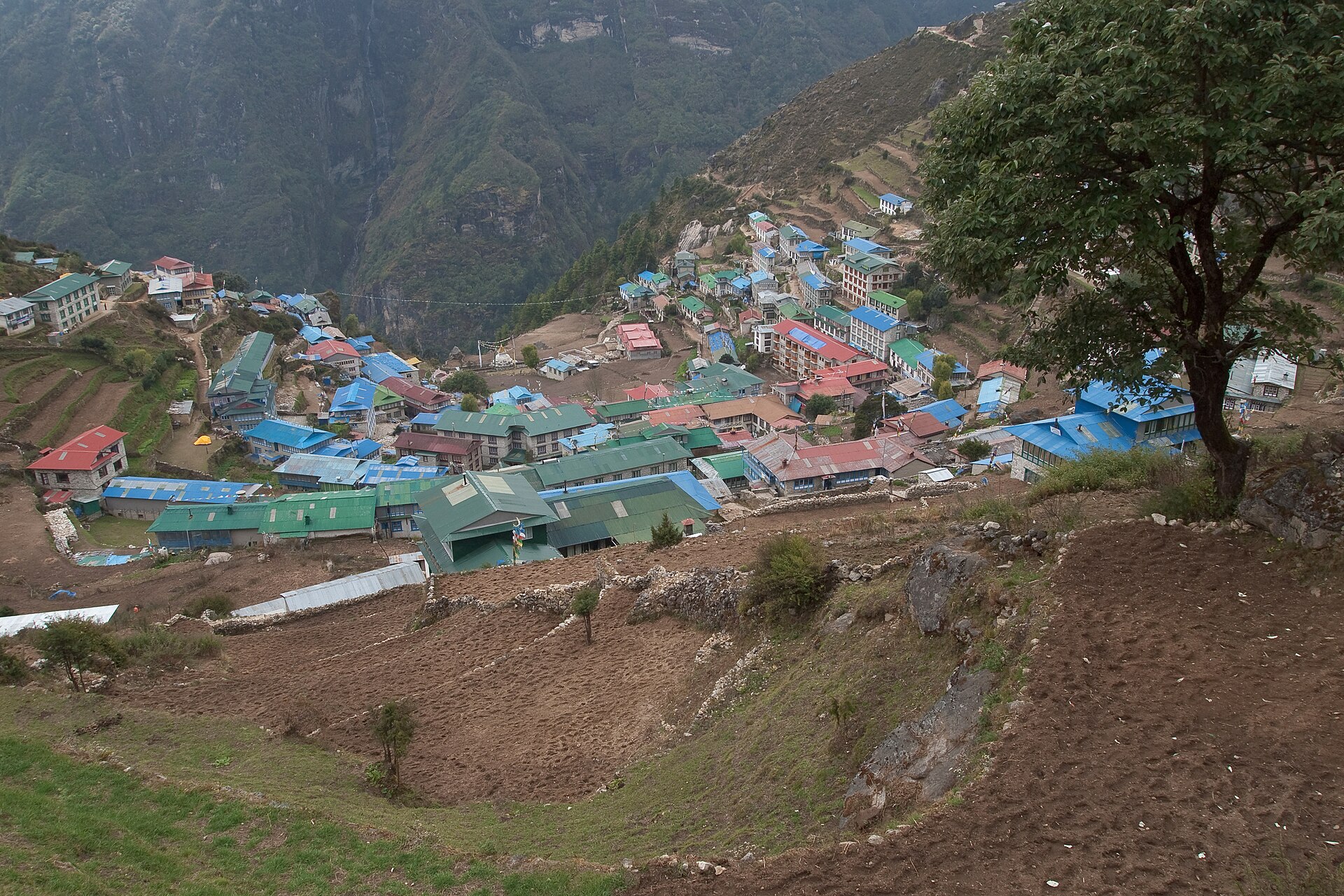
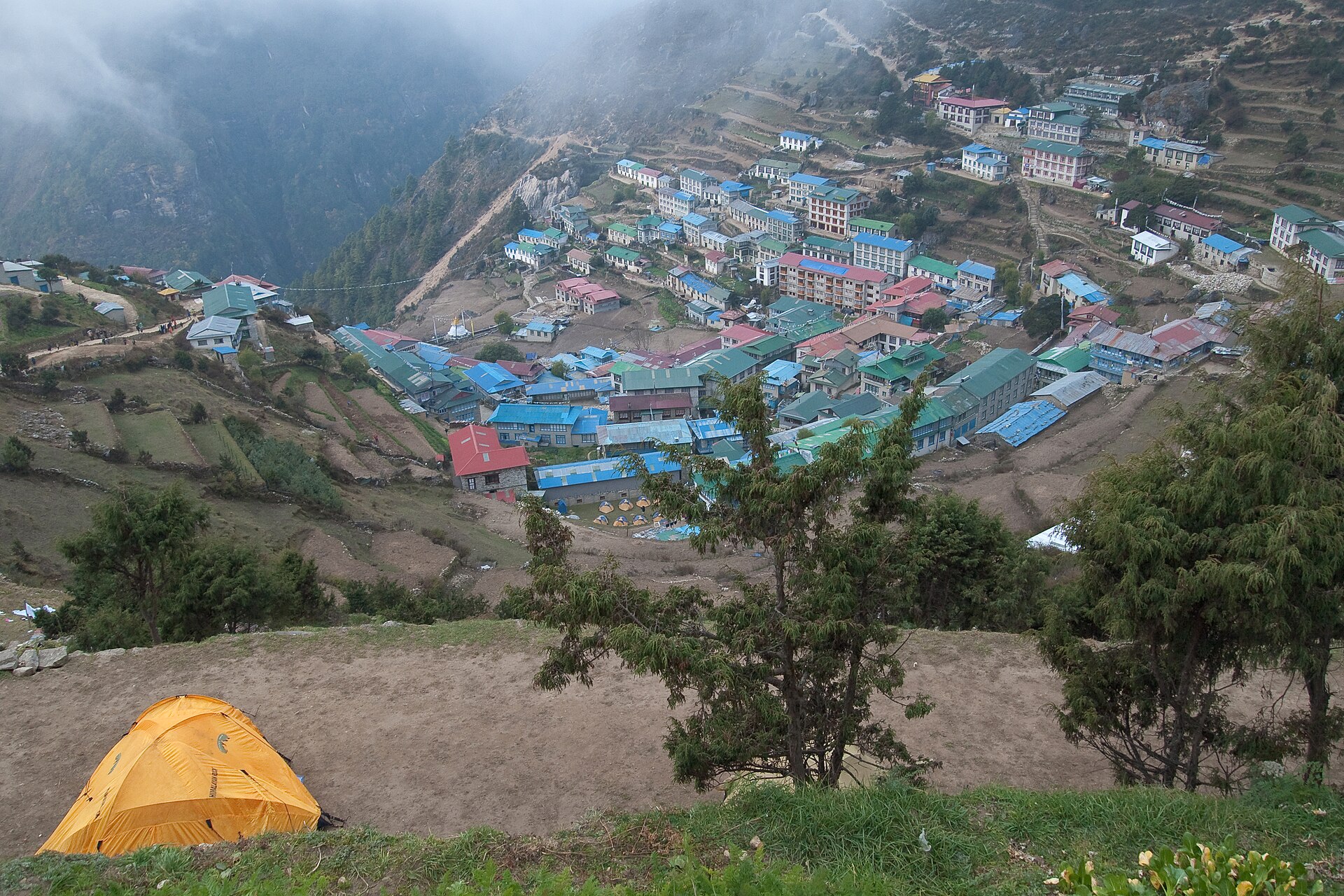
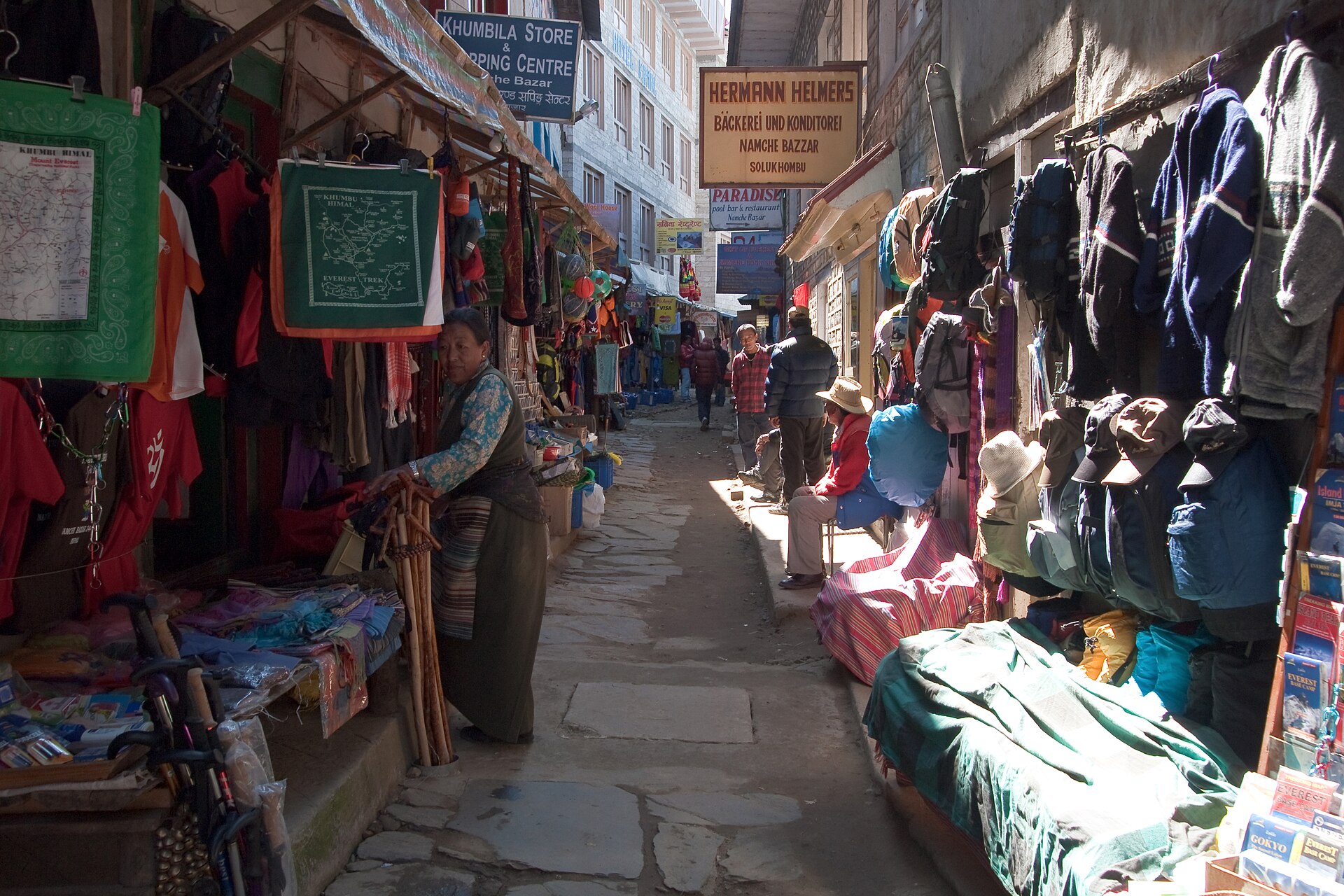
At 3,440 metres, Namche Bazaar sits in a natural amphitheatre carved into the hillside above the Bhote Koshi and Dudh Koshi rivers — a horseshoe of stone buildings, tea houses and gear shops that manages to feel, against all geographic logic, like a proper town. Every trekker heading toward Everest Base Camp passes through here, and almost all of them stay longer than they planned.
That extra time is not optional. The altitude demands it. Spend two nights minimum, and use the acclimatisation day to walk up toward the Everest View Hotel or the Sherpa Museum above the village — both reward the climb with views that reorient your sense of scale entirely.
💛 What travellers fall for
Regulars tend to seek out the Saturday market, held in the sunken central square, where traders from lower valleys still bring in rice and vegetables the way their predecessors did centuries ago. The Irish Pub — opened in 2011 and widely claimed to be the world's highest and most remote — becomes a reliable landmark for a warm drink before the trail ahead.
How Namche Bazaar came to be
Sherpa ancestors arrived from the Kham region of eastern Tibet sometime in the 15th or 16th century, and by the 17th century Namche had become a trading crossroads — Tibetan merchants bringing yak wool, salt and dairy south, Nepali traders carrying rice, tea and grain north. The exchange shaped the town's character long before any outsider arrived.
The 1953 Everest summit by Tenzing Norgay Sherpa and Sir Edmund Hillary changed everything. Hillary returned repeatedly to the Khumbu over the following decades, establishing the Himalayan Trust in 1960 and founding Khumjung School in nearby Khumjung village in 1961. Sagarmatha National Park was established in 1976, formalising the landscape that frames the town. The 2015 earthquake damaged buildings and trails across the region; reconstruction took years, and traces of that work remain visible.
Who and what shaped it
People who shaped it
Landmark buildings
See Namche Bazaar in motion
Plan your visit
On the map
When to go
Spring (March to May) brings the most reliable trekking conditions — cold nights but relatively settled days with three to five wet days across the whole season. Winter drops night temperatures to around -17°C and delivers heavy snow, while summer monsoon months bring cloud and rain that can close Lukla flights for days at a stretch.
Right now
Background & history adapted from Wikipedia (CC BY-SA) · specs from Wikidata (CC0) · weather from Open-Meteo · map data © OpenStreetMap contributors · photos from Wikimedia Commons / Unsplash with per-image credit. No third-party reviews or social posts reproduced.