
Mykonos
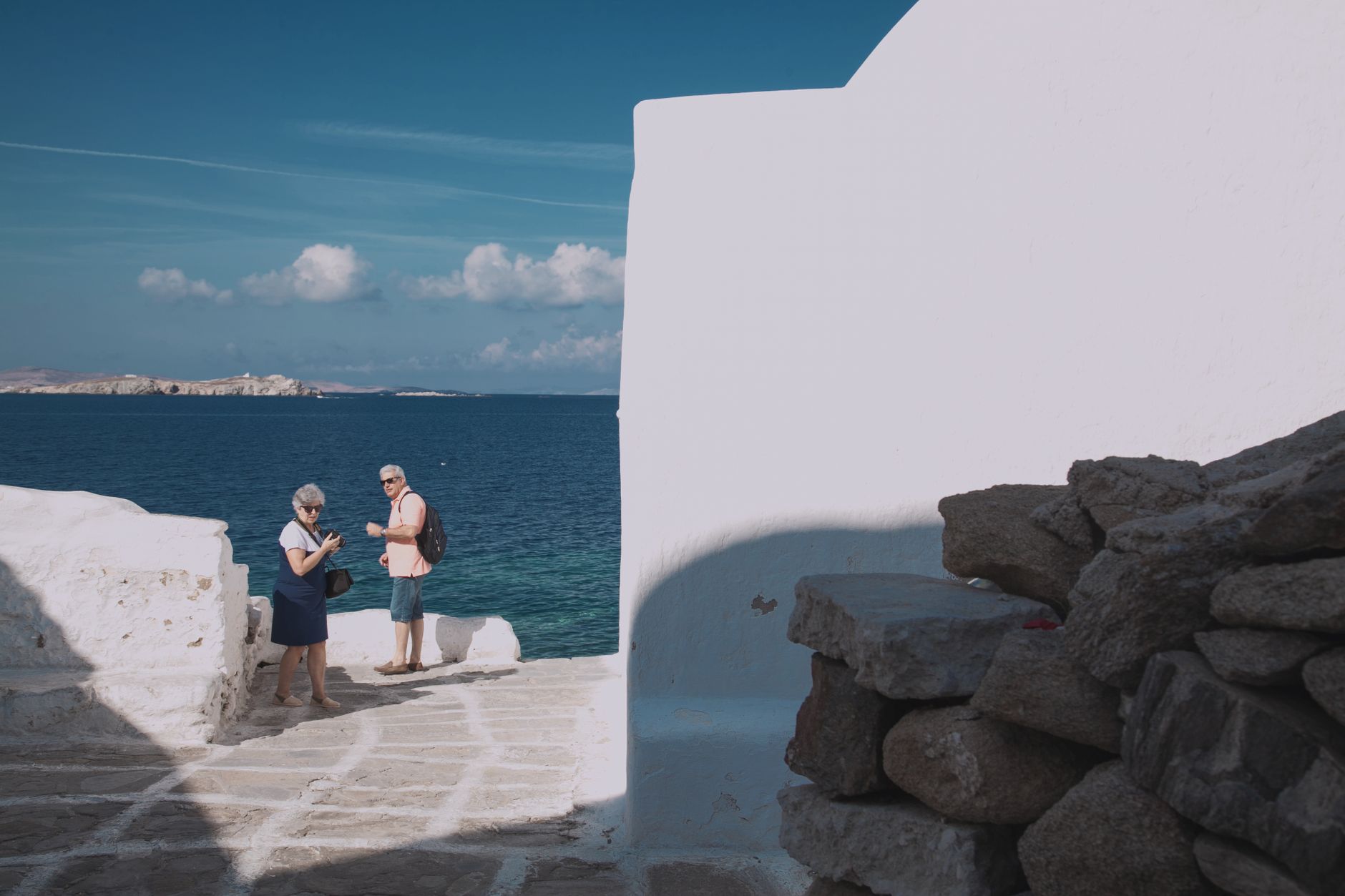
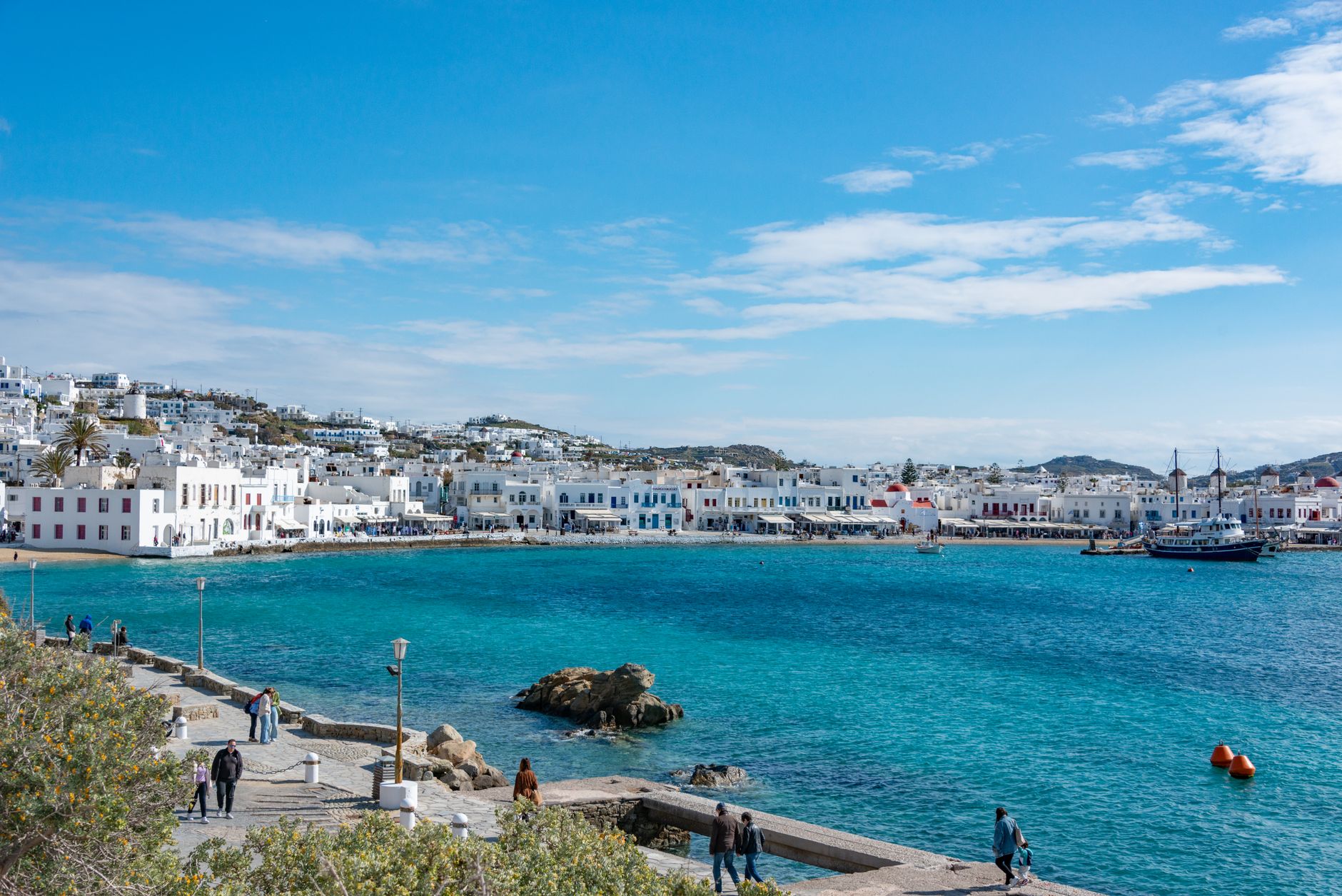
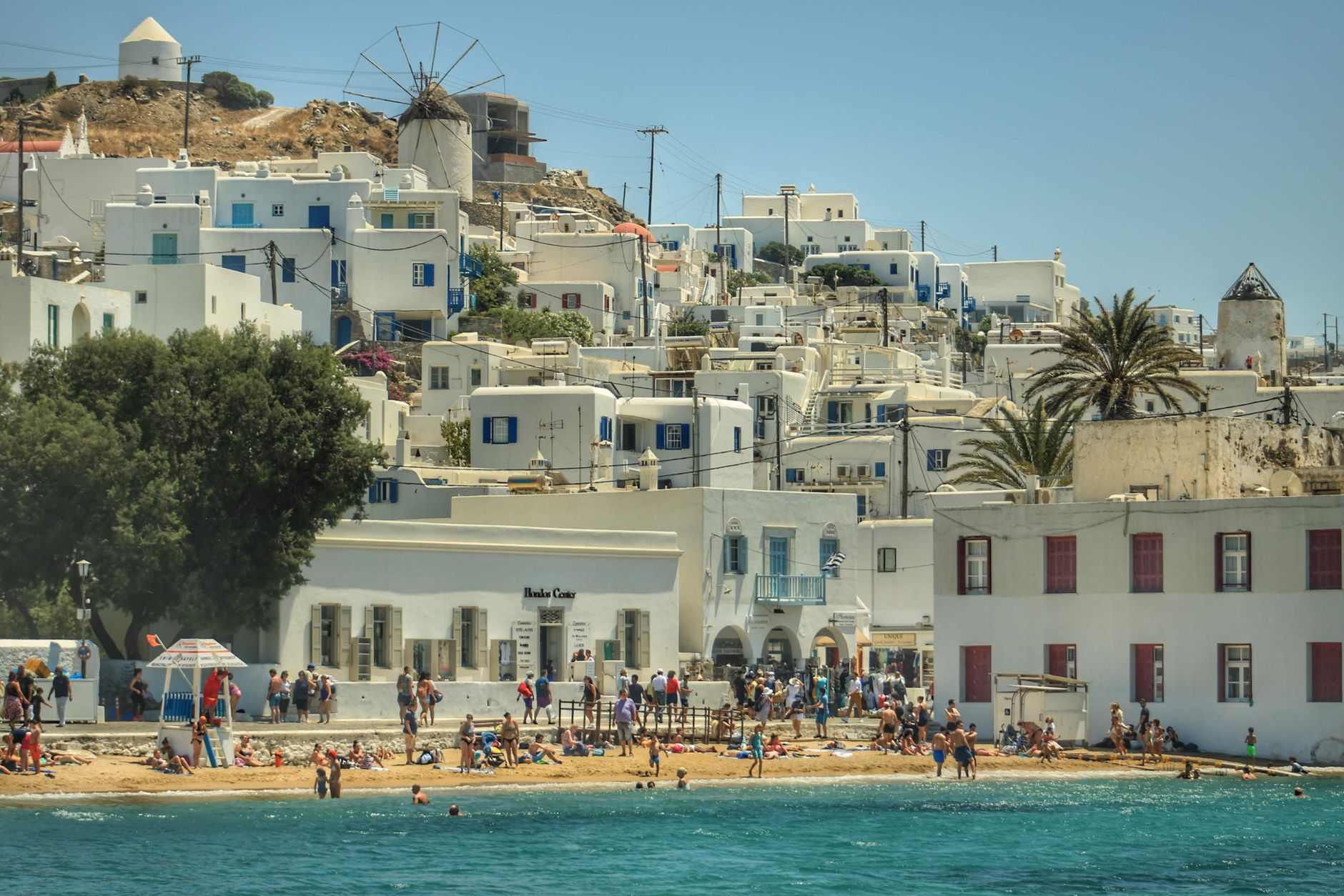
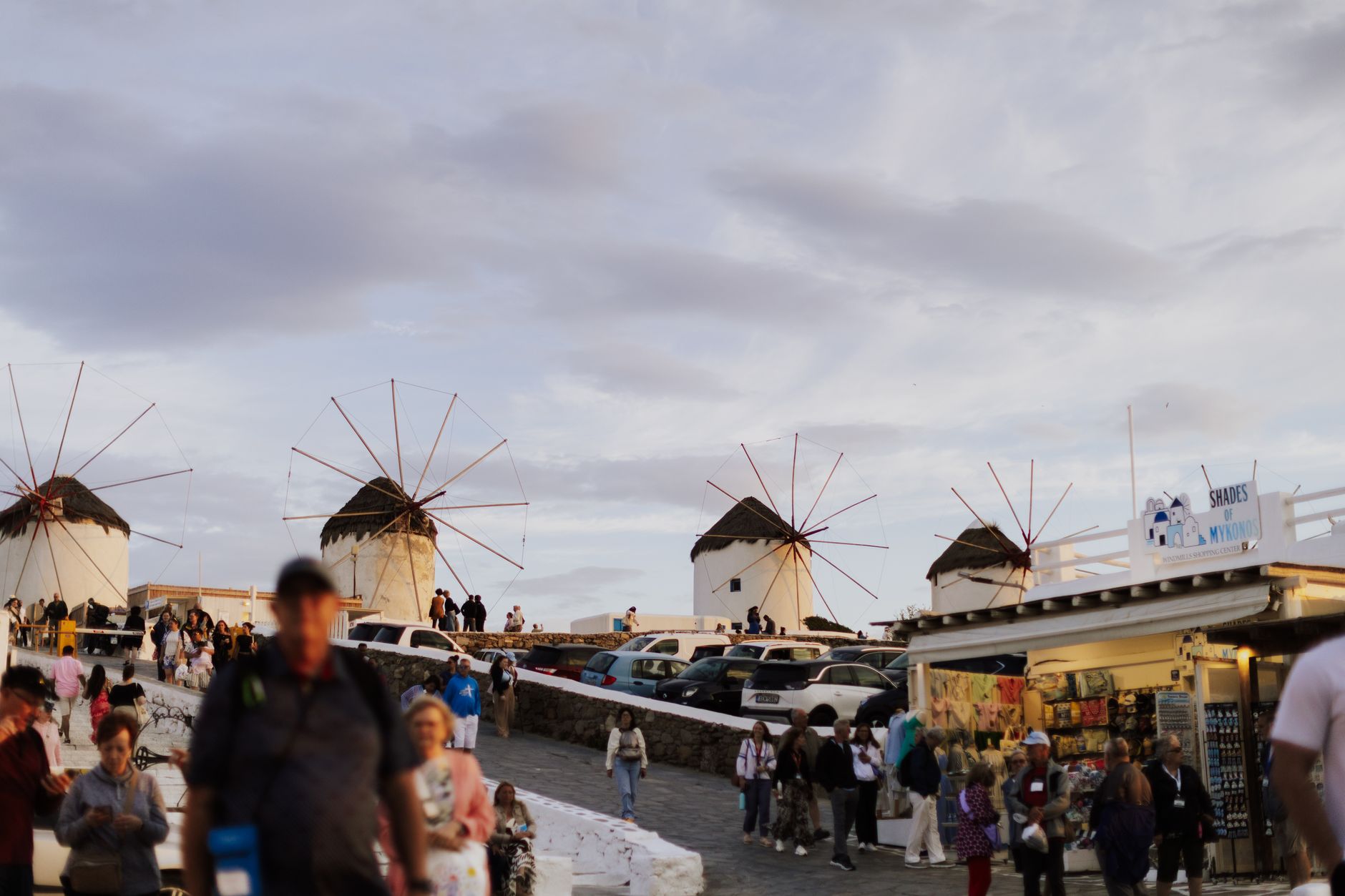
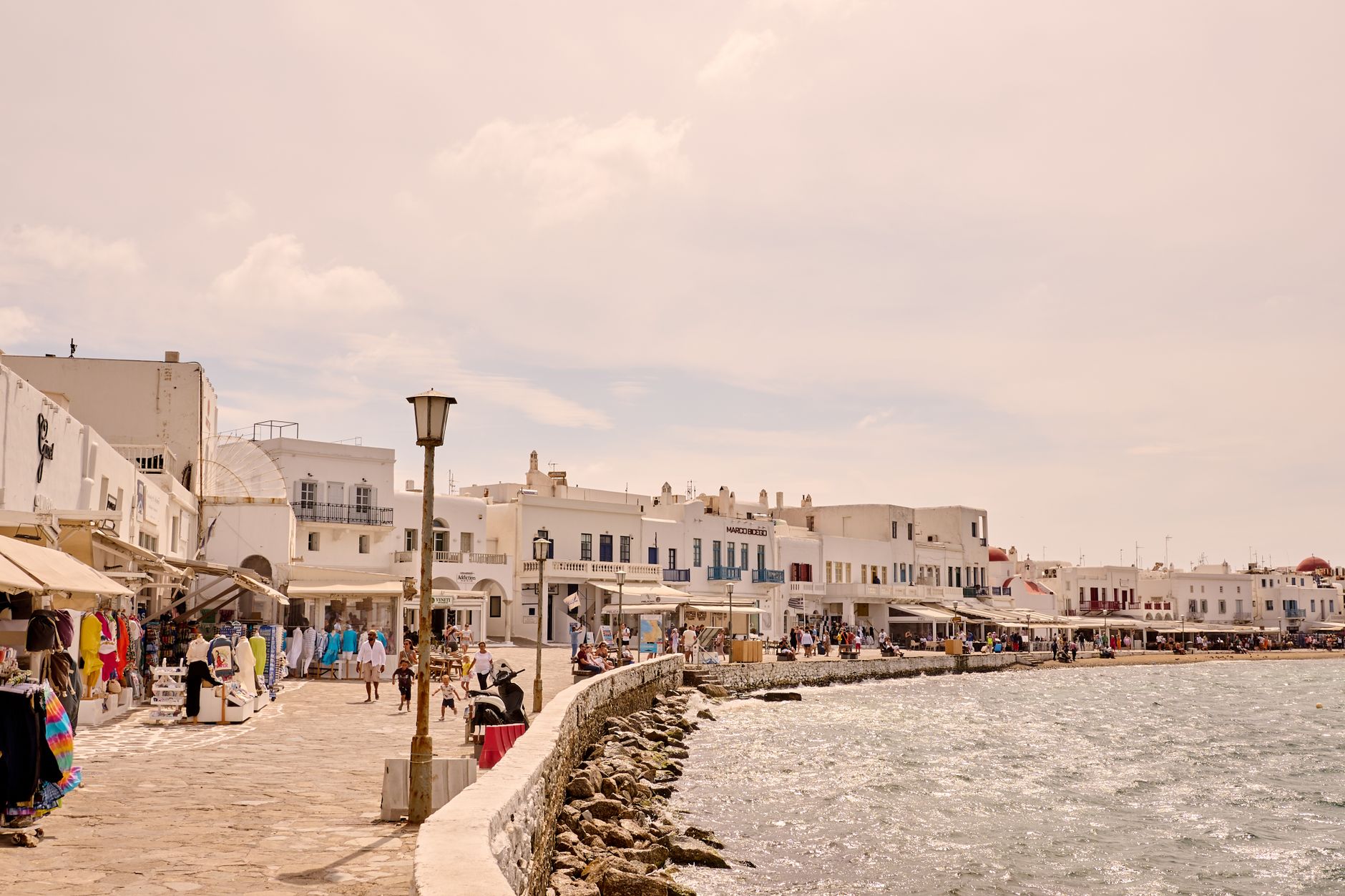
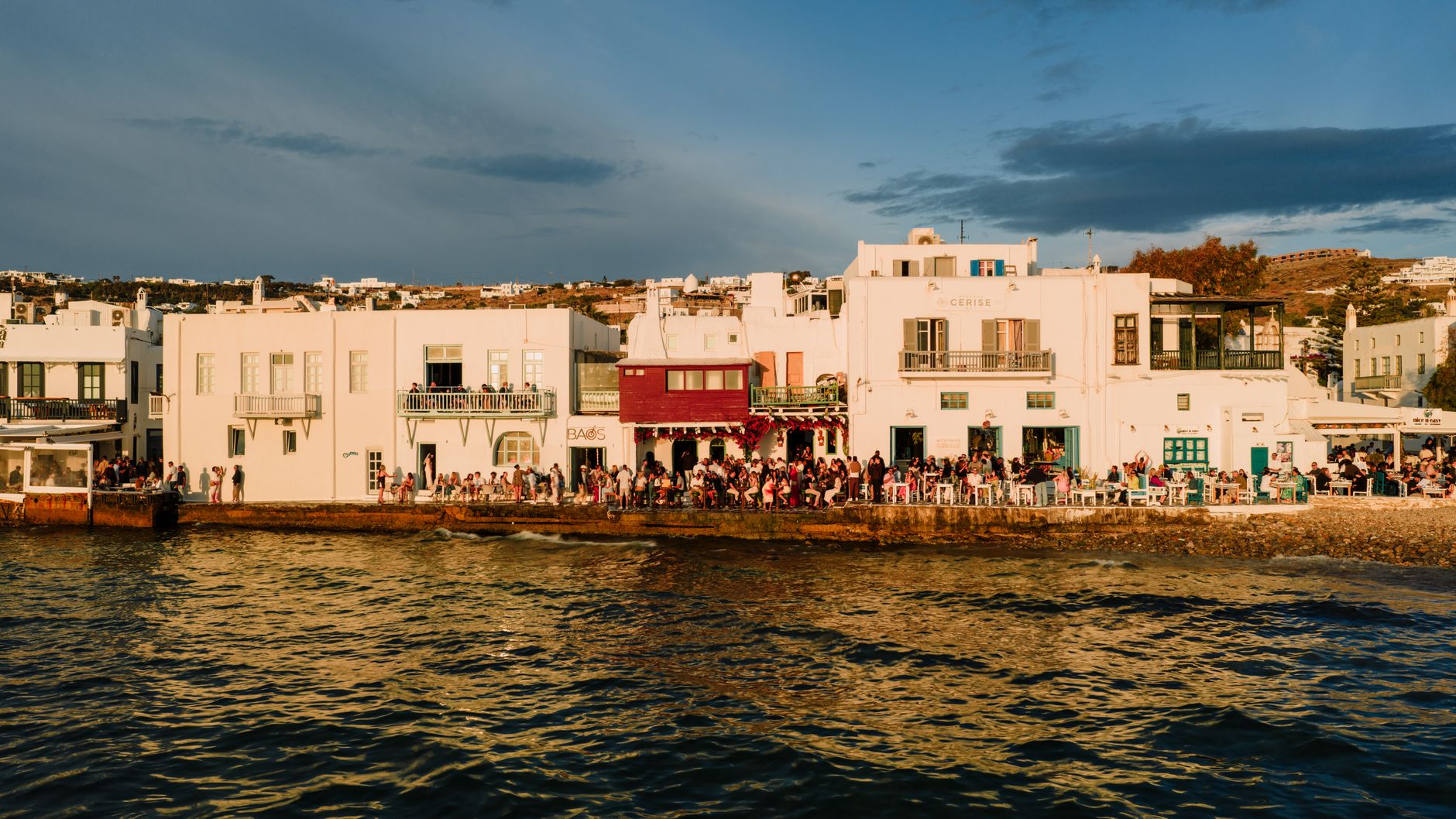
Mykonos earns its reputation on specifics: the whitewashed Panagia Paraportiani church that took two centuries to build, the row of Venetian windmills standing at Chora's edge with their wood-and-straw caps, the afternoon wind off the Aegean that can push 70 kilometres per hour and rearranges your plans without apology. The island has been drawing artists and wanderers since the early 1960s, and that layering — ancient Ionian settlement beneath Venetian architecture beneath mid-century bohemia — gives it more texture than its party-island reputation suggests.
Chora, the main town, is where most of the island's story is told. The Kastro neighbourhood, the narrow lanes of Little Venice built in the 16th century so fishermen could moor at their doorsteps, the Archaeological Museum designed by Alexandros Lykakis in 1905 — each corner offers something to look at properly, not just photograph.
💛 What travellers fall for
People who come back tend to head to Ano Mera rather than staying in Chora the whole time — the Panagia Tourliani Monastery there, founded in 1542, is genuinely quiet. They also learn fast that the Meltemi wind peaks in the afternoon, so mornings are for beaches and evenings for everything else.
How Mykonos came to be
The earliest inhabitants were Carians, traces of whom turned up at Ftelia. Ionians arrived around the 11th century BC, and the island eventually passed through Roman and then Byzantine hands before the Venetian Ghisi family built a castle at Kastro in 1207, beginning roughly three centuries of Latin rule. The Ottomans followed, and it was under Ottoman rule that one of Mykonos's most celebrated figures emerged: Manto Mavrogenous, born 1796, who spent her personal fortune equipping ships and organising local forces for the 1821 Greek War of Independence.
The 20th century brought a different kind of arrival. Artists discovered the island in the early 1960s, followed by the counterculture a decade later, and tourism quietly became the island's main business — a shift that shaped everything from the lanes of Chora to the ferry schedules out of Piraeus.
Who and what shaped it
People who shaped it
Landmark buildings
See Mykonos in motion
Plan your visit
On the map
When to go
Summers are sunny and reliably warm, but the Meltemi wind dominates July and August, gusting past 70 kph in the afternoons — factor that in for boat trips and beach days. Spring and early autumn offer calmer air and thinner crowds, which is when the island's architecture and quieter villages are easiest to appreciate.
Right now
Background & history adapted from Wikipedia (CC BY-SA) · specs from Wikidata (CC0) · weather from Open-Meteo · map data © OpenStreetMap contributors · photos from Wikimedia Commons / Unsplash with per-image credit. No third-party reviews or social posts reproduced.